Theosophy and Anthroposophy: Essential Books



Blavatsky, Steiner, the Theosophical Society, and spiritual science
Historical & scholarly catalogue. The texts listed here cover topics that have been studied — and debated — for centuries. We catalogue them for academic and historical research; we do not endorse or recommend practice. If you are struggling with mental health, intrusive thoughts, or grief, please reach out to a licensed professional (or, in the United States, dial 988).
Theosophical and Anthroposophical books trace esoteric spiritual philosophy from 19th-century origins to contemporary studies. Works like Helena Blavatsky's 'ISIS Unveiled' (1877) and R. Steiner's 'Theosophy!' provide foundational concepts. Understanding these movements requires engaging with their primary texts and historical context. This guide outlines key works for beginners and advanced students, offering a structured approach to study.














































Reading Order
Three paths · pick by your level
🌱
Beginner
- Provides a clear, early overview of Theosophy's core principles and objectives.
- Offers a collection of early essays and Q&A, illustrating the movement's initial discussions.
- Gives insight into the ongoing dialogue and topics of interest in the Theosophical movement around 1911.
- An early examination of the subject matter, providing historical context and critical perspective.
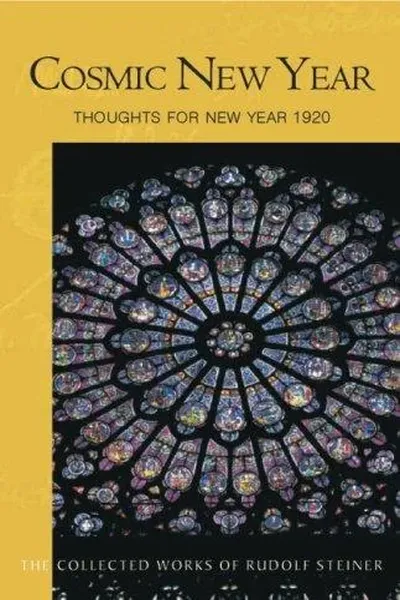
- An accessible introduction to Anthroposophy from its founder, distinguishing it from other esoteric paths.
🌿
Intermediate
- A foundational work detailing Blavatsky's critique of Western religion and science and her introduction to esoteric concepts.
- Offers a biographical and contextual approach to understanding Blavatsky and her impact.
- Represents the breadth of topics and intellectual engagement within the Theosophical sphere during the early 1930s.
- Details specific organizational aspects and influences within the Theosophical movement.
🌳
Advanced
- Blavatsky's most comprehensive work, presenting a detailed cosmology and philosophy of universal evolution.
- A primary source of mystical philosophy that significantly influenced later esoteric thinkers, including Theosophists.
- A modern scholarly analysis of key Theosophical figures and their impact on education and spiritual movements.
Why Each Book Matters
What are Theosophy and Anthroposophy?
Theosophy, largely established by Helena Blavatsky in the late 19th century, seeks to understand the underlying unity of all religions and philosophies, exploring ancient wisdom traditions and occult phenomena. Anthroposophy, founded by Rudolf Steiner in the early 20th century as a branch of Theosophy, focuses on developing human spiritual potential through a scientifically rigorous approach to the supersensible world, emphasizing individual spiritual development and a holistic understanding of humanity and the cosmos.
Best Books for Complete Beginners
For those new to these subjects, starting with accessible introductions is crucial. 'Five Years of Theosophy' offers early perspectives on the movement's core ideas. J.D. Buck's 'Nature and Aim of Theosophy' (1889) provides a clear overview of its purpose. Annie Besant's contributions, though not explicitly listed as beginner texts, are central to Theosophy's development and often serve as accessible entry points. 'The Theosophical Path Illustrated Monthly Volume 1' (1911) offers a snapshot of discussions during a formative period.
Intermediate Reading
Moving beyond introductory concepts, engage with primary figures. R. Steiner's 'Theosophy!' directly addresses the subject, offering his perspective. G.S.R. Mead's 'Theosophy and Occultism' (1892) provides an early scholarly examination. 'Jonathan West Madame Blavatsky's Baboon' offers a biographical and contextual lens on Blavatsky. The collected volumes of 'The Aryan Path' (e.g., Vol-II No-1, 1931) showcase ongoing discourse and diverse viewpoints within the Theosophical milieu.
Classical / Advanced Texts
For serious students, direct engagement with foundational texts is essential. Helena Blavatsky's magnum opus, 'The Secret Doctrine', is a cornerstone, presenting a complex cosmology and philosophy. Her earlier work, 'ISIS Unveiled' (Volume 1 and 2, 1877), lays the groundwork for her later teachings. 'The Works Of Jacob Behmen The Teutonic Theosopher Vol 1' (1764) represents an earlier mystical tradition that influenced later Theosophical thought.
Reading Order — Step by Step
Begin with J.D. Buck's 'Nature and Aim of Theosophy' (1889) for a foundational understanding. Follow with 'Five Years of Theosophy' to grasp early discussions. In Month 2, explore R. Steiner's 'Theosophy!' for Anthroposophical perspectives. Then, tackle Helena Blavatsky's 'ISIS Unveiled' (1877). For Month 3 and beyond, delve into 'The Secret Doctrine' and explore selected issues of 'The Aryan Path' for broader context and diverse viewpoints.
Other categories
Alchemy & Hermeticism
3093
Astrology & Cosmology
2043
Divination & Tarot
2212
Kabbalah & Jewish Mysticism
126
Magic & Ritual
149
Mysticism & Contemplation
610
Occult Philosophy
891
Theosophy & Anthroposophy
597
Witchcraft & Paganism
1183
Freemasonry & Secret Societies
1914
Spiritualism & Afterlife
77
Sacred Texts & Gnosticism
276
Supernatural & Occult Fiction
22
Spiritual Development
50
Esoteric History & Biography
33

Browse Esoteric Library
📚 All 52,000+ Books
🜍 Alchemy & Hermeticism
🔮 Magic & Ritual
🌙 Witchcraft & Paganism
⭐ Astrology & Cosmology
🃏 Divination & Tarot
📜 Occult Philosophy
✡️ Kabbalah & Jewish Mysticism
🕉️ Mysticism & Contemplation
🕊️ Theosophy & Anthroposophy
🏛️ Freemasonry & Secret Societies
👻 Spiritualism & Afterlife
📖 Sacred Texts & Gnosticism
👁️ Supernatural & Occult Fiction
🧘 Spiritual Development
📚 Esoteric History & Biography