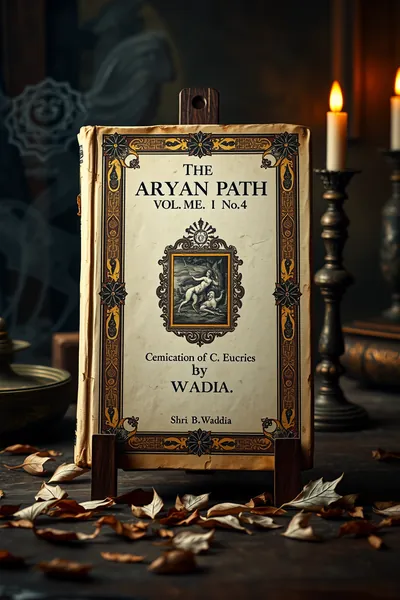
Healing And Occult Science
 78
78

Healing And Occult Science
J. Croiset Van Uchelen's 1947 treatise, Healing And Occult Science, offers a fascinating, if somewhat dated, perspective on the intersection of esoteric knowledge and physical well-being. The strength of the work lies in its earnest attempt to bridge the gap between the material and the spiritual aspects of health, presenting a unified theory of healing that predates many modern holistic approaches. Van Uchelen's exploration of subtle energies and their impact on the physical body is particularly compelling. However, the limitation is the inherent difficulty in verifying its more speculative claims within a contemporary scientific framework, and the language, while scholarly, can feel dense to a modern reader unfamiliar with early 20th-century occult discourse. A passage discussing the influence of planetary alignments on individual vitality, while intriguing, exemplifies the book's unique but challenging perspective. Ultimately, it serves as a valuable historical document for those studying the evolution of esoteric healing practices.
📝 Description
78
J. Croiset Van Uchelen's 1947 book, Healing And Occult Science, connects esoteric principles with physical well-being.
This 1947 work by J. Croiset Van Uchelen proposes that health is influenced by spiritual and energetic factors, moving beyond conventional medical views. It suggests that true healing requires attention to these subtle dimensions alongside the physical. The book is for those interested in the esoteric basis of health. It appeals to students of occult philosophy, alternative therapy practitioners, and anyone seeking to grasp the connection between consciousness, spirit, and the body. Readers should be open to metaphysical ideas and the possibility of non-material causes for physical ailments.
Van Uchelen integrates occult science with therapeutic methods. The book details concepts like the vital force, its flow, and blockages as they relate to health. It also considers how thought forms and psychic influences contribute to illness and recovery. The energetic anatomy of the human, including subtle bodies and their physical correspondences, is examined. This provides a framework for healing through these energetic systems.
Published in 1947, Healing And Occult Science emerged during a period of renewed interest in spiritualism and esoteric thought, influenced by movements like Theosophy. This era saw a growing critique of purely materialistic scientific explanations, prompting many to seek alternative understandings of life and illness. Van Uchelen's work fits into this intellectual current by blending occult science with healing practices. It represents a synthesis of scientific inquiry and spiritual exploration common in mid-20th century esoteric circles.
💡 Why Read This Book?
• Gain an understanding of the "vital force" concept as presented by Van Uchelen, exploring how its manipulation was believed to be central to healing in esoteric traditions of the 1940s. • Discover the book's perspective on "thought-forms" and their potential impact on physical ailments, offering a unique esoteric lens on psychosomatic influences. • Examine the book's framework for understanding the human energetic anatomy, providing insight into historical esoteric models of health and disease beyond the purely physical.
⭐ Reader Reviews
Honest opinions from readers who have explored this book.
❓ Frequently Asked Questions
What is the primary focus of J. Croiset Van Uchelen's Healing And Occult Science?
The book's primary focus is on exploring the connection between occult science, subtle energies, and the process of healing. It posits that spiritual and energetic factors play a significant role in physical health and disease, going beyond conventional medical understandings prevalent in 1947.
When was Healing And Occult Science first published?
Healing And Occult Science was first published in 1947. This places it within a specific historical context of esoteric thought and early 20th-century spiritual inquiry.
Does the book offer practical healing techniques?
While it lays out theoretical frameworks and discusses principles, the book primarily focuses on the philosophical and scientific underpinnings of esoteric healing. Practical application often requires interpretation and further study by the reader, drawing on the concepts presented.
Who is J. Croiset Van Uchelen?
J. Croiset Van Uchelen was an author and thinker interested in occult philosophy and its relation to human well-being. His work from 1947 reflects the esoteric intellectual currents of his time.
Is this book suitable for beginners in occult studies?
It can be challenging for absolute beginners due to its dense prose and specific terminology. However, for those with a foundational interest in esoteric subjects and a willingness to engage with complex ideas, it offers valuable historical perspective.
What is the relationship between occult science and healing in this book?
Van Uchelen argues that occult science provides a deeper understanding of the energetic and spiritual forces that govern life and health. Healing, therefore, is seen not just as a physical intervention but as a process involving these subtle, occult principles.
🔮 Key Themes & Symbolism
The Vital Force
The work explores the concept of a universal life force, akin to prana or chi, as the fundamental principle underlying all existence and health. Van Uchelen posits that imbalances or blockages in this vital force are primary causes of illness. The book details how this energy permeates the physical body and its subtle counterparts, suggesting that healing involves restoring the natural flow and equilibrium of this essential energetic current. Understanding its nature and function is presented as key to esoteric therapeutic practices.
Energetic Anatomy
Healing And Occult Science explores the esoteric understanding of the human being as more than just a physical organism. It discusses the existence of subtle bodies and energy centers (chakras, though not always by name) that are intrinsically linked to physical health. The book maps these energetic structures and their correspondences, explaining how disturbances in these finer vehicles can manifest as physical ailments, and how working with them offers a path to recovery.
Thought and Manifestation
A significant theme is the power of thought and consciousness in shaping reality, particularly concerning health. Van Uchelen examines how mental states, beliefs, and even subconscious patterns can create or exacerbate physical conditions. The concept of 'thought-forms' is explored, suggesting that concentrated mental energy can have tangible effects on the individual's energetic field and, consequently, their physical health, highlighting the mind-body connection from an occult perspective.
Spiritual Causation of Disease
Moving beyond purely material explanations, the book posits that certain illnesses have their roots in spiritual or karmic factors. It suggests that disease can be a manifestation of deeper spiritual lessons or imbalances that require a holistic approach to address. This perspective invites readers to consider the metaphysical dimensions of suffering and healing, encouraging a broader understanding of well-being that encompasses spiritual growth.
💬 Memorable Quotes
Direct passages from the work, attributed to the author.
“The physical body is but the outermost manifestation of a more complex energetic and spiritual structure.”
— This statement expresses the book's core premise: that true understanding of health and disease requires looking beyond the tangible body to the subtle energetic and spiritual layers that constitute a human being.
“Consciousness acts as a potent force in the manifestation and resolution of ailments.”
— This interpretation emphasizes the book's focus on the mind-body connection, suggesting that mental states and conscious intention play a critical role in both developing and overcoming physical conditions.
“Occult science offers a map to the unseen forces influencing human health.”
— This conveys the book's purpose: to present esoteric knowledge as a systematic discipline capable of explaining the hidden dynamics that affect physical well-being, much like a cartographer maps unknown territories.
“Healing is the restoration of energetic harmony.”
— This concise idea defines healing not as a mere physical repair but as a process of re-establishing balance and coherence within the individual's energetic system.
💡 Key Ideas
Editorial paraphrase of the work's core concepts — not direct quotes.
Imbalance in the vital fluid precedes physical symptomatology.
This paraphrased concept highlights the idea that before any physical signs of illness appear, there is a disruption in the subtle life force or energy that sustains the body.
🌙 Esoteric Significance
Tradition
This work fits within the broad stream of Western Esotericism, drawing heavily on concepts found in Hermeticism, Theosophy, and vitalist philosophies. It extends the Hermetic principle of 'As Above, So Below' to the field of health, suggesting that cosmic and subtle influences directly impact the physical body. It departs from purely religious dogma by framing healing within a scientific, albeit occult, methodology, aiming to provide a systematic understanding of spiritual influences on well-being.
Symbolism
While not explicitly detailing many symbols, the book's core concepts revolve around the 'vital force' (often symbolized by light, flow, or breath) and the energetic anatomy, which can be understood through symbols like lotuses or wheels representing energy centers. The idea of 'thought-forms' can be visualized as ephemeral, energetic constructs. These elements collectively symbolize the interconnectedness of the unseen spiritual realms with the tangible physical manifestation of health.
Modern Relevance
Contemporary practices in energy healing, such as Reiki and acupuncture, echo Van Uchelen's emphasis on the vital force and energetic meridians. Modern consciousness studies and the burgeoning field of psychoneuroimmunology (PNI) also resonate with the book's exploration of the mind's influence on physical health. Thinkers and practitioners exploring the intersection of spirituality and medicine continue to find value in its historical perspective on holistic healing.
👥 Who Should Read This Book
• Students of esoteric philosophy: Those interested in the historical development of occult thought concerning health will find this text informative, particularly its 1940s perspective. • Practitioners of energy medicine: Individuals involved in modalities like Reiki, acupuncture, or therapeutic touch can gain a deeper theoretical understanding of the subtle energies they work with. • Comparative religion and history of medicine researchers: Scholars seeking to understand alternative healing systems and the evolution of mind-body concepts will find valuable insights into mid-20th-century esoteric discourse.
📜 Historical Context
Published in 1947, J. Croiset Van Uchelen's Healing And Occult Science emerged during a period when interest in esoteric philosophy was gaining momentum, particularly in the wake of movements like Theosophy and Anthroposophy. This era saw a growing dissatisfaction with purely materialistic scientific paradigms, leading many to explore alternative systems of thought that could explain phenomena beyond empirical measurement. Van Uchelen's work contributed to a burgeoning field of occult medicine and psychical research, seeking to integrate spiritual principles with therapeutic practices. Contemporaries like Alice Bailey were exploring similar themes of spiritual healing and cosmic forces, though often with a different emphasis. The book’s reception likely aligned with existing esoteric circles, offering a framework for understanding illness as a consequence of energetic or spiritual disharmony, a perspective often at odds with mainstream medical views of the time.
📔 Journal Prompts
The concept of the vital force: How does its perceived flow or blockage relate to your own physical sensations?
Energetic anatomy: Reflect on the book's description of subtle bodies and their connection to physical health.
Thought-forms: Consider the potential influence of your own concentrated thoughts on your well-being.
Spiritual causation of disease: Explore how metaphysical perspectives might alter your understanding of illness.
The occult science map: How does Van Uchelen's framework differ from conventional medical maps of the body?
🗂️ Glossary
Vital Force
The fundamental energetic principle believed to animate all living beings. In the context of the book, its harmonious flow is essential for health, while its disruption leads to disease.
Subtle Bodies
Non-physical aspects or layers of the human organism, such as the etheric, astral, or mental bodies, which are believed to influence and be influenced by the physical body.
Thought-Forms
Energetic constructs or patterns created by focused thought and emotion, believed to have a tangible influence on the individual's energetic field and physical health.
Energetic Anatomy
The study of the body's non-physical energy systems, including channels, centers, and subtle bodies, and their relationship to physical health and illness.
Occult Science
A term used to denote a body of knowledge concerning hidden or secret principles governing the universe and human existence, often involving spiritual, energetic, and metaphysical laws.
Psychic Influences
Forces or energies originating from consciousness, thoughts, or emotions, which can impact an individual's well-being, particularly in an esoteric context.
Holistic Healing
An approach to healing that considers the whole person—mind, body, and spirit—rather than focusing solely on physical symptoms or disease.
🔮 Readers Also Liked
Browse all →




More by J. Croiset Van Uchelen
All books →
More Free Theosophy & Anthroposophy Books
View all →