Expanding Horizons
 84
84

Expanding Horizons
James A. Long’s Expanding Horizons offers a welcome departure from the more generalized esoteric guides that proliferated in the late 20th century. Long demonstrates a keen analytical mind, particularly in his dissection of the principles of correspondence as they manifest across different symbolic systems. His exploration of the "As Above, So Below" axiom feels particularly grounded, avoiding the usual platitudes. However, the book's primary limitation lies in its somewhat dry prose; while intellectually rigorous, it occasionally lacks the evocative power that can draw a reader into the more subtle aspects of the material. A passage discussing the stages of alchemical transformation, while accurate, could have benefited from more vivid metaphorical language to convey the experiential dimension. Still, for the serious student, it provides a solid intellectual framework.
📝 Description
84
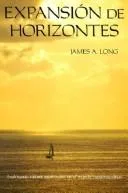
James A. Long's 1995 book, Expanding Horizons, examines the deeper mechanics of mystical traditions.
Expanding Horizons, published in 1995, moves beyond introductory esoteric concepts to analyze the philosophical underpinnings of various mystical traditions. The book builds understanding progressively, guiding readers through complex ideas with clarity and a detailed examination of principles. It is not a superficial overview but a structured analysis for dedicated students of the occult and metaphysical sciences. The work caters to individuals seeking to refine their theoretical understanding and practical application of hermetic principles. Those who appreciate rigorous intellectual engagement with spiritual concepts will find value here, though it is less suited for absolute beginners.
The mid-1990s saw a resurgence of interest in esoteric traditions, with a growing availability of digitized texts. Expanding Horizons emerged during this period, contributing to a trend towards more academic approaches to occult studies. Long's work offers a structured, analytical perspective on subjects often treated with less systematic rigor, distinguishing it from purely devotional or experiential accounts. The book addresses core esoteric doctrines, including the nature of consciousness, sympathetic magic, and the symbolic language of alchemical processes.
Published in 1995, Expanding Horizons emerged during a period of renewed interest in esoteric philosophy. This era saw a shift toward more analytical and academically oriented studies of occult subjects, distinguishing itself from earlier, more devotional or experiential approaches. The book follows a lineage of systematic inquiry into mystical traditions, contributing a structured perspective on concepts often approached less rigorously. It engages with hermetic philosophy and its practical applications, reflecting a broader academic engagement with these subjects.
💡 Why Read This Book?
• Gain a structured understanding of Hermetic correspondence principles, as detailed in the book's analysis of the "As Above, So Below" axiom, offering a clearer framework than general esoteric overviews. • Explore the symbolic language of alchemical transformation with greater depth, moving beyond superficial interpretations to grasp the underlying processes discussed in specific chapters. • Refine your theoretical understanding of consciousness and archetypal forces through Long's analytical approach, which provides a more rigorous intellectual foundation than many introductory texts.
⭐ Reader Reviews
Honest opinions from readers who have explored this book.
❓ Frequently Asked Questions
What esoteric traditions does James A. Long's Expanding Horizons primarily draw from?
Expanding Horizons primarily draws from Hermetic philosophy and alchemical traditions. It explores core doctrines and symbolic language common to these lineages, offering a structured analysis of their principles.
When was Expanding Horizons first published, and is it considered a seminal work from that period?
Expanding Horizons was first published in 1995. While not universally hailed as a seminal text, it is recognized for its analytical depth within the esoteric studies landscape of the mid-1990s.
Does the book offer practical exercises or primarily focus on theory?
The book balances theory and practice. While it delves deeply into theoretical concepts like correspondence and alchemical symbolism, it also addresses the practical application of these ideas for spiritual development.
Who is the ideal reader for Expanding Horizons?
The ideal reader is someone with a foundational knowledge of esoteric subjects seeking to deepen their understanding through rigorous intellectual engagement. It suits dedicated students of occult and metaphysical sciences.
What makes Expanding Horizons different from other esoteric books published around the same time?
Unlike more generalized guides, Expanding Horizons focuses on a structured, analytical examination of esoteric principles, particularly Hermeticism and alchemy, moving beyond introductory overviews to explore deeper mechanics.
Does the book cover Kabbalah or Tarot specifically?
While the book explores principles like correspondence and symbolic language common across various esoteric systems, its primary focus is on Hermetic philosophy and alchemical symbolism, rather than specific detailed treatments of Kabbalah or Tarot.
🔮 Key Themes & Symbolism
Principles of Correspondence
The work thoroughly examines the Hermetic principle of "As Above, So Below," detailing how universal laws are reflected in both the macrocosm and microcosm. Long dissects this concept through various symbolic systems, illustrating its application in understanding the interconnectedness of all things. This theme is central to grasping the book's analytical approach to esoteric knowledge, showing how seemingly disparate phenomena share underlying patterns and structures.
Alchemical Symbolism and Process
Expanding Horizons provides an in-depth look at alchemical symbolism, interpreting the stages and processes not merely as literal chemical transformations but as metaphors for psychological and spiritual evolution. It decodes the language of the Great Work, explaining the significance of key elements and operations. This theme offers readers a framework for understanding personal transformation through the lens of ancient alchemical allegory.
The Nature of Consciousness
A significant portion of the book is dedicated to exploring the many-sided nature of consciousness from an esoteric perspective. Long discusses its various states, its relationship to the subtle bodies, and its role in manifesting reality. This exploration aims to provide readers with a conceptual map of consciousness that integrates spiritual and philosophical viewpoints, moving beyond purely materialistic or psychological definitions.
Practical Application of Esoteric Knowledge
Beyond theoretical exposition, the book emphasizes the practical integration of esoteric principles into daily life and spiritual practice. It touches upon methods for self-development, the cultivation of inner awareness, and the application of sympathetic principles in a conscious manner. This theme highlights the utilitarian aspect of esoteric study, encouraging readers to apply learned concepts for tangible growth.
💬 Memorable Quotes
Direct passages from the work, attributed to the author.
“The universe operates on coherent principles, and understanding these principles allows for conscious participation.”
— This statement expresses the book's core thesis: that esoteric knowledge is not mystical in the sense of being random or unknowable, but rather based on consistent, discoverable laws governing existence.
“Symbolism is the language through which the deeper realities communicate with the conscious mind.”
— This highlights the importance Long places on symbolic systems, such as alchemy, as essential tools for understanding complex spiritual and psychological truths that transcend ordinary language.
“The adept learns to perceive the threads of connection that bind all phenomena.”
— This suggests that the goal of esoteric study, as presented in the work, is to develop a heightened awareness of universal interconnectedness and the subtle forces at play in the cosmos.
“Each stage of the Great Work requires a corresponding purification of the practitioner's awareness.”
— This points to the ethical and personal development aspect integral to alchemical and esoteric progress, indicating that mastery is tied to the individual's internal state and moral refinement.
💡 Key Ideas
Editorial paraphrase of the work's core concepts — not direct quotes.
Transformation is not an external event, but an internal realization mirrored by outer changes.
This paraphrase emphasizes the book's focus on inner work and personal evolution as the primary drivers of change, linking internal shifts to observable, external results in accordance with esoteric laws.
🌙 Esoteric Significance
Tradition
Expanding Horizons is firmly rooted in the Western Esoteric Tradition, specifically drawing heavily from Hermeticism and its alchemical expressions. It aligns with the philosophical underpinnings of texts like the Corpus Hermeticum and the symbolic language developed through centuries of alchemical practice. The work seeks to systematize and clarify these traditions, presenting them not as archaic mysteries but as coherent systems of knowledge applicable to spiritual development.
Symbolism
Key symbols explored include the Ouroboros, representing cyclical processes and self-sufficiency, and the Mercurial principles, symbolizing intellect, transformation, and the bridge between spirit and matter. The stages of alchemical operations, such as calcination, dissolution, and coagulation, are examined as symbolic maps for internal purification and the refinement of consciousness. These symbols function as keys to unlocking deeper layers of meaning within the esoteric worldview.
Modern Relevance
Contemporary practitioners of Hermeticism and modern alchemists continue to draw on Long's analytical approach. His work is relevant to those exploring consciousness studies, comparative mysticism, and the psychological interpretations of alchemical symbolism, echoing similar explorations by figures like Carl Jung. The book's emphasis on structured understanding appeals to researchers and practitioners seeking to integrate esoteric philosophy with modern intellectual frameworks.
👥 Who Should Read This Book
• Students of Hermetic philosophy seeking a structured, analytical text that moves beyond introductory concepts to explore core principles in depth. • Practitioners of alchemy interested in a detailed examination of its symbolic language and its application as a map for inner transformation. • Researchers in comparative religion and esoteric studies looking for a rigorous overview of key doctrines within the Western Esoteric Tradition.
📜 Historical Context
When James A. Long’s Expanding Horizons was released in 1995, the esoteric landscape was significantly influenced by the legacy of figures like Manly P. Hall, whose comprehensive works had long been foundational. The mid-90s also saw a growing interest in academic approaches to occultism, with scholars beginning to analyze these traditions with more critical distance. Competing schools of thought, such as the more New Age-oriented spiritual movements that emphasized direct experience over structured doctrine, presented a different approach. Long’s work emerged as a counterpoint, offering a more systematic and intellectually rigorous exploration of Hermeticism and alchemy. This period was prior to the widespread availability of digital archives, making focused texts like Long's valuable for serious researchers seeking detailed analyses.
📔 Journal Prompts
The principle of correspondence: Identify one instance where 'As Above, So Below' is reflected in your daily life.
Alchemical transformation: Reflect on a personal challenge as a process requiring stages of 'calcination' and 'purification'.
Symbolism of the Ouroboros: Consider the cyclical nature of a recurring pattern in your personal history.
Mercurial principles: How can the intellect be used to bridge a perceived gap between your spiritual beliefs and daily actions?
The adept's perception: What subtle connections between phenomena have you recently begun to notice?
🗂️ Glossary
Hermeticism
A religious, philosophical, and esoteric tradition based on writings attributed to Hermes Trismegistus. It emphasizes principles like "As Above, So Below" and the pursuit of gnosis through understanding the cosmos.
Alchemy
An ancient practice involving the transmutation of substances, often interpreted as a symbolic process of spiritual purification and the transformation of the self towards a higher state of being.
Correspondence
The Hermetic principle stating that there is a relationship between different levels of existence (e.g., macrocosm and microcosm), where patterns in one realm are mirrored in another.
Macrocosm
The universe considered as a whole; the greater world or system, in contrast to the microcosm.
Microcosm
The human being or the individual considered as a miniature representation of the universe or the macrocosm.
Gnosis
Spiritual knowledge or insight, particularly a knowledge of spiritual mysteries that is direct and intuitive, often seen as the key to salvation or liberation in Gnostic and Hermetic traditions.
Great Work
The alchemical term referring to the process of creating the Philosopher's Stone, often interpreted allegorically as the process of spiritual perfection and enlightenment of the alchemist.
🔮 Readers Also Liked
Browse all →






More by James A. Long
All books →
More Free Theosophy & Anthroposophy Books
View all →