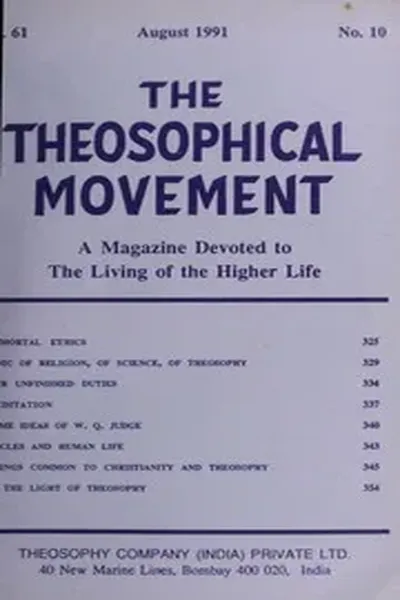
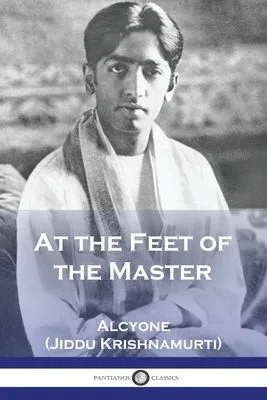
At the Feet of the Master
 78
78

At the Feet of the Master
Alcyone’s At the Feet of the Master offers a stark, unadorned blueprint for spiritual aspirants, eschewing flowery prose for direct, almost stern, instruction. Its strength lies in its unwavering focus on practical self-discipline; the chapter on 'The Four Qualifications' is particularly unyielding in its demands for discrimination and detachment. However, the book’s very directness can feel arid to a reader accustomed to more narrative or metaphorical spiritual texts. The insistence on renunciation, while central to its philosophy, might strike some as overly ascetic for contemporary sensibilities. The concept of the 'Great Sacrifice,' a pivotal point, is presented with a gravity that demands deep contemplation. It is a book that requires commitment, not casual reading.
📝 Description
78
Published in 1986, Alcyone's 'At the Feet of the Master' is a practical guide to spiritual advancement.
This book is a direct instruction for those ready to commit to a disciplined spiritual path. It moves beyond theory to offer practical guidance on the qualities and actions needed for spiritual growth. The work prepares a student for the responsibilities of discipleship by outlining the stages of inner transformation. It is written for individuals who feel a strong inner calling and have progressed beyond simple intellectual interest in the occult. The text provides concrete steps for personal development and an understanding of the path's requirements.
It serves as an introduction to more advanced study and practice, specifically for the earnest seeker. The teachings focus on the Path of Discipleship, emphasizing the need to understand the illusory nature of physical and astral planes. Purification of the self is presented as a necessity for progressing on this path. The book aims to equip readers with the discipline and self-mastery required for spiritual service.
First published in 1986, 'At the Feet of the Master' emerged during a period of significant interest in esoteric and New Age philosophies. The pseudonym Alcyone connects it to the Theosophical Society's early literature, though this work has a distinct didactic tone. It offered accessible spiritual teachings outside traditional religious structures, appearing alongside a wider array of self-help and New Age literature.
💡 Why Read This Book?
• Understand the fundamental requirements for spiritual discipleship, as outlined in the chapter 'The Four Qualifications,' which details the essential mental and ethical disciplines needed to progress beyond superficial spiritual exploration. • Grasp the concept of the 'Great Illusion,' a core teaching that illuminates the deceptive nature of material existence and personal desires, guiding you to discern the truly real from the transient. • Learn about the 'Path of Discipleship' and the 'Great Sacrifice,' a specific esoteric framework that explains the commitment and selflessness required for advanced spiritual work, offering a clear alternative to generalized self-improvement.
⭐ Reader Reviews
Honest opinions from readers who have explored this book.
❓ Frequently Asked Questions
Who was Alcyone, the author of At the Feet of the Master?
Alcyone was a pseudonym used by the author. While the name Alcyone was famously associated with Jiddu Krishnamurti in early Theosophical literature, the specific author of this work is understood to be within the lineage of Theosophical teachings, aiming to provide direct guidance.
What are the 'Four Qualifications' discussed in the book?
The Four Qualifications are essential virtues for spiritual aspirants: Discrimination (the ability to distinguish the real from the unreal), Desirelessness (freedom from attachment to the fruits of action), Good Conduct (including the control of thought, emotion, and action), and Love (unconditional and all-pervading).
What is the 'Great Illusion' mentioned in At the Feet of the Master?
The 'Great Illusion' refers to the deceptive nature of the phenomenal world and the personal ego. The book teaches that what we perceive as solid reality, including our desires and attachments, is transient and ultimately unreal compared to the eternal spiritual truths.
Is At the Feet of the Master a religious text?
While drawing from spiritual and esoteric traditions, it is not a religious text in the conventional sense. It functions more as a practical manual for spiritual development and ethical training, applicable across various spiritual paths rather than adhering to a specific dogma.
When was At the Feet of the Master first published?
The book was first published in 1986, appearing during a period of significant interest in esoteric and New Age philosophies, offering a direct approach to spiritual training.
What is the 'Path of Discipleship' described in the book?
The Path of Discipleship is the specific spiritual journey detailed in the book, where an individual consciously dedicates themselves to service and spiritual evolution under the guidance of a Master. It requires rigorous self-discipline and inner purification.
🔮 Key Themes & Symbolism
The Path of Discipleship
This theme centers on the rigorous training required for an aspirant to become a disciple. It emphasizes that the path is not merely intellectual but demands profound inner transformation. The book outlines specific stages and the necessary virtues, like discrimination and detachment, to progress. It posits that true spiritual advancement involves moving beyond the personal ego and dedicating oneself to a higher purpose, often involving service to humanity under the guidance of a spiritual teacher or Master.
Discrimination and Detachment
Central to the book's teachings are the concepts of discrimination (viveka) and detachment (vairagya). Discrimination is the ability to discern between the eternal, unchanging reality (the Self) and the transient, phenomenal world (matter and illusion). Detachment is the necessary consequence of this discrimination, freeing the aspirant from clinging to worldly possessions, sensory pleasures, and egoic desires. This dual practice is presented as the bedrock upon which all other spiritual disciplines are built.
The Nature of Reality
At the Feet of the Master presents a dualistic view of reality: the Real and the Unreal. The Unreal encompasses the physical and astral planes, along with all their phenomena, including the personal mind and emotions, which are seen as temporary and subject to change. The Real is the eternal, unchanging spiritual principle, the ultimate truth of existence. Understanding this distinction is crucial for shifting one's focus from the illusory to the eternal, a fundamental step in spiritual liberation.
The Fourfold Nature of Man
The book implicitly or explicitly discusses the different planes of existence and the corresponding vehicles or bodies through which a person functions. It highlights the necessity of purifying the lower nature—physical, emotional, and mental—to allow the higher spiritual principles to manifest. This purification process is essential for developing the control and awareness needed to read through the inner worlds and ultimately transcend them.
💬 Memorable Quotes
Direct passages from the work, attributed to the author.
“The Path is one of continuous sacrifice.”
— This statement captures the core idea that spiritual progress demands constant relinquishing of personal desires, egoic attachments, and lower nature tendencies, highlighting the demanding, selfless nature of true spiritual endeavor.
“Discrimination is the power to see the Real.”
— This emphasizes the critical faculty of distinguishing between what is eternal and true (the spiritual) and what is temporary and illusory (the material and phenomenal).
“Desirelessness does not mean apathy.”
— This clarifies that true detachment is not indifference but a state of freedom from craving and attachment, allowing for effective action without being bound by its results.
“The world is a place of suffering for the unenlightened.”
— This highlights the book's perspective that the human experience is characterized by dissatisfaction and pain when viewed through the lens of ignorance and attachment to the transient.
“Love is the only reality.”
— This points to the ultimate spiritual truth presented: that unconditional, divine love is the fundamental essence of existence, transcending all dualities and limitations.
🌙 Esoteric Significance
Tradition
This work firmly belongs within the Western Esoteric Tradition, specifically influenced by Theosophy and its lineage, which itself synthesized elements of Eastern religions (Hinduism, Buddhism) with Western Hermeticism and Neoplatonism. It functions as a foundational text, akin to a primer, for those seeking entry into the more structured paths of spiritual discipleship, emphasizing inner purification and ethical development as prerequisites for higher knowledge.
Symbolism
Key symbols include the 'Path' itself, representing the arduous journey of spiritual evolution; the 'Master,' symbolizing the enlightened guide or realized being; and the 'Sacrifice,' signifying the relinquishing of the lower self for the sake of spiritual realization and service. The book also uses the concept of 'planes' (physical, astral, mental) as symbolic representations of different levels of consciousness and reality that the aspirant must traverse and purify.
Modern Relevance
Contemporary spiritual seekers and practitioners, particularly those involved in lineages influenced by Theosophy, Anthroposophy, or modern interpretations of Hermeticism, continue to draw upon At the Feet of the Master. Its directness and emphasis on self-discipline remain relevant for individuals seeking practical, non-dogmatic guidance on cultivating virtues like discernment and detachment in an increasingly materialistic world.
👥 Who Should Read This Book
• Aspiring students of esoteric philosophy seeking a clear, practical guide to the initial stages of spiritual development and the qualities required for discipleship. • Individuals feeling a strong inner calling to serve a higher purpose who need concrete instructions on purifying their lower nature and developing self-mastery. • Researchers of spiritual traditions looking to understand the Theosophical influence on modern esoteric thought and its emphasis on ethical training as a foundation for spiritual growth.
📜 Historical Context
The 1986 publication of At the Feet of the Master occurred within a vibrant, albeit fragmented, esoteric landscape. The Theosophical movement, though past its peak influence, had laid significant groundwork for popularizing Eastern philosophies and spiritual concepts in the West. This book, appearing under a name historically linked to Theosophy, tapped into a continuing search for practical spiritual guidance that moved beyond mere intellectualism. It stood in contrast to the more psychologically focused self-help trends of the era and the burgeoning New Age movement, offering a more disciplined, almost monastic, approach. While authors like Helena Blavatsky had introduced complex metaphysical systems, Alcyone’s work provided a distilled, actionable primer for serious aspirants, distinct from the more generalized spiritual literature flourishing at the time.
📔 Journal Prompts
The 'Great Sacrifice' as a concept: what personal attachments does it ask you to examine?
Reflect on your current capacity for 'Discrimination' between the real and the unreal in your daily life.
How does the idea of 'Desirelessness' challenge your current perceptions of happiness and fulfillment?
Consider the 'Path of Discipleship' as presented: what are the most significant internal obstacles you foresee?
Analyze the 'Great Illusion' in the context of your own life experiences and perceptions.
🗂️ Glossary
The Master
A highly evolved spiritual being who has completed the Path of Discipleship and serves as a guide and teacher to those on the spiritual journey. They represent perfected wisdom and compassion.
The Path
The spiritual journey of evolution and self-realization, specifically the Path of Discipleship, which requires rigorous discipline, self-purification, and service.
Discrimination (Viveka)
The faculty of distinguishing between the eternal, unchanging Reality (the Self) and the transient, phenomenal world (matter, illusion).
Desirelessness (Vairagya)
A state of freedom from craving and attachment to the results of actions or worldly possessions, stemming from a deep understanding of impermanence.
The Great Sacrifice
The profound act of renouncing personal desires and the lower self for the sake of spiritual progress and the service of humanity.
The Great Illusion
The pervasive deception of the material world and the ego, which obscures the true spiritual reality and binds individuals to suffering.
Real and Unreal
The fundamental duality presented: the Real is the eternal spiritual essence, while the Unreal comprises all transient phenomena of the material and psychic worlds.
🔮 Readers Also Liked
Browse all →






More by Alcyone
All books →
More Free Theosophy & Anthroposophy Books
View all →