52,000+ Esoteric Books Free + Modern Compare Prices
Home Collections Jewish Mysticism
📖

Jewish Mysticism and Kabbalah Books

Jewish mysticism books trace the development of Kabbalistic thought from early Hebraic literature to modern interpretations. Works like Christian D. Ginsburg's 'The Kabbalah: its doctrines, development, and literature' and Gershom Scholem's 'On the Kabbalah and Its Symbolism' provide foundational knowledge and scholarly analysis. This guide outlines key texts for understanding the doctrines, practices, and literature of Jewish mysticism, offering a structured reading path for all levels of study.

Top Jewish Mysticism Books

25 Jewish Mysticism books
The Zohar
📖
The Zohar
Harry Sperling; Maurice Simon
4.4
73
TRENDING
Ficciones
📖
Ficciones
Jorge Luis Borges
4.4
75
Parachemy
📖
Parachemy
Paracelsus Research Society
4.0
61
YOU ARE NOT THE OUTSIDE
📖
YOU ARE NOT THE OUTSIDE
Rabbi Michael-ben-Pesach Portnaar/R
4.3
72

What is Jewish Mysticism?

Jewish mysticism, primarily known as Kabbalah, is a set of esoteric traditions and spiritual practices aimed at understanding the divine nature and the creation of the universe. It explores hidden meanings within Jewish texts, particularly the Torah, through symbolic interpretation and contemplative methods. Key concepts include the Sefirot (divine emanations), the nature of God, and the soul's journey. This tradition seeks direct experience of the divine and a deeper connection to the spiritual realms.

Best Books for Complete Beginners

For those new to Jewish mysticism, starting with accessible introductions is crucial. Christian D. Ginsburg's 'The Kabbalah: its doctrines, development, and literature' offers a comprehensive overview of the historical and doctrinal aspects. Gershom Scholem's 'On the Kabbalah and Its Symbolism' provides essential scholarly context, explaining core concepts clearly. 'The Bahir', often translated and discussed, offers early mystical narratives. These texts lay the groundwork for understanding the complex symbolism and philosophical underpinnings of Kabbalah.

Intermediate Reading

Moving beyond introductions, intermediate students can delve into primary texts and more detailed analyses. 'Introduction To The Book Of Zohar' (2014) and 'THE ZOHAR' by elgamelyan provide access to the foundational Kabbalistic text. David Bakan's 'Sigmund Freud And The Jewish Mystical Tradition' explores the psychological dimensions and historical reception of Kabbalistic ideas. Robert Wang's 'The Qabalistic Tarot' (1983) connects Kabbalistic symbolism to Tarot, offering a practical, visual approach for deeper study.

Classical / Advanced Texts

Advanced study requires engagement with seminal works and historical compilations. 'Kabbala Denudata, the Kabbalah Unveiled' (1912) by Samuel Liddell MacGregor Mathers and Christian Knorr von Rosenroth is a significant collection of Kabbalistic writings. The Zohar, particularly the Aramaic English version by Shimon Bar Yohai and Moses De León, is the central text. Works by Jacob Boehme, such as 'Aurora' (2009) and 'Mysterium Magnum' (2009), though Christian in origin, show the influence and cross-pollination of Kabbalistic ideas in Western esotericism.

Reading Order — Step by Step

Begin with an overview: Christian D. Ginsburg's 'The Kabbalah' (1907/2014) or Gershom Scholem's 'On the Kabbalah and Its Symbolism'. Weeks 3-4, explore 'The Bahir' (translated) for early concepts. Month 2, engage with 'Introduction To The Book Of Zohar' (2014) and 'THE ZOHAR' (elgamelyan) to understand the core text. For month 3, consult 'Kabbala Denudata' (1912) and David Bakan's 'Sigmund Freud And The Jewish Mystical Tradition' for historical depth and comparative analysis. Supplement with Robert Wang's 'The Qabalistic Tarot' (1983) for symbolic connections.

Frequently Asked Questions

Which Jewish mysticism book should I read first?

For a solid foundation, start with Christian D. Ginsburg's 'The Kabbalah: its doctrines, development, and literature' (1907/2014) or Gershom Scholem's 'On the Kabbalah and Its Symbolism'. These provide essential context before diving into primary texts.

What is the difference between Kabbalah and Jewish Mysticism?

Kabbalah is the primary system of Jewish mysticism. While 'Jewish mysticism' is a broader term, Kabbalah refers to its specific traditions, texts (like the Zohar), and practices developed over centuries within Judaism.

Is the Zohar difficult to read?

The Zohar is considered a complex text, originally written in Aramaic with dense symbolism. Translations like 'The Zohar Aramaic English' or introductory guides like 'Introduction To The Book Of Zohar' are recommended for accessibility.

Are there modern interpretations of Jewish mysticism?

Yes, while foundational texts are ancient, scholars like Gershom Scholem and authors exploring connections to psychology, like David Bakan, offer modern analytical perspectives. Contemporary esoteric traditions also draw on Kabbalistic concepts.

What is the role of symbolism in Jewish mysticism?

Symbolism is central. Kabbalists use Hebrew letters, numbers (Gematria), and divine names to interpret the Torah and understand the structure of reality, the Sefirot, and the relationship between the human and divine realms.

Can non-Jews study Jewish mysticism?

Historically, study was often restricted, but modern approaches are more open. Texts like Ginsburg's and Scholem's are scholarly and accessible. However, understanding the cultural and religious context is vital for respectful study.

How does Kabbalah relate to magic?

Some branches of Kabbalah, particularly in later esoteric traditions, have incorporated magical practices (e.g., 'Kabbalah Magic and the Great Work of Sel'). However, mainstream Kabbalah focuses on theological and contemplative understanding rather than practical magic.

What are the main goals of Kabbalistic practice?

The primary goals include achieving a deeper understanding of God and creation, experiencing divine presence, spiritual elevation, and contributing to 'Tikkun Olam' (repair of the world) through ethical living and spiritual discipline.

Why Each Book Matters

Texe Marrs books

Texe Marrs books

This entry refers to a collection or compilation of works by Texe Marrs, a controversial author known for his writings on conspiracy theories, Christian fundamentalism, and anti-Semitic views. His books typically explore topics such as globalism, secret societies, and alleged occult influences in contemporary politics and religion. These texts are often presented as exposés rather than scholarly works on Jewish mysticism.

The Jews In China James Finn

The Jews In China James Finn

"The Jews In China James Finn" likely refers to a historical study or account concerning the Jewish communities that existed in China, particularly focusing on the work of James Finn, a British consul who documented their presence in the 19th century. This text would be a historical and ethnographic work, providing insights into the diaspora and cultural interactions of Jewish communities, rather than Jewish mysticism.

Work of the Chariot

Work of the Chariot

"Work of the Chariot" likely refers to Merkabah mysticism, one of the earliest forms of Jewish mysticism, which focuses on visionary experiences of the divine throne-chariot described in Ezekiel's vision. Practitioners sought to ascend through heavenly realms to perceive God's glory. This text would explore the practices, visions, and theological implications of these ancient Jewish esoteric traditions.

The cold war

The cold war

This document, titled "The cold war," likely pertains to the historical geopolitical conflict between the United States and the Soviet Union. Its inclusion in an esoteric library might suggest an unconventional or allegorical interpretation of the period, or perhaps a study of hidden influences during that era. Without further context, its direct connection to Jewish mysticism or occult studies remains speculative, focusing instead on political history.

Jew of the World

Jew of the World

"Jew of the World" is a title that could encompass a wide range of themes, from historical narratives about Jewish diaspora to philosophical discussions on Jewish identity and global influence. Without specific author or content details, its connection to Jewish mysticism is uncertain. It might explore the spiritual journey of a Jew in the wider world or reflect on universal aspects of Jewish experience.

eng_t_ml-sefer-zohar

eng_t_ml-sefer-zohar

This entry, "eng_t_ml-sefer-zohar," indicates an English translation of the "Sefer Zohar," or The Book of Splendor, which is the foundational text of Kabbalah. It contains mystical interpretations of the Torah, allegorical narratives, and discussions on the nature of God, the Sefirot, and the soul. This particular title suggests a focus on providing the text in a machine-readable or scholarly format for study.

Jewish Irgun And Lehi Gangs

Jewish Irgun And Lehi Gangs

"Jewish Irgun And Lehi Gangs" refers to historical accounts or analyses of the Irgun and Lehi, two Jewish paramilitary organizations that operated in Mandate Palestine. These groups were involved in armed resistance and political activities during the mid-20th century. This text would be a historical and political document, entirely unrelated to the study of Jewish mysticism or esoteric traditions.

Kabbalah Masons And America

Kabbalah Masons And America

"Kabbalah Masons And America" explores the speculative connections between Kabbalah, Freemasonry, and the founding principles of the United States. This type of research often delves into the esoteric symbolism and philosophical influences that may have shaped American ideals and secret societies. It investigates how Kabbalistic ideas might have permeated Western esoteric traditions, including Masonic lodges.

Sefer Yetzirah 931 C.E.

Sefer Yetzirah 931 C.E.

"Sefer Yetzirah 931 C.E." refers to one of the earliest and most enigmatic texts of Jewish mysticism, the Book of Creation. This version's title specifies a date, possibly indicating a particular edition or manuscript. The "Sefer Yetzirah" describes the creation of the universe through the manipulation of the 22 Hebrew letters and the 10 Sefirot, laying foundational concepts for later Kabbalistic thought.

Constantine of Pisa

Constantine of Pisa

by Constantinus Pisanus

"Constantine of Pisa" refers to the works or teachings attributed to Constantinus Pisanus, who was a figure associated with alchemical and hermetic traditions. His writings often explored the transformation of metals and the pursuit of the Philosopher's Stone, drawing from a blend of ancient Greek, Arabic, and early medieval European esoteric thought. This text would be relevant to the history of Western alchemy.

Alchemie und Kabbala

Alchemie und Kabbala

by Gershom Scholem

Gershom Scholem's "Alchemie und Kabbala" (Alchemy and Kabbalah) is a pioneering work that explores the historical and conceptual links between these two seemingly disparate esoteric traditions. Scholem, the foremost scholar of Jewish mysticism, meticulously investigates how Kabbalistic ideas influenced alchemical thought and vice versa, particularly in Jewish and Christian mystical circles.

The Zohar

The Zohar

by Harry Sperling; Maurice Simon

This influential translation of "The Zohar" by Harry Sperling and Maurice Simon made the core text of Jewish mysticism accessible to a wider English-speaking audience. Published in the early 20th century, their work is often considered a standard reference for students of Kabbalah. The Zohar itself is a collection of mystical interpretations and discourses, primarily attributed to Rabbi Shimon bar Yochai in the 2nd century CE, though its final redaction is from the 13th century.

Jewish Mysticism

Jewish Mysticism

by Ira Robinson

Ira Robinson's "Jewish Mysticism" serves as an excellent academic introduction to the rich and diverse traditions of Jewish esoteric thought. This book provides a comprehensive overview of key figures, texts, and movements, from ancient Merkabah mysticism to medieval Kabbalah and Hasidism. It offers a structured approach to understanding the historical development and core concepts of this profound spiritual path.

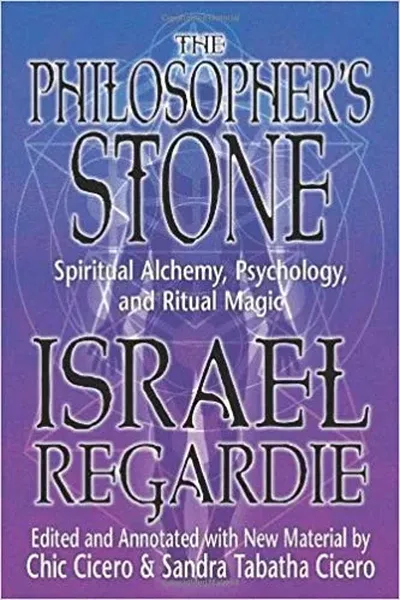
The Philosopher's Stone

The Philosopher's Stone

by Israel Regardie

Israel Regardie's "The Philosopher's Stone" explores the alchemical quest for spiritual transformation and enlightenment, often drawing parallels between the alchemical process and psychological development. Regardie, a prominent figure in the Western esoteric tradition and the Golden Dawn, integrated Kabbalistic and Hermetic principles into his understanding of alchemy. This work bridges practical occultism with mystical philosophy.

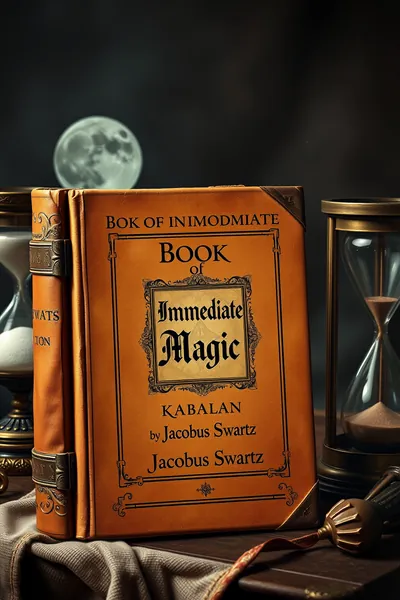
Bookof Immediate Magic

Bookof Immediate Magic

by Jacobus Swartz

"Bookof Immediate Magic" by Jacobus Swartz likely presents a system of practical magic designed for quick and direct results. Swartz's work often focuses on ritual magic, spellcraft, and the application of esoteric principles for immediate manifestation. This text would be of interest to practitioners of ceremonial magic and those seeking practical occult techniques.

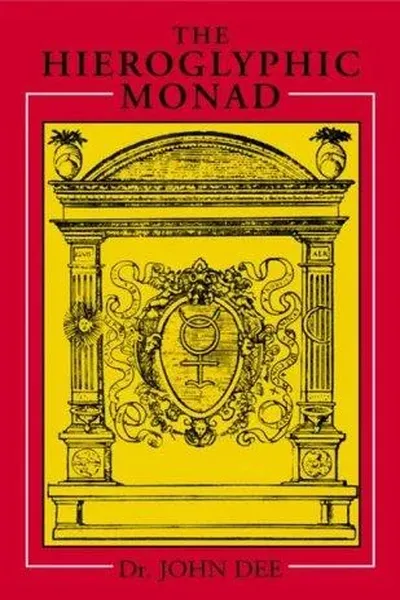
Hieroglyphic Monad

Hieroglyphic Monad

by John Dee

John Dee's "Hieroglyphic Monad" is a complex treatise on mathematics, magic, and Kabbalah, presented as a single, potent symbol. Published in 1564, this work outlines a universal language and philosophical system intended to unlock the secrets of creation and divine unity. Dee, an influential Elizabethan scholar, infused his Monad with Hermetic, alchemical, and Kabbalistic symbolism.

Ficciones

Ficciones

by Jorge Luis Borges

Jorge Luis Borges's seminal collection of short stories, "Ficciones," is renowned for its intricate philosophical puzzles, labyrinthine narratives, and metafictional elements. While not a direct text on Jewish mysticism, Borges frequently incorporated Kabbalistic concepts, such as infinite libraries and divine emanations, into his literary landscapes. His stories often explore themes of reality, identity, and the nature of knowledge, resonating with mystical inquiries.

ILLUMINATI RACIAL DOCTRINE

ILLUMINATI RACIAL DOCTRINE

by Loki Hulgaard

"ILLUMINATI RACIAL DOCTRINE" by Loki Hulgaard is a text likely situated within conspiracy theory literature, focusing on alleged doctrines of the Illuminati concerning race. Such works typically explore speculative connections between secret societies, historical events, and social hierarchies. This book would not be a primary source for Jewish mysticism but rather a text engaging with controversial conspiracy narratives.

Parachemy

Parachemy

by Paracelsus Research Society

"Parachemy" explores the alchemical and hermetic traditions, often associated with the work and philosophy of Paracelsus. This text delves into the transformation of matter and spirit, a central theme in Western esotericism. The Paracelsus Research Society focuses on preserving and disseminating the teachings of this influential Renaissance physician and alchemist, whose theories often integrated natural philosophy with mystical insights.

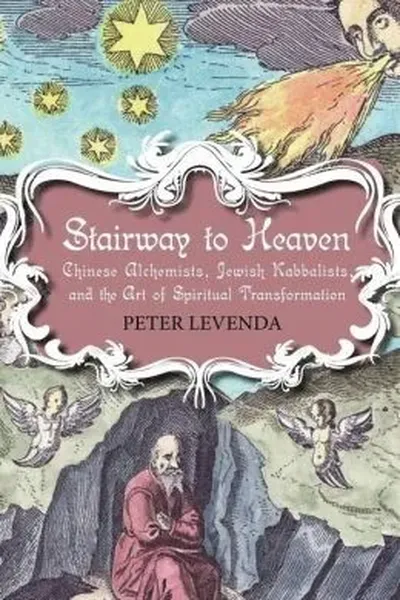
Stairway to heaven

Stairway to heaven

by Peter Levenda

"Stairway to heaven" by Peter Levenda delves into the esoteric underpinnings of various historical events and secret societies. Levenda is known for exploring the connections between occultism, politics, and ancient mysteries across different cultures. While not solely focused on Jewish mysticism, his work often touches upon Kabbalistic themes as they intersect with Western esotericism and magical traditions.

YOU ARE NOT THE OUTSIDE

YOU ARE NOT THE OUTSIDE

by Rabbi Michael-ben-Pesach Portnaar/RaMPeP

"YOU ARE NOT THE OUTSIDE" by Rabbi Michael-ben-Pesach Portnaar/RaMPeP likely offers contemporary spiritual teachings within a Jewish framework. This title suggests a focus on inner spiritual realization and the unity of self with the divine, a common theme in mystical traditions. The author's rabbinic background indicates an approach rooted in traditional Jewish thought, possibly incorporating Hasidic or Kabbalistic insights.

Parsha Notes

Parsha Notes

by Rafi Metz

"Parsha Notes" by Rafi Metz offers commentary and insights on the weekly Torah portion (Parsha). These notes typically explore the scriptural text from various perspectives, including ethical, legal, and sometimes mystical interpretations. While not exclusively a work of Jewish mysticism, such commentaries often draw upon traditional sources that touch upon Kabbalistic themes and deeper spiritual meanings embedded within the Torah.

More simplified magic

More simplified magic

by Ted Andrews

"More simplified magic" by Ted Andrews offers practical guidance on various magical techniques and spiritual practices. Andrews is known for his accessible approach to topics like animal totems, aura reading, and energy work, aiming to empower individuals to connect with the natural and spiritual worlds. This book would provide simplified instructions for personal magical development, rather than a focus on Jewish mysticism.

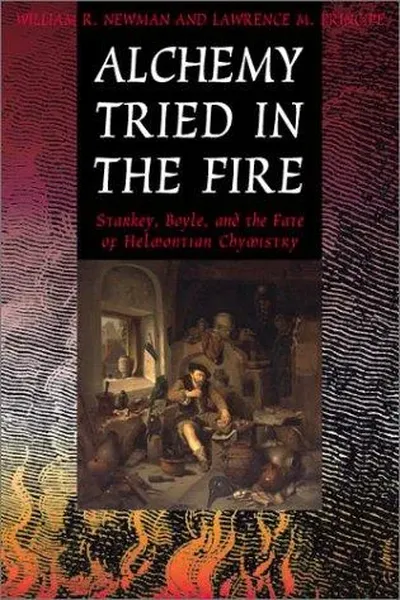
Alchemy tried in the fire

Alchemy tried in the fire

by William R. Newman

"Alchemy tried in the fire" by William R. Newman is a scholarly work that delves into the historical and scientific aspects of alchemy. Newman, a renowned historian of science, meticulously examines the laboratory practices and theoretical frameworks of alchemists throughout history. This book offers a rigorous academic perspective on alchemy, distinguishing its practices from purely mystical interpretations.

THE ZOHAR

THE ZOHAR

by elgamelyan

This rendition of "THE ZOHAR" by elgamelyan presents a significant portion of the foundational text of Kabbalah, offering deep mystical commentaries on the Torah. It is structured as an esoteric interpretation of biblical narratives, revealing layers of divine wisdom. The Zohar, primarily written in Aramaic, explores the nature of God, the creation of the universe, and the human soul's journey. It became a central text for Jewish mysticism from the 13th century onwards.

Esoteric Library
Browse Esoteric Library
📚 All 52,000+ Books 🜍 Alchemy & Hermeticism 🔮 Magic & Ritual 🌙 Witchcraft & Paganism Astrology & Cosmology 🃏 Divination & Tarot 📜 Occult Philosophy ✡️ Kabbalah & Jewish Mysticism 🕉️ Mysticism & Contemplation 🕊️ Theosophy & Anthroposophy 🏛️ Freemasonry & Secret Societies 👻 Spiritualism & Afterlife 📖 Sacred Texts & Gnosticism 👁️ Supernatural & Occult Fiction 🧘 Spiritual Development 📚 Esoteric History & Biography
Esoteric Library
📑 Collections 📤 Upload Your Book
Account
🔑 Sign In Create Account
Info
About Esoteric Library