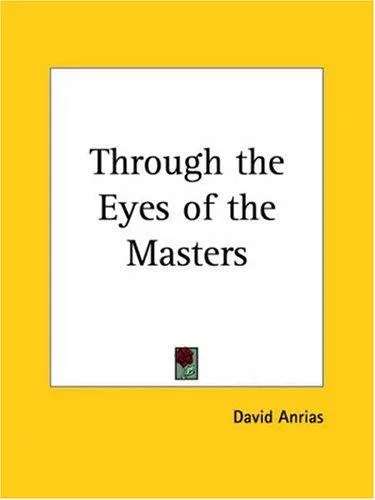
Through the Eyes of the Masters
 74
74

Through the Eyes of the Masters
David Anrias's *Through the Eyes of the Masters* offers a challenging, if somewhat dated, exposition on the internal journey of spiritual growth. The book's strength lies in its persistent focus on the inner work, particularly its detailed descriptions of the psychological hurdles faced by the aspirant. For instance, the section discussing the "Great Illusion" provides a compelling, if dense, analysis of how the ego constructs barriers to true perception. However, the prose can occasionally become dense, and the reliance on specific esoteric terminology without extensive glossing might alienate readers unfamiliar with Theosophical or similar frameworks. A notable limitation is the lack of direct engagement with contemporary philosophical discourse, even for its time. Despite these points, the work serves as a valuable historical document for understanding post-Theosophical esoteric thought, urging a shift from external seeking to internal realization.
📝 Description
74
David Anrias published 'Through the Eyes of the Masters' in 1978, questioning reality's nature.
Published in 1978, David Anrias's 'Through the Eyes of the Masters' offers a philosophical look at spiritual growth and reality. It is not a simple self-help guide. Instead, it uses esoteric traditions to map out the spiritual seeker's path. The book presents ideas that challenge common views, aiming to deepen the reader's understanding of inner life and the forces influencing human experience.
This work is for those serious about esoteric philosophy and comparative religion. It will appeal to readers seeking more than surface-level explanations of spiritual matters. They desire a thorough, yet understandable, look at complex metaphysical ideas. Those familiar with Eastern philosophies, Western occultism, or the history of mystical thought will find much to consider. It is especially suited for readers who enjoy a writing style that mixes philosophical discussion with vivid descriptions.
Anrias's book appeared in 1978, a time of renewed interest in spiritual and occult studies. It followed the counter-culture movements of the 1960s and emerged alongside literature from figures like Helena Blavatsky and Alice Bailey, who spread Theosophical ideas. While authors such as Manly P. Hall examined comparative mythology and symbolism, Anrias focused on the internal experience of the spiritual seeker, moving beyond pure historical or doctrinal analysis. The book addressed intellectual trends aiming to connect Eastern mysticism with Western philosophy, providing an alternative to prevailing materialistic or purely religious views.
💡 Why Read This Book?
• Understand the concept of the "Inner Ruler" as presented by Anrias, gaining insight into the principle of inner guidance in spiritual development, a concept he elaborates on extensively. • Grasp the challenges of the psychic path, learning about the specific obstacles and illusions detailed in the text, which differ from common New Age portrayals. • Explore the "Great Illusion" as described in the book, recognizing how deeply ingrained mental constructs can obscure spiritual truth, as analyzed through Anrias's esoteric lens.
⭐ Reader Reviews
Honest opinions from readers who have explored this book.
❓ Frequently Asked Questions
What is the primary focus of David Anrias's 'Through the Eyes of the Masters'?
The book primarily focuses on the inner journey of spiritual development, exploring consciousness, perception, and the stages of evolution from an esoteric perspective. It aims to illuminate the path of the spiritual aspirant through concepts drawn from mystical traditions.
When was 'Through the Eyes of the Masters' first published and by whom?
The book was first published in 1978. The author is David Anrias.
Is 'Through the Eyes of the Masters' suitable for beginners in esoteric studies?
While accessible to those with some background in comparative religion or philosophy, beginners might find the dense terminology and conceptual framework challenging. It is better suited for serious students seeking a deeper, more rigorous exploration.
What kind of spiritual traditions does 'Through the Eyes of the Masters' draw upon?
The work draws upon esoteric traditions, particularly those influenced by Theosophy and Eastern philosophies. It discusses concepts like subtle bodies and spiritual evolution common within these lineages.
Does the book offer practical exercises or meditation techniques?
The book is more philosophical and conceptual than practical. While it describes the inner states and challenges of spiritual development, it does not typically offer direct instructions for exercises or meditation techniques.
What is the significance of the 'Masters' mentioned in the title?
The 'Masters' refer to advanced spiritual beings or guides within esoteric thought who are believed to have attained a high level of spiritual evolution and can assist humanity. Anrias explores their role in guiding the spiritual aspirant.
🔮 Key Themes & Symbolism
The Inner Ruler
This theme centers on the concept of an "Inner Ruler," representing the higher self or divine principle that guides the spiritual aspirant. Anrias elaborates on how cultivating awareness of this inner authority is crucial for working through the complexities of spiritual growth and overcoming the limitations of the lower ego. It's presented not as an external deity but as an inherent, albeit often unrecognized, aspect of the individual's true nature, guiding one through the challenges of the path.
The Great Illusion
Anrias addresses the "Great Illusion," a pervasive misperception of reality rooted in material attachment and ego identification. This theme explains how ordinary consciousness, bound by sensory experience and personal desires, creates a distorted view of existence. The book details how recognizing and dismantling this illusion is a primary step towards genuine spiritual awakening and the perception of a higher order of reality.
Stages of Spiritual Evolution
The work maps out the progressive stages an individual undergoes on the path to enlightenment or spiritual mastery. This theme involves understanding the incremental nature of transformation, the psychic and psychological hurdles encountered at each phase, and the role of "Masters" in facilitating this evolution. It emphasizes that spiritual progress is a disciplined, internal process rather than a sudden event.
The Psychic Path and Its Perils
This theme explores the specific challenges associated with developing psychic abilities or heightened awareness. Anrias cautions against the dangers of premature psychic development, ego inflation, and mistaking lower phenomena for true spiritual attainment. The book stresses the importance of a strong ethical foundation and inner discipline to navigate these potentially misleading aspects of the esoteric path safely.
💬 Memorable Quotes
Direct passages from the work, attributed to the author.
“The "Great Illusion" binds us to the material world.”
— This interpretation points to the book's discussion of how our perception of reality is often fundamentally flawed, trapping us in worldly concerns and obscuring deeper truths.
“The psychic path demands discipline and discernment.”
— This reflects Anrias's cautionary approach to psychic development, stressing the need for rigorous self-control and the ability to distinguish genuine spiritual insights from mere psychic phenomena.
“Understanding the subtle bodies is key to comprehending consciousness.”
— This concept points to the book's exploration of the non-physical aspects of human existence and their role in shaping our experience of consciousness and reality.
💡 Key Ideas
Editorial paraphrase of the work's core concepts — not direct quotes.
The "Inner Ruler" is the divine spark that guides us.
This paraphrased concept highlights the book's emphasis on an inherent, higher consciousness within each individual that serves as a true guide, distinct from the personality or ego.
Spiritual growth requires inner transformation, not external acquisition.
This paraphrase captures the core message that true progress on the spiritual path comes from internal change and development rather than accumulating external knowledge or possessions.
🌙 Esoteric Significance
Tradition
The work is deeply rooted in the Theosophical tradition and its subsequent developments, particularly the teachings disseminated by figures like Helena Blavatsky and Alice Bailey. It aligns with the lineage that posits the existence of spiritual hierarchies ("Masters") guiding human evolution and emphasizes a path of inner purification and self-mastery. Anrias's contribution lies in his specific articulation of the psychological challenges and perceptual shifts required for the aspirant, offering a detailed map of the inner landscape.
Symbolism
Key symbols include the "Inner Ruler," representing the divine spark or higher consciousness within, and the "Great Illusion," symbolizing the pervasive misperception of reality due to ego identification and material focus. The concept of "subtle bodies" is also central, referring to the non-physical vehicles of consciousness (e.g., astral, mental bodies) through which the aspirant interacts with different planes of existence and undergoes transformation.
Modern Relevance
Contemporary esoteric practitioners and students of comparative mysticism often reference Anrias's work for its detailed psychological analysis of the spiritual path. Schools of thought focusing on the "Law of Attraction" and consciousness studies, as well as certain branches of Western Hermeticism, find resonance in his exploration of perception and inner guidance. His insights into overcoming egoic limitations remain pertinent for modern self-development and mindfulness practices seeking a deeper, metaphysical dimension.
👥 Who Should Read This Book
• Students of Theosophy and Post-Theosophical Esotericism: Those seeking to understand the development of esoteric thought beyond foundational figures will find Anrias's perspective valuable for its detailed exploration of concepts like the "Inner Ruler." • Comparative Religion Scholars: Individuals studying the evolution of spiritual ideas and the synthesis of Eastern and Western metaphysics can gain insights into how these traditions were interpreted and presented in the late 20th century. • Aspiring Metaphysical Philosophers: Readers interested in rigorous philosophical inquiry into consciousness, perception, and the nature of reality, particularly from an esoteric viewpoint, will appreciate the book's conceptual depth.
📜 Historical Context
Published in 1978, *Through the Eyes of the Masters* emerged during a period of significant revival for esoteric and spiritual studies in the West. This era saw continued interest in the legacy of Theosophy, with authors like Alice Bailey’s works still widely read and discussed. Anrias's book contributed to this milieu by offering a distinct perspective on the spiritual path, focusing on internal transformation. It navigated intellectual currents that sought to synthesize Eastern mystical concepts with Western philosophical inquiry, often in dialogue with or as a reaction against more dogmatic religious or materialistic worldviews. While not directly engaging with the academic mainstream, its ideas circulated within dedicated esoteric communities. The book's reception was primarily within circles already familiar with concepts like karma, reincarnation, and subtle bodies, offering a contemplative approach that differed from more action-oriented occult practices gaining traction at the time.
📔 Journal Prompts
The "Inner Ruler's" guidance in overcoming personal obstacles.
Reflecting on the "Great Illusion" in daily life.
The nature of "subtle bodies" and their influence on perception.
Recognizing the stages of spiritual evolution within one's own experience.
Discernment on the psychic path: distinguishing true insight from illusion.
🗂️ Glossary
Inner Ruler
The divine principle or higher self within the individual, understood as the true guide and source of spiritual authority on the path of development.
Great Illusion
A concept describing the fundamental misperception of reality caused by egoic identification, material attachment, and sensory limitations, obscuring the true nature of existence.
Subtle Bodies
Non-physical vehicles of consciousness (e.g., astral body, mental body) through which an individual interacts with different planes of reality and undergoes spiritual transformation.
Psychic Path
The development of extrasensory perception and heightened awareness, often involving challenges and potential pitfalls that require careful discernment and inner discipline.
Spiritual Aspirant
An individual actively engaged in the pursuit of spiritual knowledge, growth, and ultimate realization or enlightenment.
Ego
In this context, the lower self or personality structure, characterized by self-centeredness, identification with the material world, and often acting as an obstacle to spiritual progress.
Disidentification
The process of detaching one's sense of self from lower aspects, such as the physical body, emotions, or mental constructs, to realize a higher, truer identity.
🔮 Readers Also Liked
Browse all →






More Free Theosophy & Anthroposophy Books
View all →