What is Christian Mysticism?
Christian mysticism focuses on the direct, unmediated experience of the divine within the framework of Christian belief. It emphasizes inner prayer, contemplation, and union with God, often described as a transformative journey of the soul. Unlike theological study, it prioritizes personal encounter and spiritual practice. Key figures sought to articulate this inner life through writings that continue to guide seekers.
Best Books for Complete Beginners
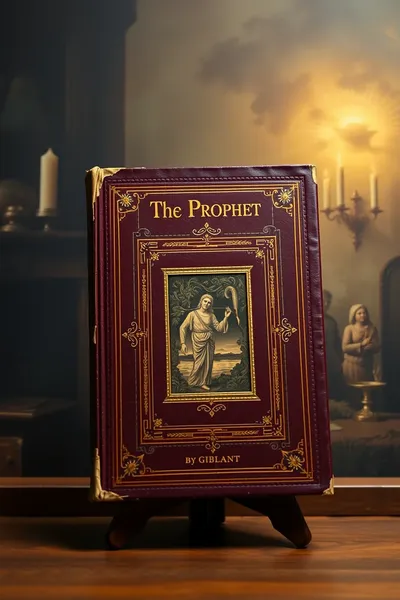
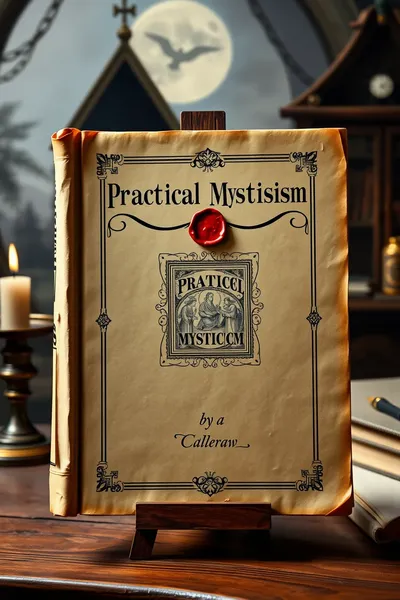
For those new to Christian mysticism, Evelyn Underhill's 'Practical Mysticism' offers a clear, accessible introduction to the principles of inner life. Leo Tolstoy's 'The Kingdom of God Is Within You' presents a radical interpretation of Christian ethics and inner truth, challenging conventional religious structures. Kahlil Gibran's 'The Prophet' provides allegorical parables that touch on spiritual themes relevant to a mystic outlook, while 'The Cell of Self-Knowledge' offers early English mystical treatises for a glimpse into historical practice.
Intermediate Reading
Moving deeper, Robert Alfred Vaughan's 'Hours with the Mystics' provides a historical overview of Christian mystical thought, tracing its development through various eras. William Ralph Inge's 'Light, Life, and Love' presents curated selections from influential German mystics, offering direct access to their writings. Caroline F. E. Spurgeon's 'Mysticism in English Literature' examines how mystical themes have been expressed in literary works, connecting the spiritual to artistic creation.
Classical / Advanced Texts
For advanced study, the compilation 'The Cell of Self-Knowledge' (1521) by Henry Pepwell offers primary source material from early English mystics, providing direct insight into historical contemplative practices. While not strictly Christian, 'The Upanishads' translated by Swami Paramananda, and Zhuangzi's 'Chuang Tzu: Mystic, Moralist, and Social Reformer' offer comparative perspectives on mystical traditions that influenced or paralleled Christian thought.
Reading Order — Step by Step
Begin with Evelyn Underhill's 'Practical Mysticism' for foundational concepts. In weeks 3-4, read Leo Tolstoy's 'The Kingdom of God Is Within You' for an ethical and experiential perspective. Month two can focus on Kahlil Gibran's 'The Prophet' for allegorical wisdom and Robert Alfred Vaughan's 'Hours with the Mystics' for historical context. For month three, engage with William Ralph Inge's 'Light, Life, and Love' and consider the primary sources in 'The Cell of Self-Knowledge'.
Frequently Asked Questions
Which Christian mysticism book should I read first?
Start with Evelyn Underhill's 'Practical Mysticism.' It offers a clear, grounded introduction to the core principles and practices of the mystical path within Christianity, making it ideal for beginners.
What is the difference between Christian mysticism and general mysticism?
Christian mysticism operates within the framework of Christian theology and the figure of Jesus Christ, seeking union with God through Christ. General mysticism may draw from various religious or philosophical traditions, not necessarily adhering to Christian doctrine.
Are Leo Tolstoy's books considered Christian mysticism?
Yes, 'The Kingdom of God Is Within You' is often seen as a form of Christian mysticism, focusing on the inner spiritual experience and ethical teachings of Christ rather than institutional dogma. It emphasizes personal transformation and direct connection to God.
What are the 'German Mystics of the Middle Ages'?
This refers to influential figures like Meister Eckhart, Johannes Tauler, and Henry Suso, who explored profound theological and spiritual concepts, emphasizing direct experience of God and the soul's journey toward Him. William Ralph Inge's collection provides access to their ideas.
How do books like 'The Upanishads' relate to Christian mysticism?
While not Christian texts, 'The Upanishads' explore concepts of ultimate reality and the self that resonate with certain mystical themes, such as the search for inner truth and unity. They offer comparative perspectives for advanced students.
Is 'The Kybalion' a Christian mystical text?
No, 'The Kybalion' is a text on Hermetic philosophy, which has roots in ancient Egyptian and Greek traditions. While it deals with universal principles of existence and consciousness, it is not specifically Christian in origin or focus.