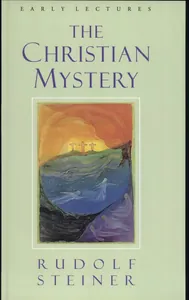
Evolution
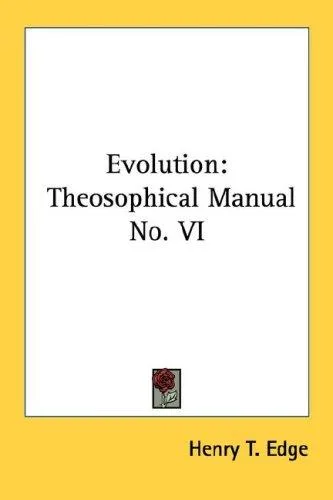
 82
82

Evolution
Henry T. Edge's *Evolution* offers a comprehensive survey of how spiritual and consciousness development has been understood across a wide array of traditions. The strength of the book lies in its diligent synthesis of disparate ideas, connecting ancient mythologies with philosophical treatises and esoteric doctrines. Edge avoids facile generalizations, instead presenting a nuanced argument for a continuous, albeit complex, trajectory of consciousness. A notable point is the treatment of Gnostic cosmology, which Edge unpacks with particular clarity, demonstrating its relevance to contemporary discussions of self-awareness. However, the sheer density of information can occasionally make the text feel more like a scholarly compendium than an accessible guide. A reader might wish for more explicit guidance on applying these vast concepts to personal practice, as the focus remains largely on intellectual architecture. Edge's meticulous approach makes *Evolution* a valuable resource for those already immersed in esoteric studies.
📝 Description
82
Henry T. Edge's 2007 book *Evolution* charts the development of consciousness through historical and philosophical traditions.
Henry T. Edge's *Evolution*, published in 2007, examines spiritual and psychological unfolding as a process distinct from biological evolution. The book maps the progression of consciousness and spiritual understanding, drawing on various historical and philosophical viewpoints. Edge presents complex metaphysical ideas in a structured way for readers seeking deeper comprehension.
This work is intended for serious students of esoteric traditions, philosophy, and comparative religion. It is especially useful for those with a background in metaphysics who wish to understand how spiritual evolution has been conceived across different eras and thought systems. Readers interested in the connections between science, philosophy, and mysticism will find ample material for thought.
Published in 2007, *Evolution* arrived during a resurgence of interest in esoteric studies. Edge's work connects to a tradition of thinkers who aimed to harmonize diverse spiritual and philosophical systems, from ancient Hermeticism to modern Theosophy. The book reflects an era where digital access expanded esoteric knowledge, yet scholarly interpretations remained valuable. It addresses the concept of evolution as a spiritual and psychological progression, linking ancient cosmologies and Gnostic ideas with contemporary philosophical thought.
💡 Why Read This Book?
• Gain a structured understanding of spiritual evolution as conceptualized across diverse esoteric systems, informed by Edge's analysis of their historical development since at least the Gnostic period. • Explore the concept of consciousness development as a continuous unfolding, drawing on specific philosophical and mythological frameworks presented in the text. • Appreciate the intricate connections between ancient cosmologies and modern metaphysical thought, as detailed in the book's exploration of archetypal patterns and symbolic language.
⭐ Reader Reviews
Honest opinions from readers who have explored this book.
❓ Frequently Asked Questions
What is the primary focus of Henry T. Edge's book 'Evolution'?
The primary focus is the esoteric concept of evolution, examining the development of consciousness and spiritual understanding across various historical and philosophical traditions.
When was 'Evolution' first published?
'Evolution' by Henry T. Edge was first published in 2007.
What kind of reader would benefit most from 'Evolution'?
Serious students of esoteric traditions, philosophy, comparative religion, and metaphysics who seek a deep understanding of spiritual development concepts would benefit.
Does the book discuss specific esoteric traditions?
Yes, the book explores concepts within traditions such as Hermeticism, Gnosticism, and Theosophy, examining their views on spiritual and consciousness evolution.
Is 'Evolution' a practical guide to spiritual practices?
While it provides intellectual frameworks, 'Evolution' is primarily an analytical and theoretical exploration of esoteric concepts rather than a direct guide to practical spiritual exercises.
What is the author's approach to the subject of evolution?
Edge approaches evolution not just biologically, but as a process of spiritual and psychological unfolding, synthesizing philosophical ideas with mystical doctrines.
🔮 Key Themes & Symbolism
Consciousness as Evolving
The central theme is the concept of evolution applied to consciousness and spiritual awareness. Edge posits that consciousness is not static but undergoes a continuous process of development. This evolution is traced through various historical epochs and philosophical systems, suggesting a universal trajectory. The book examines how different esoteric traditions, from ancient Gnosticism to early 20th-century movements, have conceptualized this ascent of awareness, often linking it to archetypal patterns and symbolic journeys of transformation.
Synthesis of Esoteric Traditions
Edge demonstrates a remarkable ability to connect diverse esoteric lineages, showing how ideas about spiritual evolution are shared and transformed across traditions. He draws parallels between Hermetic principles, Gnostic cosmologies, and Theosophical doctrines, highlighting recurring motifs in the human quest for higher knowledge. The work aims to present a unified view of esoteric philosophy, suggesting underlying truths that manifest in varied cultural and historical forms, particularly focusing on the progression of the human spirit.
Archetypal Patterns in Development
The book explores the significance of archetypal patterns as fundamental structures within the process of spiritual evolution. Edge suggests that recurring symbols, myths, and narratives across cultures represent timeless psychological and spiritual stages. Understanding these archetypes, as presented in the text, offers a roadmap for comprehending the stages of individual and collective consciousness development, from primal states to a more enlightened condition.
The Journey of the Soul
Central to Edge's thesis is the idea of the soul's journey through various states of being and awareness. This journey is depicted as an evolutionary process, where the soul progresses through challenges and revelations. The book explores how different esoteric cosmologies frame this soul-journey, often involving cycles of descent and ascent, purification, and eventual reunion with a divine source or higher consciousness.
💬 Memorable Quotes
Direct passages from the work, attributed to the author.
“The evolution of consciousness is a journey from the undifferentiated to the differentiated, and ultimately to a reintegration.”
— This interpretation highlights Edge's core argument that consciousness progresses through stages, moving from a state of unity to complexity, and then seeking a higher form of unified awareness.
“Ancient myths often encode profound truths about the stages of spiritual becoming.”
— This reflects the book's methodology of analyzing mythological narratives as symbolic representations of the evolutionary path of the soul and consciousness.
“Gnostic cosmology offers a framework for understanding the soul's descent and potential ascent.”
— This emphasizes the specific importance given to Gnostic thought in the book's exploration of spiritual evolution, particularly its depiction of the soul's journey.
“The path of esoteric development involves recognizing and integrating archetypal forces.”
— This points to the practical implication of understanding archetypes as forces that shape our spiritual growth and require conscious engagement.
“Understanding evolution spiritually requires looking beyond materialist interpretations.”
— This suggests that Edge's work champions a spiritual or metaphysical perspective on evolution, contrasting it with purely scientific or biological models.
🌙 Esoteric Significance
Tradition
This work fits within the Western Esoteric Tradition, specifically drawing from Hermetic, Gnostic, and Theosophical streams. It contributes to the ongoing project of articulating a spiritual cosmology and a developmental psychology rooted in these traditions. Edge departs from a simple reiteration by offering a philosophical synthesis, framing the evolution of consciousness as a central doctrine, akin to how earlier thinkers adapted Platonic and Neoplatonic ideas.
Symbolism
The book frequently engages with archetypal symbols that represent stages of consciousness. For instance, the concept of the 'Pleroma' from Gnosticism symbolizes the primordial unity from which existence emanates, while the 'Demiurge' represents a creative but limited force, often associated with the material world. These symbols are interpreted as stages in the soul's journey and the unfolding of divine consciousness.
Modern Relevance
Contemporary thinkers interested in consciousness studies, integral spirituality, and comparative mysticism find value in Edge's synthesis. His work provides a coherent framework for understanding personal spiritual growth within a historical and cosmic context, resonating with those exploring non-dual philosophies and the integration of esoteric knowledge into modern life.
👥 Who Should Read This Book
• Students of Western Esotericism seeking a philosophical overview of spiritual evolution. • Comparative religion scholars interested in how different traditions conceptualize consciousness development. • Metaphysical philosophers looking to bridge ancient wisdom with modern intellectual inquiry.
📜 Historical Context
Published in 2007, Henry T. Edge's *Evolution* emerged in an era where esoteric studies were gaining academic traction and broader public interest, partly fueled by the internet. The work builds upon a long tradition of synthesizing Western esotericism, drawing from Hermeticism, Gnosticism, and Theosophy. Edge engages with thinkers who sought to integrate spiritual philosophy with intellectual rigor, a lineage that includes figures like Helena Blavatsky and Rudolf Steiner, though Edge's approach is more philosophical. While not a direct polemic, *Evolution* implicitly contrasts its spiritual view of development with the dominant materialist paradigm in science and philosophy of the time. Reception was primarily within specialized circles, appreciating its comprehensive overview and scholarly tone, rather than widespread public discourse.
📔 Journal Prompts
The concept of spiritual evolution as a journey from undifferentiation.
Archetypal patterns in the soul's descent and ascent.
Gnostic frameworks for understanding consciousness development.
The synthesis of Hermetic and Theosophical ideas on spiritual progress.
Reintegrating differentiated consciousness into a higher unity.
🗂️ Glossary
Pleroma
In Gnostic cosmology, the divine fullness or totality of God's attributes and emanations; the spiritual field of perfection from which the material world is a departure.
Demiurge
In Gnosticism, the creator of the material universe, often depicted as an ignorant or malevolent entity subordinate to the true God. Represents a limited, material consciousness.
Emanation
The concept that the universe and its various levels of reality originate from a single divine source through a process of outflowing or radiating, as seen in Neoplatonism and Gnosticism.
Archetype
A primordial, universal pattern or image that recurs in the human psyche and culture, often found in myths, dreams, and symbols, representing fundamental aspects of existence.
Hermeticism
A philosophical and religious tradition based on the purported teachings of Hermes Trismegistus, emphasizing divine wisdom, the correspondence between macrocosm and microcosm, and spiritual transformation.
Theosophy
A mystical philosophy that seeks wisdom concerning the divine and the fundamental truths of existence, often blending elements from Eastern and Western religions and esotericism, popularized in the late 19th century.
Gnosticism
A diverse set of religious and philosophical systems that emerged in the early centuries CE, emphasizing gnosis (spiritual knowledge) as the path to salvation and often positing a dualistic worldview.
🔮 Readers Also Liked
Browse all →





More by Henry T. Edge
All books →
More Free Theosophy & Anthroposophy Books
View all →