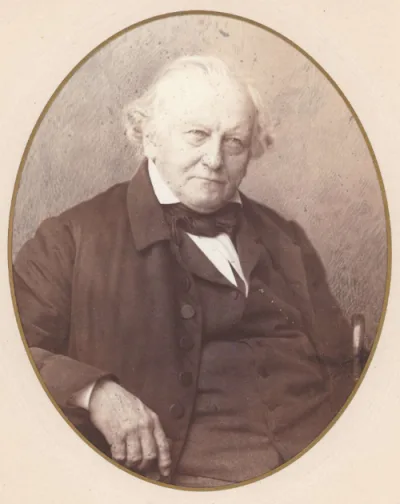
Rudolf Steiner
Rudolf Steiner founded Anthroposophy, a spiritual philosophy blending idealism, theosophy, and Gnosticism, impacting education, agriculture, and medicine.
Rudolf Steiner was an Austrian philosopher, occultist, and esotericist who developed a spiritual movement known as Anthroposophy. Emerging at the turn of the 20th century, Anthroposophy draws from German idealism and theosophy, incorporating elements of Gnosticism. Steiner initially gained recognition as a literary critic and author, with works like 'The Philosophy of Freedom' laying the groundwork for his later spiritual philosophy. His teachings aimed to synthesize science and spirituality, which he termed 'spiritual science,' applying rigorous thinking to mystical concepts.
Steiner's work evolved through distinct phases. The first focused on philosophical synthesis, while the second, beginning around 1907, saw him engage with artistic endeavors like drama, dance, and architecture, leading to the construction of the Goetheanum. Following World War I, the third phase involved practical applications of his ideas, including Waldorf education, biodynamic agriculture, and anthroposophical medicine. Steiner advocated for ethical individualism and believed that human knowledge had no inherent limits, viewing thinking itself as a form of perception for spiritual realities.
Foundations of Anthroposophy
Rudolf Steiner established Anthroposophy, a spiritual philosophy rooted in German idealism and theosophy, with influences from Gnosticism. He sought to create a 'spiritual science' that applied the logical rigor of Western philosophy to explore spiritual realms, distinguishing it from more nebulous mystical traditions. Steiner's early philosophical work, particularly 'The Philosophy of Freedom,' is considered foundational to Anthroposophy, outlining a path for human spiritual development and freedom. He posited that thinking is a perceptual faculty capable of grasping spiritual truths, aiming to demonstrate that human knowledge is not limited to the material world. This approach sought a bridge between scientific understanding and spiritual experience.
Artistic and Applied Dimensions
Steiner's work progressed into a more collaborative and artistic phase, marked by a focus on drama, dance, and architecture. This period culminated in the design and construction of the Goetheanum, intended as a center for the arts and spiritual exploration. After World War I, Steiner increasingly focused on practical applications of his Anthroposophical principles. These included the development of Waldorf education, a pedagogical approach emphasizing holistic child development; biodynamic agriculture, a method of farming based on ecological and spiritual principles; and anthroposophical medicine, which views the human being as a spiritual-soul-physical organism.
Early Life and Intellectual Development
Born in Austria, Rudolf Steiner received a varied education, including studies in mathematics, physics, and philosophy at the Vienna Institute of Technology. His early intellectual development was shaped by thinkers like Kant and Fichte, and he developed an interest in Goethe's philosophy, particularly his concept of thinking as a mode of perception. Steiner's early writings, such as 'The Theory of Knowledge Implicit in Goethe's World-Conception,' explored these ideas. Despite a period of freethinking and skepticism towards traditional religion, Steiner experienced early spiritual intuitions, which he later integrated into his developing philosophy. His academic career aspirations were not fully realized, but his philosophical writings gained him a doctorate and laid the groundwork for his later esoteric teachings.
Key Ideas
- Spiritual Science: Applying rigorous thinking to understand spiritual realities.
- Anthroposophy: A spiritual philosophy blending idealism, theosophy, and Gnosticism.
- Thinking as perception: The concept that thought is an organ for perceiving spiritual ideas.
- Holistic development: Applied in Waldorf education, biodynamic agriculture, and anthroposophical medicine.