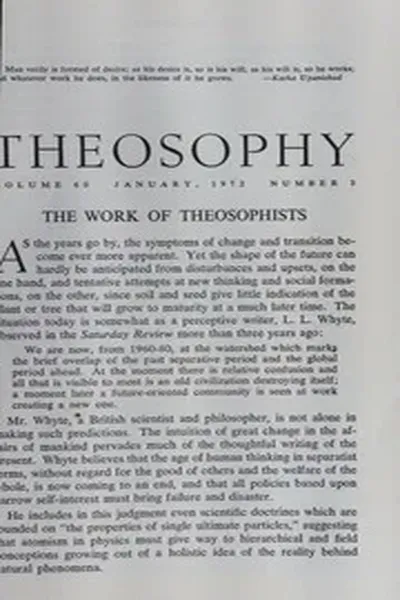
The Way of Initiation (1911)
 76
76

The Way of Initiation (1911)
Rudolf Steiner's "The Way of Initiation" is not a book for the casual browser of occult literature. Its strength lies in Steiner's characteristic systematic approach to spiritual development, mapping out a process that demands intense inner work and intellectual clarity. The lectures, originally from 1911, offer a detailed framework for understanding the stages of initiation, particularly the transformation of consciousness required for spiritual perception. The concept of developing 'imagination, inspiration, and intuition' as faculties beyond sensory experience is presented with a rare specificity. However, the density of Steiner's conceptual language can be a significant hurdle for newcomers. The book assumes a familiarity with his broader philosophical and cosmological framework, making isolated reading challenging. The absence of an original blurb from Steiner himself, with the 2016 publication by Gysi, means the reader must rely solely on the text's internal structure. "The Way of Initiation" provides a rigorous, if demanding, roadmap for advanced spiritual aspirants.
📝 Description
76
Rudolf Steiner delivered these lectures on initiation in 1911, a crucial year for his developing Anthroposophy.
The Way of Initiation collects lectures Rudolf Steiner gave in 1911, later compiled by Max Gysi in 2016. These talks address the nature of spiritual development and the process of initiation, a core subject within various esoteric traditions. Steiner delivered them during a period of significant activity as he formulated the principles of Anthroposophy. The book is aimed at individuals engaged with spiritual science and inner growth. It is particularly useful for students of Steiner's work who want to understand the practical aspects and difficulties of conscious spiritual evolution. A basic interest in consciousness evolution is helpful for readers.
Steiner discusses the development of the 'higher self' and the cultivation of spiritual faculties like imagination, inspiration, and intuition. He outlines the 'path of knowledge,' or initiation, detailing the inner changes needed to perceive spiritual truths. The lectures stress the necessity of ethical growth and intellectual discipline as groundwork for true spiritual achievement. This approach distinguishes itself from systems relying solely on emotion or faith.
Delivered in 1911, these lectures by Rudolf Steiner articulate core Anthroposophical ideas. This was a time of cross-pollination among esoteric movements, with Theosophy, an area Steiner had experience with, being prominent through figures like Annie Besant and C.W. Leadbeater. Steiner's work often responded to or expanded upon contemporary esoteric thought, advocating for a more individualized and intellectually rigorous method of spiritual research.
💡 Why Read This Book?
• Gain a structured understanding of the stages of spiritual development, distinct from popular notions of enlightenment, as detailed in Steiner's concept of the 'path of initiation'. • Explore the cultivation of specific consciousness faculties—imagination, inspiration, and intuition—as outlined in the 1911 lectures, offering a unique cognitive approach to the spiritual. • Grasp the ethical and intellectual prerequisites for spiritual attainment, as emphasized by Steiner, differentiating his rigorous method from less disciplined esoteric pursuits.
⭐ Reader Reviews
Honest opinions from readers who have explored this book.
❓ Frequently Asked Questions
What is the primary focus of Rudolf Steiner's "The Way of Initiation"?
The book focuses on the process of spiritual development and initiation, detailing the stages of inner transformation and the cultivation of higher consciousness faculties required for spiritual perception, as presented in lectures from 1911.
Who compiled and published "The Way of Initiation" in its 2016 edition?
Max Gysi is credited with compiling and publishing the 2016 edition of "The Way of Initiation," bringing Rudolf Steiner's 1911 lectures to a contemporary audience.
What are the key spiritual faculties Steiner discusses in this work?
Steiner outlines the development of imagination, inspiration, and intuition as essential faculties for perceiving spiritual realities beyond the senses.
Is "The Way of Initiation" suitable for beginners in esotericism?
While accessible to those seriously committed to spiritual study, the book's dense conceptual framework and reliance on Steiner's broader anthroposophical context may present challenges for absolute beginners.
What distinguishes Steiner's approach to initiation in this book?
Steiner emphasizes a rigorous, individualized path requiring ethical development and intellectual clarity, integrating spiritual practice with a scientific approach to consciousness.
When were the original lectures forming "The Way of Initiation" delivered?
The lectures that constitute "The Way of Initiation" were originally delivered by Rudolf Steiner in the year 1911.
🔮 Key Themes & Symbolism
The Path of Knowledge
This theme centers on the rigorous, systematic approach to spiritual attainment presented by Steiner. It posits that true spiritual insight is not a matter of passive reception or blind faith but an active, developmental process. The 'path of knowledge' requires the disciplined cultivation of inner faculties and a transformation of the individual's cognitive and moral being. It involves moving beyond ordinary sensory perception to grasp higher realities, emphasizing intellectual clarity and ethical integrity as foundational elements for this journey.
Cultivation of Higher Faculties
Central to Steiner's teachings in "The Way of Initiation" is the development of specific spiritual capacities: Imagination, Inspiration, and Intuition. These are presented not as mystical gifts but as trained faculties that allow for direct perception of the spiritual world. Imagination refers to a purified, spiritualized form of inner visualization, Inspiration is the capacity to grasp spiritual truths directly, and Intuition is the highest faculty, enabling understanding of the essential nature of spiritual beings and processes.
The Nature of Initiation
Initiation is depicted as a profound process of transformation and self-realization, not an end goal achieved through external rites alone. Steiner outlines specific stages and challenges faced by the aspirant, emphasizing the need for self-awareness, moral development, and perseverance. This process leads to a conscious understanding of one's own spiritual nature and connection to the cosmos, enabling one to act with greater wisdom and purpose in the world.
Spiritual Science and Anthroposophy
The work serves as an exposition of foundational principles within Rudolf Steiner's Spiritual Science, later developed as Anthroposophy. It presents a view of the universe and human evolution that integrates spiritual realities with empirical observation and rational understanding. The lectures aim to equip individuals with the tools to undertake their own spiritual research, fostering a verifiable, experiential approach to the divine and the hidden laws of existence.
💬 Memorable Quotes
Direct passages from the work, attributed to the author.
“The path of knowledge is the path of initiation.”
— This statement captures the core idea that true spiritual attainment involves a rigorous, intellectual, and developmental process, not merely passive belief or external ritual.
“Imagination, Inspiration, and Intuition must be developed.”
— This highlights the practical aspect of Steiner's approach, emphasizing that perception of higher realities requires the cultivation of specific, trained consciousness faculties.
“Ethical development is the foundation for spiritual perception.”
— This interpretation emphasizes Steiner's view that moral progress and self-mastery are inseparable from the capacity to understand spiritual truths.
“Initiation demands conscious effort and inner clarity.”
— This conveys the idea that the journey of spiritual awakening is an active, demanding process requiring focused intention and a clear, unclouded mind.
💡 Key Ideas
Editorial paraphrase of the work's core concepts — not direct quotes.
The spiritual world is accessible through inner transformation.
This paraphrase suggests that the hidden dimensions of reality are not external to us but are revealed through a fundamental change in our own consciousness and being.
🌙 Esoteric Significance
Tradition
This work is firmly rooted in the Western Esoteric tradition, particularly as developed through Rudolf Steiner's unique synthesis of Anthroposophy. It draws upon Hermetic, Gnostic, and Kabbalistic concepts but reframes them within a modern, psychologically nuanced framework. Steiner's approach departs from earlier esoteric systems by emphasizing the individual's capacity for direct spiritual perception through disciplined inner work, rather than reliance on ancient texts or secret lineages alone.
Symbolism
Key symbols include the 'path' itself, representing the stages of spiritual development and the challenges faced by the aspirant. The 'light' symbolizes spiritual knowledge and consciousness, contrasting with the 'darkness' of ignorance. The concept of 'transformation' is also symbolic, representing the alchemical process of changing the lower self into a higher, spiritualized being through conscious effort.
Modern Relevance
Contemporary thinkers and practitioners in fields like Waldorf education, biodynamic agriculture, and anthroposophical medicine often trace their roots to Steiner's broader work. His specific teachings on consciousness development and the cultivation of inner faculties continue to inform spiritual seekers interested in a structured, non-dogmatic approach to esoteric knowledge and personal transformation.
👥 Who Should Read This Book
["• Students of Rudolf Steiner's Anthroposophy seeking a deeper understanding of his core teachings on spiritual development and initiation.", '• Practitioners of Western Esotericism interested in comparative studies of initiation paths and consciousness transformation across traditions.', '• Individuals engaged in serious self-development who are looking for a rigorous, systematic framework for exploring the spiritual dimensions of existence.']
📜 Historical Context
Delivered in 1911, Rudolf Steiner's lectures forming "The Way of Initiation" emerged during a vibrant period of esoteric exploration. Steiner himself had recently departed from the Theosophical Society, seeking to establish his own distinct path of spiritual science. This era saw intense interest in spiritualism, Eastern philosophies, and occultism, with figures like Annie Besant and Helena Blavatsky influencing public discourse. Steiner's work, however, aimed to provide a more rigorous, individualized, and 'scientific' approach to the spiritual, contrasting with what he perceived as more dogmatic or unverified claims within contemporary movements. His lectures offered a detailed framework for consciousness development, emphasizing ethical rigor and intellectual clarity as prerequisites for spiritual insight, distinguishing his approach from the more emotional or purely intuitive methods prevalent elsewhere.
📔 Journal Prompts
The cultivation of Imagination, Inspiration, and Intuition: what practical steps can be taken daily?
Reflecting on the 'path of knowledge': how does intellectual clarity support spiritual progress?
The ethical prerequisites for initiation: identify one area for personal moral development.
Conscious effort in spiritual development: how can one maintain focus on the inner path?
Understanding the spiritual world: what are the limitations of ordinary sensory perception?
🗂️ Glossary
Initiation
A process of spiritual development and transformation, often involving stages of consciousness expansion and the attainment of higher knowledge, leading to a deeper understanding of oneself and the cosmos.
Spiritual Science
Rudolf Steiner's term for his approach to understanding the spiritual world, emphasizing empirical observation, logical reasoning, and disciplined inner development accessible to all.
Anthroposophy
The system of spiritual philosophy founded by Rudolf Steiner, seeking to connect the spiritual in the human being with the spiritual in the universe.
Imagination (Spiritual)
In Steiner's context, a purified form of inner visualization, capable of perceiving spiritual forms and processes directly, transcending ordinary fantasy.
Inspiration (Spiritual)
The capacity to grasp spiritual truths and content directly, often experienced as inner knowing or insight into spiritual realities.
Intuition (Spiritual)
The highest faculty of spiritual perception, enabling direct understanding of the essential nature of spiritual beings, events, and the underlying laws of existence.
Path of Knowledge
A term used by Steiner to describe the rigorous, developmental journey of spiritual realization that relies on disciplined inner work and intellectual understanding.
🔮 Readers Also Liked
Browse all →








More by Rudolf Steiner, Max Gysi
All books →


More Free Theosophy & Anthroposophy Books
View all →