Yeats and Theosophy

 80
80

Yeats and Theosophy
Ken Monteith’s "Yeats and Theosophy" offers a rigorous dissection of the poet’s complex relationship with Helena Blavatsky’s movement. Rather than simply cataloging influences, Monteith charts the evolution of Yeats’s engagement, from initial fascination to a more critical, yet still deeply embedded, assimilation of Theosophical ideas. A particular strength lies in Monteith’s patient tracking of specific doctrines, like the Seven Rays, as they appear, often in transmuted form, within Yeats’s later poetry, such as "A Vision." The book’s limitation, however, is its dense academic prose, which can occasionally obscure the very spiritual currents it seeks to illuminate for a broader audience. The chapter detailing Yeats's correspondence with members of the Irish Theosophical Society in the early 1900s provides crucial, though dry, evidence of his sustained interest. Ultimately, Monteith delivers a vital scholarly resource for understanding the esoteric underpinnings of one of the 20th century's greatest poets.
📝 Description
80
Ken Monteith's 2012 book, Yeats and Theosophy, examines Helena Blavatsky's influence on the poet.
First published in 2012, Ken Monteith's Yeats and Theosophy details the impact of Helena Blavatsky's Theosophical Society on W.B. Yeats. The study follows Yeats's engagement with Theosophical ideas, symbols, and people, from his early involvement in occult groups to his later poetry. Monteith situates Yeats's interest in Theosophy within the spiritual searching of the late Victorian and Edwardian periods.
This work is intended for academics, literary critics, and students of Irish literature and esoteric traditions. It will interest those who study the connection between spirituality, philosophy, and art, and how abstract metaphysical concepts appear in poetry. A basic knowledge of Yeats's writings and 19th and early 20th-century occultism is helpful for readers.
Monteith's analysis focuses on how Theosophical beliefs, such as karma, reincarnation, and the seven planes of existence, were transformed into Yeats's personal symbolic language. The book looks at specific Theosophical writings that influenced Yeats's views on the soul's path, the nature of reality, and the hidden forces influencing human fate. It shows how these ideas shaped the structure and themes of his poems and prose.
This book fits within the study of Western esotericism, specifically the impact of the Theosophical movement founded by Helena Blavatsky in the late 19th century. Theosophy synthesized Eastern philosophies with Western occult traditions, aiming to provide an alternative to materialism and traditional religion. Figures like Annie Besant and Rudolf Steiner were also associated with its development. Yeats's immersion in these ideas reflects a broader cultural interest in hidden knowledge and spiritual exploration during his time, influencing his poetic output.
💡 Why Read This Book?
• Learn how specific Theosophical concepts, like the Seven Planes, were directly translated into Yeats's symbolic language, providing a unique interpretive lens for his poetry. • Understand the intellectual milieu of the late 19th century through the lens of Theosophy's appeal to figures like Yeats, contextualizing his spiritual explorations beyond mere personal eccentricity. • Gain insight into the practical application of esoteric doctrines in artistic creation by examining how Yeats integrated ideas of karma and reincarnation into his poetic structures and themes.
⭐ Reader Reviews
Honest opinions from readers who have explored this book.
❓ Frequently Asked Questions
What specific Theosophical concepts did W.B. Yeats engage with most profoundly according to Monteith's study?
Monteith's work highlights Yeats's deep engagement with Theosophical ideas such as karma, reincarnation, the seven planes of existence, and the concept of elemental spirits, all of which informed his complex symbolic system and poetic output.
When was Ken Monteith's "Yeats and Theosophy" first published and by whom?
Ken Monteith's "Yeats and Theosophy" was first published in 2012. It is a scholarly work aimed at understanding the poet's esoteric influences.
Did Yeats ever formally join the Theosophical Society?
While Yeats was deeply influenced by Theosophy and associated with its members, Monteith's work explores the extent of his formal affiliation, suggesting his engagement was more through personal study and intellectual absorption than strict adherence to organizational doctrines.
How did Theosophy differ from other spiritual movements popular in Yeats's time?
Theosophy, as presented in the book's context, offered a syncretic synthesis of Eastern and Western esoteric philosophies, distinct from more Western-centric occult traditions or mainstream religious dogma, appealing to Yeats's search for a universal spiritual framework.
What is the significance of Yeats's "A Vision" in relation to Theosophy?
Monteith's analysis connects Yeats's "A Vision" to Theosophical cosmology, particularly its cyclical views of history and the soul's progression through various states of being, demonstrating how esoteric concepts structured his philosophical magnum opus.
Does this book discuss Yeats's involvement with other esoteric orders besides Theosophy?
While primarily focused on Theosophy, the book situates Yeats's Theosophical interests within his broader engagement with occultism, implicitly referencing his involvement with other groups like the Hermetic Order of the Golden Dawn to provide context.
🔮 Key Themes & Symbolism
Theosophical Cosmology in Poetry
This theme examines how the intricate cosmological frameworks of Theosophy, particularly Helena Blavatsky's concepts of planes of existence and elemental forces, were not merely abstract ideas for Yeats but became foundational elements within his poetic universe. Monteith illustrates how Yeats translated these complex doctrines into vivid imagery and symbolic structures, demonstrating a profound integration that moved beyond simple adoption to a personal artistic synthesis.
Karma and Reincarnation as Poetic Drivers
The work looks at how Yeats's understanding of karma and reincarnation, central tenets of Theosophy, provided him with a framework for exploring themes of fate, cyclical history, and the soul's journey across lifetimes. Monteith shows how these concepts influenced the narrative arcs and thematic resonances within Yeats's major works, offering a spiritual underpinning to his exploration of human experience and destiny.
The Esoteric Intellectual Climate
Monteith situates Yeats's Theosophical interests within the broader intellectual and spiritual ferment of the late 19th and early 20th centuries. This theme explores how Theosophy, alongside other esoteric movements, offered a compelling alternative to Victorian materialism and scientific rationalism, attracting intellectuals and artists seeking deeper meaning and a connection to hidden realities.
Yeats's Personal Esoteric Path
This theme focuses on Yeats's individual journey through various esoteric traditions, with a particular emphasis on his sustained engagement with Theosophy. It traces how his interactions with key Theosophical figures and texts shaped his evolving worldview and artistic vision, moving from early enthusiasm to a more nuanced, though enduring, spiritual orientation.
💬 Memorable Quotes
Direct passages from the work, attributed to the author.
“Yeats's engagement with Theosophy was not a superficial flirtation but a deep intellectual and spiritual immersion.”
— This interpretation highlights the substantial and sustained nature of Yeats's connection to Theosophical ideas, suggesting it formed a significant pillar of his intellectual and creative development throughout his career.
“The poet transmuted Blavatsky's abstract doctrines into potent poetic symbols.”
— This captures the essence of Yeats's artistic process as analyzed in the book: taking complex philosophical concepts from Theosophy and transforming them into tangible, evocative imagery within his poetry.
“Theosophy offered Yeats a cosmological map for understanding existence.”
— This suggests that Theosophical teachings provided Yeats with a structured worldview, a framework for comprehending the universe, human life, and spiritual realities that profoundly influenced his philosophical outlook.
“The influence of Annie Besant on Yeats's Theosophical studies is significant.”
— This points to the importance of Annie Besant, a prominent Theosophist, in shaping Yeats's understanding and exploration of Theosophical principles, underscoring the personal connections within the esoteric circles he frequented.
“Yeats found in Theosophy a language for the ineffable.”
— This interpretation emphasizes how Theosophical concepts provided Yeats with the vocabulary and conceptual tools necessary to articulate profound spiritual experiences and abstract metaphysical ideas that were otherwise difficult to express.
🌙 Esoteric Significance
Tradition
This work resides within the lineage of Western Esotericism, specifically examining the intersection of Theosophy and literary modernism. It traces how the Theosophical Society, founded in 1875, synthesized Eastern philosophies with Western occult traditions, creating a unique spiritual framework. Monteith demonstrates how W.B. Yeats, a key figure in modern poetry, absorbed and reinterpreted these Theosophical tenets, integrating them into his personal mythology and poetic output, thereby extending the practical application of esoteric thought into the area of high art.
Symbolism
Central to the book's exploration are Theosophical symbols that found new life in Yeats's poetry. Concepts like the 'Seven Planes of Existence' provided a hierarchical structure for spiritual development, while the notion of elemental beings offered archetypal figures for his dramatic and lyrical works. The cyclical view of time, inherent in Theosophical doctrines of reincarnation and cosmic ages, also became a crucial motif, shaping Yeats's understanding of history and human destiny as depicted in works like "A Vision."
Modern Relevance
Monteith's study remains highly relevant for contemporary scholars of literature, religious studies, and esoteric traditions. Modern practitioners of various spiritual paths, particularly those interested in the cross-pollination of Eastern and Western thought, can find valuable insights into how complex metaphysical systems can be artistically expressed. Thinkers exploring the relationship between consciousness, symbolism, and creative output continue to draw upon Yeats's example as illuminated by this work.
👥 Who Should Read This Book
• Scholars of W.B. Yeats and Irish Literature: Those seeking a deeper understanding of the intellectual and spiritual influences that shaped Yeats's seminal works, moving beyond biographical or purely political interpretations. • Students of Esotericism and Theosophy: Individuals interested in how major esoteric movements impacted cultural figures and artistic expression, offering concrete examples of Theosophical ideas in practice. • Comparative Religion and Philosophy Researchers: Readers investigating the historical connections between diverse spiritual traditions and their manifestation in Western thought and art during the late 19th and early 20th centuries.
📜 Historical Context
Ken Monteith’s "Yeats and Theosophy" emerges from the fertile ground of late Victorian and Edwardian spiritual seeking, a period when established certainties were challenged by scientific advancements and a burgeoning interest in non-Western philosophies. Helena Blavatsky's Theosophical Society, founded in 1875, offered a syncretic blend of esoteric traditions that captivated many intellectuals and artists, including W.B. Yeats. This era saw a proliferation of occult societies; Yeats himself was a prominent member of the Hermetic Order of the Golden Dawn in the 1890s, interacting with individuals who were often conversant with Theosophical ideas. While Theosophy competed for influence with other movements like Spiritualism and various forms of Western Hermeticism, its comprehensive worldview and claims to ancient wisdom resonated particularly strongly with those, like Yeats, seeking a spiritual alternative to materialism. The book situates Yeats’s engagement against this backdrop, highlighting how Theosophy provided a conceptual scaffolding for his later mystical and poetic explorations, differentiating it from purely Western magical traditions.
📔 Journal Prompts
The transmutation of Theosophical doctrines into poetic symbols.
Yeats's interpretation of karma and reincarnation.
The appeal of Theosophy in the late Victorian era.
The influence of Annie Besant on Yeats's esoteric studies.
Connecting Yeats's 'A Vision' to Theosophical cosmology.
🗂️ Glossary
Theosophy
A syncretic spiritual movement founded by Helena Blavatsky in 1875, aiming to synthesize Eastern and Western esoteric philosophies and religions, emphasizing universal brotherhood, and exploring hidden natural laws and divine potential in humanity.
Seven Planes of Existence
A Theosophical concept describing a hierarchical structure of reality, from the physical to the purely spiritual, through which consciousness evolves. Yeats adapted this concept into his own symbolic systems.
Karma
In Theosophy, the law of cause and effect, where actions in one life determine the circumstances and experiences of subsequent lives; a fundamental principle of reincarnation.
Reincarnation
The Theosophical belief that the soul undergoes a cycle of physical deaths and rebirths, evolving spiritually through successive lifetimes.
Elemental Beings
Spiritual or semi-corporeal entities associated with the four classical elements (earth, air, fire, water) in Theosophical and occult traditions, often featured in Yeats's poetry.
A Vision
W.B. Yeats's complex autobiographical and philosophical work, first published in 1925, which outlines his personal system of gyres and cosmology, heavily influenced by his esoteric studies, including Theosophy.
Hermetic Order of the Golden Dawn
A late 19th-century magical order influential in Western Esotericism, of which W.B. Yeats was a member, providing a foundational context for his engagement with occultism.
🔮 Readers Also Liked
Browse all →






More by Ken Monteith
All books →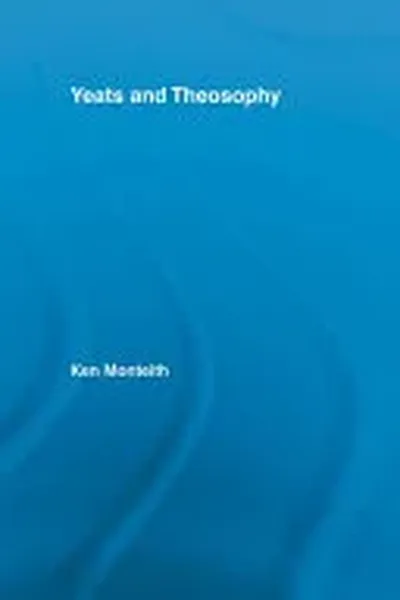
More Free Theosophy & Anthroposophy Books
View all →