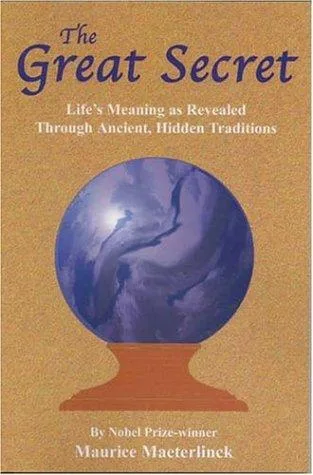
The great secret
 73
73

The great secret
Maeterlinck's "The Great Secret" offers a potent, if at times elusive, contemplation of existence. Its strength lies in its unwavering commitment to posing fundamental questions about consciousness and our place in the universe, refusing easy answers. The prose, while dense, invites slow reading and deep reflection. A limitation, however, is the abstract nature of its arguments, which can leave the reader yearning for more concrete anchors or illustrative examples. The passage discussing the "invisible forces" shaping our lives, while evocative, might feel overly speculative to some. Still, the book's persistent exploration of the unknown makes it a valuable addition to the Esoteric Library's collection.
📝 Description
73
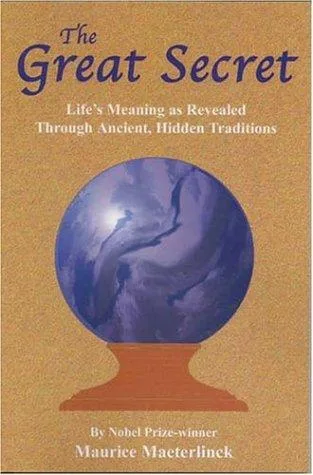
Maurice Maeterlinck's 1969 book, "The Great Secret," consists of contemplative essays on consciousness and perception.
Maurice Maeterlinck's "The Great Secret" is a collection of essays that examine consciousness, the limitations of human perception, and the possibility of a deeper grasp of existence. Published in 1969, the book tackles philosophical and metaphysical questions that go against common scientific and religious ideas. It is aimed at readers interested in philosophy, mysticism, and existential questions. The work is suitable for individuals who ponder reality beyond what can be measured, those who question the edges of the known, and students of consciousness wanting to broaden their understanding. It is not intended for readers seeking practical spiritual methods.
The book emerged in 1969, a time of considerable cultural and intellectual change. The late 1960s saw a rise in interest in Eastern philosophies, mysticism, and altered states of consciousness, influenced by figures such as Timothy Leary and the broader counterculture. Maeterlinck's writings, though composed earlier, connected with this atmosphere of challenging established norms and looking into inner worlds. This resonated with a growing curiosity about the non-rational elements of human experience, standing in contrast to the dominant scientific materialism of the era.
Published in 1969, "The Great Secret" appeared during a period when Western culture was increasingly receptive to Eastern philosophies and esoteric thought. This era saw a growing interest in mysticism, altered states, and non-rational approaches to understanding reality, often in reaction to a perceived overemphasis on scientific materialism. Maeterlinck's contemplative essays fit within this broader movement, addressing themes of inner experience and the hidden dimensions of existence that appealed to those seeking meaning beyond conventional frameworks.
💡 Why Read This Book?
• Explore the concept of the "unseen" forces Maeterlinck posits as influencing reality, offering a framework for understanding subtle energies beyond sensory perception, as discussed in his chapters on invisible phenomena. • Engage with Maeterlinck's critique of scientific rationalism from his era, learning how to question empirical limitations and consider alternative modes of knowing that were gaining traction around the 1960s. • Contemplate the nature of the "soul" as presented in the text, gaining insights into metaphysical interpretations of consciousness that diverge from purely materialist explanations.
⭐ Reader Reviews
Honest opinions from readers who have explored this book.
❓ Frequently Asked Questions
When was Maurice Maeterlinck's 'The Great Secret' first published?
The book 'The Great Secret' by Maurice Maeterlinck was first published in 1969, reflecting a later period of philosophical inquiry into consciousness and existence.
What philosophical traditions influenced 'The Great Secret'?
While not explicitly stated, the work draws from contemplative traditions that explore metaphysics, consciousness, and the limits of empirical knowledge, resonating with late 19th and early 20th-century Symbolist and philosophical currents.
Is 'The Great Secret' a practical guide to esoteric practices?
No, 'The Great Secret' is primarily a philosophical and contemplative work. It explores metaphysical concepts rather than offering step-by-step instructions for esoteric practices.
What is the central theme explored in 'The Great Secret'?
The central theme revolves around the nature of consciousness, the limits of human perception, and the existence of a deeper, perhaps unseen, reality that influences our world.
Who was Maurice Maeterlinck?
Maurice Maeterlinck (1862-1949) was a Belgian playwright, poet, and essayist who received the Nobel Prize in Literature in 1911 for his diverse literary works, often exploring themes of mystery and the subconscious.
What kind of audience would appreciate 'The Great Secret'?
Readers interested in philosophical explorations of consciousness, metaphysics, existentialism, and the nature of reality beyond the observable world would find this book engaging.
🔮 Key Themes & Symbolism
The Limits of Perception
Maeterlinck challenges the anthropocentric view that our senses and rational minds are the sole arbiters of reality. He posits that much of existence remains beyond our current grasp, operating on principles we have yet to comprehend. This theme encourages readers to question the certainty of empirical knowledge and consider the vastness of the unknown, suggesting that true understanding requires an openness to experiences and truths that lie outside conventional scientific frameworks. The work argues for a humility in the face of cosmic mysteries.
Invisible Forces
A core concept in "The Great Secret" is the existence and influence of "invisible forces." These are not merely abstract ideas but are presented as active agents shaping our lives and the universe. Maeterlinck suggests these forces are fundamental to existence, akin to gravity or electromagnetism but operating on a subtler, perhaps psychic or spiritual, plane. Understanding these forces, he implies, is key to unlocking deeper truths about ourselves and the cosmos, moving beyond a purely materialistic interpretation of the world.
Consciousness and the Soul
The book engages deeply with the nature of consciousness, moving beyond its biological correlates to explore its potential as a fundamental aspect of reality. Maeterlinck contemplates the soul not as a religious dogma but as a locus of experience and awareness that transcends the physical body. He suggests that consciousness might be far more interconnected and expansive than commonly believed, hinting at possibilities of a universal consciousness or a deeper self that exists independently of our individual, ephemeral existence.
The Unknowable and Mystery
Maeterlinck embraces the concept of the unknowable, not as a void, but as a fertile ground for wonder and deeper inquiry. He suggests that the persistent presence of mystery is not a failure of understanding but an intrinsic feature of existence. This perspective invites readers to find solace and intellectual stimulation in what remains beyond definitive explanation, fostering an attitude of perpetual exploration rather than the pursuit of final answers. The book champions a reverence for the enigmatic aspects of life.
💬 Memorable Quotes
Direct passages from the work, attributed to the author.
“The greatest secret is that there is no secret.”
— This paradoxical statement suggests that the profound truths of existence are not hidden in obscure doctrines but are present and accessible, perhaps overlooked due to our limited perspectives or expectations of complexity.
“We are surrounded by invisible forces.”
— This highlights Maeterlinck's central thesis that a significant portion of reality operates beyond our five senses, implying that these unseen influences play an important role in shaping our lives and the universe.
“The soul is not a thing, but a state of being.”
— This interpretation frames the soul not as a static entity but as a dynamic, evolving aspect of consciousness, emphasizing experience and awareness over a fixed, material form.
“Our senses are not equipped to grasp the whole truth.”
— This directly challenges the sufficiency of empirical observation, positing that a complete understanding of reality requires modes of knowing that transcend physical perception and rational analysis.
“The universe is not indifferent to our existence.”
— This suggests an underlying interconnectedness or purpose within the cosmos, implying that humanity is not an isolated phenomenon but is integral to a larger, responsive universal order.
🌙 Esoteric Significance
Tradition
While not strictly adhering to a single named tradition, Maeterlinck's work draws from the broad currents of Western esotericism that emphasize consciousness, the unseen world, and the limitations of empirical knowledge. It shares thematic ground with Neoplatonism and certain strands of Hermeticism, which posit a layered reality accessible through intuition and contemplation rather than solely through sensory data. His focus on the inner life and the potential for a deeper, universal consciousness aligns with mystical traditions seeking direct experience of the divine or ultimate reality.
Symbolism
Key symbols in "The Great Secret" often revolve around the unseen and the intangible. The concept of "invisible forces" acts as a potent symbol for the hidden energies and intelligences that Maeterlinck believed permeated existence. Light, often depicted as emanating from beyond the visible spectrum, symbolizes higher consciousness or spiritual illumination. The notion of the "soul" functions symbolically as the true, eternal self, distinct from the transient personality, representing the ultimate locus of awareness and connection to the cosmic.
Modern Relevance
Maeterlinck's exploration of consciousness and the limitations of perception remains relevant today, particularly within fields like transpersonal psychology, consciousness studies, and contemplative practices. Thinkers and practitioners interested in the intersection of science and spirituality, or those exploring non-dual philosophies, find his work a valuable precursor. His ideas echo in discussions around quantum physics' implications for reality, the nature of subjective experience, and the search for meaning beyond materialistic frameworks, making his contemplative essays a touchstone for contemporary metaphysical inquiry.
👥 Who Should Read This Book
• Students of philosophy and metaphysics seeking to explore the nature of consciousness and reality beyond empirical boundaries, who will gain a contemplative perspective on the limits of human knowledge. • Readers interested in the history of ideas surrounding mysticism and esoteric thought in the late 19th and early 20th centuries, who will find context for the intellectual currents of that era. • Individuals questioning the sufficiency of scientific materialism in explaining existence, who will be encouraged to consider alternative modes of knowing and perceiving the universe.
📜 Historical Context
Maurice Maeterlinck's "The Great Secret," published in 1969, arrived during a period of intense spiritual and philosophical exploration. The late 1960s saw a marked increase in Western interest in Eastern religions, mysticism, and altered states of consciousness, often facilitated by figures like Alan Watts and the burgeoning counterculture. Maeterlinck's contemplative essays, with their focus on the unseen and the limits of rationalism, found fertile ground amidst this intellectual climate. His work resonated with thinkers who were questioning the adequacy of scientific materialism, a dominant paradigm for much of the 20th century. This period also witnessed critical engagement with existentialist thought, notably from Jean-Paul Sartre, who explored similar themes of consciousness and freedom, albeit from a different philosophical stance. Maeterlinck's exploration of mystery and the ineffable offered an alternative to the stark certainties often presented by prevailing scientific and philosophical orthodoxies of the time.
📔 Journal Prompts
The nature of the "invisible forces" Maeterlinck discusses and their potential influence on daily life.
Reflecting on moments where human perception seems insufficient to grasp a situation's full reality.
Contemplating the "state of being" Maeterlinck associates with the soul.
The role of mystery in fostering intellectual and spiritual growth.
Identifying personal biases that limit one's understanding of the "great secret."
🗂️ Glossary
Invisible Forces
Elements or energies that exist and exert influence within the universe but are not detectable by the ordinary human senses or conventional scientific instruments. Maeterlinck suggests these are fundamental to existence.
Consciousness
The state or quality of awareness, or of being aware of an external object or something within oneself. Maeterlinck explores consciousness as potentially more fundamental and expansive than typically understood.
The Soul
In Maeterlinck's context, not necessarily a religious concept, but the enduring essence of a being, the seat of awareness and experience that may transcend physical existence.
Perception
The ability to see, hear, or become aware of something through the senses. Maeterlinck questions the completeness and accuracy of human sensory perception in understanding ultimate reality.
Rationalism
A philosophical approach that emphasizes reason as the chief source and test of knowledge. Maeterlinck often contrasts rational understanding with intuitive or mystical apprehension.
Metaphysics
The branch of philosophy that deals with the first principles of things, including abstract concepts such as being, knowing, substance, cause, identity, time, and space.
Empirical Knowledge
Knowledge derived from sensory experience and observation, often tested through experimentation. Maeterlinck critiques its limitations in grasping deeper truths.
🔮 Readers Also Liked
Browse all →



More by Maurice Maeterlinck
All books →

More Free Theosophy & Anthroposophy Books
View all →