Gothic horror, dark fantasy, supernatural tales, and esoteric fiction
⚠️
Historical & scholarly catalogue. The texts listed here cover topics that have been studied — and debated — for centuries. We catalogue them for academic and historical research; we do not endorse or recommend practice. If you are struggling with mental health, intrusive thoughts, or grief, please reach out to a licensed professional (or, in the United States, dial 988).
Supernatural and occult fiction books trace the uncanny from early Gothic tales like Horace Walpole's 'The Castle of Otranto' (1764) to the cosmic dread of H.P. Lovecraft's 'The Call of Cthulhu' (1928). This genre delves into the unknown, exploring ghosts, curses, and otherworldly entities that challenge rational understanding. Readers will find a curated selection of foundational works and influential narratives that define the landscape of supernatural and occult literature.
Richard Marsh's 1897 novel The Beetle, published the same year as Dracula, became a bestseller. It tells the story of a mysterious, shape-shifting entity from ancient Egypt, known as the Beetle, that seeks revenge on a British politician. The narrative weaves together elements of horror, mystery, and adventure, featuring hypnotism, ancient curses, and a complex plot that unfolds across various social strata of London, reflecting Victorian fears of the exotic and the uncanny.
Sheridan Le Fanu's 1872 collection In a Glass Darkly presents five chilling stories, framed as the posthumous papers of a German physician, Dr. Hesselius, an early "occult detective." It includes the seminal vampire novella Carmilla, as well as "Green Tea," a tale of a man haunted by a demonic monkey. The collection explores psychological horror, spectral visitations, and the thin veil between sanity and madness, showcasing Sheridan Le Fanu's profound influence on ghost story tradition.
Charles Maturin's epic 1820 Gothic novel Melmoth the Wanderer tells the story of John Melmoth, who sells his soul for an extended life, condemned to wander the earth seeking someone to take his bargain. The novel employs a complex narrative structure of nested stories, spanning centuries and continents, to explore themes of spiritual despair, persecution, and the human capacity for cruelty and endurance. Its vast scope and intense philosophical inquiries make it a challenging yet rewarding read, a pinnacle of Gothic literature.
John Polidori's 1819 short story The Vampyre is often credited with introducing the sophisticated, aristocratic vampire into Western literature. Lord Ruthven, a charismatic but sinister figure, preys on young women, leaving a trail of death and despair. Born from a ghost story competition involving Mary Shelley and Lord Byron, this tale established many conventions of the modern vampire narrative, moving away from folklore's monstrous depictions to a more human, yet equally terrifying, villain.
Matthew Lewis' scandalous 1796 Gothic novel The Monk: A Romance is a landmark work of the genre, notorious for its explicit themes of incest, rape, and demonic intervention. It follows the corrupt monk Ambrosio, who succumbs to temptation and depravity, aided by a succubus. The novel's shocking content and exploration of moral decay, religious hypocrisy, and the supernatural's tangible presence made it immensely popular and controversial, pushing the boundaries of what was acceptable in literature.
Bram Stoker's seminal 1897 novel Dracula introduces the iconic Count Dracula, a Transylvanian vampire who attempts to move to England to spread his curse. Told through an epistolary format of journal entries, letters, and newspaper clippings, the story follows Jonathan Harker, Mina Murray, and Abraham Van Helsing as they fight to prevent Dracula's reign of terror. This work solidified many modern vampire tropes, exploring themes of Victorian anxieties, sexuality, and the clash between ancient evil and modern science.
H. P. Lovecraft's iconic 1928 short story The Call of Cthulhu is a cornerstone of cosmic horror, introducing the elder god Cthulhu and his terrifying cult. The narrative pieces together fragmented accounts from a deceased professor's papers, revealing an ancient, alien entity slumbering beneath the Pacific Ocean, whose awakening threatens human sanity and civilization. Lovecraft's tale emphasizes humanity's insignificance in a vast, indifferent cosmos, where true horror lies in the incomprehensible and the utterly alien.
Ambrose Bierce's 1893 collection of short stories, Can Such Things Be?, is a masterclass in psychological horror and the supernatural, often set against the backdrop of the American Civil War. Bierce's tales are characterized by their cynical tone, sudden, shocking endings, and exploration of themes like death, madness, and the uncanny. Stories such as "An Occurrence at Owl Creek Bridge" (though not strictly supernatural, it embodies the psychological disorientation) and "The Damned Thing" are iconic for their bleak realism and chilling supernatural incursions.
Stanley G Weinbaum's 1930 novel The Dark Other explores themes of identity, psychic phenomena, and the uncanny. It tells the story of a man haunted by a doppelgänger, a malevolent twin entity that seems to be a physical manifestation of his own dark impulses or an independent supernatural force. The narrative delves into psychological horror, questioning the nature of consciousness and the boundaries of the self, creating a tense atmosphere of dread and self-discovery as the protagonist grapples with his terrifying shadow.
Robert W Chambers' 1895 collection of interconnected short stories, The King in Yellow, is a foundational work of weird fiction. The tales revolve around a forbidden play, "The King in Yellow," which drives readers to madness and opens gateways to an alien, cosmic entity. Stories like "The Repairer of Reputations" and "The Mask" weave a tapestry of existential dread, unreliable narration, and a pervasive sense of the uncanny, profoundly influencing authors like H.P. Lovecraft with its unique brand of subtle, psychological horror.
Joris Karl Huysmans' 1891 novel Là-bas explores Satanism in fin-de-siècle Paris through the disillusioned writer Durtal. It delves into the historical figure Gilles de Rais and contemporary occult practices, contrasting spiritual seeking with decadent excess and the mundane. The book is notable for its detailed, often disturbing, descriptions of black masses and its critique of modern society, marking a significant work of French Decadent literature that blurs the lines between fiction and esoteric investigation.
Charles Brockden Brown's 1798 novel Wieland, considered America's first Gothic novel, centers on the Wieland family and the patriarch's mysterious death by spontaneous combustion. The narrative explores themes of religious fanaticism, ventriloquism, and psychological manipulation, as Theodore Wieland believes he hears divine commands leading him to commit horrific acts. It critically examines the dangers of extreme rationalism and religious enthusiasm, leaving readers to question the true source of the 'supernatural' events.
Mary Shelley's profound 1818 novel Frankenstein tells the story of Victor Frankenstein, a brilliant scientist who creates a sentient being in an unorthodox experiment, only to abandon it. The Creature, intelligent and articulate, seeks acceptance but is met with rejection, leading to a tragic cycle of revenge. This foundational work of both science fiction and horror explores themes of creation, responsibility, prejudice, and the consequences of playing God, resonating deeply with philosophical and ethical questions.
F Marion Crawford's 1891 collection of supernatural tales, Wandering Ghosts, is a classic of the genre, featuring some of his most memorable ghost stories. The volume includes "The Upper Berth," a chilling tale of a haunted ship's cabin, and "For the Blood Is the Life," a vampire story set in Italy. F Marion Crawford's elegant prose and skillful construction of suspense create an enduring sense of dread, often blending the supernatural with psychological insights into his characters' fears and obsessions.
This collection by Various authors, Devil Stories, compiles tales centered around demonic encounters, pacts with the devil, and the corrupting influence of evil. Dating from different periods, these stories explore the perennial human fascination with temptation, damnation, and the struggle between good and evil. They often draw from folklore and religious narratives, showcasing diverse interpretations of the infernal, from cautionary moral allegories to thrilling encounters with malevolent entities, reflecting cultural anxieties about sin and salvation.
Sheridan Le Fanu's 1872 novella Carmilla predates Dracula and features the seductive female vampire Carmilla preying on young Laura in a secluded Styrian castle. This atmospheric tale is a cornerstone of vampire literature, known for its psychological depth, homoerotic undertones, and the elegant, predatory nature of its titular character. It contributes significantly to the gothic tradition, focusing on intense personal dread and the slow, insidious corruption of its victims.
Crawford, F. Marion (Francis Marion)'s 1901 novel The King's Messenger, while less overtly supernatural than some of his ghost stories, often hints at the uncanny or the mysterious, characteristic of his broader body of work. F Marion Crawford was known for blending romance, adventure, and elements of the supernatural, creating narratives that kept readers on edge. This particular novel, like many of his, likely features a blend of historical intrigue and unexplained occurrences, maintaining a subtle undercurrent of the esoteric or the fateful.
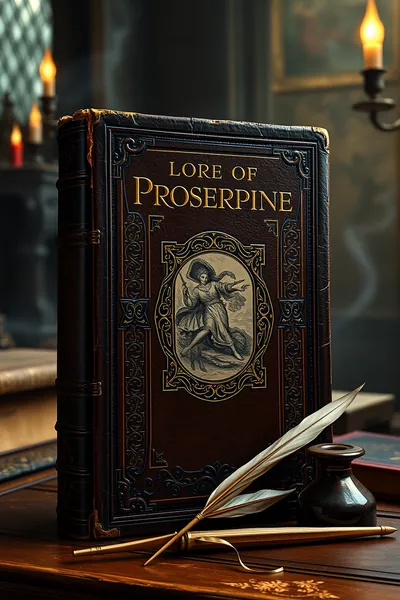
Maurice Hewlett's 1913 work Lore of Proserpine is a unique blend of memoir, essay, and fantastical fiction, exploring paganism, nature spirits, and the author's personal encounters with the supernatural. Hewlett recounts childhood visions and a lifelong fascination with ancient deities and the "otherworld" that exists alongside our own. The book is a lyrical and evocative exploration of the unseen, blending classical mythology with personal mystical experiences, reflecting a deep engagement with esoteric themes and the power of imagination.
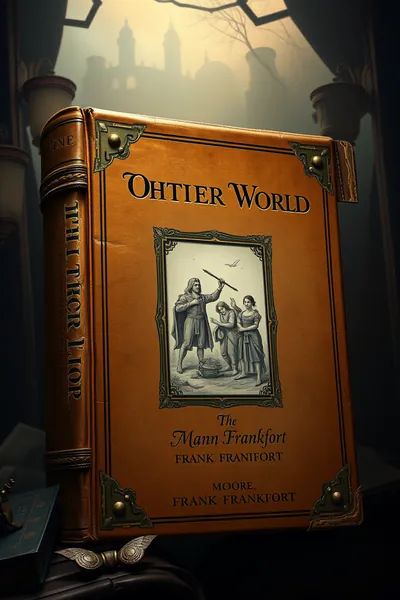
Moore, Frank Frankfort's 1904 novel The Other World explores spiritualism and the afterlife through the experiences of its characters. The story follows individuals who attempt to communicate with the deceased, encountering both genuine phenomena and fraudulent mediums. It reflects the widespread interest in spiritualism during the late Victorian and Edwardian eras, examining the human desire for connection beyond the veil and the ethical dilemmas associated with such pursuits, blending elements of romance and the supernatural.
What is Supernatural & Occult Fiction?
Supernatural and occult fiction explores narratives that involve forces or phenomena beyond the scope of normal scientific understanding. This can include ghosts, spirits, demons, magic, curses, psychic abilities, and encounters with beings or realms not of this world. These stories often tap into primal fears and human fascination with the unknown, creating suspense, horror, or a sense of profound mystery.
Best Books for Complete Beginners
For those new to the genre, start with accessible yet impactful works. Bram Stoker's 'Dracula' (1897) is a cornerstone of vampire lore, blending gothic atmosphere with psychological terror. Edgar Allan Poe's 'The Works of Edgar Allan Poe, Volume 1' (1850) offers a perfect introduction to his macabre tales of madness and the supernatural. Henry James' 'The Turn of the Screw' (1898) provides a masterclass in psychological ambiguity and subtle haunting, making it an excellent entry point.
Intermediate Reading
Moving beyond introductory texts, Algernon Blackwood's 'Four Weird Tales' offers a deeper dive into uncanny experiences and nature's hidden forces. Charles Brockden Brown's 'Wieland' (1798) explores themes of madness and delusion within a proto-Gothic framework. F. Marion Crawford's 'Wandering Ghosts' (1894) presents a collection of chilling ghost stories that refine the genre's conventions. Carrie Ryan's 'The Forest of Hands and Teeth' offers a modern YA take on post-apocalyptic horror with supernatural elements.
Classical / Advanced Texts
Serious students should engage with foundational and complex works. Charles Maturin's 'Melmoth the Wanderer' (1820) is a sprawling Gothic novel dealing with pacts and damnation. H.P. Lovecraft's 'At the Mountains of Madness' (1936) exemplifies cosmic horror, introducing vast, indifferent entities. Ambrose Bierce's 'Can Such Things Be?' (1893) collects potent, often ironic, tales of the uncanny and the supernatural, demanding careful interpretation.
Reading Order — Step by Step
Begin with accessible classics: Month 1, Week 1-2: Edgar Allan Poe (Vol 1), Henry James' 'The Turn of the Screw'. Week 3-4: Bram Stoker's 'Dracula'. Month 2: Algernon Blackwood ('Four Weird Tales'), F. Marion Crawford ('Wandering Ghosts'). Month 3: Charles Brockden Brown's 'Wieland', Ambrose Bierce's 'Can Such Things Be?'. Month 3+: H.P. Lovecraft ('At the Mountains of Madness', 'The Whisperer in Darkness'), Charles Maturin's 'Melmoth the Wanderer'.