The Astral Light
 81
81

The Astral Light
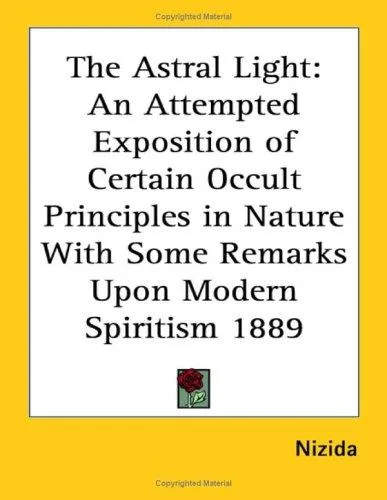
Nizida's *The Astral Light*, originating from 1889, offers a dense, systematic exploration of the subtle energetic fabric of existence. Unlike many contemporary works that skirt around the topic, Nizida posits the Astral Light as a tangible, operative force. The author's strength lies in this direct, almost scientific approach to occult principles, particularly in detailing how this light functions as a conduit for thought and influence. A notable limitation, however, is the text's inherent reliance on the conceptual language of its era, which can render certain passages opaque to modern readers without significant background in 19th-century esotericism. The detailed discussions on the 'vital fluid' and its role in manifestation, while fascinating, require careful parsing. Ultimately, *The Astral Light* serves as a valuable, albeit challenging, primary source for understanding a specific strand of late Victorian occult thought.
📝 Description
81
Published in 1889, The Astral Light details subtle cosmic energies shaping consciousness and reality.
Nizida's The Astral Light, first appearing in 1889, outlines a system for understanding the invisible forces that influence both the cosmos and human awareness. The book treats the 'Astral Light' not as a mere philosophical idea, but as a functional principle that disciplined individuals can access. It provides a framework for grasping the energetic connections between the individual and the universe.
This text is intended for those seriously studying esoteric philosophy, occult science, and comparative mysticism. It suits readers who want to move past basic ideas and engage with significant literature from the late 19th-century occult revival. Those interested in the theoretical basis of energy work, spiritual alchemy, and the link between mind and matter will find substantial content. The book is especially useful for researchers tracking the intellectual streams that fed movements like Theosophy.
Emerging in 1889, The Astral Light arrived during a surge of occult interest in Europe and North America, a period that saw the founding of groups like the Hermetic Order of the Golden Dawn. Nizida's work engages with contemporary spiritualist and mesmerist concepts but aims to construct a more elaborate theory of cosmic forces. It distinguishes itself from simpler notions of psychic phenomena and reflects a broader intellectual trend that sought to understand hidden realities alongside emerging scientific discoveries.
💡 Why Read This Book?
• Gain a concrete understanding of the 'Astral Light' as presented in 1889, moving beyond vague notions of energy to explore its function as a universal medium, a concept central to Nizida's framework. • Learn about the 'vital fluid' and its relationship to consciousness and manifestation, as described in the text's specific chapters on energetic mechanics. • Appreciate the historical context of late 19th-century esoteric thought, seeing how this book engaged with spiritualism and mesmerism while developing its own distinct cosmology.
⭐ Reader Reviews
Honest opinions from readers who have explored this book.
❓ Frequently Asked Questions
What is the primary focus of Nizida's *The Astral Light*?
The book's central theme is the Astral Light, conceptualized as a pervasive, subtle energetic medium that influences both consciousness and the material world. Nizida explores its properties and potential for manipulation.
When was *The Astral Light* first published and what was the historical climate?
First published in 1889, the book emerged during a significant occult revival in Europe, coinciding with the rise of movements like the Hermetic Order of the Golden Dawn and Theosophy.
Does the book offer practical exercises for working with the Astral Light?
While primarily theoretical, the work implies that focused will and specific disciplines can attune individuals to the Astral Light, suggesting a path for experiential engagement rather than explicit step-by-step instructions.
How does Nizida's concept of the Astral Light differ from modern ideas of energy?
Nizida's Astral Light is presented as a conscious, impressionable medium carrying psychic and spiritual forces, distinct from purely physical energy concepts. It is a vehicle for thought-forms and vital essence.
Is *The Astral Light* considered a foundational text for any specific esoteric tradition?
It is significant for understanding late 19th-century occultism and its development, particularly influencing thought streams that fed into or ran parallel to Theosophy and Western Hermeticism.
What is the 'vital fluid' as discussed in the book?
The 'vital fluid' refers to the energetic essence or life force that animates beings and is believed to be carried or influenced by the Astral Light, playing a role in manifestation and spiritual vitality.
🔮 Key Themes & Symbolism
The Astral Light as Universal Medium
The central thesis posits the Astral Light as an all-pervading etheric substance that acts as a conduit for cosmic forces, thoughts, and life essence. Nizida details its properties as a responsive medium, capable of holding impressions and influencing both the spiritual and material planes. Understanding this light is key to grasping the interconnectedness of all phenomena within the esoteric worldview presented.
Vital Fluid and Manifestation
The book elaborates on the concept of the 'vital fluid,' an animating principle closely linked to the Astral Light. This fluid is presented as the energetic basis of life and a crucial element in the process of manifestation. Nizida suggests that by understanding and working with the vital fluid, individuals can influence their own energetic state and contribute to the shaping of reality.
Microcosm and Macrocosm
A core theme is the principle of correspondence between the individual human being (microcosm) and the universe (macrocosm). The Astral Light serves as the connecting medium through which these two realms interact and influence each other. The book explores how internal states and external conditions are reflections, mediated by this subtle energetic field.
Perception and Will
Nizida touches upon the idea that perception of and interaction with the Astral Light is not passive but requires focused consciousness and directed will. This implies that through specific mental and spiritual disciplines, individuals can attune themselves to the Astral Light, potentially gaining insight and influencing energetic patterns.
💬 Memorable Quotes
Direct passages from the work, attributed to the author.
“The Astral Light is the universal medium, the reservoir of all forces.”
— This statement captures the book's primary concept, presenting the Astral Light not just as a theoretical construct but as the fundamental energetic substrate of existence.
“Thought is a force that travels upon the Astral Light.”
— This highlights the active role of consciousness within the esoteric framework, suggesting that mental energy is transmitted and has tangible effects via the Astral Light.
“The vital fluid animates all living forms.”
— This emphasizes the life-giving aspect of the energies discussed, linking the concept of the vital fluid directly to biological existence and vitality.
“Willpower can direct the flow of subtle energies.”
— This interpretation suggests that the book advocates for agency within the energetic system, implying that focused intent is a key to interacting with the Astral Light.
💡 Key Ideas
Editorial paraphrase of the work's core concepts — not direct quotes.
Correspondence exists between the inner and outer worlds.
This paraphrased concept points to the principle of 'as above, so below,' suggesting that the Astral Light acts as a bridge connecting the individual's inner state to the external environment.
🌙 Esoteric Significance
Tradition
This work fits within the broader Western Esoteric Tradition, particularly drawing from Hermeticism and Neoplatonism with its emphasis on a pervasive, subtle medium. It shares conceptual ground with later Theosophical ideas regarding cosmic planes and the etheric body but presents a distinct framework developed independently. The text attempts a more systematized, almost scientific, approach to these energies, reflecting the intellectual currents of the late 19th century.
Symbolism
The primary symbol is the 'Astral Light' itself, representing the cosmic ether, a luminous, responsive medium carrying all impressions and energies. The 'vital fluid' functions as a symbol of life force, the animating principle within this light. The concept of the microcosm mirroring the macrocosm also serves as a symbolic framework, illustrating interconnectedness through this energetic medium.
Modern Relevance
Contemporary practitioners of energy healing, subtle-body work, and certain New Age spiritualities echo Nizida's foundational concepts of a pervasive energetic field and the power of focused consciousness. While not always citing Nizida directly, the underlying principles of manipulating subtle energies for personal transformation and manifestation align with the ideas explored in *The Astral Light*.
👥 Who Should Read This Book
• Students of 19th-century occultism seeking primary source material beyond the most famous movements, to understand the diverse intellectual range of the era. • Practitioners of energy work or subtle body disciplines interested in historical conceptualizations of cosmic and vital forces that underpin modern practices. • Comparative religion scholars examining the evolution of esoteric thought and how concepts of subtle energies were articulated before and during the rise of Theosophy.
📜 Historical Context
First published in 1889, Nizida's *The Astral Light* emerged during a fervent period of occult revival, a time when figures like Helena Blavatsky were popularizing Eastern philosophies and esoteric interpretations of science through the Theosophical Society. The Hermetic Order of the Golden Dawn, founded just prior in 1888, was also exploring ceremonial magic and Kabbalistic systems. Nizida's work can be seen as contributing to this milieu by offering a systematic, almost scientific, exposition of subtle energies, differentiating itself from the more purely spiritualist or psychic phenomena prevalent at the time. It engaged with concepts like mesmerism and the 'ether' but sought to elevate them into a cohesive metaphysical structure. While not directly engaging in public debates with specific contemporaries like Arthur Edward Waite or Annie Besant, its publication alongside their works reflected a shared intellectual current seeking hidden truths beneath the surface of conventional Victorian society.
📔 Journal Prompts
The Astral Light as a universal medium, its potential implications for interconnectedness.
Reflect on the concept of the 'vital fluid' and its relation to personal vitality.
Consider the correspondence between inner states and outer phenomena through the lens of subtle energies.
Analyze how 'willpower' might influence energetic flows as suggested by the text.
Explore the historical context of 1889 occultism and Nizida's contribution.
🗂️ Glossary
Astral Light
A concept representing a subtle, pervasive energetic medium that permeates the cosmos, carrying impressions, thoughts, and life force. It is seen as a fundamental substance connecting all things.
Vital Fluid
The animating principle or life force that is believed to be carried within or influenced by the Astral Light, essential for the existence and vitality of all living beings.
Microcosm
The individual human being, viewed as a miniature reflection or representation of the larger universe (the macrocosm).
Macrocosm
The universe as a whole, the greater cosmic order, often seen as being in correspondence with the microcosm.
Thought-forms
Mental constructs or energetic imprints generated by thought, believed to exist within the Astral Light and potentially influence reality.
Ether
In the context of 19th-century esoteric thought, often refers to a subtle, luminous substance filling the universe, akin to or synonymous with the Astral Light.
Correspondence
The Hermetic principle 'As above, so below,' suggesting a relationship of analogy and mutual influence between different levels of reality, such as the inner and outer worlds.
🔮 Readers Also Liked
Browse all →



More Free Theosophy & Anthroposophy Books
View all →