What is Hinduism?
Hinduism, originating in the Indian subcontinent, is a diverse system of beliefs and traditions, often described as a family of religions rather than a single monolithic faith. It encompasses a wide range of philosophies, rituals, and practices, with core concepts including dharma (duty/ethics), karma (action and consequence), samsara (reincarnation), and moksha (liberation). Its origins are deeply intertwined with the Vedic period, evolving over millennia through various philosophical schools and devotional movements.
Best Books for Complete Beginners
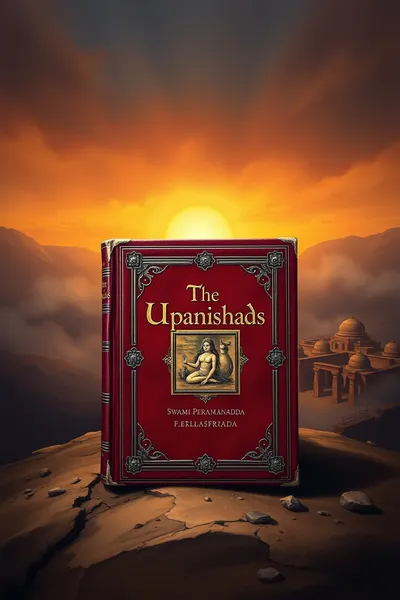
For those new to Hinduism, starting with accessible overviews is key. The Upanishads by Swami Paramananda provides early philosophical dialogues that form a bedrock of Hindu thought. Development of Hinduism by Prof.M.M.Ninan offers a historical survey of its evolution. A Study of the Bhâgavata Purâna; or, Esoteric Hinduism by Purnendu Narayana Sinha (1901) introduces a major Puranic text in an accessible way. Advanced Course In Yogi Philosophy And Oriental Occultism touches on related spiritual practices. These texts offer a broad introduction to core concepts and historical context.
Intermediate Reading
Building on foundational knowledge, intermediate texts explore specific schools and practices. The Secret Doctrine, Vol. 1 of 4 by H. P. Blavatsky synthesizes science, religion, and philosophy from a theosophical perspective, engaging with Hindu cosmology. The Bhamati Catussutri by S. S. Suryanarayana Sastri and C. Kunhan Raja presents a key commentary on Vedanta philosophy. Astrology Books by B Suryanarayana Row and A Manual Of Hindu Astrology by B. V. Raman (1935 Edition) introduce the principles of Vedic astrology, a significant aspect of Hindu tradition.
Classical / Advanced Texts
Advanced study often involves engaging directly with primary scriptures and complex commentaries. The Upanishads, as translated by Swami Paramananda, represent core philosophical texts. The Secret Doctrine, Vol. 4 of 4 by H. P. Blavatsky continues its synthesis of esoteric traditions. A study of the Bhagavata Purana; or, Esoteric Hinduism by Sinha, Purnendu Narayana (1901) provides in-depth analysis of a major Purana. These works require careful reading and often benefit from prior study of introductory materials.
Reading Order — Step by Step
Begin with a broad historical overview like Development of Hinduism by Prof.M.M.Ninan. Next, engage with foundational philosophical texts such as The Upanishads by Swami Paramananda. For a deeper dive into Puranic literature, consult A study of the Bhagavata Purana; or, Esoteric Hinduism by Purnendu Narayana Sinha (1901). Explore theosophical interpretations with The Secret Doctrine, Vol. 1 by H. P. Blavatsky. For those interested in Vedic astrology, B. V. Raman's A Manual Of Hindu Astrology (1935 Edition) is a good starting point, followed by works like Sanjay Rath's Crux Of Vedic Astrology (1998).
Frequently Asked Questions
Which Hinduism book should I read first?
For a beginner, 'Development of Hinduism' by Prof.M.M.Ninan offers a good historical context. Alternatively, 'The Upanishads' by Swami Paramananda introduces foundational philosophical ideas.
What are the main scriptures in Hinduism?
The primary scriptures are the Vedas, followed by the Upanishads, Puranas, and the Epics (Ramayana and Mahabharata, including the Bhagavad Gita).
Is Vedic astrology part of Hinduism?
Yes, Vedic astrology, or Jyotisha, is considered one of the Vedangas (auxiliary disciplines of the Vedas) and is an integral part of traditional Hindu culture and practice.
What is the difference between Hinduism and Vedanta?
Vedanta is one of the six orthodox schools of Hindu philosophy, focusing on the Upanishads. Hinduism is a broader term encompassing various traditions, philosophies, and practices, of which Vedanta is a significant part.
Are there books on Hindu deities?
Yes, many books explore the Puranas and other texts that describe Hindu deities, their stories, and their symbolism. 'A study of the Bhagavata Purana; or, Esoteric Hinduism' is one such text.
Where can I find information on Hindu rituals?
Information on rituals is often found within the Vedas, Puranas, and specific sastras. Some modern interpretive works, like those touching on Tantra, also discuss ritualistic practices.
How do I start learning about Hindu philosophy?
Begin with accessible translations of the Upanishads and works that explain core concepts like Brahman and Atman. Books like 'The Bhamati Catussutri' offer deeper philosophical discussions.