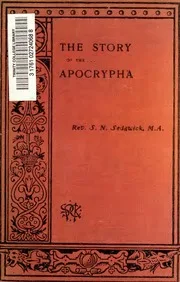
The Holy Bible, according to the Authorized version (A.D. 1611), with an explanatory and critical commentary and a revision of the translation : Apocrypha
 76
76

The Holy Bible, according to the Authorized version (A.D. 1611), with an explanatory and critical commentary and a revision of the translation : Apocrypha



Henry Wace's 'The Holy Bible, according to the Authorized version (A.D. 1611), with an explanatory and critical commentary and a revision of the translation: Apocrypha' is a treasure trove for contemporary esoteric seekers. Wace's meticulous scholarship and his ability to unravel the occult dimensions of the Apocrypha make this book a must-read. The commentary is both enlightening and challenging, encouraging readers to look beyond the surface narratives and explore the deeper spiritual truths. Wace's revision of the translation adds another layer of depth, making the text accessible to modern readers. For those interested in Gnosticism and the occult, this book is an invaluable resource. The detailed explanations and critical insights provide a comprehensive understanding of the esoteric themes within the Apocrypha.
📝 Description
76
Henry Wace published his annotated Apocrypha in the 19th century, focusing on the 1611 Authorized Version.
This two-volume edition of the Apocrypha, based on the 1611 Authorized Version of the Bible, features extensive commentary by Henry Wace. First appearing in the 19th century, Wace's work aims to illuminate the symbolic and philosophical layers within these texts. His annotations provide a critical lens through which to understand the Apocrypha's place in biblical tradition. The commentary engages with the rich imagery and theological ideas present in books like Tobit, Judith, and Wisdom of Solomon. It is designed for readers interested in a detailed scholarly approach to these often overlooked scriptures.
Wace's commentary on the Apocrypha engages with texts that have historically occupied a unique space between canonical and apocryphal scripture. These books contain narratives and teachings that later traditions, including certain mystical and Gnostic movements, found particularly resonant. The focus on symbolism and philosophical depth within Wace's annotations aligns with an interest in uncovering layers of meaning beyond the literal. This approach allows for a consideration of the Apocrypha as a source for understanding earlier esoteric currents within religious thought.
💡 Why Read This Book?
Reading 'The Holy Bible, according to the Authorized version (A.D. 1611), with an explanatory and critical commentary and a revision of the translation: Apocrypha' by Henry Wace today offers readers a unique opportunity to delve into the esoteric and occult dimensions of ancient biblical texts. This book provides a deeper understanding of spiritual enlightenment and divine mysteries, making it an essential read for those interested in Gnosticism and occult studies. The insights gained from Wace's commentary can enrich one's spiritual journey and offer new perspectives on religious texts.
⭐ Reader Reviews
Honest opinions from readers who have explored this book.
❓ Frequently Asked Questions
What is the significance of the Apocrypha in esoteric studies?
The Apocrypha holds significant spiritual and historical value, offering deeper insights into biblical narratives and divine mysteries. It is a key resource for those studying Gnosticism and the occult.
How does Henry Wace's commentary enhance the understanding of the Apocrypha?
Wace's commentary provides a unique blend of scholarly rigor and esoteric insights, making the Apocrypha accessible and meaningful to modern readers. His revision of the translation further enriches the text.
Who should read this book?
This book is ideal for those interested in esoteric studies, Gnosticism, and the occult. It is also valuable for scholars and spiritual seekers looking to deepen their understanding of biblical texts.
🔮 Key Themes & Symbolism
Symbolism and Hidden Knowledge
The Apocrypha is rich with symbolic language and hidden knowledge, which Wace's commentary unveils. This theme is crucial for understanding the deeper layers of biblical texts and their esoteric significance.
Philosophical Significance
Wace's work explores the philosophical underpinnings of the Apocrypha, revealing the profound wisdom embedded within these ancient texts. This theme is essential for those seeking spiritual enlightenment and intellectual curiosity.
Mystical Traditions
The Apocrypha is a central to various mystical traditions, including Hermeticism and Gnosticism. Wace's commentary provides insights into these traditions, making it a valuable resource for practitioners and scholars alike.
💬 Memorable Quotes
Direct passages from the work, attributed to the author.
“And he showed me a pure river of water of life, clear as crystal, proceeding out of the throne of God and of the Lamb.”
— This vision of the river of life symbolizes the flow of divine wisdom and the eternal nature of spiritual truths.
“And the angel of the Lord spake unto Philip, saying, Arise, and go toward the south unto the way that goeth down from Jerusalem unto Gaza, which is desert.”
— This encounter highlights the mystical guidance provided by divine messengers, leading seekers on their spiritual journey.
💡 Key Ideas
Editorial paraphrase of the work's core concepts — not direct quotes.
And the light shineth in darkness; and the darkness comprehended it not.
This quote underscores the esoteric idea of divine light penetrating the darkness of ignorance, a central theme in many mystical traditions.
For what is your life? It is even a vapour, that appeareth for a little time, and then vanisheth away.
This passage highlights the transience of life, encouraging seekers to focus on spiritual growth and enlightenment.
And without controversy great is the mystery of godliness: God was manifest in the flesh, justified in the Spirit, seen of angels, preached unto the Gentiles, believed on in the world, received up into glory.
This quote emphasizes the mystical nature of divine revelation and the esoteric path to spiritual enlightenment.
🌙 Esoteric Significance
Tradition
This book belongs to the Hermetic and Gnostic traditions, which emphasize the pursuit of hidden knowledge and spiritual enlightenment. These traditions view the Apocrypha as a repository of mystical wisdom, accessible only to those who delve deeply into its symbolism and philosophical significance.
Symbolism
Key symbols in the Apocrypha include the divine light, the river of life, and the desert journey. These symbols represent the esoteric path to spiritual enlightenment, the flow of divine wisdom, and the trials and transformations that seekers encounter on their journey.
Modern Relevance
Today, this edition remains relevant for modern practitioners of Hermeticism, Gnosticism, and other esoteric traditions. It provides a valuable resource for those seeking to understand the mystical dimensions of biblical literature and apply these insights to their spiritual practices.
👥 Who Should Read This Book
Beginners in esoteric studies may find this edition challenging but rewarding. Scholars of religious studies will appreciate the depth of Wace's commentary and its historical context. Spiritual seekers will find it a valuable guide to the mystical dimensions of biblical literature, while practitioners of occult traditions will benefit from its insights into symbolism and hidden knowledge.
📜 Historical Context
Published in the 19th century, Henry Wace's annotated edition of the Apocrypha emerged during a time of significant intellectual and spiritual inquiry. The era was marked by a resurgence of interest in esoteric and mystical traditions, driven by figures like Eliphas Lévi and Madame Blavatsky. Wace's work aimed to provide a scholarly and spiritually enlightening perspective on the Apocrypha, bridging the gap between historical context and modern esoteric practices. This edition has had a lasting influence on scholars, spiritual seekers, and practitioners of occult traditions, offering a comprehensive guide to the mystical dimensions of biblical literature.
📔 Journal Prompts
Reflect on a passage from the Apocrypha that resonated with you and explore its esoteric significance.
How does Wace's commentary enhance your understanding of biblical symbolism?
Consider the philosophical themes in the Apocrypha and their relevance to your spiritual journey.
What hidden knowledge have you uncovered through reading this edition?
How does the Apocrypha's mystical wisdom apply to your modern spiritual practices?
🗂️ Glossary
Apocrypha
A collection of ancient texts that offer deeper insights into biblical symbolism and hidden knowledge, often considered part of esoteric and mystical traditions.
Esoteric
Relating to knowledge that is hidden or mysterious, often involving spiritual and mystical dimensions.
Hermeticism
An esoteric tradition based on the writings attributed to Hermes Trismegistus, emphasizing the pursuit of hidden knowledge and spiritual enlightenment.
Gnosticism
An ancient religious movement that emphasized the pursuit of hidden knowledge and spiritual enlightenment, often through the interpretation of mystical texts.
Symbolism
The use of symbols to represent abstract ideas or qualities, a key aspect of esoteric and mystical traditions.
This book appears in 9 collections
🔮 Readers Also Liked
Browse all →







More by Henry Wace
All books →
From the “Gnosticism” Collection
View all →




More Free Sacred Texts & Gnosticism Books
View all →