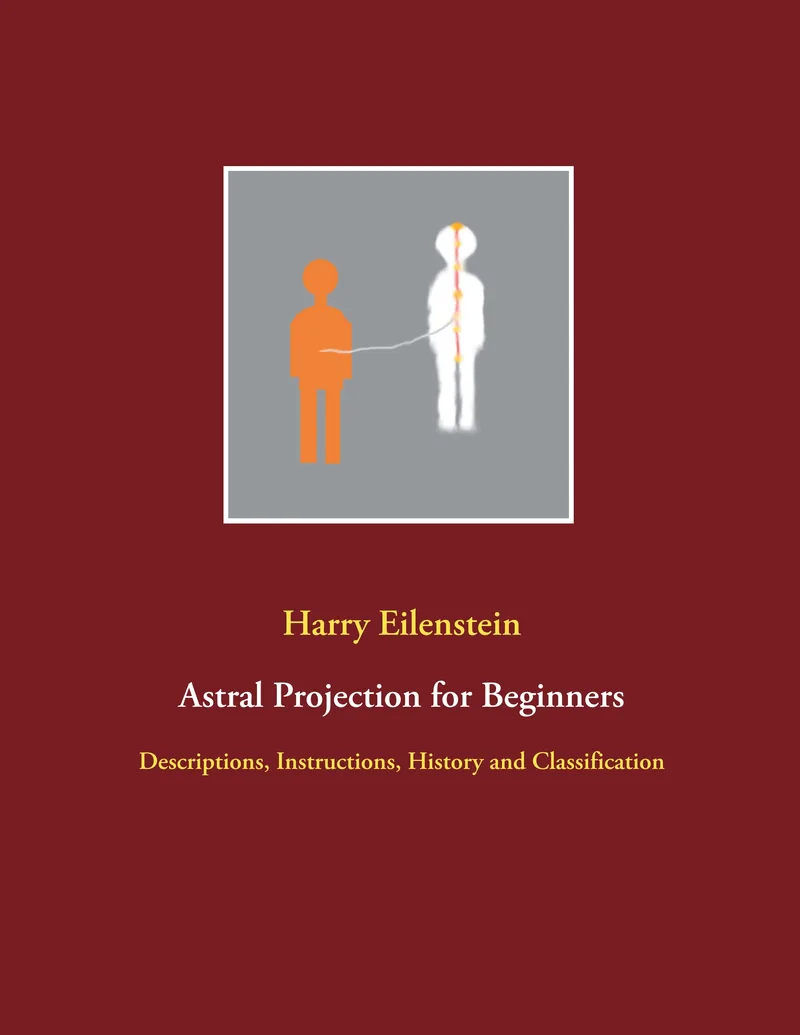
Astral Projection for Beginners
 71
71

Astral Projection for Beginners
Harry Eilenstein’s *Astral Projection for Beginners* attempts to demystify a subject often shrouded in pseudoscientific jargon. The book’s strength lies in its direct approach, presenting astral projection as a tangible practice rooted in historical shamanism rather than purely speculative fancy. Eilenstein’s assertion that shamanism is the original form of religion provides a compelling, albeit broad, historical anchor. However, the text occasionally falters in its specificity. While it mentions various methods, from relaxation to initiations, it sometimes feels like a survey rather than a deep dive into any single technique. The passage discussing the man not consisting solely of the physical body, while central to the thesis, could benefit from more detailed exploration of the philosophical underpinnings. Ultimately, Eilenstein offers a functional introduction to astral projection, suitable for the uninitiated, but experienced practitioners may find it lacks the nuanced depth they seek.
📝 Description
71
Harry Eilenstein's 1980 book, Astral Projection for Beginners, presents out-of-body experience as a core element of ancient traditions.
This guide, first published in 1980, approaches astral projection not as a fringe belief but as a practice with deep roots in early human spirituality. Eilenstein argues that the very origins of shamanism are tied to consciousness separating from the physical body. The book is designed for those new to the idea, aiming to make the concept of out-of-body experiences understandable without requiring prior esoteric study. It addresses individuals curious about consciousness beyond the physical, spiritual seekers, and those interested in the historical background of mystical disciplines.
Eilenstein details specific concepts necessary for understanding astral projection. These include how to differentiate the physical and astral bodies, methods for reaching altered states of awareness, and techniques for moving within the astral plane after a separation occurs. The author stresses that astral projection is a skill that can be learned through consistent practice and disciplined methods. The book connects these practices to ancient Mystery school initiations and the long history of shamanistic religion.
Eilenstein situates astral projection within a long lineage of spiritual practices focused on non-physical experience. He connects it to shamanism, humanity's oldest religious tradition, suggesting that altered states of consciousness were fundamental to early human understanding of reality. The book also points to its presence in ancient Mystery schools, where initiation rites likely involved consciously exploring states beyond the physical body for spiritual growth. This places Eilenstein's work within traditions that view consciousness as distinct from, and capable of transcending, the physical form.
💡 Why Read This Book?
• Understand the historical genesis of shamanism, recognizing astral projection as its root, as detailed in the book's foundational chapters. • Learn diverse methods for inducing out-of-body experiences, from simple relaxation exercises to advanced initiation concepts presented by Eilenstein. • Grasp the core distinction between the physical and astral bodies, a concept crucial for beginners exploring consciousness beyond the corporeal form.
⭐ Reader Reviews
Honest opinions from readers who have explored this book.
❓ Frequently Asked Questions
What is the earliest historical evidence for astral projection mentioned in the book?
The book points to shamanism as the original form of religion, directly stemming from astral projection experiences, suggesting a practice with deep prehistoric roots predating recorded history.
Does Harry Eilenstein provide specific techniques for beginners?
Yes, Eilenstein outlines various methods, including relaxation exercises and references to initiation rites, designed to help beginners initiate an astral projection experience.
Is astral projection considered a purely spiritual phenomenon in this book?
The book presents astral projection as central to both magic and religion, indicating it is viewed as a phenomenon that bridges the spiritual and practical applications of consciousness exploration.
What is the significance of the physical body versus the astral body?
Eilenstein emphasizes that humans are not solely composed of a physical body. The book explores the concept of an astral body as a vehicle for consciousness during projection.
When was 'Astral Projection for Beginners' first published?
Harry Eilenstein's 'Astral Projection for Beginners' was first published on April 29, 2021.
Are there different types of astral projection methods discussed?
Yes, the book mentions a variety of methods, ranging from gentle relaxation exercises to more intense forms of initiation, all aimed at achieving an astral projection state.
🔮 Key Themes & Symbolism
Consciousness Beyond Form
Eilenstein posits that human existence transcends the physical body, a core tenet explored throughout the work. This concept is presented as fundamental to understanding astral projection, differentiating it from mere hallucination or dream states. The book argues that this understanding birthed ancient religious forms like shamanism, where non-corporeal travel was central to spiritual practice and healing. The exploration emphasizes that the experience of consciousness existing independently of the physical form is a verifiable, albeit subjective, aspect of human potential.
Shamanism as Original Religion
The work establishes a direct lineage between astral projection and the origins of religious practice, specifically identifying shamanism as its earliest manifestation. This perspective reframes shamanic journeys not just as spiritual quests but as literal explorations of non-physical realities facilitated by consciousness separation. By linking these ancient practices to the broader concept of astral projection, Eilenstein highlights the enduring human drive to explore realms beyond the immediate physical environment. This connection underscores the profound historical significance of out-of-body experiences.
Methods of Attainment
Eilenstein surveys a spectrum of techniques for achieving astral projection, acknowledging that different approaches suit different individuals. These range from accessible relaxation exercises, designed to calm the mind and body for separation, to more profound methods like initiations into ancient Mystery schools. The book suggests that the path to projection is complex, involving mental discipline, energetic preparation, and sometimes ritualistic frameworks, catering to a diverse range of practitioners and their willingness to engage with specific practices.
The Astral Plane
Central to the concept of astral projection is the idea of the astral plane – a non-physical dimension accessible through altered states of consciousness. The book implies this realm is populated and structured, offering experiences distinct from the physical world. Understanding the nature of this plane, and how to navigate it safely and intentionally, is presented as a key objective for those undertaking astral projection. It is depicted as a space for learning, exploration, and spiritual growth.
💬 Memorable Quotes
Direct passages from the work, attributed to the author.
“Man does not only consist of the physical body.”
— This foundational statement asserts that human identity and experience extend beyond the biological form, suggesting a non-physical component of being that is capable of independent existence or experience.
“Astral projection is one of the central elements in magic and in religion.”
— This highlights the historical and practical importance of out-of-body experiences, positioning them not as fringe phenomena but as integral to the development and practice of both mystical traditions and religious systems worldwide.
“There are many different methods of arriving at an astral projection experience.”
— This indicates that the book will explore a variety of approaches to achieving out-of-body states, suggesting that the path is not singular and can be adapted to individual temperaments and practices.
“From relaxation exercises to near-death to initiations into the Mysteries.”
— This provides a concrete range of techniques discussed, illustrating the diverse spectrum of methods covered, from gentle, accessible practices to more intense, potentially transformative experiences.
💡 Key Ideas
Editorial paraphrase of the work's core concepts — not direct quotes.
Shamanism, which is the original form of religion, [was born from astral projection].
This paraphrase links the earliest known religious practices directly to the experience of astral projection, framing it as the experiential basis upon which foundational spiritual beliefs and rituals were built.
🌙 Esoteric Significance
Tradition
This work fits within the broader Hermetic and Western Esoteric traditions, which have long explored the nature of consciousness and its potential beyond the physical form. It draws parallels with Gnostic ideas concerning the soul's journey and Neoplatonic concepts of emanation. While not strictly adhering to a single lineage, Eilenstein's approach to astral projection as a learnable skill accessible through various methods aligns with the practical, experiential focus found in many modern esoteric paths seeking direct knowledge.
Symbolism
The book's core symbolism revolves around the duality of the physical and astral bodies, representing the separation of consciousness from its material anchor. The concept of 'realms' or 'planes' symbolizes the multi-dimensional nature of existence, accessible through focused intent and altered states. Initiation rites mentioned symbolize transformative passages, marking a transition from ordinary awareness to a more expanded perception of reality, akin to alchemical processes of transmutation.
Modern Relevance
Eilenstein's work speaks to contemporary interest in lucid dreaming, out-of-body experiences (OBEs), and consciousness hacking. Thinkers and practitioners in fields like transpersonal psychology and modern shamanism often reference the possibility of non-physical consciousness. The book provides an accessible entry point for individuals exploring these areas, aligning with current trends in self-exploration and the search for deeper understanding of subjective experience beyond conventional scientific paradigms.
👥 Who Should Read This Book
['• Novice practitioners of esoteric arts seeking a foundational understanding of astral projection and its historical context.', '• Individuals curious about consciousness and the possibility of experiences beyond the physical body, looking for practical guidance.', '• Students of comparative religion and ancient practices interested in the origins of shamanism and its connection to non-corporeal travel.']
📜 Historical Context
Published in 2021, Harry Eilenstein's *Astral Projection for Beginners* enters a contemporary range of spiritual and esoteric literature that has seen a resurgence in interest in consciousness studies and alternative realities. While not directly engaging with specific historical figures in great detail, the work implicitly situates itself within a lineage stretching back to early 20th-century Theosophy and the works of figures like Helena Blavatsky, who also explored non-physical planes. The book's emphasis on shamanism as the root of religion also echoes anthropological and comparative religion studies, though it focuses more on the experiential aspect of out-of-body travel. In the context of modern occultism, Eilenstein's approach aligns with practical, experiential guides that seek to clarify esoteric concepts for a wider audience, moving away from the more esoteric or dogmatic texts of earlier eras. Its reception is likely among those seeking accessible entry points into topics previously confined to specialized circles.
📔 Journal Prompts
The concept of man not consisting solely of the physical body: initial reflections.
Compare the described relaxation exercises with personal experiences of deep calm.
Analyze the historical link between shamanism and astral projection as presented.
Consider the potential benefits of experiencing different methods of astral projection.
Reflect on the idea of the astral plane as a distinct reality.
🗂️ Glossary
Astral Projection
The experience or practice of consciousness separating from the physical body to travel in non-physical realms, often referred to as the astral plane.
Astral Body
A subtle, non-physical body or vehicle of consciousness believed to be capable of independent existence and movement during astral projection.
Shamanism
A spiritual practice originating in prehistoric times, characterized by a practitioner (shaman) who is believed to interact with a spirit world, often through altered states of consciousness and journeying.
Mystery Schools
Ancient organizations, particularly in the Greco-Roman world, that offered initiatory rites and teachings on esoteric doctrines, often involving spiritual transformation and knowledge of the divine.
Initiation
A formal ceremony or ritual marking admission to a particular rank, office, or status, especially within a secret or esoteric group, often involving spiritual or psychological transformation.
Physical Body
The tangible, biological form composed of matter that is subject to the laws of physics and is the primary vehicle of consciousness in ordinary waking life.
Non-physical Realms
Dimensions or planes of existence that are not composed of ordinary matter and are not perceptible through the standard five senses, accessible through altered states of consciousness.