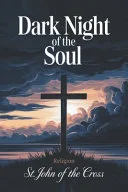
Dark Night of the Soul (Religion)
 73
73

Dark Night of the Soul (Religion)
St. John of the Cross's "Dark Night of the Soul" is a stark, unflinching examination of spiritual desolation. The 16th-century Carmelite friar does not offer platitudes; instead, he dissects the soul's experience of perceived divine abandonment with an almost clinical precision. His descriptions of the 'night of the spirit,' particularly its testing of faith when all sensory and intellectual consolations vanish, are particularly potent. While the poetic meter of the original Spanish is lost in translation, the raw spiritual intensity remains. A limitation for some contemporary readers might be the dense theological framework, which assumes a certain familiarity with Catholic mysticism. However, the passage describing the soul as a 'little bird' that must learn to sing even in darkness, stripped of all external aid, offers a powerful image of resilience and faith. It is an essential, albeit challenging, text for anyone serious about the arduous path of spiritual union.
📝 Description
73
St. John of the Cross wrote 'Dark Night of the Soul' around 1578, detailing spiritual desolation.
This volume contains St. John of the Cross's 16th-century mystical poem and its commentary. It describes a spiritual path marked by deep emptiness and a feeling of divine abandonment. The text is a guide for the soul's progress through difficult purification.
It addresses those seeking significant spiritual change, theologians considering divine union, and contemplatives experiencing spiritual dryness. The book speaks to individuals who see suffering as a way to encounter the divine, especially within Christian mysticism.
Composed likely during St. John's imprisonment in Toledo in 1577-1578, the work reflects the religious and mystical climate of Counter-Reformation Spain. It engages with earlier contemplative practices and later influenced figures like Teresa of Ávila.
St. John of the Cross's 'Dark Night of the Soul' is a key text in Christian mysticism, specifically within the Carmelite tradition. It articulates a transformative process often experienced by advanced practitioners seeking union with God. The poem and commentary describe stages of spiritual purification that involve detachment from sensory and spiritual consolations, leading to a state of profound reliance on faith alone. This path, though arduous, is presented as necessary for the soul's ultimate absorption into the divine.
💡 Why Read This Book?
• Understand the spiritual concept of 'abnegation' as detailed in the poem's verses, learning how self-denial becomes a path to divine presence. • Grasp the specific trials of the 'night of the spirit,' a phase St. John of the Cross situates during his imprisonment in Toledo, moving beyond general descriptions of hardship. • Discover the symbolic meaning of the 'dark night' itself, not as mere suffering but as a divine process of purification preceding union, as articulated in the prose commentary.
⭐ Reader Reviews
Honest opinions from readers who have explored this book.
❓ Frequently Asked Questions
When was St. John of the Cross imprisoned in Toledo?
St. John of the Cross was imprisoned in Toledo, Spain, from late 1577 to late 1578. It is widely believed he composed the poem "Dark Night of the Soul" during this period of intense suffering and isolation.
What is the difference between the night of the senses and the night of the spirit?
The 'night of the senses' involves detachment from worldly pleasures and spiritual consolations, a purification of appetites. The 'night of the spirit' is a deeper, more painful phase of existential darkness and a sense of God's absence, testing faith itself.
Is 'Dark Night of the Soul' a literal account of St. John's life?
While inspired by his experiences, including his imprisonment in Toledo, the work is primarily a theological and mystical treatise on the soul's journey towards God, using his personal trials as a foundation for universal spiritual principles.
What literary form is 'Dark Night of the Soul'?
The core of the work is a poem of 38 stanzas. St. John of the Cross also wrote an extensive prose commentary on this poem, explaining its mystical significance and stages of spiritual development.
Who was Teresa of Ávila in relation to St. John of the Cross?
Teresa of Ávila was a contemporary Carmelite nun and mystic who collaborated with St. John of the Cross in the reform of the Carmelite Order. She recognized the spiritual depth of his writings.
What does 'abnegation' mean in the context of 'Dark Night of the Soul'?
Abnegation refers to the denial of one's own desires, will, and affections. In the book, it is presented as a crucial step in the soul's purification, essential for detaching from the self and moving towards divine union.
🔮 Key Themes & Symbolism
The Active and Passive Nights
The work distinguishes between the active night, where the soul consciously detaches from sensory pleasures and spiritual consolations, and the passive night, where God Himself purifies the soul more profoundly. This duality highlights the soul's journey from self-directed discipline to divinely-induced transformation, a core tenet in Carmelite mysticism.
Divine Union as Goal
The ultimate aim presented is not mere spiritual peace but a complete union of the soul with God. The 'dark night' is the necessary fiery trial, the crucible where the soul is refined to a state of perfect conformity with the divine will, shedding all imperfections.
Suffering as Purification
Rather than a punishment, suffering, especially the spiritual desolation described, is portrayed as a divine tool for stripping away attachments and ego. This transformative power of pain is central to the book's message, framing hardship as integral to spiritual growth and divine encounter.
The Role of Faith
During the passive night of the spirit, when all sensible and intellectual supports are removed, faith becomes the soul's sole anchor. The text emphasizes that true faith is tested and strengthened in this void, becoming a pure, unadulterated trust in God's unseen presence.
💬 Memorable Quotes
Direct passages from the work, attributed to the author.
“What is this night, then, that so transforms and enkindles?”
— This question captures the paradoxical nature of the 'dark night.' It is presented not as an absence of God, but as an intense, transformative divine action that purifies and ignites the soul, even when experienced as darkness.
“Upon a dark night, with the yearnings of love inflamed—o, happy fortune!—I went forth unseen, my house being now at rest.”
— This opening line establishes the poem's core theme: a soul driven by divine love beginning a perilous, solitary spiritual journey. The 'happy fortune' suggests that this intense, dark experience is ultimately a blessed path towards God.
“I am no longer I, nor is my own any longer mine.”
— This statement signifies the ultimate goal of spiritual union: the dissolution of the ego and the complete surrender of the self to God. It reflects a state where the soul's identity is wholly absorbed into the divine.
“For the spirit is not grieved by the loss of these things, but rather rejoices in its emptiness.”
— This highlights the spiritual paradox of the 'dark night.' True spiritual progress involves finding joy not in possession or consolation, but in detachment and emptiness, which prepares the soul for divine indwelling.
“And I, going along, my love inflamed, passed on beyond my own self.”
— This captures the ecstatic movement of the soul during its intense spiritual journey. Love becomes the powerful force that propels the individual beyond the limitations of their own ego and worldly consciousness.
🌙 Esoteric Significance
Tradition
This work is a core part of Christian mysticism, specifically within the Carmelite tradition. It bridges contemplative prayer with a profound psychological and spiritual analysis of the soul's purification. While rooted in Catholic dogma, its exploration of existential spiritual states and detachment speaks to broader esoteric concepts of transcending the ego and achieving unity with the divine.
Symbolism
The central symbol is the 'dark night' itself, representing a period of spiritual obscurity and abandonment by God, paradoxically leading to divine union. Other symbols include the 'well' from which the soul drinks (divine grace) and the 'little bird' that must learn to sing in darkness, signifying the soul's resilience and growing reliance on faith alone.
Modern Relevance
Contemporary practitioners of mindfulness, contemplative Christianity, and even some secular psychological approaches to suffering draw upon its insights. Thinkers exploring the phenomenology of spiritual experience and the nature of faith in the face of existential doubt find its stark honesty invaluable.
👥 Who Should Read This Book
• Advanced practitioners of Christian contemplative prayer seeking to understand periods of spiritual dryness and perceived divine absence. • Students of mystical theology interested in the Carmelite tradition and the experiential path to union with God. • Individuals undergoing significant personal or spiritual trials who seek a framework for understanding suffering as a transformative process.
📜 Historical Context
St. John of the Cross composed "Dark Night of the Soul" during a tumultuous period in 16th-century Spain, likely while imprisoned by his Carmelite opponents in Toledo in 1577-1578. This era was marked by the Counter-Reformation, a fervent Catholic revival seeking to reaffirm doctrine and practice against the rise of Protestantism. Mysticism flourished, with figures like Teresa of Ávila also undertaking significant reforms within the Carmelite order. John's work emerged from this environment, contrasting sharply with the more academic or scholastic theological approaches of the time. His direct, experiential descriptions of the soul's journey offered a powerful counterpoint to purely intellectual theology, influencing subsequent generations of mystics and spiritual writers within and beyond the Catholic tradition.
📔 Journal Prompts
The soul's journey through the night of the senses, as described in the prose commentary.
The metaphorical 'little bird' learning to sing in darkness, a symbol of faith's resilience.
The concept of 'abnegation' and its role in detaching from spiritual consolations.
Experiencing the passive night: God's action versus the soul's receptivity.
The transformation of the house 'being now at rest' for the soul's outward journey.
🗂️ Glossary
Night of the Senses
The initial stage of spiritual purification where the soul detaches from worldly pleasures and even spiritual consolations, beginning to habituate itself to God's presence without sensory aids.
Night of the Spirit
A deeper, more painful phase of purification where the soul experiences profound dryness, darkness, and a sense of divine abandonment, testing its very faith and love.
Abnegation
The act of denying or renouncing one's own will, desires, and affections, particularly in the spiritual life, as a means of moving closer to God.
Divine Union
The ultimate goal of the spiritual life, described as a complete and loving oneness between the soul and God, achieved through profound purification and transformation.
Aridities
Periods of spiritual dryness or lack of feeling, characterized by a lack of spiritual consolation or a sense of God's absence, common during the night of the spirit.
Contemplation
A form of prayer characterized by a quiet, loving focus on God, often involving a deep, intuitive apprehension of divine truth rather than discursive reasoning.
Spiritual Motive
The driving force or reason behind spiritual actions, which the 'dark night' aims to purify, ensuring actions are motivated solely by love for God rather than self-interest or consolation.