What is Voodoo?
Voodoo, or Vodou, is a complex religious and spiritual tradition with roots in West African Vodun, blended with elements of Roman Catholicism and other influences. It is practiced primarily in Haiti and its diaspora. Central to Voodoo are the Lwa, spirits or deities that serve as intermediaries between humanity and Bondye, the supreme creator God. Rituals often involve drumming, dancing, and spirit possession, aiming for healing, guidance, and spiritual connection.
Best Books for Complete Beginners
For those new to Voodoo, starting with accessible introductions is key. While no direct Voodoo texts are listed, related works on magic and folklore provide context. Charles Mackay's 'Memoirs of Extraordinary Popular Delusions and the Madness of Crowds' offers historical perspective on belief systems. Edgar Thurston's 'Omens and Superstitions of Southern India' touches upon regional folk beliefs that share thematic similarities. Lynn Thorndike's 'A History of Magic and Experimental Science' provides a broad academic overview of magical traditions across eras, laying groundwork for understanding Voodoo's place in history.
Intermediate Reading
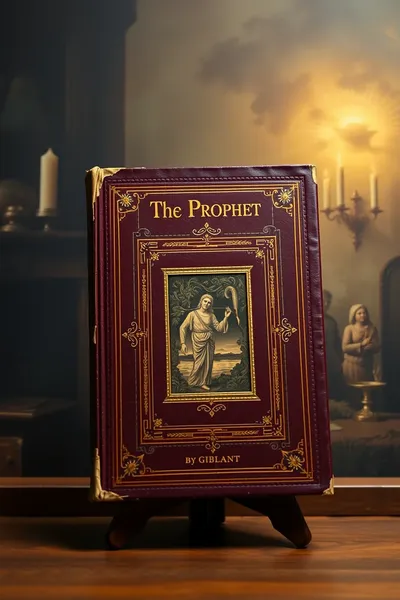
Intermediate students can deepen their understanding with texts exploring magic and comparative religion. James George Frazer's 'The Golden Bough' provides a monumental comparative study of magic and religion worldwide, offering parallels and contrasts. William Blake's 'The Marriage of Heaven and Hell' explores spiritual and mystical concepts through allegorical literature. Kahlil Gibran's 'The Prophet' offers philosophical reflections on life and spirituality that resonate with themes found in many esoteric traditions, including Voodoo.
Classical / Advanced Texts
Advanced study involves engaging with primary source material and foundational occult texts. 'The Lesser Key of Solomon, Goetia' is a significant grimoire detailing spirit invocation and magical practices, crucial for understanding historical Western esotericism. Lynn Thorndike's 'A History of Magic and Experimental Science, Volume 1' offers scholarly depth into the historical development of magical thought. The 'book of Enoch' provides an ancient apocalyptic text with mystical visions and cosmology, relevant to broader esoteric studies.
Reading Order — Step by Step
Begin with foundational overviews of magic and folklore. Weeks 1-2: Read Charles Mackay's 'Memoirs of Extraordinary Popular Delusions' and Edgar Thurston's 'Omens and Superstitions of Southern India' for historical and cultural context. Month 2: Transition to broader studies of magic and religion with James George Frazer's 'The Golden Bough' and Lynn Thorndike's 'A History of Magic and Experimental Science, Volume 1'. Month 3+: Explore more specific esoteric texts like 'The Lesser Key of Solomon, Goetia' and study mystical philosophy with William Blake's 'The Marriage of Heaven and Hell' and Kahlil Gibran's 'The Prophet'.
Frequently Asked Questions
Which book should I read first to understand Voodoo?
For beginners, start with Charles Mackay's 'Memoirs of Extraordinary Popular Delusions' to grasp historical contexts of belief. Then, move to Edgar Thurston's 'Omens and Superstitions of Southern India' for comparative folklore.
Are Voodoo and Haitian Vodou the same?
While 'Voodoo' is often used as a general term, Haitian Vodou is a specific, complex religious tradition. The term 'Voodoo' can sometimes carry negative connotations due to historical misrepresentations.
Where do Voodoo practices originate?
Haitian Vodou's roots lie primarily in the West African Vodun religion, blended with elements from Roman Catholicism and indigenous Caribbean beliefs brought by enslaved Africans.
What are the Lwa in Voodoo?
The Lwa are spirits or deities that act as intermediaries between humanity and Bondye (the supreme God) in Haitian Vodou. They are venerated through rituals, music, and dance.
Is Voodoo about black magic and curses?
Popular culture often sensationalizes Voodoo, focusing on negative aspects. While some practitioners may engage in sorcery, Voodoo is fundamentally a religion focused on community, healing, and spiritual connection with the Lwa.
Can I find books specifically on Haitian Vodou in this catalog?
This catalog contains foundational texts on magic, folklore, and comparative religion that provide essential context for understanding Vodou, rather than specific theological treatises on Haitian Vodou itself.
What is the significance of 'The Lesser Key of Solomon'?
'The Lesser Key of Solomon' is a significant grimoire from the 17th century detailing demonology and ceremonial magic, important for understanding the historical development of Western esoteric traditions.