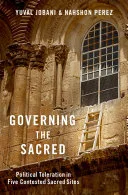
Governing the Sacred
 73
73

Governing the Sacred
Yuval Jobani and Nahshon Perez’s "Governing the Sacred" offers a granular look at how holy sites become flashpoints for intractable conflict. Rather than abstract theorizing, the authors ground their analysis in specific, often explosive, case studies. The examination of Devils Tower National Monument, for instance, effectively illustrates the tension between federal land management and Indigenous spiritual practices, a dynamic rarely explored with such depth. A notable strength is the book's insistence on dissecting the varied claims—ownership, access, permissible conduct—that fuel these disputes. However, the dense academic prose, particularly in the early chapters, may present a barrier for readers less familiar with critical theory. A more accessible introduction to the core theoretical underpinnings would have enhanced its reach. The work's exploration of how 'religious conduct' itself becomes a battleground is particularly illuminating, revealing the subtle yet potent ways faith is policed within shared sacred zones. Ultimately, "Governing the Sacred" provides a crucial, albeit demanding, scholarly intervention into understanding religiously charged territorial disputes.
📝 Description
73
Governing the Sacred analyzes how holy sites become flashpoints for ownership, access, and religious practice.
Yuval Jobani and Nahshon Perez's Governing the Sacred examines the complex dynamics surrounding holy sites, using case studies to illustrate conflicts over ownership, access, and religious observance. The authors move past simple explanations to consider the interwoven legal, political, and spiritual factors that frequently lead to disputes. The book demonstrates how shared sacred spaces often become central to the formation of identity, the exercise of power, and the defense of deeply held beliefs.
The work incorporates both historical precedents and current controversies, showing that sacred sites have long been arenas of conflict. It offers a method for understanding enduring disputes, such as those concerning the Western Wall and Babri Masjid, by placing them within wider social, political, and religious movements. The authors also address how colonial histories and nationalist goals have further complicated claims to these significant locations. Key concepts like contested sovereignty, sacred geography, and the securitization of religious sites are central to the analysis. The book investigates how religious claims are asserted and protected through legal means, political strategies, and sometimes, violence. It also looks at 'sacred deadlock,' a state of persistent, intractable conflict over holy places that shapes community identities and regional stability.
This book does not fit neatly into standard esoteric traditions like Hermeticism, Kabbalah, or Western Magic. Instead, it engages with a specific, often overlooked, area where the sacred intersects with concrete political and legal structures. Its focus on the material realities and power struggles surrounding holy places offers a unique perspective, viewing these sites not just as spiritual centers but as contested territories whose governance reveals much about human belief, identity, and conflict. The work bridges academic disciplines, bringing a critical lens to the social and political mechanisms that shape religious experience and territorial claims.
💡 Why Read This Book?
• Gain specific insights into how legal frameworks and political power dynamics shape access to and use of sacred sites, as demonstrated by the case of the Western Wall and its complex history. • Understand the concept of 'sacred deadlock' and its implications for conflict resolution, learning from examples like the Babri Masjid dispute and its long-lasting societal impact. • Discover the intricate relationship between federal land management and Indigenous spiritual claims, particularly as explored through the case of Devils Tower National Monument.
⭐ Reader Reviews
Honest opinions from readers who have explored this book.
❓ Frequently Asked Questions
What are the main holy sites discussed in Governing the Sacred?
The book analyzes several key sites, including Devils Tower National Monument in Wyoming, the Babri Masjid/Ram Janmabhoomi site in India, and the Western Wall in Jerusalem, exploring the unique conflicts surrounding each.
Who are the authors of Governing the Sacred?
Governing the Sacred was authored by Yuval Jobani and Nahshon Perez, with its first publication in 2020.
What academic disciplines does Governing the Sacred contribute to?
The work significantly contributes to religious studies, political science, anthropology, and conflict resolution by examining the governance and contested nature of sacred spaces.
Does the book offer solutions to conflicts over holy sites?
While not offering simple solutions, the book provides analytical frameworks and deep case studies that illuminate the complexities, aiding in understanding and potentially informing future resolutions.
What is the primary focus of Governing the Sacred?
The primary focus is on the intense contestation over holy sites, examining issues of ownership, access, usage rights, and permissible religious conduct that lead to conflict and violence.
When was Governing the Sacred first published?
Governing the Sacred was first published in 2020.
🔮 Key Themes & Symbolism
Sacred Geography and Sovereignty
This theme examines how physical locations imbued with spiritual significance become battlegrounds for competing claims of ownership and control. The work illustrates how 'sacred geography' is not merely about physical space but about the assertion of sovereignty, both earthly and divine. It analyzes how different groups articulate their rights and histories tied to these sites, often leading to intractable disputes. The book highlights how the very sanctity of a place can intensify political and religious struggles, making resolutions exceptionally challenging.
Contested Access and Usage Rights
A central concern is the struggle over who can access sacred sites and how they can be used. Governing the Sacred dissects the often-conflicting rules and expectations surrounding religious conduct within these shared spaces. It explores how permissions, prohibitions, and the policing of religious practices become critical points of contention, frequently escalating into violence. The analysis reveals how differing interpretations of religious law and custom are used to justify exclusive or restricted access.
The Politics of Religious Identity
The book argues that conflicts over holy sites are deeply intertwined with the formation and expression of religious and group identity. These sites serve as powerful symbols around which collective narratives are built and maintained. The work demonstrates how disputes over ownership and access are not just about land, but about affirming the legitimacy and historical continuity of a particular faith community. This theme explores how struggles over sacred spaces can become proxies for broader identity politics.
Sacred Deadlock and Violence
Jobani and Perez introduce the concept of 'sacred deadlock' to describe situations where disputes over holy sites become entrenched and seemingly irresolvable, persisting across generations. This theme analyzes the conditions that foster such prolonged conflict and the extreme violence that can erupt when these impasses are challenged. The work examines how the symbolic importance of these sites fuels the intensity of these conflicts, making compromise exceedingly difficult and often leading to cycles of unrest.
💬 Memorable Quotes
Direct passages from the work, attributed to the author.
“Holy sites are often at the center of intense contestation regarding ownership, access, usage rights, and permissible religious conduct.”
— This foundational statement expresses the book's core argument: sacred places are rarely peaceful havens but are instead focal points for profound disagreements that manifest in various forms of conflict.
“These difficulties are exemplified by the five sites profiled in Governing the Sacred...”
— This highlights the book's methodological approach, emphasizing the use of specific, real-world examples to illustrate theoretical points about conflict over sacred spaces.
“They are often the source intractable long-standing conflicts and extreme violence.”
— This underscores the severe consequences of disputes over holy sites, pointing to their potential to generate enduring animosity and physical harm, moving beyond mere academic debate.
“The Western Wall (Jerusalem) serves as a critical case study for understanding competing claims in a highly sensitive geopolitical context.”
— This references a specific, prominent example discussed in the book, signaling the book's engagement with globally recognized sites of religious and political tension.
“Ownership, access, usage rights, permissible religious conduct are key issues in governing sacred sites.”
— This concisely lists the primary categories of dispute examined throughout the work, providing a clear roadmap of the book's analytical focus.
🌙 Esoteric Significance
Tradition
While not strictly within a single esoteric lineage like Hermeticism or Kabbalah, "Governing the Sacred" engages with the profound spiritual and symbolic dimensions inherent in how humans relate to sacred geography. It explores how perceived divine claims and earthly power struggles intersect, a theme resonant across many mystical traditions that posit a connection between the terrestrial and celestial realms. The work's focus on contested sites can be seen as a secularized examination of how the 'divine' is made manifest, defended, and ultimately governed in the human world.
Symbolism
The book implicitly deals with the symbolism of the land itself as a sacred vessel. Holy sites, whether natural formations like Devils Tower or constructed places like the Western Wall, function as powerful symbols of divine presence, historical continuity, and collective identity. The very act of contestation over these sites imbues them with further layers of symbolic meaning, representing struggles for spiritual legitimacy, cultural survival, and political autonomy.
Modern Relevance
Contemporary thinkers and practitioners in fields ranging from interfaith dialogue to political theology draw upon analyses like that in "Governing the Sacred." The work is relevant to modern discussions on religious freedom, the role of sacred sites in national identity, and the ethics of land use in religiously diverse societies. Activists and scholars working on conflict resolution in regions with significant religious heritage sites, or those examining the intersection of indigenous rights and public lands, find its case studies and analytical frameworks particularly applicable.
👥 Who Should Read This Book
• Scholars of religious conflict and peace studies seeking detailed case analyses of how holy sites become arenas for dispute. • Anthropologists and sociologists interested in the intersection of place, identity, and power in religious contexts. • Legal professionals and policymakers grappling with issues of religious freedom, land rights, and interfaith relations.
📜 Historical Context
Published in 2020, "Governing the Sacred" emerged amidst heightened global attention to religious nationalism and territorial disputes. The intellectual currents it engages with include critical approaches to post-colonial studies, the sociology of religion, and peace and conflict studies. The work implicitly responds to scholars like Karen Armstrong, who have extensively written on the history of religious conflict, offering a more granular, legalistic, and political science-oriented analysis. While the book itself may not detail specific reception events, its subject matter directly addresses ongoing, highly publicized conflicts, such as the decades-long dispute surrounding Babri Masjid in India, which saw significant violence and political upheaval, particularly in the 1990s. The book's focus on contested governance of sacred sites also places it in dialogue with anthropological studies of ritual and place, and legal scholarship on property rights and religious freedom.
📔 Journal Prompts
The contestation over ownership and access to sacred sites, as analyzed in Governing the Sacred, prompts reflection on...
Navigating permissible religious conduct within shared sacred spaces: what ethical frameworks emerge from the book's examples?
The concept of 'sacred deadlock' presented in the work suggests a need to examine...
Devils Tower National Monument as a site of spiritual and federal claims: how do these differing authorities manifest?
The long-standing conflicts exemplified by Babri Masjid/Ram Janmabhoomi highlight the intersection of...
🗂️ Glossary
Sacred Geography
The study of the spatial distribution and significance of religious phenomena, focusing on how places are imbued with spiritual meaning and become focal points for belief and practice.
Contested Sovereignty
Situations where multiple groups or authorities assert claims of ultimate control and legitimacy over a particular territory or resource, often leading to political or physical conflict.
Usage Rights
The legal or customary entitlements that define who can use a specific resource or space, and under what conditions, particularly relevant in the context of shared religious sites.
Permissible Religious Conduct
The set of behaviors, rituals, and practices deemed acceptable within a religious space according to the rules or interpretations of the groups associated with it.
Sacred Deadlock
A state of prolonged and seemingly irresolvable conflict over a sacred site, characterized by entrenched positions and a lack of progress towards peaceful resolution.
Securitization of Religious Sites
The process by which religious sites become subject to heightened security measures and surveillance due to their perceived importance in political or social conflicts.
Intractable Conflicts
Disputes that are extremely difficult or impossible to resolve due to deeply held beliefs, historical grievances, or fundamental disagreements between the parties involved.