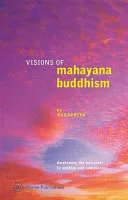
Visions of Mahayana Buddhism
 82
82

Visions of Mahayana Buddhism
Nagapriya’s treatment of Mahayana Buddhism is commendably thorough, presenting a broad spectrum of its expressions from its early Indian roots to its diffusion across Asia. The author successfully integrates historical narrative with an appreciation for lived practice, a difficult balance to strike. A particular strength is the examination of the Bodhisattva ideal not just as a philosophical concept but as a lived aspiration, explored through various historical exemplars. However, the sheer breadth of the subject matter means that some areas, such as the specific doctrinal differences between, for instance, Madhyamaka and Yogacara schools, receive less in-depth analysis than a specialist might desire. The book’s detailed account of the transmission of Buddhist texts to East Asia is a notable passage. Ultimately, *Visions of Mahayana Buddhism* serves as a robust and informative introduction for serious students of the tradition.
📝 Description
82
Nagapriya's 2014 book charts the historical spread and diverse practices of Mahayana Buddhism.
This book details one of Buddhism's major branches, moving beyond doctrine to cover Mahayana's varied practices, key texts, and developing movements. It maps the tradition's historical growth and its spread through South and East Asia. The Mahayana tradition began centuries after the Buddha's death, with important figures like Nagarjuna contributing in the 2nd century CE. Nagapriya traces this lineage through major cultural and philosophical changes in India, China, and Tibet.
The work is suited for anyone wanting a solid grasp of Mahayana thought and practice. It functions as an introduction for those new to Buddhism and a reference for those already familiar. Scholars, practitioners, and students of comparative religion will find its detailed examination useful. The book covers central ideas like emptiness (sunyata) and the Bodhisattva ideal, alongside meditation methods.
Mahayana Buddhism, as presented here, is rooted in contemplative traditions that seek direct experience of reality beyond conceptualization. The focus on concepts like emptiness and the Bodhisattva path points to practices aimed at transforming consciousness and cultivating compassion. The examination of seminal sutras and meditative techniques situates the book within a lineage of texts and methods designed to guide practitioners toward profound insight and ethical development, reflecting a path of spiritual realization.
💡 Why Read This Book?
• Gain a foundational understanding of Mahayana Buddhism's historical trajectory, tracing its path from its origins in India to its spread across East Asia, as detailed in the book's historical sections. • Grasp core Mahayana concepts like *sunyata* (emptiness) and the Bodhisattva path, presented with an emphasis on their practical application rather than mere theoretical exposition. • Appreciate the diversity within Mahayana, understanding how its literature, practices, and movements evolved differently in regions like China and Tibet, as mapped out by Nagapriya.
⭐ Reader Reviews
Honest opinions from readers who have explored this book.
❓ Frequently Asked Questions
What is the earliest historical period covered in Visions of Mahayana Buddhism?
The book traces the origins of Mahayana Buddhism back to its emergence in India, several centuries after the Buddha's passing, and explores its early doctrinal developments.
Which major Asian regions does Nagapriya discuss in relation to Mahayana Buddhism?
Nagapriya charts the movement of Mahayana across South Asia (primarily India) and East Asia, including significant coverage of its development in China and Tibet.
What is the significance of the Bodhisattva ideal as presented in the book?
The book examines the Bodhisattva ideal not just as a philosophical tenet but as a lived aspiration, focusing on the path of enlightenment for the benefit of all beings.
Does the book cover specific Mahayana scriptures?
Yes, Nagapriya's work references foundational Mahayana literature, including key sutras like the Prajnaparamita and the Lotus Sutra, discussing their role in the tradition.
Is this book suitable for complete beginners to Buddhism?
Absolutely. The book is structured to provide a solid foundation for any study in Buddhism, making it ideal for both teaching and personal use for those new to the subject.
What role does 'lived practice' play in Nagapriya's approach?
Nagapriya blends extensive historical and doctrinal knowledge with an emphasis on how Mahayana themes and practices are actually lived and expressed by adherents.
🔮 Key Themes & Symbolism
The Bodhisattva Path
Central to Mahayana, the Bodhisattva ideal is presented not merely as an abstract concept but as a profound commitment to achieving enlightenment for the sake of all sentient beings. Nagapriya explores the motivations, practices, and vows associated with this path, tracing its evolution through various schools and historical figures who embodied this aspiration. The book illustrates how this altruistic aim shapes Mahayana ethics and soteriology, differentiating it from earlier Buddhist traditions.
Emptiness and Ultimate Reality
The concept of *sunyata*, or emptiness, is a core part of Mahayana philosophy, particularly within the Madhyamaka school. Nagapriya explains how this doctrine challenges conventional notions of self and existence, positing that phenomena lack inherent, independent being. The exploration extends to understanding emptiness not as nihilism, but as the ground for liberation and compassion, revealing a profound metaphysical perspective on reality.
Mahayana Literature
The book surveys the vast corpus of Mahayana sutras and commentaries that form the scriptural basis of the tradition. Nagapriya highlights key texts such as the Prajnaparamita sutras, the Lotus Sutra, and the Avatamsaka Sutra, discussing their unique teachings on emptiness, skillful means (*upaya*), and the nature of Buddhahood. Understanding this literature is presented as crucial to grasping the diverse philosophical and practical dimensions of Mahayana.
Transmission and Adaptation
A significant focus is placed on how Mahayana Buddhism traversed geographical and cultural landscapes, particularly its transmission from India to East Asia. Nagapriya details the processes of translation, adaptation, and synthesis that occurred as Buddhist doctrines interacted with indigenous philosophies and social structures in regions like China, Korea, and Japan, leading to distinct schools and practices.
💬 Memorable Quotes
Direct passages from the work, attributed to the author.
“The Mahayana tradition charts the evolution and expression of Buddhist thought across Asia.”
— This statement captures the book's scope, emphasizing its focus on the historical development and diverse manifestations of Mahayana Buddhism beyond its Indian origins.
“Core themes include the Bodhisattva ideal and the concept of emptiness (sunyata).”
— This highlights two fundamental pillars of Mahayana philosophy and practice discussed within the text, indicating their central importance to the tradition's teachings.
“Practices range from meditation to the study of extensive literature.”
— This points to the integrated approach of Mahayana, where theoretical understanding gained from scriptures is complemented by direct meditative experience and ethical conduct.
“The book blends historical knowledge with an element of lived practice.”
— This signifies the author's intention to connect the academic study of Mahayana with the tangible realities of how its principles are embodied and enacted by practitioners.
“Visions of Mahayana Buddhism provides a solid foundation for study.”
— This suggests the book's utility as an introductory or foundational text, suitable for those beginning their exploration of Buddhism or seeking a comprehensive overview.
🌙 Esoteric Significance
Tradition
While Mahayana Buddhism is a major world religion, certain aspects align with esoteric traditions through their emphasis on direct experiential realization and the potential for rapid transformation. The lineage is distinct from Western esoteric paths like Hermeticism or Kabbalah, yet shares an interest in transcending ordinary perception. Nagapriya’s work, by focusing on practices and visionary aspects, bridges the gap between academic study and the inner life of the practitioner, common in esoteric frameworks.
Symbolism
Key symbols explored include the lotus flower, representing purity and enlightenment arising from defiled circumstances, and the Dharma wheel, symbolizing the Buddha's teachings in motion. The concept of *upaya* (skillful means) also functions symbolically, representing the adaptive strategies employed by enlightened beings to guide others. These symbols are not mere decoration but integral to the Mahayana understanding of reality and the path to liberation.
Modern Relevance
Contemporary thinkers and practitioners in mindfulness, secular Buddhism, and transpersonal psychology often draw implicitly or explicitly on Mahayana concepts like compassion and emptiness. Schools of engaged Buddhism, influenced by figures like Thich Nhat Hanh, continue to adapt Mahayana principles for social and environmental activism. The emphasis on interconnectedness and the Bodhisattva ideal finds echoes in modern ethical discourse and movements promoting global well-being.
👥 Who Should Read This Book
• Students of comparative religion: Those seeking to understand the major branches of Buddhism and their historical and philosophical divergences from other global faiths. • Aspiring Buddhist practitioners: Individuals beginning their journey into Buddhist practice who require a clear, comprehensive overview of Mahayana philosophy, ethics, and core teachings. • Scholars of Asian Studies: Researchers interested in the cultural and intellectual history of South and East Asia, particularly concerning the impact and evolution of Buddhist thought.
📜 Historical Context
Published in 2014, *Visions of Mahayana Buddhism* entered a range of Buddhist studies already rich with scholarship. The Mahayana tradition itself has a deep history, emerging in India around the 1st century BCE and developing alongside other Indian philosophical systems like Vedanta. Key figures such as Nagarjuna, a philosopher active in the 2nd century CE, articulated crucial Madhyamaka doctrines that profoundly shaped Mahayana thought. By the time Nagapriya’s work appeared, scholars like Donald Lopez Jr. had extensively documented Tibetan Buddhism, and scholars of East Asian Buddhism, such as Bernard Faure, were examining the cultural specifics of Chan (Zen) and other schools. Nagapriya’s contribution situates itself within this ongoing academic discourse, aiming to synthesize historical development with practical understanding, offering a comprehensive overview that acknowledges the intellectual currents of both ancient India and contemporary Buddhist scholarship.
📔 Journal Prompts
The Bodhisattva ideal: How does the aspiration to enlighten all beings challenge conventional self-interest?
Reflecting on sunyata: What are the implications of phenomena lacking inherent existence for everyday perception?
Mahayana literature: Which sutra's central theme, as presented by Nagapriya, most intrigues you?
The practice of skillful means (*upaya*): Consider a situation where a direct approach might be less effective than an indirect one.
Geographical spread: How might the cultural context of 1st-century India have shaped early Mahayana teachings?
🗂️ Glossary
Mahayana
Meaning 'Great Vehicle,' a major branch of Buddhism that emerged centuries after the Buddha, characterized by the Bodhisattva ideal and a vast body of scriptures.
Bodhisattva
An enlightened being who postpones their own final nirvana out of compassion to help all sentient beings achieve enlightenment.
Sunyata
The Sanskrit term for 'emptiness,' referring to the doctrine that all phenomena lack inherent, independent existence.
Prajnaparamita
A genre of Mahayana sutras ('Perfection of Wisdom') that expound the doctrine of emptiness and the path of the Bodhisattva.
Upaya
Sanskrit for 'skillful means,' referring to the adaptive methods and strategies used by enlightened beings to guide others toward liberation.
Dharma Wheel
A symbol representing the Buddha's teachings, often depicted with eight spokes, symbolizing the Noble Eightfold Path.
Nagarjuna
An influential Indian Buddhist philosopher (c. 150–250 CE) considered the founder of the Madhyamaka school, known for his extensive writings on emptiness.