What are Apparitions?
Apparitions are generally understood as visual or sensory manifestations of a person or entity not physically present. Historically, these phenomena have been attributed to ghosts, spirits of the deceased, or supernatural beings. Explanations range from psychological perceptions and hallucinations to genuine spiritual or psychic events. The study of apparitions often intersects with folklore, religion, parapsychology, and occult traditions, seeking to categorize, explain, and verify such reported experiences.
Best Books for Complete Beginners
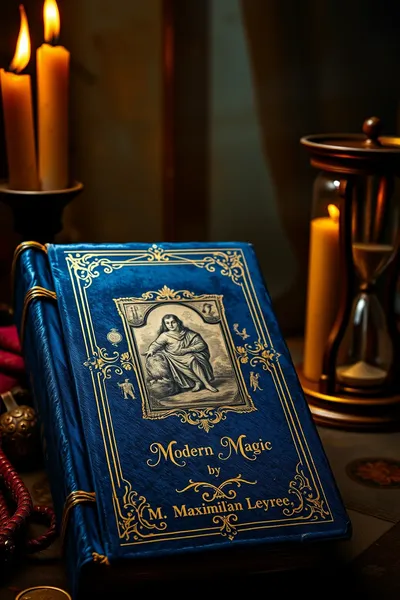
For those new to the study of apparitions, starting with broader overviews is recommended. D. R. McAnally's 'Irish Wonders' provides a body of folklore, including spectral tales from Ireland, offering a folkloric foundation. Walter Scott's 'Letters on Demonology and Witchcraft' historicizes early beliefs about supernatural encounters, while M. Schele de Vere's 'Modern Magic' examines contemporary (19th century) beliefs and alleged phenomena. These texts introduce the concepts and historical context without requiring prior specialized knowledge.
Intermediate Reading
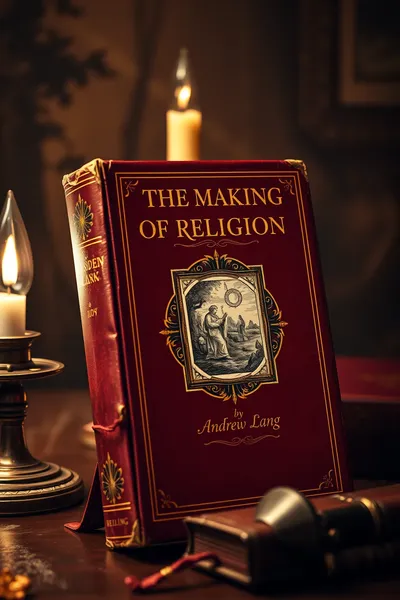
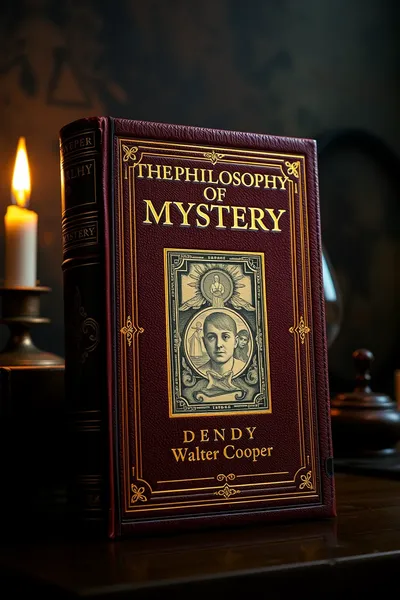
Moving beyond foundational folklore, intermediate texts explore the psychology and spiritual dimensions of apparitions. Andrew Lang's 'The Making of Religion' investigates the origins and evolution of religious beliefs, often touching upon spectral phenomena. William Cooper Dendy's 'The Philosophy of Mystery' offers a psychological exploration of unexplained experiences. For a more direct look at spiritualism, the 'Preliminary Report of the Commission Appointed by the University of Pennsylvania to Investigate Modern Spiritualism' provides a critical, yet detailed, examination of phenomena investigated by the Seybert Commission.
Classical / Advanced Texts
Advanced study involves engaging with primary source materials and foundational occult texts. H. P. Blavatsky's 'Isis unveiled, Volume 2' presents a comprehensive, albeit complex, view of ancient and modern occultism, including discussions relevant to spiritual manifestations. C. W. Leadbeater's 'The Astral Plane' offers a detailed description of non-physical realms and their inhabitants, directly addressing the nature of entities encountered in altered states. Theodore Flournoy's 'From India to the planet Mars' provides a detailed case study of a mediumistic trance, exploring phenomena like glossolalia and alleged interplanetary communication.
Reading Order — Step by Step
Begin with a broad folkloric and historical overview. Weeks 1-2: Read D. R. McAnally's 'Irish Wonders' and Walter Scott's 'Letters on Demonology and Witchcraft' to grasp historical and folkloric contexts. Month 2: Move to Andrew Lang's 'The Making of Religion' and M. Schele de Vere's 'Modern Magic' for a deeper dive into the evolution of beliefs and contemporary accounts. Month 3: Engage with more analytical works like the 'Preliminary Report of the Commission Appointed by the University of Pennsylvania to Investigate Modern Spiritualism' and William Cooper Dendy's 'The Philosophy of Mystery'. Advanced readers can then proceed to Blavatsky, Leadbeater, and Flournoy.
Frequently Asked Questions
Which apparition book should I read first?
For beginners, start with 'Irish Wonders' by D. R. McAnally to explore folklore, or Walter Scott's 'Letters on Demonology and Witchcraft' for historical context on beliefs about spirits.
Are apparitions real?
The reality of apparitions is a subject of ongoing debate. Texts range from skeptical investigations like the Seybert Commission report to esoteric explanations of non-physical entities and planes of existence.
What is the difference between a ghost and an apparition?
An apparition is the manifestation itself, while a ghost is typically understood as the spirit of a deceased person believed to be causing the apparition.
How do spiritualist texts explain apparitions?
Spiritualist texts often attribute apparitions to communication from spirits of the deceased, facilitated through mediums or occurring spontaneously due to residual energy or unfinished business.
Can psychological factors explain apparitions?
Yes, psychological factors such as hallucination, pareidolia, and suggestion are often considered as potential explanations for perceived apparitions, as explored in works like 'The Philosophy of Mystery'.
What is the astral plane in relation to apparitions?
In esoteric traditions, the astral plane is considered a non-physical realm where spirits and subtle energies exist. Texts like Leadbeater's 'The Astral Plane' describe it as a common location for perceived apparitions.