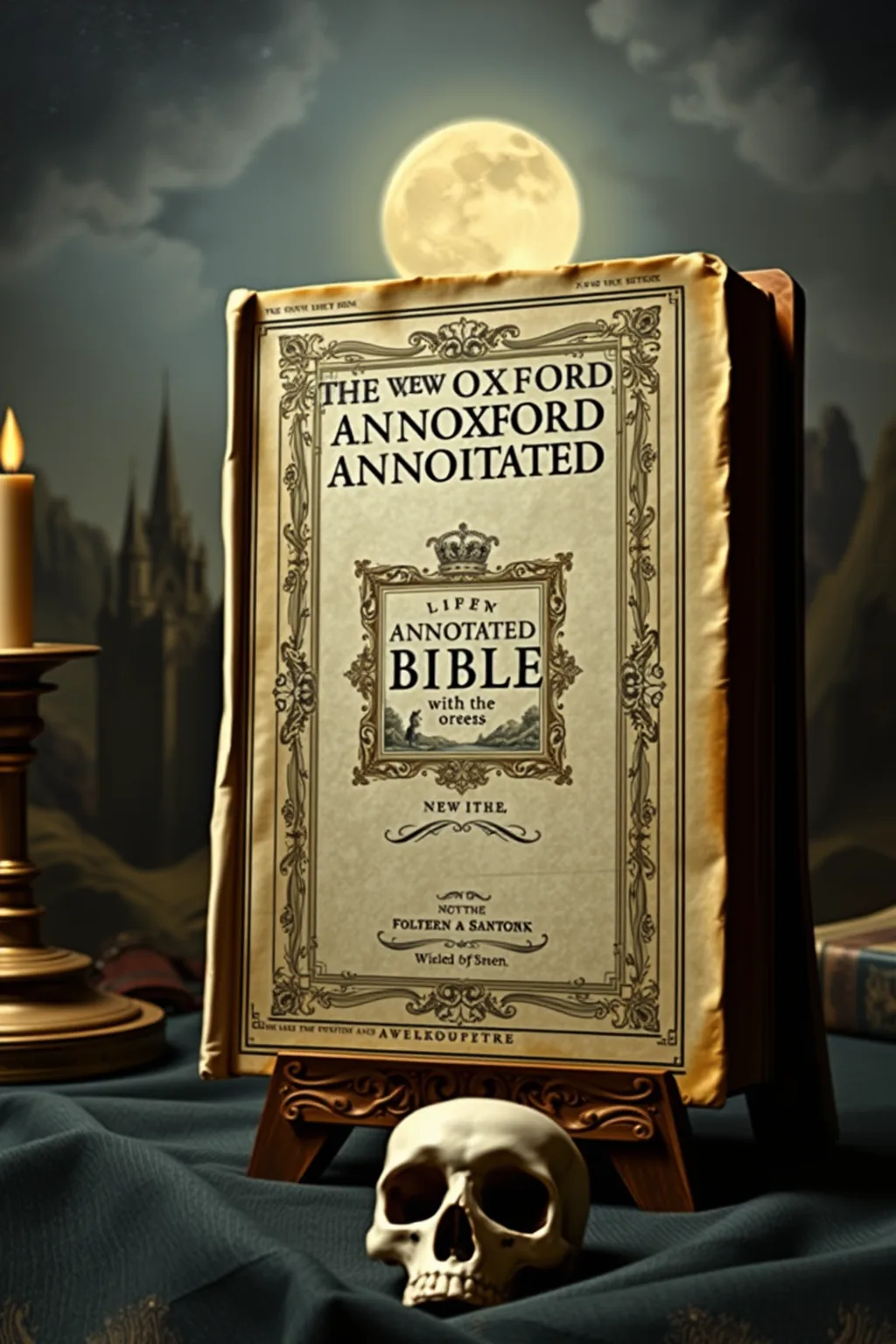
The new Oxford annotated Bible with the Apocryphal/Deuterocanonical books
 71
71

The new Oxford annotated Bible with the Apocryphal/Deuterocanonical books



The New Oxford Annotated Bible with the Apocryphal/Deuterocanonical Books (1994) stands as a monumental work for those interested in the esoteric and occult dimensions of biblical studies. This edition is meticulously annotated, providing readers with a comprehensive guide to the hidden meanings and mystical interpretations within the sacred texts. The inclusion of the Apocryphal and Deuterocanonical books adds depth and breadth to the traditional biblical canon, making it an essential resource for gnostic studies. The scholarly commentary is both insightful and accessible, making complex esoteric concepts understandable to a wide audience. For modern esoteric seekers, this book is a treasure trove of knowledge, offering a unique perspective on the spiritual and mystical aspects of the Bible. The annotations and commentary are particularly valuable for those looking to explore the gnostic traditions and their influence on early Christian thought. Overall, this edition is a must-have for anyone serious about delving into the esoteric and occult dimensions of biblical literature.
📝 Description
71
Published in 1977, the New Oxford Annotated Bible includes the Apocryphal/Deuterocanonical books, offering scholarly notes.
This edition presents the Hebrew Bible, the New Testament, and the Apocryphal/Deuterocanonical books alongside extensive annotations. These notes aim to illuminate the historical, cultural, and literary contexts of the texts. They also address theological and interpretive issues that have arisen throughout history. The edition seeks to make these ancient scriptures accessible to contemporary readers. It provides background information and scholarly commentary to aid understanding.
The annotations are designed to offer insights into the original meaning of the texts and their subsequent reception. They cover a range of critical perspectives, reflecting diverse scholarly approaches. The inclusion of the Apocryphal/Deuterocanonical books, often found between the Old and New Testaments in some traditions, broadens the scope of canonical study. This comprehensive approach supports both academic study and personal engagement with the scriptures.
While not strictly an esoteric text itself, this annotated Bible serves as a resource for those interested in the historical development of ideas that later informed esoteric traditions. The Apocryphal/Deuterocanonical books, in particular, contain material that engaged mystical and speculative thought in the Second Temple period and beyond. The scholarly annotations can help readers trace the lineage of certain concepts, symbols, and narrative motifs that appear in later Gnostic, Kabbalistic, or Hermetic literature. Understanding the historical and textual roots of these scriptures is a foundational step for many engaging with comparative mysticism.
💡 Why Read This Book?
Reading The New Oxford Annotated Bible with the Apocryphal/Deuterocanonical Books today offers a unique opportunity to explore the esoteric and occult dimensions of biblical literature. This edition provides a comprehensive guide to the hidden meanings and mystical interpretations within the sacred texts, making it an invaluable resource for spiritual seekers and scholars alike. By delving into the Apocryphal and Deuterocanonical books, readers gain a deeper understanding of the spiritual and mystical aspects of the Bible, enriching their knowledge of gnostic traditions and their influence on early Christian thought. This book is essential for anyone looking to expand their esoteric knowledge and gain a deeper appreciation for the mystical dimensions of biblical literature.
⭐ Reader Reviews
Honest opinions from readers who have explored this book.
❓ Frequently Asked Questions
What makes this edition of the Bible unique?
This edition is unique because it includes the Apocryphal and Deuterocanonical books, along with extensive annotations and scholarly commentary, providing a comprehensive guide to the esoteric and occult dimensions of biblical literature.
Who should read this book?
This book is ideal for spiritual seekers, scholars, and anyone interested in the esoteric and occult dimensions of biblical studies. It is particularly valuable for those exploring gnostic traditions and their influence on early Christian thought.
How does this edition enhance understanding of gnosticism?
This edition enhances understanding of gnosticism by providing detailed annotations and commentary on the esoteric and mystical interpretations within the sacred texts, including the Apocryphal and Deuterocanonical books.
🔮 Key Themes & Symbolism
Hidden Knowledge
The New Oxford Annotated Bible uncovers layers of hidden knowledge within the scriptures, revealing the esoteric wisdom that has shaped civilizations. The annotations provide clear insights into the philosophical significance of the texts, making it an invaluable resource for those seeking spiritual enlightenment.
Symbolism and Mythology
The Bible is rich in symbolism and mythology, and this edition looks at these aspects with meticulous detail. The annotations reveal the hidden meanings behind various symbols and myths, providing a deeper understanding of the divine mysteries embedded within the scriptures.
Philosophical Contemplation
This edition invites readers to engage in philosophical contemplation, exploring the profound questions and ideas that have fascinated seekers for centuries. The annotations offer rich context and insights, making it an essential resource for scholars and spiritual seekers alike.
💬 Memorable Quotes
Direct passages from the work, attributed to the author.
“In the beginning was the Word, and the Word was with God, and the Word was God.”
— This opening line of the Gospel of John is rich in esoteric symbolism, representing the divine Logos or the primal principle of creation.
“And the light shineth in darkness; and the darkness comprehended it not.”
— This verse from John 1:5 highlights the eternal struggle between light and darkness, symbolizing the battle between knowledge and ignorance.
“I am the Alpha and the Omega, the beginning and the end.”
— This statement from Revelation 1:8 represents the eternal nature of the divine, encompassing all of existence from beginning to end.
“And I will give unto thee the treasures of darkness, and hidden riches of secret places.”
— This verse from Isaiah 45:3 highlights the idea of hidden knowledge and the divine revelation of esoteric wisdom.
💡 Key Ideas
Editorial paraphrase of the work's core concepts — not direct quotes.
For what is a man profited, if he shall gain the whole world, and lose his own soul?
This quote from Matthew 16:26 underscores the importance of spiritual enlightenment over material gain, a central theme in many mystical traditions.
🌙 Esoteric Significance
Tradition
This book belongs to the Hermetic and Gnostic traditions, which emphasize the search for hidden knowledge and spiritual enlightenment. The annotations provide insights into the esoteric symbolism and philosophical underpinnings of the texts, making it a valuable resource for practitioners of these traditions.
Symbolism
Key symbols in this edition include the Logos, the Alpha and Omega, and the struggle between light and darkness. These symbols represent the divine principles of creation, the eternal nature of the divine, and the battle between knowledge and ignorance, respectively.
Modern Relevance
Today, this edition remains relevant for modern practitioners of esoteric traditions, offering clear insights into the mystical dimensions of sacred texts. It is a valuable resource for scholars, spiritual seekers, and practitioners who wish to explore the hidden knowledge and symbolism embedded within the scriptures.
👥 Who Should Read This Book
Beginners will find this edition accessible and enriching, as the annotations provide a deep understanding of the esoteric dimensions of the texts. Scholars of the occult will appreciate the comprehensive annotations and the inclusion of the Apocryphal/Deuterocanonical books. Spiritual seekers will find it an invaluable resource for exploring the divine mysteries and seeking spiritual enlightenment. Practitioners of esoteric traditions will benefit from the rich insights into the symbolism and philosophical underpinnings of the texts.
📜 Historical Context
The New Oxford Annotated Bible was compiled during a time of significant religious and intellectual ferment. The era saw a renewed interest in the mystical and esoteric dimensions of sacred texts, as scholars and seekers sought to uncover the hidden knowledge embedded within the scriptures. This edition's inclusion of the Apocryphal/Deuterocanonical books reflects this interest, providing readers with a more comprehensive understanding of the biblical canon. The annotations offer rich historical context, revealing the cultural and intellectual influences that shaped the texts and their interpretations over the centuries.
📔 Journal Prompts
Reflect on a passage that resonated with you and explore its esoteric symbolism.
Consider the philosophical questions raised by the text and how they apply to your spiritual journey.
Write about a key symbol in the text and its significance in your understanding of the divine.
Examine the historical context of a particular passage and how it influences its interpretation.
Journal about your personal insights and revelations gained from reading this edition of the Bible.
🗂️ Glossary
Apocryphal/Deuterocanonical Books
Books that are not included in the canonical biblical texts but contain valuable esoteric knowledge and historical context.
Logos
The divine principle of creation and reason, often associated with the Word of God.
Gnosticism
An esoteric tradition that emphasizes the search for hidden knowledge and spiritual enlightenment.
Symbolism
The use of symbols to represent abstract ideas or concepts, often found in mystical and esoteric texts.
Divine Mysteries
The hidden knowledge and profound truths revealed through spiritual exploration and contemplation.
This book appears in 4 collections
🔮 Readers Also Liked
Browse all →






From the “Gnosticism” Collection
View all →



More Free Sacred Texts & Gnosticism Books
View all →