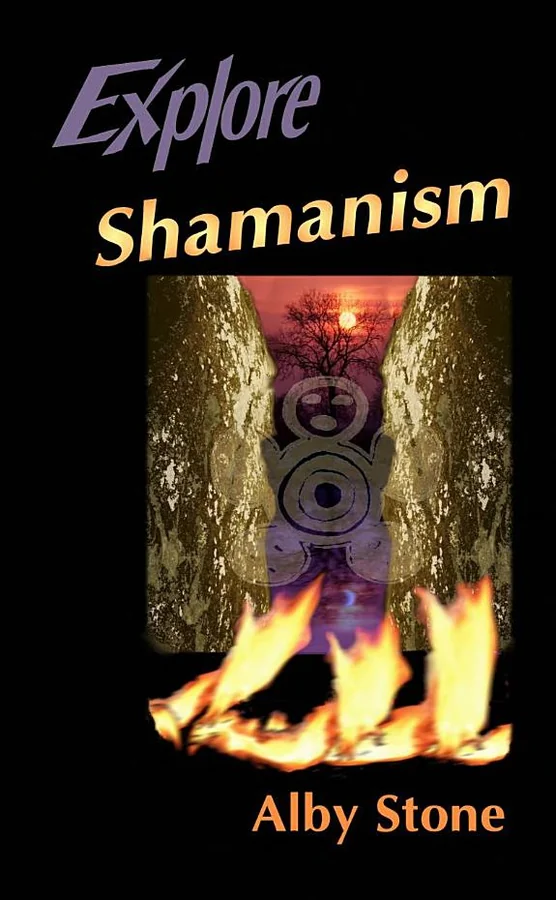
Explore Shamanism
 82
82

Explore Shamanism
Alby Stone's "Explore Shamanism" presents a valuable, if occasionally dense, overview of a complex spiritual phenomenon. The author’s strength lies in meticulously cataloging diverse shamanic traditions, moving beyond the romanticized Western interpretations that often dominate popular discourse. Stone avoids sensationalism, opting instead for a grounded, academic approach. A particularly insightful passage details the use of the drum's rhythmic pulse as a tool for journeying, a recurring motif across disparate cultures. However, the book’s academic rigor can sometimes make it less accessible to the absolute beginner, with terminology that occasionally requires prior knowledge. Despite this, it offers a solid, fact-based foundation for understanding shamanism's global reach and enduring relevance.
📝 Description
82
Alby Stone's 2003 book examines shamanic practices across cultures and time.
Published in 2003, Alby Stone's "Explore Shamanism" moves past superficial descriptions to detail the cosmologies, rituals, and philosophies of shamanism. Stone clarifies the roles shamans play as intermediaries, healers, and knowledge keepers within their communities. The book is for readers seeking a thorough academic introduction to shamanism, useful for those studying comparative religion, anthropology, or esoteric traditions. Students, researchers, and practitioners will find a solid grounding in shamanic concepts. Those already familiar with the subject may encounter new ways of understanding established ideas.
Stone places shamanism within its historical and academic context, acknowledging earlier anthropological work while correcting colonial biases. The book addresses the spiritual practices and beliefs of various cultures, presenting a respectful and detailed account. It systematically explains core shamanic concepts like spirit journeys, the use of spirit helpers, altered states of consciousness, and the shaman's connection to the natural world. Ethical considerations and the responsibilities tied to shamanic roles are also discussed.
Alby Stone's work engages with the academic study of indigenous spiritualities, particularly shamanism. It acknowledges foundational scholarship, such as Mircea Eliade's influential 1951 text, while striving for a more respectful and detailed presentation. The book addresses the ongoing re-evaluation of shamanic practices in both academic and popular spheres, aiming to move beyond earlier interpretations and colonial perspectives. Stone's examination contributes to understanding shamanism as a worldview and lived experience, separate from simplistic or romanticized notions.
💡 Why Read This Book?
• Gain a nuanced understanding of shamanic spirit journeys, examining how different cultures utilize rhythmic sound, such as the shamanic drum, to facilitate these altered states, a concept detailed in the book's exploration of trance induction. • Appreciate the diverse roles of shamans beyond simple "healers," recognizing their functions as cultural historians and intermediaries with the spirit world, as illuminated by specific case studies presented in the work. • Distinguish between authentic shamanic practices and their Western appropriations by understanding the ethical frameworks and cultural contexts that underpin traditional shamanism, a critical point addressed by Stone.
⭐ Reader Reviews
Honest opinions from readers who have explored this book.
❓ Frequently Asked Questions
What is the primary difference between shamanism and other religions as presented in "Explore Shamanism"?
Stone highlights that shamanism is often less a formal religion with dogma and more a set of practices and beliefs centered on the shaman's direct experience with the spirit world, serving vital community functions.
When was "Explore Shamanism" first published, and who is the author?
The book was first published in 2003, authored by Alby Stone, an established figure in the study of esoteric and indigenous traditions.
Does "Explore Shamanism" discuss specific shamanic cultures or general principles?
The book examines both general principles common to many shamanic traditions and provides specific examples from various cultures, offering a balanced perspective on the subject.
Are altered states of consciousness a central theme in Alby Stone's "Explore Shamanism"?
Yes, altered states of consciousness, particularly those achieved through sonic entrainment like drumming, are presented as fundamental to the shamanic journey and interaction with spirits.
What is the author's approach to the historical study of shamanism?
Stone takes a critical yet respectful approach, acknowledging earlier works like Eliade's while seeking to provide a more contemporary and culturally sensitive overview of shamanic traditions.
Can "Explore Shamanism" be considered an academic text or a practitioner's guide?
It functions as a scholarly introduction, bridging academic research with accessible explanations, making it suitable for both students and those seeking informed understanding rather than direct instruction.
🔮 Key Themes & Symbolism
The Shamanic Journey
Central to the book is the concept of the shamanic journey, an altered state of consciousness allowing the practitioner to traverse between the ordinary and spirit worlds. Stone details how tools like rhythmic drumming, chanting, and sometimes plant-based substances are employed across various cultures to facilitate these journeys. The purpose often involves seeking guidance, healing, or retrieving lost soul parts. The work emphasizes that these journeys are not mere hallucinations but are understood within the cultural cosmology as real encounters with spiritual entities and realms.
Spirit Helpers and Guides
"Explore Shamanism" extensively covers the integral role of spirit helpers, also known as spirit guides or familiars. These entities, often perceived as animals, ancestors, or nature spirits, are crucial allies for the shaman. They provide knowledge, protection, and power during journeys and healing rituals. Stone illustrates how the relationship with these helpers is cultivated and maintained through respect and reciprocity, forming a vital partnership that empowers the shaman to fulfill their community's needs. The nature and form of these helpers vary significantly by culture.
Shamanism as a Worldview
The book posits shamanism not merely as a collection of techniques but as a comprehensive worldview. It presents a perception of reality where the material and spiritual realms are intimately connected and interdependent. Shamanic cultures often view illness as arising from spiritual imbalance or intrusion, and the shaman's role is to restore harmony. Stone explores how this perspective shapes the community's relationship with nature, ancestors, and the very fabric of existence, underscoring its holistic approach to life and well-being.
Cultural Diversity and Adaptation
A significant aspect of Stone's work is its emphasis on the vast diversity of shamanic practices worldwide. Rather than presenting a monolithic 'shamanism,' the book highlights how these traditions are deeply rooted in specific geographical, ecological, and cultural contexts. From Siberian reindeer herders to Amazonian plant healers, the methods, spirits, and cosmologies adapt. This section underscores that while core principles may exist, the expression of shamanism is uniquely shaped by the societies that practice it.
💬 Memorable Quotes
Direct passages from the work, attributed to the author.
“The drum is often the primary vehicle for entering the spirit world.”
— This statement expresses the book's focus on the practical tools of shamanism. It suggests that the rhythmic sound of the drum isn't just accompaniment but a fundamental technology for inducing the trance state necessary for spiritual exploration and communication.
“Shamanic healing addresses imbalances in the spiritual, not just the physical, body.”
— This interpretation highlights a core tenet of shamanic philosophy: that many ailments have spiritual origins. The shaman's work, therefore, involves interacting with the non-physical dimensions to restore wholeness, a concept crucial for understanding this practice.
“Spirit helpers are seen as active collaborators, not passive tools.”
— This emphasizes the reciprocal relationship between the shaman and the spirit world. It suggests a dynamic partnership where spirits have agency and are essential allies, requiring respect and understanding from the practitioner.
“Cosmologies vary, but the intermediary role of the shaman is a constant.”
— This points to the universality of the shamanic function across diverse cultures. Despite differences in belief systems, the shaman's essential task of bridging the human and spirit realms remains a consistent feature.
“Understanding requires looking beyond Western rationalism.”
— This serves as a call to open-mindedness for the reader, suggesting that shamanic experiences and beliefs may not align with conventional scientific or philosophical frameworks and require a different mode of comprehension.
🌙 Esoteric Significance
Tradition
While not strictly adhering to a single lineage like Hermeticism or Kabbalah, "Explore Shamanism" engages with the broader currents of animistic and nature-based spiritualities that underpin many esoteric traditions. It aligns with practices that emphasize direct experiential contact with unseen forces and the interconnectedness of all things. The work can be seen as a bridge, offering scholarly validation for concepts explored in more esoteric systems, particularly those focused on nature spirits, elemental forces, and altered states of consciousness.
Symbolism
The book frequently references the symbolism of the World Tree (Axis Mundi), representing the connection between the underworld, earthly realm, and celestial spheres, a common motif in shamanic cosmologies. Animal symbolism is also paramount, with spirit animals like the bear, wolf, or eagle serving as powerful guides and embodiments of specific energies or attributes. The cyclical nature of seasons and life/death/rebirth is another pervasive symbolic theme, reflecting the shaman's role in maintaining natural and spiritual equilibrium.
Modern Relevance
Contemporary practices in ecopsychology, deep ecology, and certain forms of nature-based spirituality draw heavily on the principles outlined in "Explore Shamanism." Thinkers and practitioners focusing on indigenous wisdom, trauma healing through somatic and spiritual means, and the integration of altered states for personal growth often reference the foundational understanding of shamanism provided by works like Stone's. It informs modern attempts to reconnect with the natural world and indigenous perspectives on healing and community well-being.
👥 Who Should Read This Book
• Students of comparative religion and anthropology seeking a scholarly yet accessible overview of shamanic traditions worldwide, including their historical development and cultural variations. • Individuals interested in esoteric or alternative spiritualities who wish to understand the roots of animistic beliefs and nature-based practices, moving beyond New Age interpretations. • Practitioners of healing arts or mindfulness seeking to explore the therapeutic potential of altered states of consciousness and the concept of spiritual causality in illness, as detailed in the book's case studies.
📜 Historical Context
Published in 2003, Alby Stone's "Explore Shamanism" entered a field already significantly shaped by scholars like Mircea Eliade, whose seminal "Shamanism: Archaic Techniques of Ecstasy" (1951) provided a foundational, albeit sometimes criticized, comparative framework. The early 21st century saw a growing academic interest in indigenous epistemologies and a critique of earlier colonial perspectives that had often pathologized or dismissed shamanic practices. Stone's work arrived at a time when anthropological studies were increasingly emphasizing the cultural specificity and social embeddedness of shamanism, moving away from universalizing theories. It also engaged with a burgeoning popular interest in shamanism, often fueled by the New Age movement, while maintaining a scholarly rigor that distinguished it from more superficial accounts. The reception was generally positive within academic circles for its comprehensive scope and balanced approach.
📔 Journal Prompts
The shamanic drum's role in facilitating altered states.
Your personal understanding of spirit helpers and their potential functions.
The concept of the World Tree as a cosmic map.
Reflecting on the balance between nature and human society.
The distinction between spiritual and physical illness.
🗂️ Glossary
Shaman
An individual in tribal societies who acts as an intermediary between the visible world and the world of spirits, often performing healing, divination, and ritualistic functions.
Spirit Journey
A trance-like state induced by the shaman to travel to the spirit world for purposes of healing, guidance, or retrieving information.
Spirit Helper
An entity from the spirit world (often an animal or ancestral spirit) that provides assistance, knowledge, and power to the shaman.
Altered State of Consciousness (ASC)
A condition of awareness that deviates from normal waking consciousness, often achieved through drumming, chanting, or psychoactive substances in shamanic practice.
Cosmology
The understanding of the universe and its structure held by a particular culture or group, including its origins, order, and relationship between the spiritual and material realms.
Animism
The belief that natural objects, phenomena, and the universe itself possess souls or consciousness; a worldview often associated with shamanism.
World Tree (Axis Mundi)
A mythological concept representing the center of the world, connecting the underworld, the earthly plane, and the heavens; a common symbol in shamanic cosmologies.
This book appears in 1 collection
🔮 Readers Also Liked
Browse all →









From the “Shamanism” Collection
View all →







More Free Sacred Texts & Gnosticism Books
View all →