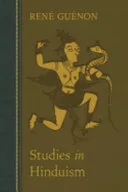
Studies in Hinduism
 78
78

Studies in Hinduism
René Guénon’s *Studies in Hinduism* offers a rare, uncompromisingly metaphysical lens through which to view the vast Indian tradition. Guénon, never one for superficiality, treats Hinduism not as a collection of practices or beliefs, but as a direct manifestation of the Eternal Tradition. The strength here lies in his rigorous application of perennialist principles, revealing the common metaphysical bedrock beneath diverse Hindu doctrines. He masterfully dissects concepts like *Brahman* and *Atman*, anchoring them in a universal ontological framework that predates and underpins any particular historical religion. A notable passage unpacks the esoteric significance of the *Vedic sacrifice*, illustrating how ritual action points to cosmic principles. However, the work’s singular focus can also be its limitation; readers seeking ethnographic detail or historical contingency will not find it here. Guénon’s prose, while precise, demands sustained attention, offering little concession to the casual reader. Ultimately, this is an essential, albeit demanding, text for understanding the metaphysical architecture of Hinduism from a traditionalist perspective.
📝 Description
78
René Guénon's *Studies in Hinduism* was first compiled in 2001, gathering his analyses of Hindu thought.
This collection presents René Guénon's examination of Hindu traditions, focusing on their metaphysical underpinnings rather than a simple survey. Guénon, a significant figure in 20th-century traditionalist thought, unpacks the cosmology, theology, and ritual of Hinduism. The book aims to convey the spiritual essence of these traditions, accessible to those who look for universal truths beyond specific cultures.
It is intended for students of comparative religion, esoteric philosophy, and perennialism, especially those familiar with Guénon's earlier works. Readers interested in traditionalist metaphysics or the philosophical basis of Hindu practices will find substantial material. The volume addresses a gap in English scholarship by compiling previously scattered or untranslated essays by Guénon (1886-1951).
Guénon critically engaged with the positivism of his era, drawing from global traditions. This collection offers his perspective on Eastern thought, contrasting with contemporary Orientalist scholarship. He discusses fundamental Hindu concepts such as Brahman, Atman, Maya, and the Yugas, emphasizing hierarchical structures within these traditions.
René Guénon's work is rooted in the Traditionalist School, a movement that posits the existence of a perennial wisdom underlying all exoteric religions and philosophies. *Studies in Hinduism* exemplifies this by seeking the universal metaphysical principles within a specific tradition, viewing Hinduism not as a historical phenomenon but as a manifestation of primordial truth. Guénon's approach contrasts with purely academic or exoticized views, instead emphasizing the intellectual and spiritual doctrines that connect different traditions through a common, unchanging essence.
💡 Why Read This Book?
• Gain a metaphysical framework for understanding Hindu cosmology, moving beyond exoteric descriptions to grasp the underlying principles of *Brahman* and *Atman* as articulated by Guénon. • Explore the concept of the *Yugas* and cyclical time, understanding how this cosmology informs a traditionalist view of history and societal decline. • Appreciate Guénon's analysis of Vedic ritual, recognizing its function not merely as religious observance but as a symbolic representation of cosmic processes and spiritual transmission.
⭐ Reader Reviews
Honest opinions from readers who have explored this book.
❓ Frequently Asked Questions
What is the primary focus of René Guénon's 'Studies in Hinduism'?
The book's primary focus is on the metaphysical and esoteric dimensions of Hinduism, presenting it as a repository of universal wisdom rather than a historical or anthropological subject.
When was René Guénon active as a writer?
René Guénon was active primarily in the first half of the 20th century, with most of his major works published between the 1920s and his death in 1951.
Does 'Studies in Hinduism' discuss specific Hindu deities?
While Guénon references deities, his focus is on their symbolic and metaphysical significance within the broader cosmic order, rather than on devotional aspects.
Is this book suitable for beginners in Hinduism?
It is best suited for those with some prior familiarity with religious studies or esoteric philosophy, as Guénon's approach is highly theoretical and metaphysical.
What is the concept of 'Perennialism' as related to Guénon's work?
Perennialism, a philosophy Guénon championed, posits that all major religious traditions share a common, underlying metaphysical truth or 'wisdom'.
What does Guénon mean by 'esoteric' versus 'exoteric' in his analysis?
Exoteric refers to the outward, literal, or public aspect of a religion, while esoteric refers to its inner, hidden, symbolic, and spiritual meaning.
🔮 Key Themes & Symbolism
The Metaphysics of Brahman and Atman
Guénon meticulously examines the Hindu concepts of Brahman, the ultimate, undifferentiated Reality, and Atman, the eternal Self or soul. He posits that understanding the identity of Atman with Brahman is the supreme goal of spiritual realization within the Hindu tradition. This exploration moves beyond simple definitions, examining the ontological implications of these principles as the foundation of all existence and consciousness, aligning them with the perennialist notion of a singular, Absolute Principle underlying diverse traditions.
Vedic Cosmology and Cyclical Time
The work analyzes the structure of the cosmos as described in the Vedas, focusing on the concept of cyclical time, marked by the ages known as Yugas. Guénon interprets this cyclical view not merely as a historical model but as a metaphysical blueprint reflecting the processes of manifestation, dissolution, and renewal inherent in the universe. He connects this cosmology to the idea of a primordial tradition from which later traditions have, in his view, become progressively distant, leading to the 'Reign of Quantity'.
Ritual as Symbolic Action
Guénon dissects Hindu rituals, particularly Vedic sacrifices (*yajña*), revealing their esoteric significance. He argues that these outward actions are not arbitrary but are symbolic representations of cosmic operations and spiritual truths. The performance of ritual, when understood correctly, serves as a means of re-establishing connection with divine principles and participating in the cosmic order, acting as a vehicle for spiritual transmission and realization.
The Principle of Initiation
A central theme is the necessity of spiritual initiation for accessing the deeper truths of any tradition, including Hinduism. Guénon emphasizes that esoteric knowledge is not acquired through intellectual study alone but through a process of transmission from a qualified master to a disciple within an authentic initiatory lineage. This concept underscores the hierarchical nature of spiritual authority and the importance of maintaining the integrity of tradition.
💬 Memorable Quotes
Direct passages from the work, attributed to the author.
“The Hindu tradition contains the most complete expression of the Primordial Tradition.”
— This statement reflects Guénon's core thesis that Hinduism, due to its antiquity and preservation of certain key metaphysical doctrines, offers the most unadulterated glimpse into the universal spiritual truths that underpin all religions.
“Brahman is the principle of all existence.”
— Guénon uses this to establish Brahman as the supreme, unmanifest Absolute, the source from which all contingent realities emanate. It highlights the monistic or non-dualistic foundation of his understanding of Hinduism.
“The distinction between the exoteric and the esoteric is fundamental.”
— This emphasizes Guénon's focus on the inner, symbolic meaning of religious forms and doctrines, contrasting it with the purely outward or literal interpretations often prevalent in modern scholarship.
“The cyclic notion of time is inherent in the Hindu worldview.”
— Guénon points to the concept of Yugas (epochs) to illustrate Hinduism's understanding of cosmic and historical processes as cyclical, a view he contrasts with the linear progression favored in Western thought.
“Initiation is the means by which spiritual authority is transmitted.”
— This highlights Guénon's belief in the necessity of a direct, authoritative transmission of spiritual knowledge through established lineages, a key element in preserving the esoteric dimension of traditions.
🌙 Esoteric Significance
Tradition
Guénon’s work firmly belongs to the Traditionalist School, also known as the Perennialist movement, which posits a universal, primordial wisdom underlying all exoteric religions. His analysis of Hinduism aligns it with Hermeticism, Platonism, and Islamic esotericism, viewing it as one of the most direct and complete expressions of this singular, eternal tradition. He departs from purely academic studies by prioritizing metaphysical truth and initiatory transmission over historical or anthropological analysis.
Symbolism
Key symbols Guénon explores include the *Lotus* (*Padma*), representing the manifestation of the universe from the primordial waters and the unfolding of consciousness. The *Wheel* (*Chakra*) symbolizes cyclical time, cosmic processes, and the spiritual centers within the human microcosm. The *Sacrifice* (*Yajña*) is interpreted not merely as ritualistic offering but as a cosmogonic act, mirroring the primordial self-limitation of the Absolute that leads to creation.
Modern Relevance
Contemporary thinkers influenced by Guénon, such as Titus Burckhardt and Seyyed Hossein Nasr, continue to engage with his interpretations of Hinduism. His work remains relevant for students of comparative esotericism, traditionalist philosophy, and those seeking a metaphysical understanding of religious symbolism. It informs discussions on the critique of modernity and the search for spiritual authenticity in a desacralized world, resonating with movements interested in traditional cosmology and the critique of materialism.
👥 Who Should Read This Book
• Students of comparative religion and metaphysics seeking a traditionalist interpretation of Hindu doctrines, particularly those interested in René Guénon's broader philosophical framework. • Scholars of esotericism interested in how Eastern traditions were understood and integrated into Western metaphysical thought during the 20th century. • Individuals engaged in spiritual practices who desire a deeper theoretical understanding of concepts like *Brahman*, *Atman*, and the symbolic meaning of Vedic rituals.
📜 Historical Context
René Guénon’s *Studies in Hinduism*, a compilation of his writings on the subject, emerged in its English form in 2001, long after his death in 1951. Guénon was a controversial figure in the intellectual field of early 20th-century France, a period dominated by secularism, positivism, and the rise of various spiritualist movements. He positioned himself against these currents, advocating for a return to the metaphysical principles of traditional societies. His critique of modernity found echoes in the work of contemporaries like Aldous Huxley, who engaged with Eastern philosophies, though Guénon’s approach remained far more rigorously metaphysical and less focused on personal experience. While Orientalism was prevalent, Guénon offered a distinct perspective, interpreting Indian traditions through the lens of a universal 'Perennial Philosophy,' often critiquing what he saw as the dilution or misunderstanding of these traditions by Western scholars and practitioners.
📔 Journal Prompts
The concept of Brahman as the unmanifest Absolute.
The symbolic meaning of the Vedic sacrifice (*yajña*).
The implications of cyclical time (*Yugas*) for understanding history.
The distinction between exoteric and esoteric dimensions within Hinduism.
The role of initiation in traditional spiritual transmission.
🗂️ Glossary
Brahman
In Hinduism, the ultimate, unchanging, infinite, and immanent spiritual reality that is the foundation of all existence. It is the Absolute, the Supreme Being.
Atman
The individual soul or true Self, which is understood in Advaita Vedanta to be identical with Brahman. It represents the eternal, unchanging essence of a being.
Maya
Often translated as 'illusion,' Maya refers to the cosmic power that conceals the true nature of reality (Brahman) and creates the appearance of a diverse, material world.
Yuga
An epoch or age within a cycle of cosmic time in Hindu cosmology. The four Yugas (Satya, Treta, Dvapara, Kali) represent a gradual decline in righteousness and spiritual awareness.
Yajña
A Vedic ritual sacrifice, often involving fire, offerings, and chanting. Guénon interprets it as a symbolic act representing cosmic creation and spiritual transformation.
Vedas
The oldest and most authoritative scriptures of Hinduism, considered to be divinely revealed. They contain hymns, rituals, philosophical insights, and guidance for spiritual life.
Perennialism
A philosophical and spiritual viewpoint, championed by Guénon, that asserts the existence of a common, underlying metaphysical truth shared by all major religious and spiritual traditions.