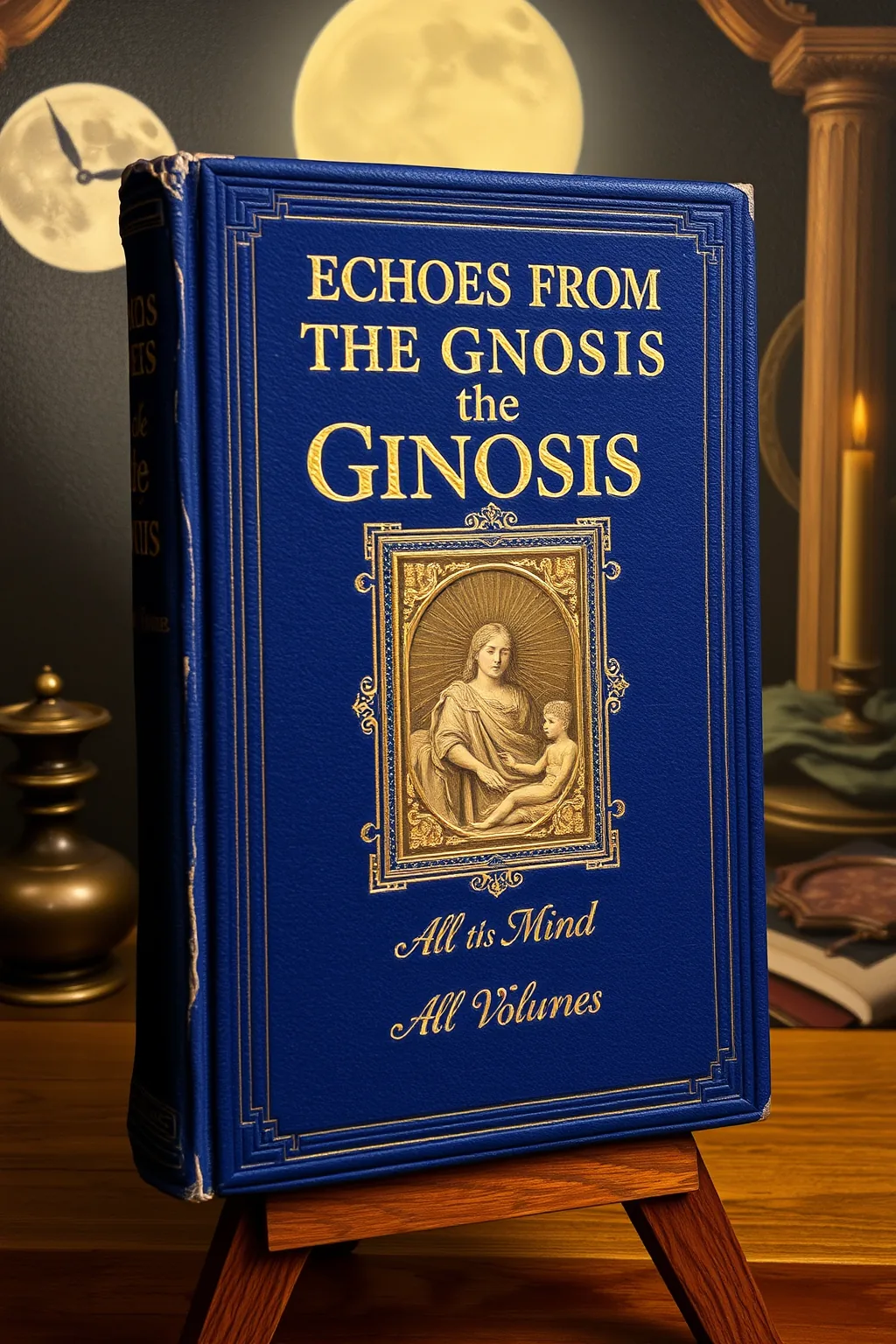
Echoes From the Gnosis – The Gnosis of the Mind
 74
74

Echoes From the Gnosis – The Gnosis of the Mind



By Alaric Kestrel (Metaphysical Studies Reviewer) — G. R. S. Mead’s 'Echoes From the Gnosis – The Gnosis of the Mind' stands as a monumental achievement in Gnostic scholarship. As the first modern scholar to systematically translate and interpret these elusive texts, Mead offers unparalleled access to the core tenets of Gnosticism. His meticulous work, predating major archaeological finds, reveals a profound understanding of the spiritual and philosophical currents that shaped this ancient tradition. This series is an essential resource for serious students of mysticism, providing clarity and depth to complex Gnostic concepts. It’s a vital gateway for anyone seeking to understand the origins of spiritual thought and the perennial quest for inner knowledge.
📝 Description
74
Published before the Nag Hammadi library was found, 'Echoes From the Gnosis' presents Gnostic texts.
G. R. S. Mead compiled and translated early Gnostic writings in 'Echoes From the Gnosis – The Gnosis of the Mind.' This collection appeared before the major discoveries of Gnostic texts at Nag Hammadi, providing access to materials that were then largely unknown. Mead's work focuses on the teachings of various Gnostic groups, detailing their understanding of the divine element within humans, the structure of the universe, and the way toward spiritual freedom.
Each part of this series functions as a guide to understanding complex ideas. It covers the symbolic language, stories with hidden meanings, and the philosophical foundations of Gnosticism. The book invites those interested in spiritual matters to examine their own consciousness and discover their inner spiritual capacities. Mead’s scholarship offers a detailed look at a historical spiritual movement.
This work engages with Gnosticism, a spiritual and philosophical movement that flourished in the early centuries CE. Gnostic systems often posited a dualistic worldview, distinguishing between a transcendent, unknowable God and a lesser creator deity responsible for the material world. Humanity was seen as containing a divine spark, trapped in the material realm and needing special knowledge (gnosis) for liberation. Mead’s compilation offers direct access to primary source material from this tradition, illuminating its complex cosmology and soteriology.
✍️ Author
All Volumes
This is a list of best-selling fiction authors to date, in any language. While finding precise sales numbers for any given author is nearly impossible, the list is based on approximate numbers provided or repeated by reliable sources.
💡 Why Read This Book?
Embark on an illuminating journey into the heart of ancient Gnostic wisdom. 'Echoes From the Gnosis' offers rare translations and insightful interpretations, providing direct access to esoteric teachings lost for centuries. Ideal for spiritual seekers, occult scholars, and practitioners of inner disciplines who yearn for profound metaphysical understanding and the keys to self-realization.
⭐ Reader Reviews
Honest opinions from readers who have explored this book.
❓ Frequently Asked Questions
Who was G. R. S. Mead?
G. R. S. Mead was a seminal scholar of esoteric traditions and the first modern translator and interpreter of Gnostic texts. He was also a secretary to Helena Blavatsky, the founder of Theosophy.
What makes these Gnostic texts unique?
These texts represent some of the earliest and most comprehensive translations of Gnostic writings available, predating the discovery of the Nag Hammadi Library, offering a unique historical perspective on these profound spiritual teachings.
What is 'Gnosis' in this context?
Gnosis refers to a special, intuitive knowledge or spiritual insight that leads to liberation. It's not intellectual understanding alone, but a direct, experiential knowing of divine truths and one's own spiritual essence.
Is this book suitable for beginners?
While rich and profound, the series is best approached by those with some foundational interest in philosophy, mysticism, or comparative religion. Mead's interpretations provide guidance for deeper study.
What is the philosophical significance of Gnosticism?
Gnosticism offers a dualistic worldview, emphasizing the inherent divinity within humanity contrasted with a flawed material creation. It explores themes of cosmic rebellion, spiritual awakening, and the path to salvation through knowledge.
🔮 Key Themes & Symbolism
The Divine Spark Within
This theme explores the Gnostic concept of the divine essence or 'spark' residing within every human being, often contrasted with the limitations of the material world. It explores the idea that true liberation comes from recognizing and awakening this inner divinity, leading to a profound understanding of one's true nature and connection to the transcendent realm. The texts illuminate practices and insights aimed at igniting this latent spiritual fire, guiding the soul towards its ultimate reunion with the divine source.
Cosmic Dualism and the Demiurge
A central tenet examined is the Gnostic understanding of a dualistic cosmos, often positing a benevolent, transcendent God separate from the flawed creator of the material universe, the Demiurge. This theme scrutinizes the nature of this flawed creator, the perceived imperfections of the material world, and the spiritual struggle against ignorance and illusion perpetuated by this lower cosmic power. The 'Gnosis of the Mind' reveals how understanding this cosmic architecture is crucial for spiritual detachment and ascent.
The Path to Spiritual Liberation
This theme focuses on the Gnostic pathway to salvation, which is primarily achieved through 'Gnosis' – direct spiritual knowledge and insight. The works presented illuminate the various stages and methods for attaining this liberating knowledge, including the role of spiritual teachers, deciphering symbolic language, and overcoming the forces that bind the soul to the material plane. It offers a profound exploration of inner transformation and the awakening of consciousness necessary for transcending earthly limitations.
💬 Memorable Quotes
Direct passages from the work, attributed to the author.
“The key to the kingdom is within.”
— This highlights the Gnostic emphasis on inner awakening and self-discovery as the primary means of spiritual attainment, rather than external rituals or dogma.
“Ignorance is the great chain.”
— This points to the Gnostic belief that spiritual bondage stems from a lack of true knowledge, or 'Gnosis', about one's divine origin and the nature of reality.
“The material world is a shadow.”
— This reflects the Gnostic view of the physical realm as an illusion or a lesser imitation of the true, spiritual reality.
“Awaken, O sleeper, and rise from the dead.”
— A powerful call to spiritual consciousness, urging individuals to break free from the slumber of ignorance and realize their divine potential.
“True knowledge sets the soul free.”
— This captures the core Gnostic doctrine that experiential, spiritual understanding is the ultimate liberator of the human spirit.
🌙 Esoteric Significance
Tradition
This work is deeply rooted in the Gnostic tradition, an early Christian and Hellenistic spiritual movement that emphasized direct spiritual knowledge (Gnosis) as the path to salvation. It explores Gnostic cosmology, the nature of the divine, the flawed creation of the material world, and the individual's journey to liberation from ignorance and material bondage, offering a unique perspective on early mystical Christianity and its esoteric underpinnings.
Symbolism
The texts within 'Echoes From the Gnosis' are rich with complex symbolism, including allegorical figures, cosmic myths, and cryptic parables. Mead meticulously deciphers these symbols, revealing their deeper meanings related to spiritual awakening, the hidden nature of reality, the struggle between light and darkness, and the process of divine ascent. Understanding this symbolic language is key to unlocking the profound Gnostic teachings on the nature of the soul and its journey back to the divine.
Modern Relevance
In an age often characterized by materialism and spiritual disconnection, the Gnostic quest for inner knowledge and liberation remains profoundly relevant. 'The Gnosis of the Mind' offers timeless insights into self-awareness, the nature of consciousness, and the search for meaning. Its exploration of challenging dualisms and the inherent divine potential within humanity provides a powerful framework for individuals seeking to work through the complexities of modern life with greater spiritual insight and resilience.
👥 Who Should Read This Book
This collection is a valuable collection for several distinct groups. **Spiritual Seekers** will find profound meditations on the inner life and the nature of reality, offering paths to deeper self-understanding and connection. **Occult Scholars and Mystics** will appreciate Mead's pioneering scholarship and direct access to primary Gnostic texts, providing essential context for their studies. **Practitioners of Inner Disciplines** will discover ancient wisdom and symbolic keys that can inform their meditative and contemplative practices. Even **Curious Beginners** with an interest in alternative spiritual histories will find Mead's clear prose and insightful interpretations a valuable starting point into the enigmatic world of Gnosticism.
📜 Historical Context
Penned in the early 20th century, 'Echoes From the Gnosis' emerged during a period of intense interest in comparative religion and esoteric philosophies. G. R. S. Mead, a scholar deeply influenced by Theosophy and his close association with Helena Blavatsky, sought to bridge the gap between ancient mystical traditions and modern understanding. His work predates the key discovery of the Nag Hammadi Library in 1945, making his translations and interpretations exceptionally valuable. At a time when Gnosticism was largely known through the critiques of early Church Fathers, Mead's efforts offered a more direct and sympathetic engagement with these complex, often misunderstood, spiritual teachings, contributing significantly to the burgeoning field of religious studies and occult scholarship.
📔 Journal Prompts
Reflect on a time you felt a profound sense of 'knowing' without logical explanation. How did this experience align with the concept of Gnosis?
Consider the Gnostic idea of the material world as potentially flawed or illusory. What aspects of modern life might represent this 'shadow' for you?
What does the concept of a 'divine spark' within you mean in practical, everyday terms? How can you nurture it?
Explore the symbolism of light and darkness in your personal spiritual journey. Where do you see these forces at play?
How can the pursuit of 'Gnosis' – direct spiritual insight – inform your daily decisions and interactions?
🗂️ Glossary
Gnosis
A Greek term meaning 'knowledge,' specifically referring to intuitive, experiential, and spiritual understanding, often seen as the key to salvation and liberation from the material world in Gnostic traditions.
Demiurge
In Gnostic cosmology, the lesser creator god responsible for the material universe, often depicted as ignorant or malevolent, distinct from the supreme, transcendent God.
Aeons
Emanations or divine beings in Gnostic cosmology, originating from the supreme God, forming a spiritual hierarchy that mediates between the divine realm and the material world.
Sophia
A prominent female Aeon in Gnosticism, often associated with wisdom, whose yearning or fall from the divine realm is sometimes depicted as the origin of the material creation.
Pleroma
The 'fullness' or totality of the divine realm in Gnosticism, comprising the supreme God and the Aeons, from which the material world is seen as a deviation or flawed creation.
This book appears in 2 collections
🔮 Readers Also Liked
Browse all →







From the “Theosophy” Collection
View all →







More Free Theosophy & Anthroposophy Books
View all →