What is Prophecy?
Prophecy involves the foretelling of future events, often understood as divine communication or intuitive insight. It can manifest through visions, dreams, or symbolic language, interpreted by individuals with perceived special abilities. Historically, prophecy has been central to religious traditions, philosophical inquiry, and esoteric practices, influencing cultural and societal development through its perceived connection to a higher order or hidden knowledge.
Best Books for Complete Beginners
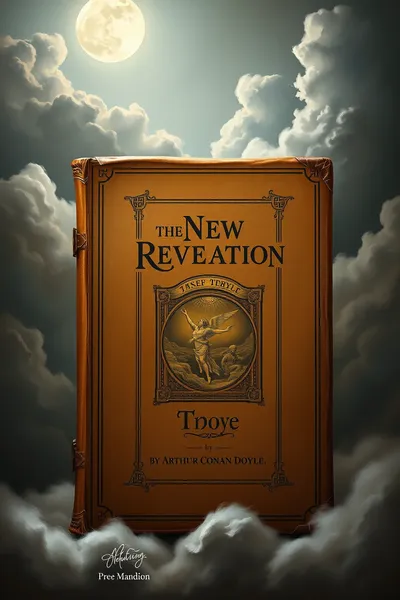
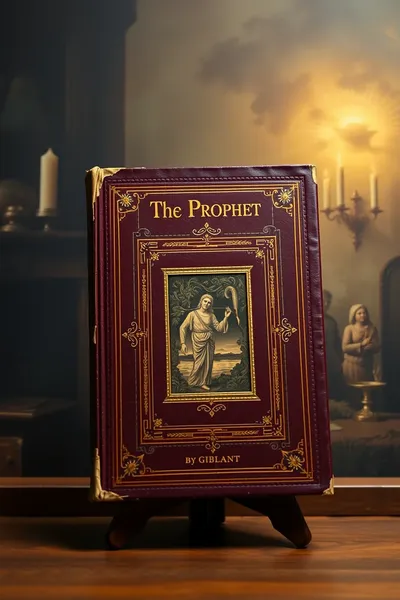
For those new to prophecy, Gibran Kahlil Gibran's 'The Prophet' offers accessible poetic reflections on life and destiny. Arthur Conan Doyle's 'The New Revelation' provides a personal account of spiritualist experiences, while William Blake's 'The Marriage of Heaven and Hell' presents a unique, symbolic vision. Walter Scott's 'Guy Mannering, Or, the Astrologer' introduces fictional narrative with prophetic undertones, and 'The book of Enoch the Prophet' offers an early, influential text on apocalyptic visions.
Intermediate Reading
Intermediate students can examine H.P. Blavatsky's 'Isis Unveiled, Volume 2', which examines ancient mysteries and their connection to prophecy. Andrew Lang's 'The Making of Religion' explores the anthropological roots of belief systems, including prophetic traditions. J. L. Kennon's 'The Planet Mars and Its Inhabitants' offers a psychic revelation, while Leo Tolstoy's 'The Kingdom of God Is Within You' critiques established religious structures from a spiritual perspective that touches on inner prophecy.
Classical / Advanced Texts
Advanced study benefits from direct engagement with primary sources. 'The Edda, Volume 1' provides the mythological framework of Norse prophecy and cosmology. 'The suppressed Gospels and Epistles of the original New Testament of Jesus the Christ, Volume 6, Clement' by William Wake offers early Christian texts that may contain prophetic elements. Manly P. Hall's 'The Initiates of the Flame' explores esoteric traditions and their prophetic lineages.
Reading Order — Step by Step
Begin with Gibran Kahlil Gibran's 'The Prophet' for an accessible introduction to prophetic themes. Follow with Arthur Conan Doyle's 'The New Revelation' for a modern perspective on spiritual communication. In Month 2, explore Walter Scott's 'Guy Mannering' for fictional context and Andrew Lang's 'The Making of Religion' for historical perspective. By Month 3, engage with 'The book of Enoch the Prophet' and H.P. Blavatsky's 'Isis Unveiled, Volume 2' for deeper, classical explorations.
Frequently Asked Questions
Which prophecy book should I read first?
For a gentle introduction, start with Gibran Kahlil Gibran's 'The Prophet'. Its poetic style makes complex themes accessible, offering a broad perspective on destiny and spiritual insight.
Are there fictional books that explore prophecy?
Yes, Walter Scott's 'Guy Mannering, Or, the Astrologer' is a classic novel that incorporates themes of fate and astrological influence, providing a narrative context for prophetic ideas.
What is the difference between prophecy and divination?
Prophecy is often seen as receiving a message, typically divine, about future events. Divination is the practice of attempting to discover future or unknown information through various methods, like card reading or astrology.
Is 'The book of Enoch' a religious text?
'The book of Enoch the Prophet' is an ancient Jewish apocalyptic religious text, considered canonical by the Ethiopian Orthodox Tewahedo Church and Eritrean Orthodox Tewahedo Church, but not by most other Jewish or Christian denominations.
Where can I find information on modern prophecy?
Arthur Conan Doyle's 'The New Revelation' offers a perspective on spiritualism and communication with the beyond from the early 20th century, reflecting a modern engagement with prophetic ideas.
How do occult texts relate to prophecy?
Texts like H.P. Blavatsky's 'Isis Unveiled' explore occult traditions and ancient mysteries, often linking them to hidden knowledge and prophetic insights that are not readily apparent in mainstream understanding.