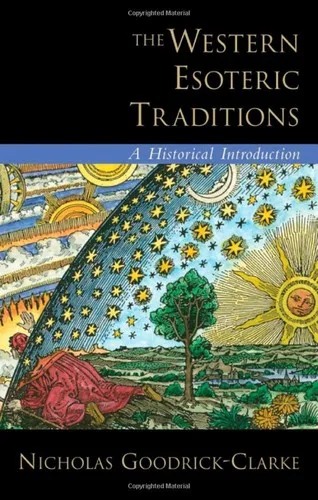
The western esoteric traditions
 63
63

The western esoteric traditions



Nicholas Goodrick-Clarke's "The Western Esoteric Traditions" is an indispensable guide for anyone seeking to grasp the profound philosophical and spiritual currents that have shaped Western civilization. This meticulously researched volume charts the evolution of esoteric thought from its ancient roots to its modern manifestations, offering a clarity rarely found in such complex subject matter. Goodrick-Clarke's erudition illuminates the interconnectedness of traditions like Hermeticism and Gnosticism, revealing their enduring impact on occultism and Theosophy. Ideal for both neophyte seekers and seasoned scholars, this work serves as a vital bridge to understanding hidden knowledge and its historical significance.
📝 Description
63
Nicholas Goodrick-Clarke's 1985 book examines Western esotericism from antiquity to the modern era.
This book traces the development of Western esoteric thought, beginning with ancient traditions like Gnosticism and Neo-Platonism. It follows their influence through Hermeticism and alchemy, showing how these ideas shaped philosophical and spiritual inquiry over centuries. Goodrick-Clarke connects these currents to later movements in Western culture, including their impact on art, science, and magic. The work aims to clarify a complex intellectual history that is often overlooked or misrepresented.
It details how concepts of hidden knowledge and inner transformation were pursued alongside empirical study of the natural world. The author highlights the enduring human desire to understand cosmic order and achieve a state of spiritual harmony. This survey provides a structured account of traditions that have sought ultimate truth through mystical and occult means. It offers a guide to understanding this rich, yet frequently misunderstood, intellectual inheritance.
Western esotericism encompasses diverse traditions that often stand apart from mainstream religious and philosophical discourse. These include practices and beliefs focused on hidden knowledge, spiritual transformation, and the relationship between the cosmos and the individual. Movements like Gnosticism, Hermeticism, and various forms of magic and alchemy fall under this broad umbrella. They share a common interest in achieving direct experience of the divine or ultimate reality, often through symbolic interpretation, ritual, and contemplative practices. This book places those traditions within their historical development and cultural impact.
💡 Why Read This Book?
Uncover the hidden spiritual and philosophical lineage of the West. This book offers a concise yet comprehensive overview of esoteric traditions, revealing their profound influence on history and thought. Essential for seekers of hidden knowledge, scholars of mysticism, and practitioners interested in the roots of occultism.
⭐ Reader Reviews
Honest opinions from readers who have explored this book.
❓ Frequently Asked Questions
What are the core traditions discussed in this book?
The book delves into foundational Western esoteric traditions including Hermeticism, Neo-Platonism, Gnosticism, and Alchemy, tracing their historical development and interconnectedness.
Is this book suitable for beginners?
Yes, "The Western Esoteric Traditions" provides an accessible introduction, making complex concepts understandable for those new to the field of esotericism.
How does the book connect spirituality and science?
It explores how these traditions historically integrated empirical observation of the natural world with spiritual understanding, seeking a harmonious relationship between humanity and the cosmos.
What is the historical scope of the book?
The book covers a vast historical span, beginning with the early Christian era and extending through the historical development of these esoteric lineages.
What kind of knowledge can I expect to gain?
Readers will gain insights into occultism, the history of mystical thought, the symbolism of esoteric practices, and the enduring philosophical significance of these ancient traditions.
🔮 Key Themes & Symbolism
The Hermetic Legacy
This section explores the profound influence of Hermeticism, rooted in the teachings attributed to Hermes Trismegistus. It examines the core principles of "As Above, So Below," the concept of divine correspondence, and the pursuit of gnosis through understanding the macrocosm and microcosm. The transformative power of alchemical symbolism and the quest for spiritual perfection are central to this theme, revealing how Hermetic thought laid the groundwork for much of Western esoteric philosophy.
Gnosticism and the Divine Spark
Study the complex world of Gnosticism, where the emphasis is placed on secret knowledge (gnosis) as the path to salvation. This theme investigates the dualistic worldview, the concept of a hidden, true God, and the belief in a divine spark within humanity that must be awakened. The book illuminates the Gnostic critique of the material world and their quest to transcend earthly limitations and reconnect with the spiritual realm, highlighting their impact on early Christian heterodoxies and later esoteric movements.
The Quest for Celestial Harmony
This theme examines the enduring belief in a harmonious cosmic order and humanity's place within it. It explores how esoteric traditions sought to understand and align with celestial influences, seeing the universe as a divinely orchestrated system. The pursuit of spiritual enlightenment is often framed as the restoration of this cosmic balance within the individual, linking personal transformation to universal principles and the intricate dance of the stars and planets.
💬 Memorable Quotes
Direct passages from the work, attributed to the author.
“Alchemy is the art of spiritual transformation.”
— This concise statement reveals the deeper, non-literal meaning of alchemy, presenting it not just as material transmutation but as a metaphor for the purification and elevation of the human spirit.
“The stars whisper secrets to those who listen.”
— This evocative phrase speaks to the ancient practice of astrology and divination, suggesting that celestial bodies hold wisdom accessible through intuition and contemplation.
💡 Key Ideas
Editorial paraphrase of the work's core concepts — not direct quotes.
The universe is a divine range, and we are threads within it.
This quote highlights the interconnectedness of all things within a divinely ordered cosmos, suggesting that each individual plays a vital role in the grand design.
True knowledge is not found in books, but within the soul.
Emphasizing the inner journey of self-discovery, this quote points to esoteric traditions' focus on introspection and direct spiritual experience over external dogma.
To know oneself is to know the divine.
This quote expresses a core tenet of many esoteric paths: the belief that self-awareness leads to an understanding of the universal divine principle, blurring the lines between the human and the sacred.
🌙 Esoteric Significance
Tradition
This work is a seminal exploration of Western esotericism, encompassing a broad spectrum of mystical, magical, and philosophical traditions that have existed parallel to mainstream religious and intellectual currents. It highlights the common threads of hidden knowledge, symbolic language, and the pursuit of spiritual transformation that unite diverse schools of thought, from ancient Hermeticism and Gnosticism to later occult movements.
Symbolism
The book delves deeply into the rich symbolic language inherent in esoteric traditions. From the alchemical symbols representing stages of spiritual purification to the astrological correspondences reflecting cosmic order, symbolism is presented as a key to unlocking hidden meanings and understanding the universe's intricate design. These symbols are not mere decoration but vehicles for transmitting profound metaphysical concepts and facilitating inner transformation.
Modern Relevance
In an era often characterized by materialism and fragmentation, "The Western Esoteric Traditions" offers a compelling counter-narrative. It demonstrates the enduring human need for meaning, transcendence, and a holistic understanding of existence. The book reveals how these ancient wisdom traditions provide frameworks for personal growth, spiritual inquiry, and a deeper connection to the cosmos, making them remarkably relevant for contemporary seekers navigating complex modern challenges.
👥 Who Should Read This Book
This book is essential for a diverse audience. **Beginners** will find a clear and authoritative introduction to the often-intimidating world of Western esotericism. **Scholars** of religion, philosophy, and history will appreciate its meticulous research and insightful analysis. **Spiritual seekers** will discover pathways to understanding perennial wisdom and their own inner journeys. **Practitioners** of occult arts, magic, and meditation will find the historical context and philosophical underpinnings of their disciplines illuminated, offering a richer appreciation of their practice.
📜 Historical Context
Nicholas Goodrick-Clarke's "The Western Esoteric Traditions" emerges from a rich intellectual soil, a landscape shaped by centuries of philosophical and spiritual ferment. Its roots lie in the Hellenistic period, where Greek philosophy, Egyptian mysticism, and Near Eastern traditions converged. The early Christian era saw the rise of Gnosticism and Neo-Platonism, profound systems that explored the nature of the divine, the material world, and the path to spiritual liberation. The medieval period witnessed the alchemical arts flourish, often intertwined with Hermetic philosophy and Kabbalistic thought. The Renaissance and Enlightenment periods, while ostensibly rationalist, paradoxically fueled a resurgence of interest in these hidden streams, as thinkers sought to reconcile ancient wisdom with new discoveries. This book situates itself within this ongoing dialogue, demonstrating how these traditions have continuously evolved and influenced Western culture, art, and thought.
📔 Journal Prompts
Reflect on a personal experience that felt like uncovering hidden knowledge. What did you learn?
Consider the concept of 'As Above, So Below.' How does this principle manifest in your own life or the world around you?
If you were to begin an alchemical journey of self-transformation, what 'base metal' would you wish to transmute within yourself, and into what 'gold'?
How do you perceive the relationship between the material world and the spiritual realm in your daily life?
What celestial influences, if any, do you feel might be guiding or impacting your path?
🗂️ Glossary
Hermeticism
A philosophical and religious tradition based on writings attributed to Hermes Trismegistus, emphasizing divine knowledge, the interconnectedness of the cosmos, and the pursuit of gnosis through understanding natural laws.
Gnosticism
A diverse set of religious and philosophical movements that emphasized secret knowledge (gnosis) as the path to salvation, often positing a dualistic worldview and a hidden, true God distinct from the creator of the material world.
Neo-Platonism
A philosophical system developed in the 3rd century CE, building upon the ideas of Plato, that emphasized the ultimate reality of the One (or the Good) and the emanation of all existence from it through a hierarchical series of divine principles.
Alchemy
An ancient practice that sought to purify, mature, and perfect certain materials, often interpreted metaphorically as a spiritual process of transforming the soul and achieving enlightenment, alongside its literal pursuit of transmuting base metals into gold.
Theosophy
A spiritual movement founded in the late 19th century that sought to understand the underlying principles of all religions, often drawing from Eastern philosophies and Western esoteric traditions to reveal a universal divine wisdom.
This book appears in 4 collections
🔮 Readers Also Liked
Browse all →


![Herrman's [sic] black art](/img/thumb/herrman-s-sic-black-art-alexander-herrmann.webp)





More by Nicholas Goodrick-Clarke
All books →
From the “Hermeticism” Collection
View all →







More Free Alchemy & Hermeticism Books
View all →