100% Free & Public Domain 16,000+ Esoteric Books No Registration Needed
Home Collections Hermeticism
🌿

Hermeticism: Ancient Esoteric Wisdom & Sacred Texts

25 Curated Books · 📥 Free PDF & EPUB · 📚 100% Public Domain ·Updated 2026

Unlocking profound spiritual and philosophical insights, Hermeticism stands as a venerable esoteric tradition that has influenced Western thought for millennia. Rooted in the teachings attributed to the mythical sage Hermes Trismegistus, this rich body of knowledge offers a unique lens through which to understand the cosmos, humanity's place within it, and the principles governing existence. Esoteric Library is proud to present a curated collection of 25 public-domain texts dedicated to this tradition, inviting seekers to explore its timeless wisdom.

The origins of Hermeticism trace back to Hellenistic Egypt, where Greek philosophical concepts blended with ancient Egyptian religious beliefs, particularly those associated with the god Thoth. The primary foundational texts, collectively known as the Corpus Hermeticum, are a series of dialogues and treatises revealing a sophisticated monotheistic theology, cosmology, and the path to spiritual gnosis. These texts, often presented as conversations between Hermes Trismegistus and his disciples, lay out a worldview where the divine permeates all existence. Alongside these, the enigmatic Emerald Tablet offers a succinct yet potent summary of alchemical and philosophical principles, famously stating, "As above, so below," a foundational concept that speaks to the interconnectedness of all planes of reality.

A more accessible yet influential cornerstone of modern esoteric thought is The Kybalion, published anonymously in 1908 by Three Initiates. This work distills the complex Hermetic teachings into seven universal principles, making them understandable for a broader audience. These principles include Mentalism (all is Mind), Correspondence (as above, so below), Vibration (nothing rests), Polarity (everything is dual), Rhythm (everything flows), Cause and Effect (every effect has its cause), and Gender (everything has its masculine and feminine principles). These provide a practical framework for understanding the universe and influencing one's reality. The profound impact of these teachings can be seen across various esoteric movements, including Hermetic Alchemy, Rosicrucianism, and even the mystical currents of Gnosticism and Neoplatonism.

Our extensive collection features multiple editions and translations of these foundational works, ensuring a diverse perspective on this tradition. You'll find various renditions of the "Corpus Hermeticum," including scholarly translations by figures like George Robert Stowe Mead, providing different interpretations of these ancient dialogues. The enduring influence of Hermetic thought is also evident in the works of historical figures such as Paracelsus, whose writings on hermetic chemistry and medicine are included, showcasing practical applications during the Renaissance. Whether you are seeking the concise wisdom of the "Emerald Tablet," the systematic philosophy presented in "The Kybalion," or the profound spiritual insights of the "Corpus Hermeticum," our library provides direct access to these transformative texts.

We invite you to immerse yourself in the profound teachings of Hermeticism. From its ancient Egyptian roots and Hellenistic synthesis to its modern interpretations, this tradition offers timeless insights into the nature of reality and the human spirit. With 25 free public-domain books available, the Esoteric Library is your gateway to understanding the principles that have guided mystics, philosophers, and alchemists for centuries. Begin your exploration today and uncover the hidden knowledge that continues to resonate with seekers worldwide.

Top Hermeticism Books

25 Hermeticism books
Corpus hermeticum
📖
Corpus hermeticum
Hermes Trismegistus
4.1
65
Kybalion
📖
Kybalion
The Three The Three Initiates
4.1
63
The Kybalion
📖
The Kybalion
Three Initiates
4.4
75
Kybalion
📖
Kybalion
Three Initiates Staff
4.1
65

Reading Order

Three paths · pick by your level

🌱

Beginner

  1. Kybalion Hermetic Philosophy Offers an accessible introduction to Hermetic philosophy through its clear exposition of the Seven Principles.
  2. Emerald Tablet of Hermes A concise and enigmatic text, providing a foundational statement of Hermetic and alchemical wisdom in a few potent lines.
  3. The Kybalion: A Study of The Hermetic Philosophy of Ancient Egypt... Another accessible edition of The Kybalion, ideal for newcomers to grasp core Hermetic concepts and their practical application.
🌿

Intermediate

  1. Corpus hermeticum A primary source, essential for understanding the original spiritual and philosophical dialogues attributed to Hermes Trismegistus.
  2. The Corpus Hermeticum This scholarly translation of the Corpus Hermeticum by G.R.S. Mead provides valuable context and insight into the ancient texts.
  3. Divine Pymander and the Emerald Tablets of Thoth Hermes Trismegistus Combines the Divine Pymander with the Emerald Tablets, offering more direct engagement with foundational Hermetic literature.
🌳

Advanced

  1. Hermetic chemistry Explores the practical application of Hermetic principles within the realm of alchemical and medical theory by Paracelsus.
  2. The Hermetic and Alchemical Writings of Paracelsus A comprehensive collection of Paracelsus's writings, revealing his deep integration of Hermetic and alchemical thought.
  3. ASCLEPIUS: A SECRET DISCOURSE OF HERMES TRISMEGISTUS; ED. BY... A core Hermetic dialogue, Asclepius delves into complex theological and cosmological themes, suitable for deeper study.

Why Each Book Matters

The Corpus Hermeticum.pdf (PDFy mirror)

The Corpus Hermeticum.pdf (PDFy mirror)

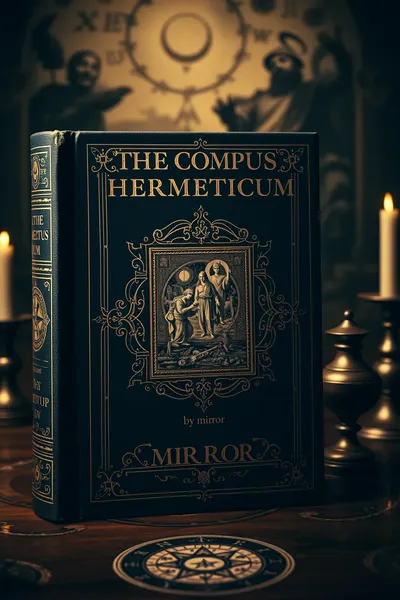
This PDF mirror provides access to the Corpus Hermeticum, the primary collection of texts for studying classical Hermeticism. While the specific translator is not identified in this listing, the content includes dialogues and treatises attributed to Hermes Trismegistus, which were rediscovered during the Renaissance and profoundly influenced thinkers like Marsilio Ficino. These texts discuss concepts such as the divine mind (Nous) and the human quest for gnosis.

Corpus Hermeticum

Corpus Hermeticum

by G. Mead

This translation of the Corpus Hermeticum by G. Mead (George Robert Stowe Mead) is a significant contribution to the study of Hermeticism. Mead, a renowned Theosophist and scholar, brought these ancient Greek texts, dating from the 1st to 3rd centuries CE, to a wider English-speaking audience. His work often includes valuable introductory essays and notes that contextualize the philosophical dialogues, helping readers understand concepts like the divine Nous (Mind) and its role in creation.

The Corpus Hermeticum

The Corpus Hermeticum

by George Robert Stowe Mead

This authoritative translation by George Robert Stowe Mead is a cornerstone for English readers seeking to study the Corpus Hermeticum. Published in 1906, Mead's meticulous scholarship provides not only the text of the ancient treatises but also extensive historical and philosophical commentary. He elucidates the complex cosmology and spiritual teachings, such as the doctrine of reincarnation and the ascent of the soul, which are central to the Hermetic tradition.

Divine Pymander and the Emerald Tablets of Thoth Hermes Trismegistus

Divine Pymander and the Emerald Tablets of Thoth Hermes Trismegistus

by Hermes Trismegistus

This volume presents two pillars of Hermetic wisdom: the Divine Pymander and the Emerald Tablets. The Divine Pymander, or Poimandres, is the first and perhaps most important tractate of the Corpus Hermeticum, detailing a profound creation myth and the process of spiritual illumination through a dialogue between Hermes and the divine intellect, Pymander. The inclusion of the Emerald Tablets further grounds this collection in the core alchemical and cosmological tenets central to Hermeticism.

Emerald Tablet of Hermes

Emerald Tablet of Hermes

by Hermes Trismegistus

Considered one of the most significant and enigmatic texts in Western esotericism, the Emerald Tablet of Hermes is a short, cryptic work attributed to Hermes Trismegistus. Its thirteen concise statements, including the renowned phrase "That which is below is like that which is above, and that which is above is like that which is below," encapsulate fundamental principles of alchemy, magic, and Hermetic philosophy. The tablet's exact origin is debated, but it has been a guiding text for alchemists and mystics since at least the 12th century.

ASCLEPIUS: A SECRET DISCOURSE OF HERMES TRISMEGISTUS; ED. BY CLEMENT SALAMAN

ASCLEPIUS: A SECRET DISCOURSE OF HERMES TRISMEGISTUS; ED. BY CLEMENT SALAMAN

by Hermes Trismegistus

Asclepius is a pivotal Hermetic dialogue, presented here in an edition by Clement Salaman. This text, part of the broader Corpus Hermeticum, features Hermes Trismegistus instructing Asclepius on profound subjects such as the nature of God, the cosmos, prophecy, and the fate of souls. It includes the famous "Lament of Asclepius," a prophetic passage foretelling the decline of ancient Egyptian religion and the rise of a new spiritual era.

Corpus hermeticum

Corpus hermeticum

by Hermes Trismegistus

This collection represents the heart of classical Hermeticism, comprising a series of Greek treatises and dialogues attributed to the legendary sage Hermes Trismegistus. Written between the 1st and 3rd centuries CE, these texts, such as the Poimandres or "Shepherd of Men," explore profound themes of divine creation, the nature of the cosmos, the human soul's journey, and the path to spiritual knowledge. They present a sophisticated philosophical theology that significantly influenced Renaissance thought and subsequent esoteric traditions.

The Hermetic and Alchemical Writings of Paracelsus

The Hermetic and Alchemical Writings of Paracelsus

by Paracelsus

This comprehensive collection brings together the extensive "Hermetic and Alchemical Writings" of Paracelsus (1493-1541). It showcases his innovative approach, which fused medical practice with alchemical theory and Hermetic philosophy. These writings reveal his understanding of the "Archaeus," a vital life force or cosmic agent, and his revolutionary use of minerals and chemicals in medicine, marking a significant departure from traditional humoral theory.

Hermetic chemistry

Hermetic chemistry

by Paracelsus

In this work, Paracelsus (1493-1541), the influential Renaissance physician and alchemist, applies Hermetic principles to the study of chemistry and medicine. He challenged the prevailing medical theories of his time, advocating for a holistic approach that recognized the interconnectedness of the human body, the cosmos, and the spiritual realm. His insights into the "tria prima" (salt, sulfur, mercury) as fundamental elements showcase his unique blend of Hermetic thought and early scientific inquiry.

Hermetic Philosophy

Hermetic Philosophy

by Paracelsus

This text delves into the broader "Hermetic Philosophy" as interpreted and practiced by Paracelsus (1493-1541). Beyond specific chemical applications, Paracelsus explored the philosophical underpinnings of Hermeticism, emphasizing the concept of the microcosm and macrocosm—that man is a small universe reflecting the greater cosmos. His writings often touch upon natural magic, astrology, and the spiritual dimensions of healing, all informed by Hermetic principles.

Hermetic medicine and hermetic philosophy

Hermetic medicine and hermetic philosophy

by Paracelsus

This work by Paracelsus (1493-1541) explores the deep connections between Hermetic philosophy and the art of healing. Paracelsus revolutionized medicine by integrating alchemical and astrological principles, viewing disease not merely as a physical ailment but as an imbalance within the individual's spiritual and cosmic constitution. He believed in the power of "signatures"—divine patterns in nature—to reveal medicinal properties, a concept deeply rooted in Hermetic correspondence.

Emerald Tablet of Hermes

Emerald Tablet of Hermes

This particular edition presents the concise and profound text known as the Emerald Tablet of Hermes. While the "author" is listed as a placeholder, the wisdom contained within is attributed to Hermes Trismegistus. The tablet's thirteen maxims, including the famous axiom about the correspondence between the macrocosm and microcosm, have been interpreted by alchemists for centuries as a key to transforming matter and spirit. Its influence on esoteric thought is undeniable.

The Kybalion - A Study Of The Hermetic Philosophy Of Ancient Egypt And Greece

The Kybalion - A Study Of The Hermetic Philosophy Of Ancient Egypt And Greece

by The Three Initiates

This edition of The Kybalion by The Three Initiates offers readers a chance to engage with the Hermetic philosophy that emerged from ancient Egypt and Greece. It is celebrated for its clear articulation of the Seven Hermetic Principles, including the Principle of Vibration, which posits that "Nothing rests; everything moves; everything vibrates." This concept explains the varying states of matter and mind, from the grossest to the most subtle, all existing within a spectrum of vibratory rates.

Kybalion Hermetic Philosophy

Kybalion Hermetic Philosophy

by The Three Initiates

This edition of The Kybalion offers a clear and accessible exposition of Hermetic philosophy. Authored by The Three Initiates and first published in 1908, the book distills ancient wisdom into seven universal principles, such as the Principle of Polarity, which states that "Everything is Dual; everything has poles; everything has its pair of opposites." It serves as an excellent introduction for those seeking to understand the fundamental laws governing the universe and their practical application in personal development and spiritual growth.

Kybalion and the Emerald Tablet of Hermes

Kybalion and the Emerald Tablet of Hermes

by The Three Initiates

This edition combines two foundational Hermetic texts: The Kybalion and the Emerald Tablet of Hermes. The Kybalion, originally published in 1908, systematically outlines the Seven Hermetic Principles, such as the Principle of Mentalism, stating "The All is Mind; The Universe is Mental." The Emerald Tablet, a much older and more cryptic text, provides the famous dictum "As above, so below," summarizing a core tenet of Hermetic philosophy regarding the interconnectedness of all planes of existence. This compilation offers both a modern interpretation and an ancient source for understanding Hermeticism.

Kybalion

Kybalion

by The Three The Three Initiates

This edition of The Kybalion offers the seminal text on modern Hermetic philosophy. Authored by the anonymous The Three The Three Initiates in 1908, it simplifies complex ancient teachings into seven universal laws. One key concept is the Principle of Mentalism, which asserts that "The All is Mind; The Universe is Mental," suggesting that reality originates from a universal consciousness, a cornerstone of Hermetic thought.

The Kybalion: A Study of The Hermetic Philosophy of Ancient Egypt and Greece

The Kybalion: A Study of The Hermetic Philosophy of Ancient Egypt and Greece

by Three Initiates

This classic work by Three Initiates, originally published in 1908, serves as a foundational text for modern Hermeticism. It presents a systematic study of the Hermetic philosophy of ancient Egypt and Greece, focusing on the seven universal principles. For example, the Principle of Cause and Effect asserts that "Every Cause has its Effect; every Effect has its Cause; everything happens according to Law." The book aims to elucidate the hidden truths behind the observable world.

The Kybalion: a study of the hermetic philosophy of ancient Egypt and Greece

The Kybalion: a study of the hermetic philosophy of ancient Egypt and Greece

by Three Initiates

Another rendition of the seminal 1908 work by Three Initiates, this text is a detailed exploration of Hermetic philosophy. It meticulously breaks down the seven cosmic laws, such as the Principle of Gender, which teaches that "Gender is in everything; everything has its Masculine and Feminine Principles." This principle is not limited to physical gender but extends to creative forces throughout the universe, making the book a guide to understanding universal generation and regeneration.

The Kybalion HTP

The Kybalion HTP

by Three Initiates

This variant of The Kybalion (likely "Hermetic Thought Principles") by Three Initiates provides a concise yet profound exploration of Hermetic philosophy. Published in 1908, it simplifies complex ancient teachings into digestible principles. A key teaching is the Principle of Rhythm, which describes how "Everything flows out and in; everything has its tides; all things rise and fall," illustrating the cyclical nature of existence and phenomena.

The Kybalion

The Kybalion

by Three Initiates

This edition of The Kybalion by Three Initiates continues to be a popular entry point into Hermetic philosophy. First published in 1908, it elaborates on the seven universal laws, such as the Principle of Vibration, which posits that "Nothing rests; everything moves; everything vibrates." This concept explains the dynamic nature of the universe and the varying rates of energy that constitute all forms of matter and consciousness.

Kybalion - a Study of the Hermetic Philosophy of Ancient Egypt and Greece

Kybalion - a Study of the Hermetic Philosophy of Ancient Egypt and Greece

by Three Initiates

This version of The Kybalion delves into the Hermetic philosophy originating from ancient Egypt and Greece. Written by Three Initiates and first appearing in 1908, the text systematically explains the seven universal principles, including the Principle of Rhythm, which describes how "Everything flows out and in; everything has its tides." It aims to provide readers with a master-key to unlock the understanding of life's mysteries, drawing parallels between the macrocosm and microcosm.

Kybalion - Sacred Knowledge

Kybalion - Sacred Knowledge

by Three Initiates

This edition presents The Kybalion by Three Initiates as a source of "Sacred Knowledge" within Hermeticism. Published in 1908, it distills the ancient Hermetic teachings into seven universal principles, offering keys to understanding the universe. The book's focus on the practical application of principles like Cause and Effect empowers readers to consciously shape their reality, moving beyond mere observation to active participation in the cosmic dance.

The Kybalion

The Kybalion

by Three Initiates

Another offering of The Kybalion by Three Initiates, this text is a cornerstone of modern Hermeticism. It meticulously outlines the Seven Hermetic Principles, including the Principle of Polarity, stating that "Everything is Dual; everything has poles; everything has its pair of opposites." This principle explains the existence of opposites in nature, such as light and dark, heat and cold, and their inherent unity.

Kybalion

Kybalion

by Three Initiates Staff

This version of The Kybalion, attributed to Three Initiates Staff, presents the 1908 work that systematized Hermetic philosophy for the modern era. It introduces the Seven Hermetic Principles, including the Principle of Correspondence, famously summarized as "As above, so below." This principle highlights the interconnectedness of all planes of existence, from the spiritual to the material, and is a fundamental concept in understanding the Hermetic worldview.

The Emerald Tablet of Hermes

The Emerald Tablet of Hermes

by Unknown

This version offers the revered Emerald Tablet of Hermes, a short yet immensely influential text foundational to Hermeticism and alchemy. Though its origins are shrouded in mystery, with some scholars dating its earliest known Arabic form to the 8th century, its core message of "As above, so below" has resonated through mystical traditions. The text's brevity belies its profound implications for understanding the unity of creation and the processes of transformation.

Glossary

Hermes Trismegistus
The legendary author of Hermetic texts, a syncretic figure combining the Greek god Hermes and the Egyptian god Thoth. He is revered as a divine scribe and source of esoteric knowledge.
Corpus Hermeticum
A collection of 17 Greek treatises and dialogues from the 1st to 3rd centuries CE, presenting a philosophical theology, cosmology, and spiritual path attributed to Hermes Trismegistus.
Emerald Tablet
A short, cryptic text attributed to Hermes Trismegistus, famously containing the dictum "As above, so below." It outlines alchemical principles and the unity of creation.
Kybalion
A 1908 book by The Three Initiates, which modernizes and systematizes Hermetic philosophy into Seven Universal Principles, making ancient wisdom accessible to a new generation.
Seven Hermetic Principles
Foundational concepts like Mentalism, Correspondence, and Vibration, popularized by the Kybalion, which describe the universal laws governing all phenomena in the cosmos.

FAQ

What is Hermeticism?

Hermeticism is an ancient esoteric tradition based on philosophical and spiritual writings attributed to the mythical sage Hermes Trismegistus. It encompasses a unique blend of Greek philosophy and ancient Egyptian religious thought, focusing on divine knowledge and cosmic principles. This tradition emphasizes the interconnectedness of all things and humanity's potential for spiritual ascent.

How do I start with Hermeticism?

Begin by exploring foundational texts like The Kybalion for its accessible Seven Principles, or the Emerald Tablet for its concise wisdom. These texts provide an excellent entry point into the core concepts of Hermeticism before delving into more complex original works. Familiarizing yourself with these basic ideas will build a strong foundation.

Is Hermeticism difficult to learn?

Hermeticism can be complex due to its philosophical depth and ancient origins, but accessible texts like The Kybalion simplify its core principles. Starting with modern interpretations can ease the learning curve. Patience and an open mind are key to gradually understanding its profound teachings and applying them.

What's the best book on Hermeticism?

For a foundational understanding of Hermeticism, The Kybalion (1908) is widely recommended for its clear articulation of the Seven Principles. For classical insights, the Corpus Hermeticum offers direct engagement with ancient dialogues. The "Emerald Tablet" is also crucial for its concise alchemical wisdom.

Can I download Hermeticism books for free?

Yes, Esoteric Library offers 25 public-domain Hermeticism books available for free download. Our collection includes key texts like the Corpus Hermeticum, the Emerald Tablet, and The Kybalion. You can access these important works to support your study of Hermetic philosophy without cost.

Esoteric Library
Browse Esoteric Library
📚 All 16,000+ Books 🜍 Alchemy & Hermeticism 🔮 Magic & Ritual 🌙 Witchcraft & Paganism Astrology & Cosmology 🃏 Divination & Tarot 📜 Occult Philosophy ✡️ Kabbalah & Jewish Mysticism 🕉️ Mysticism & Contemplation 🕊️ Theosophy & Anthroposophy 🏛️ Freemasonry & Secret Societies 👻 Spiritualism & Afterlife 📖 Sacred Texts & Gnosticism 👁️ Supernatural & Occult Fiction 🧘 Spiritual Development 📚 Esoteric History & Biography
Esoteric Library
📑 Collections 📤 Upload Your Book
Account
🔑 Sign In Create Account
Info
About Esoteric Library