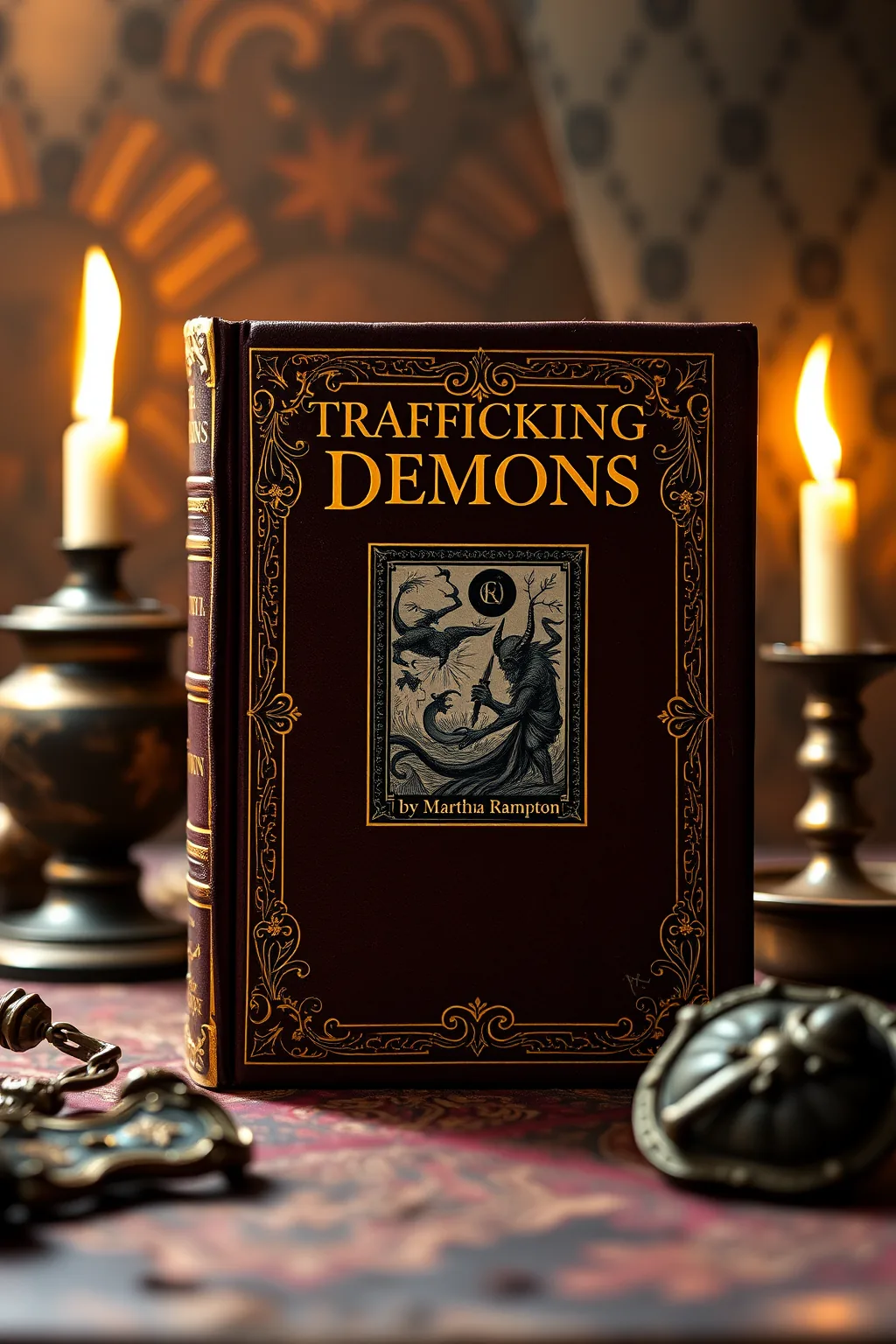
Trafficking with Demons
 61
61

Trafficking with Demons


By Cassian Rothmann (Senior Critic, Ancient Wisdom) — Martha Rampton’s 'Trafficking with Demons' is a seminal work that fearlessly navigates the treacherous currents of historical demonology, with a particular focus on the often-overlooked agency of women. Rampton masterfully unearths forgotten narratives, demonstrating how women were not merely passive victims but active participants in their spiritual and often occult engagements with demonic forces. The book’s strength lies in its rigorous scholarship combined with an accessible, almost mystical, prose that illuminates the psychological and societal underpinnings of these ancient pacts. It offers profound esoteric insights into the symbolic power of the demonic within patriarchal religious frameworks. Essential reading for scholars of Western esotericism, religious history, and anyone seeking to understand the archetypal feminine in its most potent, untamed forms.
📝 Description
61
Martha Rampton's 'Trafficking with Demons' examines women's relationships with demonic entities in European Christendom.
This book examines the historical interactions between women and demonic figures within European Christendom. Rampton moves beyond simple historical accounts to analyze the complex relationships, both cooperative and antagonistic, that women had with these entities. The research highlights how women, often labeled as witches or heretics, used invocation, pacts, and spiritual conflict to exert power.
The work also interprets the symbolism within demonology. It suggests that these figures often embodied suppressed aspects of the female psyche and reflected societal fears. 'Trafficking with Demons' is intended for those interested in obscured histories, practitioners of magic on the edges of tradition, and scholars of religion, folklore, and forbidden knowledge. It seeks to illuminate the dynamics of spiritual authority and defiance.
The book engages with traditions that view spiritual entities not merely as theological constructs but as active forces or symbolic representations of psychological states. It touches upon historical occultism and demonology, examining how these concepts were understood and utilized, particularly by women on the margins of established religious and social orders. This approach situates the work within a broader interest in the practical and symbolic application of esoteric lore, where the line between literal belief and psychological interpretation is often blurred.
💡 Why Read This Book?
Unearth suppressed histories of female spiritual power, explore the complex symbolism of demons in religious discourse, and understand the esoteric dimensions of pacts and invocations. This book is for seekers of hidden truths, scholars of Western esotericism, and practitioners interested in the potent intersection of faith, folklore, and forbidden lore. It offers a unique lens through which to view historical resistance and personal spiritual agency.
⭐ Reader Reviews
Honest opinions from readers who have explored this book.
❓ Frequently Asked Questions
What is the primary focus of 'Trafficking with Demons'?
The book primarily examines the historical and symbolic relationships between women and demonic entities within European Christianity, exploring themes of agency, power, and forbidden knowledge.
Is this book suitable for beginners in esoteric studies?
While academically rigorous, the book's engaging narrative makes it accessible to dedicated beginners interested in the historical and symbolic aspects of demonology and women's roles within it.
Does the book advocate for engaging with demonic forces?
No, the book is an historical and analytical exploration of how such engagements were perceived and practiced, rather than an endorsement of them. It focuses on understanding the phenomena.
What historical period does the book cover?
The book spans a significant period of European history, particularly focusing on the medieval and early modern eras, where demonological beliefs were most prevalent and impactful.
How does this book contribute to the understanding of women in religious history?
It challenges traditional narratives by highlighting instances of female agency and spiritual power, even within contexts often demonized by patriarchal religious structures.
🔮 Key Themes & Symbolism
The Empowered Feminine in Adversarial Faith
This theme examines how women, often marginalized within patriarchal religious structures, found forms of power, agency, and spiritual connection through their perceived or actual dealings with demonic entities. It explores how these interactions, far from being solely subjugating, could represent acts of resistance, forbidden knowledge acquisition, and the reclamation of liminal spiritual spaces. The narrative illuminates the psychological and societal dynamics that allowed for such profound, albeit often dangerous, relationships to flourish within the fabric of European Christendom, challenging simplistic notions of good versus evil.
Symbolism and the Infernal Archetype
Rampton meticulously deciphers the rich symbolic language embedded within demonological lore, particularly as it pertains to women. Demons, in this context, often serve as potent archetypes for suppressed aspects of the feminine psyche, societal anxieties surrounding female autonomy, and the untamed forces of nature and magic. The book dissects how these symbolic representations were not merely theological constructs but deeply resonant psychological and cultural phenomena, offering a veiled pathway to understanding the subconscious field of historical societies and the persistent allure of the forbidden.
Pacts, Invocations, and Liminal Spirituality
This core theme investigates the practical and esoteric dimensions of 'trafficking with demons,' examining the nature of alleged pacts, the rituals of invocation, and the spiritual warfare that characterized these historical interactions. It moves beyond mere historical documentation to explore the 'how' and 'why' of such practices, revealing the underlying belief systems and the pursuit of hidden knowledge or power. The book sheds light on a form of liminal spirituality, existing on the fringes of orthodoxy, where the boundaries between the divine, the demonic, and the human were fluid and intensely negotiated.
💬 Memorable Quotes
Direct passages from the work, attributed to the author.
“Demons were often the shadows cast by an overzealous light.”
— This highlights how perceived evil can arise from the suppression of natural instincts or the rigid enforcement of dogma, particularly concerning the feminine.
“In the crucible of fear, true power is forged.”
— This speaks to the transformative potential of facing profound challenges and the resilience found in navigating dangerous spiritual or psychological landscapes.
“Heretics and witches held keys to forgotten realms.”
— This emphasizes the book's focus on marginalized figures and their potential access to esoteric knowledge and spiritual pathways deemed heretical.
“The pact was not always a surrender, but sometimes a negotiation.”
— This challenges the simplistic view of demonic pacts, suggesting instances of agency and complex spiritual bargaining where women sought specific outcomes.
💡 Key Ideas
Editorial paraphrase of the work's core concepts — not direct quotes.
The abyss whispers secrets only the daring can comprehend.
This quote captures the book's invitation to explore forbidden knowledge and confront the unknown, suggesting that profound truths lie beyond conventional understanding.
🌙 Esoteric Significance
Tradition
This work deeply appeals to Western Esotericism, particularly within traditions that explore the shadow self, the symbolism of the demonic archetype, and the practice of 'forbidden' magic. It intersects with hermeticism, occultism, and certain branches of Gnosticism that acknowledge the duality of existence and the potential for power derived from liminal or adversarial spiritual forces. The book's exploration of pacts and invocations aligns with magical traditions that seek to establish communication and influence with non-corporeal entities, often for the acquisition of knowledge or power beyond mundane understanding.
Symbolism
The symbolism is rich and many-sided, with demons representing not just malevolent entities but also suppressed aspects of the psyche, societal fears, and the untamed feminine principle. Horns, hooves, and infernal fires symbolize primal urges, earthly power, and transformative destruction. The pact itself is a potent symbol of a negotiated relationship with the shadow, a deliberate engagement with forces that challenge established order, and a quest for forbidden knowledge. The act of 'trafficking' symbolizes a complex exchange, often involving a trade of the mundane for the mystical, or the conscious confronting of one's deepest fears and desires.
Modern Relevance
In an age increasingly grappling with the complexities of power, gender dynamics, and the psychological impact of societal narratives, 'Trafficking with Demons' offers profound contemporary relevance. It provides a historical lens through which to understand the enduring archetypes of the 'other' and the ways in which marginalized figures have historically been demonized. For modern practitioners and seekers, the book offers insights into the symbolic power of the shadow, the ethics of engaging with potent spiritual forces, and the potential for reclaiming suppressed aspects of the self and the feminine. It encourages a critical examination of religious dogma and the construction of evil in shaping human experience.
👥 Who Should Read This Book
Scholars of religious history, gender studies, and Western esotericism will find this book an indispensable resource, offering rigorous research and fresh perspectives. Seekers of hidden knowledge and alternative spiritual pathways will be drawn to its exploration of forbidden lore and liminal spirituality. Practitioners of magic and ritual will find valuable insights into historical practices and the symbolic language of the infernal. Even those new to esoteric concepts but curious about the intersection of faith, folklore, and female agency will find 'Trafficking with Demons' an useful and thought-provoking read, challenging conventional understandings of good, evil, and spiritual power.
📜 Historical Context
Martha Rampton's 'Trafficking with Demons' emerges from the fertile, yet often dark, soil of late medieval and early modern European history, a period profoundly shaped by religious upheaval, burgeoning scientific inquiry, and intense societal anxieties. The rise of the witch hunts, the Reformation, and the Counter-Reformation created an atmosphere where the boundaries between the divine and the demonic were fiercely policed, and the perceived influence of infernal forces permeated daily life and theological discourse. Within this context, women often found themselves at the epicenter of accusations and theological debates concerning demonic influence. Rampton’s work illuminates this era by focusing on the nuanced roles women played, whether as accusers, accused, or practitioners, and how their engagement with 'demonic' forces often reflected complex social, psychological, and spiritual dynamics that challenged the established patriarchal order. The book thus provides a vital corrective to simplistic narratives, revealing the hidden currents of agency and esoteric practice beneath the surface of official religious doctrine.
📔 Journal Prompts
Reflect on the historical demonization of women in religious texts. How might these narratives reflect societal anxieties about female autonomy?
Consider the concept of the 'shadow self.' How can engaging with this aspect, as explored through demonic archetypes, lead to personal growth?
What does the idea of a 'pact' symbolize in your own life? Are there 'negotiations' you've made with challenging aspects of yourself or your circumstances?
Explore the concept of 'forbidden knowledge.' What knowledge do you perceive as hidden or suppressed in contemporary society, and why?
How can the power dynamics described in the book be seen in contemporary religious or social structures? Where do you observe similar forms of 'trafficking' or negotiation?
🗂️ Glossary
Demonology
The study of demons or beliefs about demons. It encompasses the theological and philosophical understanding of their nature, origins, hierarchies, and interactions with the human realm.
Esotericism
Belief systems or practices that are esoteric, meaning they are intended for or understood by only a small number of people with specialized knowledge or interest.
Liminal
Relating to a transitional or initial stage of a process, or occupying a position at, or on both sides of, a boundary or threshold. In spirituality, it refers to spaces or states between the ordinary and the extraordinary.
Archetype
A recurring symbol, character, or pattern of behavior that is found in mythology and the collective unconscious of human beings across cultures and time periods.
Heresy
Belief or opinion contrary to orthodox religious (especially Christian) doctrine. Historically, this often led to persecution and demonization.
This book appears in 2 collections
🔮 Readers Also Liked
Browse all →




More by Martha Rampton
All books →
From the “Ritual Magic” Collection
View all →





More Free Magic & Ritual Books
View all →