What is Theosophy?
Theosophy, meaning 'divine wisdom', is a modern esoteric philosophical movement that emerged in the late 19th century. It seeks to understand the underlying unity of all religions, philosophies, and sciences, proposing a universal spiritual truth accessible through intuition and direct experience, not solely through dogma. Key figures like H.P. Blavatsky synthesized Eastern and Western mystical traditions, presenting complex ideas about cosmic evolution, human spiritual development, and the nature of consciousness.
Best Books for Complete Beginners
For those new to Theosophy, starting with introductory texts provides a clear foundation. 'The Key to Theosophy' by H.P. Blavatsky offers a direct Q&A format explaining fundamental concepts and the aims of the Theosophical Society. C.W. Leadbeater's 'A Textbook of Theosophy' presents a systematic overview of its doctrines, including reincarnation and karma. Annie Besant's 'Esoteric Christianity, or The Lesser Mysteries' explores the hidden spiritual teachings within Christianity from a Theosophical perspective, making complex ideas more accessible.
Intermediate Reading
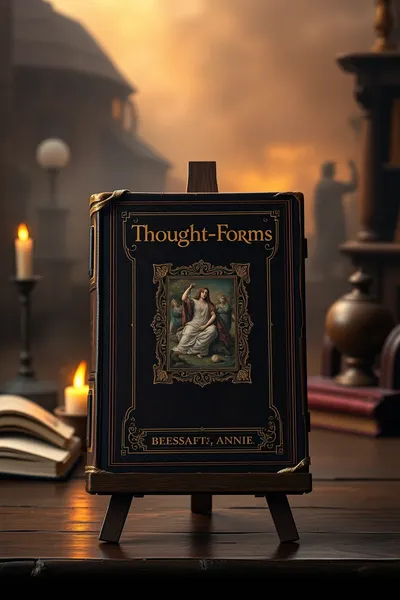
Moving beyond the basics, intermediate readers can explore more detailed aspects of Theosophical thought. 'The Astral Plane: Its Scenery, Inhabitants and Phenomena' by C.W. Leadbeater offers a detailed account of the subtle areas of existence. Annie Besant and C.W. Leadbeater's 'Thought-Forms' investigates the nature and manifestation of thoughts and emotions. Rudolf Steiner's 'An Outline of Occult Science' provides a comprehensive view of his spiritual scientific approach, which shares roots with Theosophy.
Classical / Advanced Texts
The core texts of Theosophy represent its most comprehensive and challenging works. H.P. Blavatsky's monumental 'The Secret Doctrine' (in its four volumes) is the major work, synthesizing science, religion, and philosophy to present a vast cosmic history and evolutionary scheme. 'Isis unveiled' by Blavatsky also serves as a foundational work, addressing ancient mysteries and theological controversies. Jacob Boehme's 'Threefold Life of Man' offers a 17th-century precursor to mystical thought, influencing later Theosophical ideas.
Reading Order — Step by Step
Begin with H.P. Blavatsky's 'The Key to Theosophy' for a foundational understanding. Follow with C.W. Leadbeater's 'A Textbook of Theosophy' for a systematic overview. In the second month, explore Annie Besant's 'Esoteric Christianity, or The Lesser Mysteries' and C.W. Leadbeater's 'The Astral Plane'. By the third month, tackle the initial volumes of H.P. Blavatsky's 'The Secret Doctrine' (Vol. 1 & 2), supplemented by 'Occult Chemistry' by Besant and Leadbeater for specific occult investigations. Continue with subsequent volumes of 'The Secret Doctrine' and works by Steiner or other Theosophists as interest dictates.
Frequently Asked Questions
Which Theosophy book should I read first?
For a clear introduction, begin with H.P. Blavatsky's 'The Key to Theosophy'. Its question-and-answer format directly addresses fundamental concepts and the purpose of the Theosophical movement.
What is the relationship between Theosophy and other religions?
Theosophy posits a universal spiritual truth underlying all religions. It seeks to synthesize their common esoteric teachings, viewing them as different expressions of the same eternal wisdom.
Is Theosophy a religion?
Theosophy is generally considered a philosophy or a spiritual path rather than a religion. It does not have dogma or rituals but encourages personal study, intuition, and the search for truth.
What are the main ethical teachings in Theosophy?
Key ethical principles include the universal brotherhood of humanity, self-transformation through understanding karma and reincarnation, and the pursuit of wisdom for the benefit of all beings.
How does Theosophy explain human evolution?
Theosophy describes a grand evolutionary process through successive cycles and 'root races', involving the development of consciousness and the unfolding of latent spiritual powers within humanity.
Are the concepts in Theosophy difficult to grasp?
Theosophical texts, particularly those by Blavatsky, can be dense and complex. Starting with introductory works and proceeding systematically is recommended for easier comprehension.