What is Hermetic Alchemy?
Hermetic Alchemy is a spiritual and philosophical practice rooted in the Hermetic tradition, which posits that the universe is governed by principles of correspondence, vibration, and mentalism. Unlike laboratory alchemy focused on material transformation, Hermetic Alchemy seeks the transmutation of the self – achieving spiritual enlightenment and inner perfection. It draws heavily on the teachings attributed to Hermes Trismegistus, synthesizing elements of ancient Egyptian and Greek wisdom, Gnosticism, and Neoplatonism.
Best Books for Complete Beginners
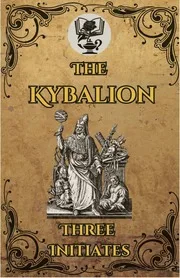
For those new to Hermetic Alchemy, start with accessible overviews. 'The Kybalion: A Study of The Hermetic Philosophy' by Three Initiates introduces core principles in a concise format. 'The Hermetica. The Lost Wisdom Of The Pharaohs' by Timothy Freke and Peter Gandy offers a modern interpretation of key texts. 'Isis unveiled, Volume 1' by H. P. Blavatsky touches upon alchemical themes within a broader occult context. 'The Story of Alchemy and the Beginnings of Chemistry' by M. M. Pattison Muir provides historical background without dense theory.
Intermediate Reading
Moving beyond introductions, look at works that explore alchemical symbolism and practice. Herbert Silberer's 'Hidden Symbolism of Alchemy and the Occult Arts' deciphers alchemical allegory. Manly P. Hall's 'The Initiates of The Flame' discusses esoteric traditions including alchemy. Arthur Edward Waite's 'Lives of alchemystical philosophers' offers biographical accounts and a bibliography. Charles Mackay's 'Memoirs of Extraordinary Popular Delusions' (Volumes 1-3) provides historical context on alchemical pursuits, albeit critically.
Classical / Advanced Texts
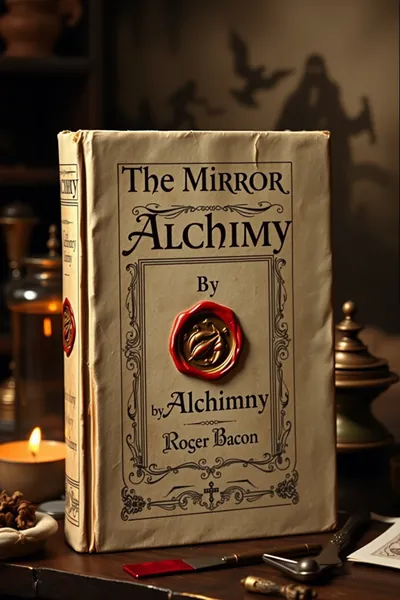
For serious students, engaging with primary sources is crucial. 'The Corpus Hermeticum' (PDFy mirror, 2014) contains the foundational texts attributed to Hermes Trismegistus. Michal Sedziwój's 'A New Light of Alchymie' is a significant historical alchemical treatise. Roger Bacon's 'The Mirror of Alchimy' presents early alchemical ideas. 'Of Natural and Supernatural Things' by Basilius Valentinus offers insights into alchemical processes and philosophy from a historical practitioner's perspective.
Reading Order — Step by Step
Begin with 'The Kybalion' and Freke/Gandy's 'The Hermetica' in Month 1 to grasp fundamental concepts. In Month 2, read Silberer's 'Hidden Symbolism' and Hall's 'The Initiates of The Flame' to explore symbolic interpretations. Supplement with Mackay's 'Memoirs of Extraordinary Popular Delusions' for historical context. By Month 3, tackle primary texts like 'The Corpus Hermeticum' and Sedziwój's 'A New Light of Alchymie', using Waite's 'Lives of alchemystical philosophers' as a reference for biographical and bibliographical details.
Frequently Asked Questions
Which Hermetic Alchemy book should I read first?
Begin with 'The Kybalion' by Three Initiates for a foundational overview of Hermetic principles. Alternatively, Freke and Gandy's 'The Hermetica' offers a modern take on key texts.
Is Hermetic Alchemy about turning lead into gold?
While historical alchemy pursued material transformation, Hermetic Alchemy primarily focuses on the 'Great Work' of spiritual transformation and self-perfection within the alchemist.
What is the 'Corpus Hermeticum'?
The 'Corpus Hermeticum' is a collection of ancient philosophical and religious treatises attributed to Hermes Trismegistus, forming the basis of Hermetic philosophy and influencing alchemy.
How does Hermetic Alchemy relate to laboratory alchemy?
Hermetic Alchemy views laboratory processes metaphorically, seeing the physical work as a reflection of the inner, spiritual work of transmutation and purification of the soul.
What are the main principles of Hermeticism?
Key principles include Mentalism (The All is Mind), Correspondence ('As Above, So Below'), Vibration (Nothing rests), Polarity (Duality), Rhythm, Cause and Effect, and Gender.
Are there practical exercises in Hermetic Alchemy?
While direct practical instructions are rare in foundational texts, practices often involve meditation, contemplation, self-reflection, and symbolic understanding of alchemical processes.
Where can I find information on alchemical symbols?
Herbert Silberer's 'Hidden Symbolism of Alchemy and the Occult Arts' is an excellent resource for understanding the complex symbolic language used in alchemical texts.