What is Prima Materia?
Prima Materia, or 'first matter,' is a fundamental concept in alchemy representing the primordial, undifferentiated substance from which all things are believed to originate. It is often described as a chaotic, elemental potentiality, a universal substrate that alchemists sought to isolate, purify, and transform into higher forms, most notably the Philosopher's Stone. Understanding Prima Materia is central to grasping the theoretical underpinnings of alchemical transmutation and its symbolic meanings.
Best Books for Complete Beginners
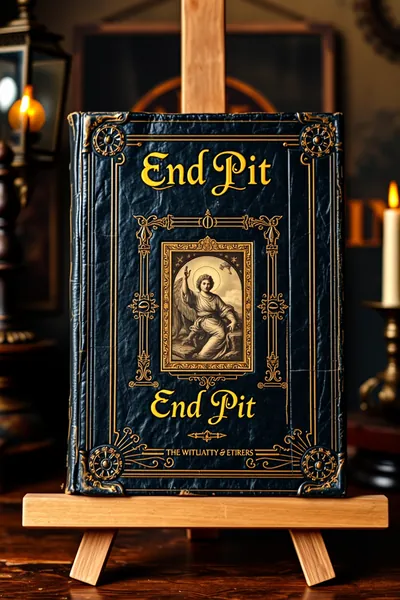
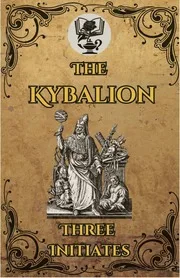
For those new to the concept, start with accessible introductions that explain alchemical language. 'The Kybalion: A Study of The Hermetic Philosophy' offers a foundational overview of Hermetic principles, which heavily influenced alchemical thought. Evelyn Underhill's 'Practical Mysticism' provides a more general introduction to mystical experience, often a precursor to deeper alchemical study. John Uri Lloyd's 'Etidorhpa; or, The End of Earth' presents a narrative journey that touches upon alchemical themes in an engaging, allegorical manner, making complex ideas more digestible.
Intermediate Reading
Moving beyond initial concepts, look at texts that explain alchemical processes and symbolism more directly. Herbert Silberer's 'Hidden Symbolism of Alchemy and the Occult Arts' is crucial for understanding the psychological and symbolic layers of alchemy. C. J. S. Thompson's 'The Mystery and Romance of Alchemy and Pharmacy' offers historical context and details on alchemical practices. Arthur Edward Waite's 'Lives of alchemystical philosophers' provides biographical insights into key figures and their pursuits, bridging historical accounts with theoretical discussions.
Classical / Advanced Texts
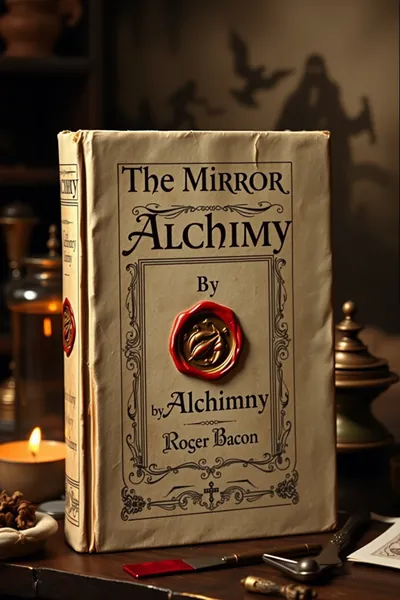
For serious students, engaging with primary alchemical treatises is essential. Roger Bacon's 'The Mirror of Alchimy' is a significant early work outlining alchemical principles. Michal Sedziwój's 'A New Light of Alchymie' presents a more technical alchemical perspective from the early modern period. The collection of texts within 'The Corpus Hermeticum' and 'The Hermetica. The Lost Wisdom Of The Pharaohs' by Freke and Gandy are vital for understanding the philosophical roots from which alchemy emerged.
Reading Order — Step by Step
Begin with 'The Kybalion' (Three Initiates) for a foundational grasp of Hermeticism. Follow with John Uri Lloyd's 'Etidorhpa' for an allegorical introduction to alchemical journeys. In month two, explore Herbert Silberer's 'Hidden Symbolism of Alchemy' to understand symbolic meanings, and C. J. S. Thompson's 'The Mystery and Romance of Alchemy' for historical context. For month three, tackle primary texts like Roger Bacon's 'The Mirror of Alchimy' and Michal Sedziwój's 'A New Light of Alchymie' to engage with classical alchemical writings.
Frequently Asked Questions
Which Prima Materia book should I read first?
Begin with 'The Kybalion: A Study of The Hermetic Philosophy' by Three Initiates. It provides a clear, structured introduction to the core principles of Hermeticism, which are foundational to understanding the concept of Prima Materia in alchemy.
Is 'Prima Materia' a scientific concept?
Prima Materia is a concept rooted in ancient alchemy and esoteric philosophy, not modern science. It represents a theoretical primordial substance, distinct from the elements and compounds studied in contemporary chemistry.
How does Prima Materia relate to the Philosopher's Stone?
Prima Materia is considered the raw, unrefined starting point. The Philosopher's Stone is the ultimate goal of the alchemical process, achieved by purifying and transforming the Prima Materia through the Great Work.
Are there different interpretations of Prima Materia?
Yes, interpretations vary. Some view it as a physical substance, others as a psychological state, a spiritual potential, or a symbolic representation of chaos and undifferentiated energy.
What is the historical origin of the term 'Prima Materia'?
The term originates from Latin alchemical texts, translating to 'first matter.' It draws upon earlier Greek philosophical concepts of a primordial substance from which the cosmos emerged.
Can beginners find value in advanced alchemical texts?
While challenging, advanced texts like 'The Mirror of Alchimy' can offer glimpses into historical alchemical thought. However, it's recommended to build a foundation with introductory works first to better understand the context and terminology.