Azoth
 61
61

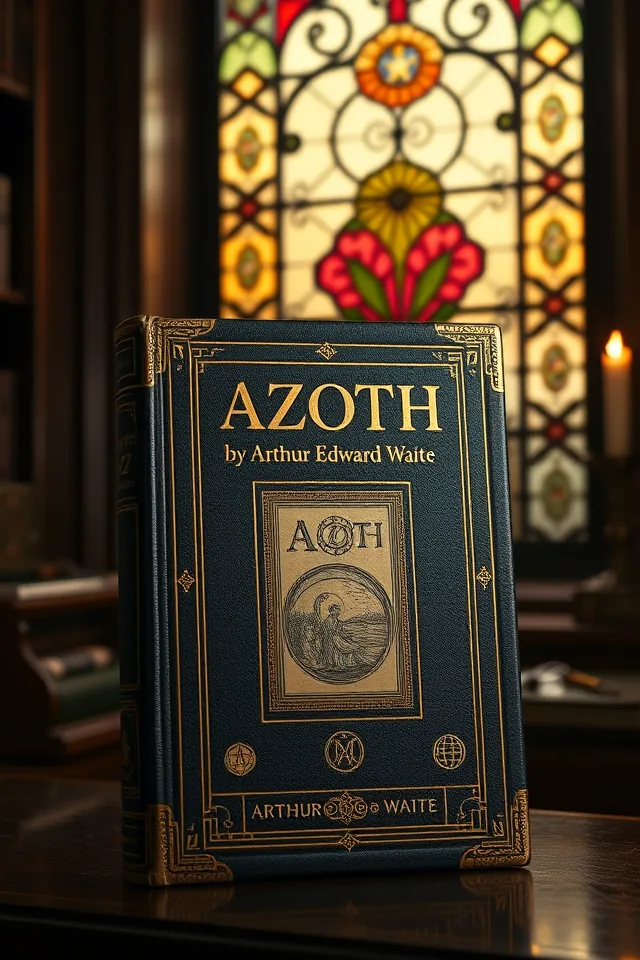
Azoth



Review by Aurelia Blackwood (Occult Philosophy Critic) — Arthur Edward Waite's 'Azoth' is a masterclass in alchemical and hermetic philosophy. Waite's esoteric insights are profound, making this book a treasure trove for those delving into the mysteries of the occult. The strengths of 'Azoth' lie in its ability to blend historical context with mystical interpretation, providing readers with a comprehensive understanding of alchemy's philosophical significance. Ideal for both novice seekers and seasoned scholars, 'Azoth' stands as a beacon of wisdom in the realm of esoteric literature.
📝 Description
61
Arthur Edward Waite published 'Azoth' in 1910, dissecting alchemical symbolism.
Arthur Edward Waite's 'Azoth' examines the symbolic language and philosophical underpinnings of alchemy. Published in 1910, the book presents alchemical processes not merely as metallurgical experiments, but as metaphors for spiritual development. Waite unpacks the hidden meanings within alchemical texts and imagery, aiming to clarify the traditions for serious students. He focuses on the hermetic arts, connecting them to broader mystical and occult philosophies. The work is structured to guide readers through the layered interpretations of alchemical symbolism, revealing its connection to inner transformation.
The book is particularly concerned with the symbolic representation of the 'Azoth,' a concept central to alchemical theory, often understood as a universal solvent or life force. Waite traces its various interpretations across different alchemical schools and historical periods. He views alchemy as a path for spiritual purification and enlightenment, rather than a literal pursuit of gold. This perspective frames the entire discussion, making 'Azoth' a study in esoteric symbolism and its application to the human condition.
Arthur Edward Waite was a prominent figure in the late 19th and early 20th century occult revival, known for his scholarly approach to esotericism. 'Azoth' sits within this context, drawing from a wide range of historical alchemical literature, including works attributed to figures like Paracelsus and Nicolas Flamel. Waite's interpretation aligns with the theosophical and mystical currents of his time, which often sought to find spiritual or psychological meaning in ancient traditions. He distinguished his approach from purely historical or materialistic interpretations, emphasizing the inner, spiritual dimensions of alchemy.
💡 Why Read This Book?
Read 'Azoth' to gain a deep understanding of alchemical symbolism and its mystical implications. Ideal for seekers of hidden knowledge, scholars of esoteric traditions, and practitioners of spiritual alchemy, this book offers a unique perspective on the transformative power of the hermetic arts. Dive into the rich symbolism and philosophical depth that Waite presents, and uncover the secrets of the ancient mystics.
⭐ Reader Reviews
Honest opinions from readers who have explored this book.
❓ Frequently Asked Questions
What is the central theme of 'Azoth'?
The central theme of 'Azoth' is the alchemical process of transformation, both material and spiritual. Waite explores the symbolism and philosophical significance of alchemy, making it a key text for those interested in hermeticism.
Who is the intended audience for this book?
The intended audience includes seekers of hidden knowledge, scholars of esoteric traditions, and practitioners of mysticism. Beginners will find it enlightening, while experts will appreciate its depth and insight.
How does 'Azoth' contribute to the field of alchemy?
'Azoth' contributes to the field of alchemy by providing a comprehensive and symbolic interpretation of the alchemical process. Waite's work bridges historical context with modern esoteric thought, making it a valuable resource for both study and practice.
What are some key symbols discussed in 'Azoth'?
Key symbols in 'Azoth' include the Philosopher's Stone, the Ouroboros, and the process of distillation. Waite delves into the mystical meanings behind these symbols, offering readers a deeper understanding of alchemical symbolism.
Is 'Azoth' suitable for beginners in the occult?
While 'Azoth' is rich in esoteric knowledge, beginners may find it challenging due to its dense symbolism and philosophical depth. However, with patience and a willingness to explore, newcomers can gain valuable insights from this text.
🔮 Key Themes & Symbolism
The Alchemical Process
Waite examines the intricate stages of the alchemical process, from the initial phase of Nigredo to the final stage of Rubedo. This theme explores the symbolism of transformation, both in the material world and within the spiritual realm. Readers gain a deeper understanding of the hermetic arts and their philosophical significance.
Symbolism in Alchemy
The book is rich in alchemical symbolism, with Waite interpreting key symbols such as the Philosopher's Stone and the Ouroboros. These symbols are not merely decorative but hold profound mystical meanings, guiding the reader through the esoteric range of alchemy.
Spiritual Transformation
Fundamentally, , 'Azoth' is about spiritual transformation. Waite uses the alchemical process as a metaphor for personal and spiritual growth, encouraging readers to seek inner alchemy and enlightenment. This theme resonates deeply with those on a spiritual journey.
💬 Memorable Quotes
Direct passages from the work, attributed to the author.
“The Philosopher's Stone represents the ultimate goal of alchemy.”
— Waite's interpretation of the Philosopher's Stone as a symbol of spiritual attainment highlights the mystical aspirations of alchemists.
“Alchemy is the art of making gold from base metals.”
— While this refers to the literal practice of alchemy, it also symbolizes the transmutation of the self from a base to a higher state.
💡 Key Ideas
Editorial paraphrase of the work's core concepts — not direct quotes.
The alchemical process is a journey of the soul.
This quote underscores the spiritual dimension of alchemy, where the transformation of matter mirrors the transformation of the self.
The Ouroboros symbolizes the eternal cycle of life and death.
This quote examines the cyclical nature of existence, as depicted in the alchemical symbol of the Ouroboros.
The seeker of alchemical wisdom must start a path of reading of self-discovery.
This quote emphasizes the personal and introspective nature of alchemical study, urging readers to look within for enlightenment.
🌙 Esoteric Significance
Tradition
Azoth belongs to the Hermetic tradition, which emphasizes the unification of spiritual and material knowledge. This tradition, rooted in ancient Greek philosophy, focuses on the pursuit of hidden wisdom and the transformation of the self through esoteric practices.
Symbolism
Key symbols in 'Azoth' include the Philosopher's Stone, the Ouroboros, and the process of distillation. These symbols are rich in mystical meaning, representing the stages of spiritual and alchemical transformation. The Philosopher's Stone, for instance, symbolizes the ultimate goal of alchemy: the attainment of spiritual enlightenment.
Modern Relevance
Today, 'Azoth' remains relevant for modern practitioners of alchemy and mysticism. Its insights into the alchemical process and symbolism continue to inspire seekers of hidden knowledge. Contemporary scholars and practitioners use 'Azoth' as a guide to understanding the deeper philosophical implications of alchemy, making it a timeless resource in the esoteric community.
👥 Who Should Read This Book
Beginners in the occult will find 'Azoth' to be a challenging yet rewarding read, offering a comprehensive introduction to alchemical symbolism and philosophy. Scholars of esoteric traditions will appreciate the depth and insight provided by Waite's interpretations. Spiritual seekers will be drawn to the book's exploration of spiritual transformation and inner alchemy. Practitioners of mysticism will find 'Azoth' to be an invaluable resource for deepening their understanding of the hermetic arts.
📜 Historical Context
Written in an era where the mysteries of alchemy were still shrouded in secrecy, 'Azoth' by Arthur Edward Waite stands as a key work in the field of hermeticism. During the late 19th and early 20th centuries, Waite contributed significantly to the revival of interest in occult and mystical traditions. His work helped bridge the gap between ancient alchemical texts and modern esoteric thought, influencing generations of scholars and practitioners. The book's enduring relevance lies in its ability to clarify complex alchemical processes and symbols, making them accessible to contemporary seekers.
📔 Journal Prompts
How does the alchemical process of Nigredo relate to personal transformation?
What are the mystical meanings behind the symbols of the Philosopher's Stone and the Ouroboros?
In what ways can the principles of alchemy be applied to spiritual growth?
Reflect on a time when you experienced a personal transformation. How does this relate to the alchemical process?
How does the pursuit of hidden knowledge enrich your spiritual journey?
🗂️ Glossary
Nigredo
The first stage of the alchemical process, symbolizing darkness and purification. It represents the initial phase of transformation.
Albedo
The second stage of alchemy, characterized by purification and the attainment of spiritual whiteness. It signifies spiritual cleansing.
Rubedo
The final stage of the alchemical process, symbolizing the attainment of spiritual enlightenment and the creation of the Philosopher's Stone.
Philosopher's Stone
A legendary alchemical substance said to be capable of turning base metals into gold and granting eternal life. Symbolically, it represents spiritual attainment.
Ouroboros
An ancient symbol depicting a serpent or dragon swallowing its own tail, representing the eternal cycle of life, death, and rebirth.
This book appears in 3 collections
🔮 Readers Also Liked
Browse all →







More by Arthur Edward Waite
All books →
From the “Hermeticism” Collection
View all →









More Free Alchemy & Hermeticism Books
View all →