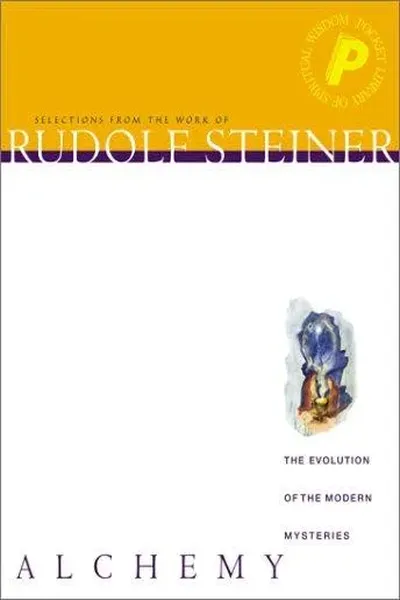
What is Spiritual Alchemy?
Spiritual alchemy is a path of inner transformation, often drawing parallels to the ancient practice of physical alchemy. It focuses on refining the self, purifying consciousness, and achieving a higher state of being, rather than transmuting base metals. This process involves working with internal energies, understanding symbolic language, and integrating spiritual principles into daily life. It's a journey of self-discovery, aiming for spiritual enlightenment or 'perfection'.
Best Books for Complete Beginners
For those new to spiritual alchemy, starting with accessible introductions is key. 'The essentials of spiritual alchemy' by Lawrence M. McCafferty provides a solid overview of core concepts. 'Spiritual Alchemy for Creative People' by Vickie Krudwig offers a modern, relatable approach. 'Alchemy Inner Spiritual Path' by David Phillips introduces the fundamental principles in a clear manner. 'Soul Alchemy' by Jessica Verrill explores personal transformation through alchemical metaphors. Finally, 'Fundamentals of Spiritual Alchemy' by Caroline Myss offers a contemporary perspective on inner work.
Intermediate Reading
Building on foundational knowledge, intermediate texts delve deeper into specific traditions and practices. 'Taoist Yoga: Alchemy & Immortality' by Charles Luk is essential for understanding the Eastern perspective on internal alchemy. 'Nourishing the Essence of Life' by Eva Wong provides practical guidance on cultivating vital energies. Jonathan Quinn II's 'The Science Of Internal Alchemy' offers a detailed look at the mechanics of inner transformation. 'The Way Of The Golden Elixir - An Introduction To Taoist Alchemy (Neidan)' further elaborates on Taoist internal practices.
Classical / Advanced Texts
Advanced study requires engaging with more complex and primary source materials. 'The Story of Han Xiangzi - The Alchemical Adventures of a Daoist Immortal' (2011) offers narrative insights into alchemical lore. Arthur Edward Waite's 'Spiritual And Physical Alchemy' and 'Of Spiritual Alchemy And The Holy Grail' provide historical and symbolic analyses from a Western esoteric viewpoint. 'The Philosopher's Stone' by Israel Regardie is a significant work on Western ceremonial magic and alchemy. 'Theurgy, or the Hermetic practice' by E. J. Langford Garstin explores practical hermetic applications.
Reading Order — Step by Step
Begin with introductory texts like 'The essentials of spiritual alchemy' by Lawrence M. McCafferty and 'Spiritual Alchemy for Creative People' by Vickie Krudwig for Weeks 1-2. In Month 2, transition to Charles Luk's 'Taoist Yoga: Alchemy & Immortality' and Eva Wong's 'Nourishing the Essence of Life' to grasp Eastern approaches. By Month 3, explore more detailed works such as Jonathan Quinn II's 'The Science Of Internal Alchemy' and Arthur Edward Waite's 'Spiritual And Physical Alchemy'. Continue with advanced texts based on your evolving interests and understanding.
Frequently Asked Questions
Which spiritual alchemy book should I read first?
For a solid starting point, consider 'The essentials of spiritual alchemy' by Lawrence M. McCafferty. It lays out the fundamental concepts clearly, making it ideal for beginners.
What is the difference between physical and spiritual alchemy?
Physical alchemy sought to transmute metals, while spiritual alchemy focuses on the transmutation of the self—purifying consciousness, overcoming limitations, and achieving spiritual enlightenment or perfection.
Are Taoist alchemy texts relevant to spiritual alchemy?
Yes, Taoist internal alchemy (Neidan), as seen in works like 'Taoist Yoga' by Charles Luk, is a significant branch of spiritual alchemy, focusing on cultivating internal energies for transformation.
What does 'The Great Work' refer to in alchemy?
'The Great Work' is the alchemical term for the entire process of spiritual transformation, purification, and the attainment of the highest spiritual state, often symbolized by creating the Philosopher's Stone.
Can spiritual alchemy be applied to daily life?
Absolutely. Spiritual alchemy provides a framework for self-improvement, ethical conduct, and conscious living. Practices aim to refine one's character and energy, impacting everyday interactions and well-being.
What is the role of symbolism in spiritual alchemy?
Symbolism is crucial. Alchemical texts use metaphors and allegories (like metals, furnaces, and elixirs) to describe internal psychological and spiritual processes that are difficult to express directly.
Is spiritual alchemy related to Hermeticism?
Yes, spiritual alchemy is deeply intertwined with Hermetic philosophy, which emphasizes esoteric knowledge, spiritual transformation, and the principle of 'as above, so below,' influencing many alchemical traditions.