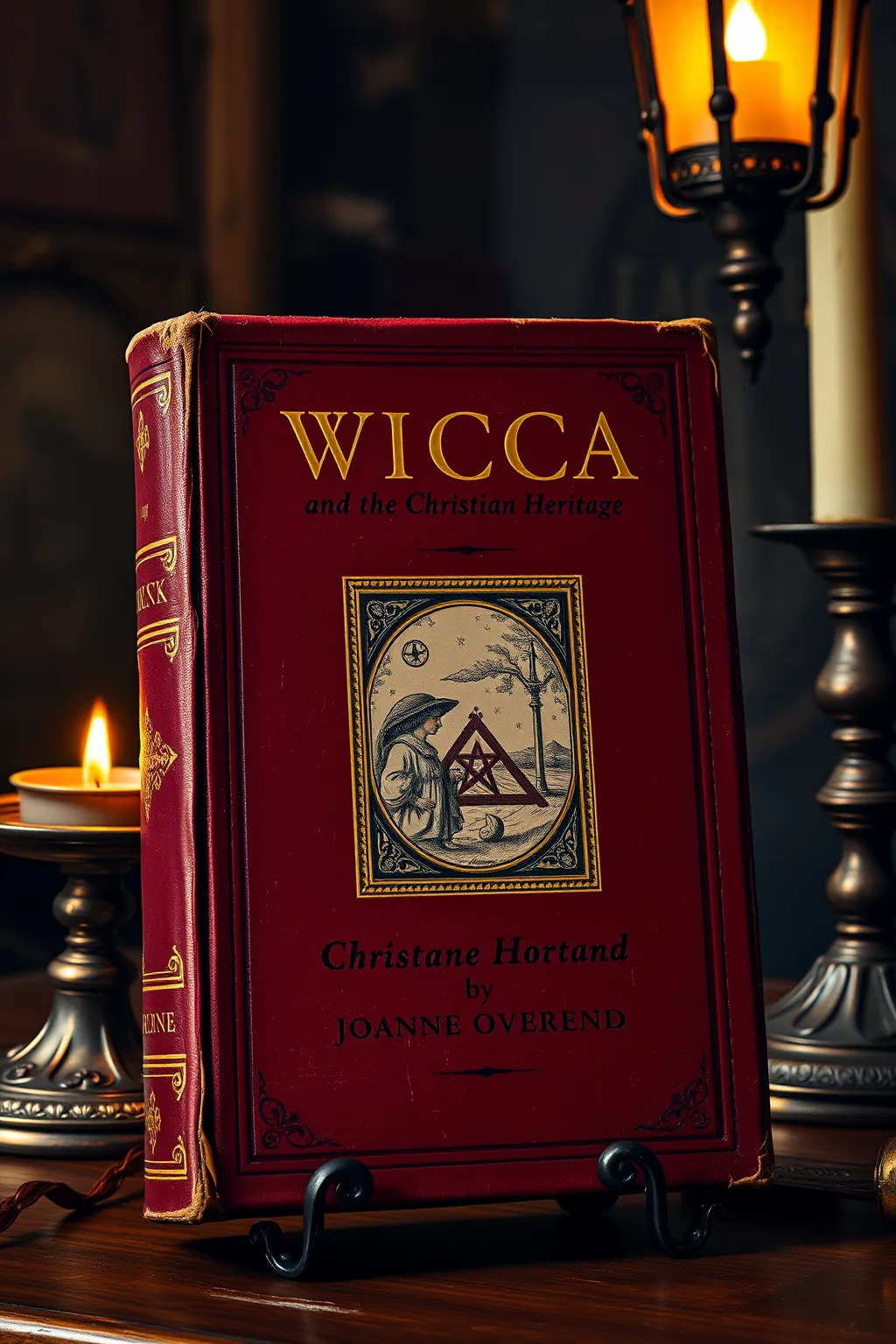
Wicca and the Christian Heritage
 63
63

Wicca and the Christian Heritage

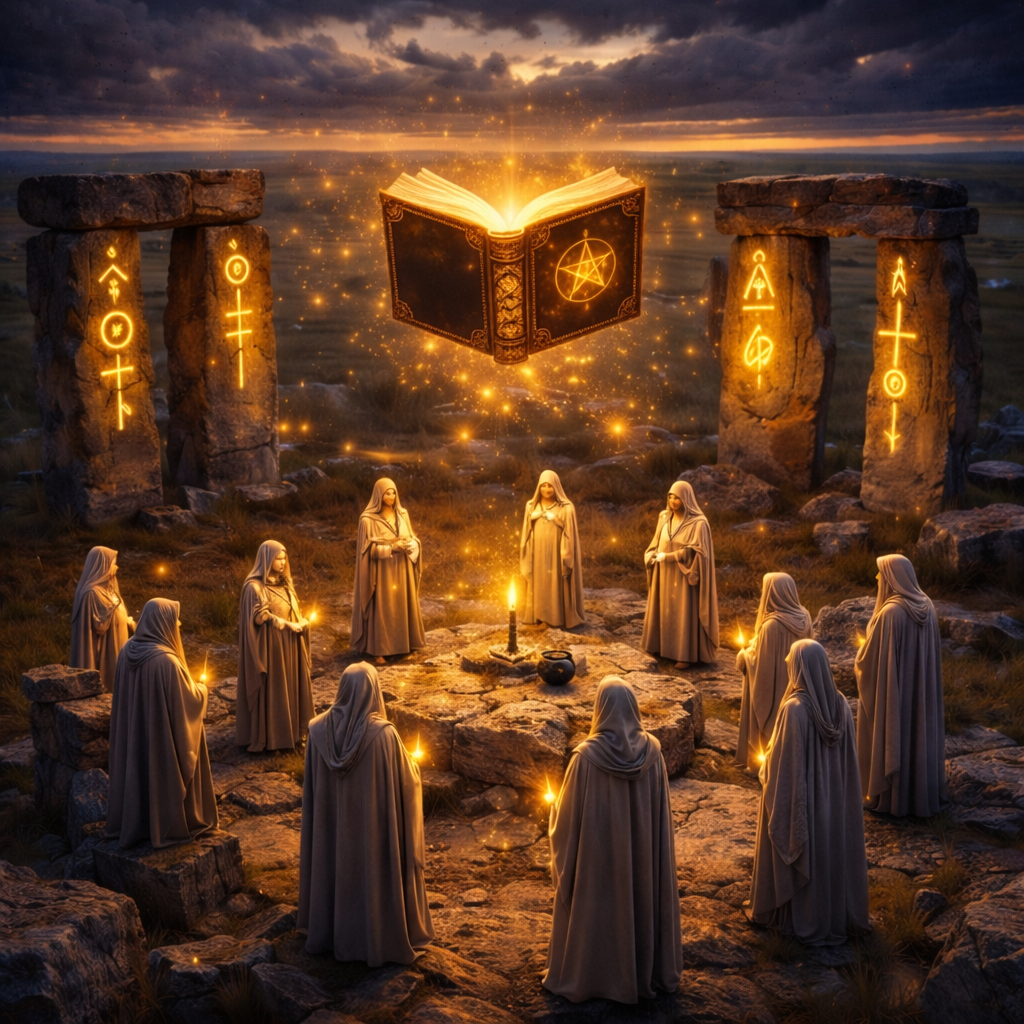

Evander Ashcroft (Alchemy & Hermeticism Editor) — Joanne Overend's "Wicca and the Christian Heritage" is a masterfully crafted investigation into the often-overlooked symbiosis between witchcraft and Christianity. Eschewing superficial comparisons, Overend delves into the deep archetypal currents and historical interactions that reveal a shared esoteric lineage. She deftly illuminates how elements of pre-Christian practice and belief may have been transmuted or preserved within Christian traditions, offering profound insights for those seeking to understand the evolution of Western magic. This book is essential reading for Neopagan scholars, Christian mystics, and anyone intrigued by the hidden continuities in spiritual history. Its strength lies in its nuanced approach and its ability to foster a more holistic understanding of the sacred.
📝 Description
63
Joanne Overend's 2018 book examines the hidden links between Wicca and Christian traditions.
Joanne Overend's "Wicca and the Christian Heritage" investigates the often overlooked connections between pagan practices and Christianity. The author traces shared symbols and concepts that unite these seemingly separate spiritual paths. Overend explores how the feminine divine appears in Christian imagery and how natural forces resonate within liturgical practices.
This book encourages a contemplative look at spirituality, suggesting that the sacred is not limited to one doctrine. It reveals a more integrated view of spiritual expression that moves beyond rigid dogma. Rather than just a historical survey, it presents an alchemical perspective on the shared spiritual foundations of Western traditions.
This work fits within the modern esoteric tradition of comparative religion and syncretism. It follows scholars and practitioners who seek to find common ground between diverse spiritual systems, particularly those that have historically been in opposition. The book's focus on uncovering veiled connections and symbolic resonances aligns with the esoteric interest in hidden meanings and the interconnectedness of all things.
💡 Why Read This Book?
For seekers yearning to bridge perceived spiritual divides, this book offers a profound revelation. It's for scholars desiring a nuanced historical perspective and practitioners wishing to enrich their understanding of witchcraft's deep roots. Discover the hidden connections that illuminate the evolution of Western spirituality and embrace a more inclusive, mystical worldview.
⭐ Reader Reviews
Honest opinions from readers who have explored this book.
❓ Frequently Asked Questions
Does this book suggest Wicca is derived solely from Christianity?
No, the book explores the complex intermingling and mutual influence, suggesting shared roots and later syncretic developments rather than a simple derivation.
Is this book suitable for absolute beginners in Wicca?
Yes, while it delves into complex historical and theological connections, Overend's writing is accessible and provides foundational context for those new to the subject.
What historical periods does the book primarily focus on?
The book spans from early Christianity and pre-Christian European traditions through to more recent historical periods, examining how these influences have persisted and transformed.
Can this book help in understanding Christian symbolism from a pagan perspective?
Absolutely. It offers fresh interpretations of Christian symbols, revealing potential pagan resonances and archetypal meanings that might otherwise remain unseen.
Does the author present Wicca as a 'reformed' Christianity?
The book focuses on historical and symbolic connections and mutual influences, rather than advocating for Wicca as a direct reformation of Christianity. It highlights shared spiritual currents.
🔮 Key Themes & Symbolism
The Veiled Feminine Divine
This theme explores how the powerful archetype of the Great Goddess, often suppressed or recontextualized, may have found enduring, albeit often disguised, expressions within Christian iconography and devotional practices. It examines figures like Mary, the saints, and even the concept of Sophia (Wisdom) as potential carriers of pre-Christian feminine divinity, revealing a persistent undercurrent of the sacred feminine that resonates deeply with Wiccan theology and practice, offering a richer, more nuanced understanding of divine manifestation.
Symbolic Resonance and Transmutation
Here, the focus is on how ancient pagan symbols and rituals were not always eradicated but often transmuted or reinterpreted within the Christian framework. Overend illuminates how familiar Christian symbols might possess deeper, older layers of meaning rooted in nature worship, fertility rites, and animistic beliefs. This exploration allows readers to perceive the continuity of symbolic language across traditions, fostering an appreciation for the adaptive and enduring nature of spiritual expression and the hidden wisdom embedded within seemingly orthodox forms.
The Alchemy of Spiritual Convergence
This theme looks at the concept of spiritual alchemy, viewing the historical interactions between Wicca and Christianity not as conflict, but as a transformative process. It posits that through centuries of proximity and influence, elements of each tradition have undergone an alchemical change, leading to unexpected convergences and the emergence of new understandings of the sacred. The book encourages readers to see this convergence as a pathway to a more integrated and holistic spiritual path, transcending rigid boundaries and embracing the interconnectedness of all spiritual expression.
💬 Memorable Quotes
Direct passages from the work, attributed to the author.
“The whispers of the ancient Earth echo in cathedral stone.”
— This metaphor suggests that the fundamental, primal energies of nature, central to paganism, continue to resonate and influence even within the most established Christian structures.
“Shadows hold the memory of forgotten light.”
— This implies that what may appear as obscured or 'dark' aspects of a tradition can actually contain the preserved essence of older, perhaps more direct, spiritual illumination.
“Where dogma ends, the true mystery begins.”
— This highlights the book's focus on the esoteric and mystical, suggesting that the most profound spiritual truths lie beyond rigid doctrines and into the area of personal experience and intuition.
“Roots intertwine beneath the surface of belief.”
— This speaks to the hidden connections and shared origins that exist between seemingly distinct spiritual paths, emphasizing a deeper, underlying unity.
“The sacred is a river, not a stagnant pool.”
— This metaphor illustrates the dynamic, evolving, and interconnected nature of spirituality, suggesting that it flows and adapts, drawing from multiple sources.
🌙 Esoteric Significance
Tradition
This work is deeply rooted in the esoteric traditions that explore the hidden correspondences and underlying unity of diverse spiritual paths. It draws from comparative religion, Gnosticism, and hermeticism, which posit that beneath the surface of exoteric doctrines lie deeper, mystical truths accessible through symbolism, intuition, and direct experience. The book acts as a bridge, suggesting that the esoteric currents within Christianity and the revitalized paganism of Wicca share common archetypal wellsprings.
Symbolism
The book's esoteric significance lies in its re-examination of Christian symbols through a lens that recognizes potential pagan or Gnostic resonances. It probes the deeper meanings of figures, rituals, and architectural elements, suggesting that many were imbued with pre-Christian sacred feminine energies, nature worship, and shamanic practices. By unveiling these layers, the book encourages a more profound, multi-dimensional understanding of sacred symbolism, revealing how ancient wisdom can be encoded within seemingly orthodox religious forms.
Modern Relevance
In an era increasingly seeking spiritual integration and authenticity, "Wicca and the Christian Heritage" offers profound modern relevance. It challenges rigid divisions between seemingly opposing belief systems, encouraging a more inclusive and holistic spiritual perspective. For individuals exploring their spiritual paths, it provides a framework for understanding how different traditions can inform and enrich one another, fostering a sense of connection to both ancestral wisdom and contemporary spiritual practices, and promoting a more nuanced dialogue between faiths.
👥 Who Should Read This Book
This clear work is essential for several distinct groups. For the **beginner seeker**, it offers a foundational understanding of how seemingly disparate spiritual paths can be interconnected, clarifying the relationship between Wicca and Christianity. **Scholars of religion and history** will find a nuanced and well-researched exploration that challenges conventional narratives. **Wiccan practitioners** will gain deeper insight into the historical and symbolic roots of their craft, enriching their practice with a broader context. **Christian mystics** and those interested in comparative theology will discover new interpretations of their own tradition, revealing less-obvious layers and potential universal truths. Anyone yearning for a more integrated and less dogmatic understanding of spirituality will find profound value within its pages.
📜 Historical Context
"Wicca and the Christian Heritage" emerges from a wide range of historical scholarship and spiritual inquiry, reflecting a growing modern interest in the nuanced relationship between pagan traditions and dominant Western religions. The book is situated within a context where scholars and practitioners alike are re-evaluating historical narratives, seeking to uncover the often-suppressed connections and syncretic developments that shaped European spiritual landscapes. It acknowledges the historical periods of persecution and tension but also emphasizes periods of subtle influence, adaptation, and even co-optation of pagan themes and symbols within Christianity. This work contributes to a broader understanding of how indigenous European spiritualities, while often forced underground, continued to inform and enrich the cultural and religious fabric, particularly as the influence of Christianity spread and evolved across centuries.
📔 Journal Prompts
Reflect on a Christian symbol that holds personal significance. How might its meaning be interpreted through a nature-based or feminine divine lens?
Consider the concept of 'sacred feminine' within your own spiritual understanding. Where do you see its presence or absence in various traditions?
Explore the idea of 'transmutation' in your own life. How have challenging experiences or beliefs been transformed into something positive or insightful?
Journal about the concept of hidden knowledge. What 'veiled' spiritual truths do you feel drawn to uncover in your life or within religious traditions?
How does the idea of 'spiritual convergence' resonate with your personal journey? Can you identify instances where different aspects of your belief system have merged or influenced one another?
🗂️ Glossary
Neopaganism
A modern religious movement that draws inspiration from ancient pre-Christian European pagan religions, often emphasizing nature worship, polytheism, and ritual practice.
Christendom
The collective body of Christian churches and adherents, and the geographical areas where Christianity is the dominant religion; historically, it implies a cultural and political sphere influenced by Christianity.
Hekserij
A Dutch and Flemish term for witchcraft, often used in historical and academic contexts to refer to the practice and belief in magic and sorcery.
Esoteric
Intended for or likely to be understood by only a small number of people with a specialized knowledge or interest; relating to or dealing with the occult or mystical aspects of a subject.
Archetype
In psychology and mythology, a primordial image, symbol, or pattern of thought that is derived from the collective unconscious and recurs in literature and art, representing universal human experiences.
This book appears in 2 collections
🔮 Readers Also Liked
Browse all →




More by Joanne Overend
All books →
From the “Ritual Magic” Collection
View all →





More Free Magic & Ritual Books
View all →