52,000+ Esoteric Books Free + Modern Compare Prices
Home Collections Atlantis
🌊

Atlantis Books: A Comprehensive Reading List

Key texts on Atlantis explore its origins, cataclysm, and legacy from ancient philosophical inquiries to modern esoteric interpretations. H. P. Blavatsky's 'The Secret Doctrine' (Vols. 1-2) and Plato's dialogues, as referenced in texts like Proclus' 'On the Theology of Plato', provide foundational viewpoints. This curated list guides you through primary sources and influential secondary works, offering a structured path to understanding the Atlantis narrative.

Top Atlantis Books

25 Atlantis books
Being or good?
📖
Being or good?
Agnieszka Kijewska
4.0
61
Hermetica
📖
Hermetica
Brian P. Copenhaver
4.1
62
MUST READ
Piers Plowman
📖
Piers Plowman
Diane Purdy Lichstein
4.0
61
TRENDING
Neoplatonica
📖
Neoplatonica
Dublin Conference on Neoplatonism (
4.0
61
Theophany
📖
Theophany
Eric D. Perl
4.0
62
Plato and Hesiod
📖
Plato and Hesiod
G. R. Boys-Stones
4.0
61
Bygone Beliefs
📖
Bygone Beliefs
H. Stanley Redgrove
4.1
64
PAGE-TURNER
The shadow kingdom
📖
The shadow kingdom
Howard, Robert E. (Robert Ervin)
4.2
69
MUST READ
Gonimos
📖
Gonimos
Leendert Gerrit Westerink
4.0
61
Proclus
📖
Proclus
Lucas Siorvanes
4.0
62
Mind in nature
📖
Mind in nature
Maria Teresa Teixeira
4.0
61
The Magic World
📖
The Magic World
Nesbit, E. (Edith)
4.3
69
Neoplatonism
📖
Neoplatonism
Pauliina Remes
4.1
64
Neoplatonism
📖
Neoplatonism
Remes Pauliina Staff
4.0
61
Neoplatonism
📖
Neoplatonism
Richard T. Wallis
4.1
63

What is Atlantis?

Atlantis is a legendary island civilization first described by the ancient Greek philosopher Plato in his dialogues 'Timaeus' and 'Critias'. He depicted it as a powerful maritime empire located beyond the Pillars of Hercules, which ultimately sank into the ocean due to divine punishment for its hubris. While often treated as historical fact, its existence remains a subject of debate, with interpretations ranging from allegorical tales to descriptions of a lost continent or advanced ancient culture.

Best Books for Complete Beginners

For those new to Atlantis, starting with accessible overviews is crucial. While not directly on Atlantis, Arlo Bates' 'The Pagans' touches on ancient belief systems that inform later myths. Edith Nesbit's 'The Magic World' offers a fictional yet evocative portrayal of lost civilizations. For a more direct, albeit fictionalized, approach to ancient mysteries, Robert E. Howard's 'The Shadow Kingdom' provides an imaginative dive into lost worlds. These texts offer entry points into the broader themes surrounding lost civilizations and ancient lore.

Intermediate Reading

Moving beyond introductory concepts, engage with works that delve deeper into the philosophical and esoteric dimensions. Bertrand Russell's 'Mysticism and Logic and Other Essays' provides a critical lens on belief systems. Caroline F. E. Spurgeon's 'Mysticism in English Literature' examines how mystical themes permeate culture. Ralph Shirley's 'Occultists & Mystics of All Ages' contextualizes Atlantis within a broader history of esoteric thought. These books encourage a more analytical approach to the subject.

Classical / Advanced Texts

Serious students should consult primary sources and foundational esoteric works. Plato's original dialogues are essential, though not directly cataloged here, their ideas are discussed in Proclus' 'On the Theology of Plato' (translated by Thomas Taylor). H. P. Blavatsky's 'The Secret Doctrine' (Vols. 1-2) is a monumental synthesis of ancient wisdom, linking Atlantis to global cosmogenesis. Iamblichus' 'On the Mysteries of the Egyptians, Chaldeans, and Assyrians' offers insights into ancient religious and philosophical practices that influenced later Atlantis narratives.

Reading Order — Step by Step

Begin with foundational philosophical discussions that frame the Atlantis narrative, such as the ideas presented in Aristotle's 'On His Predecessors, Being the First Book of His Metaphysics'. Next, explore the esoteric synthesis presented in Blavatsky's 'The Secret Doctrine, Vol. 1'. Follow this with Blavatsky's 'The Secret Doctrine, Vol. 2' to complete her cosmic history. For deeper classical context, consult Proclus' 'On the Theology of Plato'. Finally, integrate broader occult and mystical traditions by reading works like Ralph Shirley's 'Occultists & Mystics of All Ages'.

Frequently Asked Questions

Which Atlantis book should I read first?

For a gentle introduction to the themes surrounding lost civilizations, start with Edith Nesbit's 'The Magic World' or Robert E. Howard's 'The Shadow Kingdom'. These offer imaginative entry points before delving into more complex philosophical or esoteric texts.

Is Atlantis a real place?

The existence of Atlantis is primarily known through Plato's philosophical dialogues. While some interpret it as a historical account, many scholars view it as an allegory or myth. Texts like Blavatsky's 'The Secret Doctrine' explore it from an esoteric perspective.

What is the connection between Atlantis and ancient Egypt?

Esoteric traditions, particularly those influenced by H. P. Blavatsky, often link Atlantis to ancient Egypt, suggesting Atlantean influence on Egyptian civilization, religion, and architecture. Works like 'Isis unveiled' explore these connections.

Are there fictional books about Atlantis?

Yes, many fictional works explore the Atlantis myth. Edith Nesbit's 'The Magic World' and Robert E. Howard's 'The Shadow Kingdom' are examples that touch upon lost civilizations and ancient mysteries, offering a narrative approach.

What is the Theosophical view of Atlantis?

Theosophy, as presented by H. P. Blavatsky in 'The Secret Doctrine', posits Atlantis as a major root race in human evolution, possessing advanced spiritual and scientific knowledge before its cataclysmic end.

How does philosophy relate to the Atlantis myth?

Plato used Atlantis in his dialogues as a philosophical device to discuss ideal societies, divine justice, and the dangers of hubris. Later philosophers like Proclus and Iamblichus engaged with these Platonic ideas in their own works.

Where can I find primary sources on Atlantis?

While Plato's original dialogues are key, primary sources exploring related ancient traditions include Iamblichus' 'On the Mysteries' and Proclus' commentaries on Plato. Blavatsky's 'The Secret Doctrine' synthesizes many ancient texts.

Why Each Book Matters

The Red King

The Red King

'The Red King' is a title that often evokes images of alchemical processes or mythical rulers. While the specific author and context for this public-domain text are 'Unknown,' such titles frequently connect to esoteric lore surrounding hidden knowledge, magical transformation, or ancient powerful figures. These themes align with the esoteric understanding of Atlantis as a source of forgotten power and a realm ruled by wise, perhaps even magically adept, monarchs.

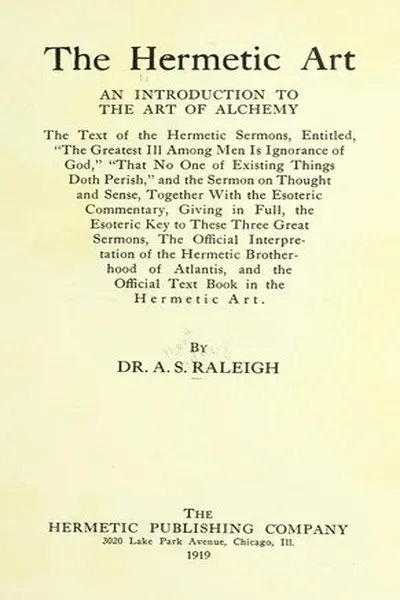
The Hermetic art

The Hermetic art

by A. S. Raleigh

'The Hermetic art' by A. S. Raleigh explores the principles and practices of Hermeticism, focusing on its spiritual and alchemical dimensions. Raleigh, a prominent figure in early 20th-century occultism, elucidates the Hermetic pursuit of wisdom and transformation. This book directly connects to the esoteric understanding of Atlantis as a civilization that mastered these 'Hermetic arts,' possessing profound knowledge of cosmic laws and the ability to transmute reality.

Being or good?

Being or good?

by Agnieszka Kijewska

'Being or good?' by Agnieszka Kijewska examines a fundamental question in Neoplatonic philosophy regarding the nature of the ultimate principle. Kijewska's work explores the debate among Neoplatonists about whether the One is primarily 'Being' or 'Good.' This deep dive into metaphysical foundations is crucial for understanding the ethical and ontological dimensions of ideal societies, resonating with the philosophical aspirations and spiritual perfection often attributed to Atlantis.

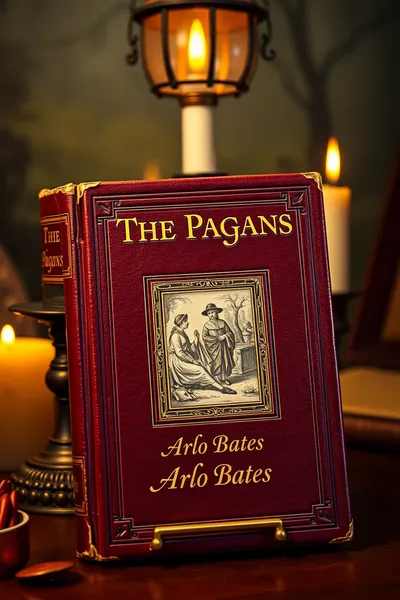
The Pagans

The Pagans

by Arlo Bates

'The Pagans' by Arlo Bates, published in 1884, is a novel that explores the intellectual and social conflicts within a group of Boston artists and writers grappling with traditional beliefs versus emerging secularism. While not directly about Atlantis, the book's themes of questioning established dogma and searching for new forms of spirituality and truth reflect the broader human quest for meaning that often leads to exploring ancient myths and lost civilizations like Atlantis.

Hermetica

Hermetica

by Brian P. Copenhaver

'Hermetica,' edited by Brian P. Copenhaver, presents a critical edition and translation of the core Hermetic texts. These ancient Greek-Egyptian writings reveal a profound esoteric philosophy encompassing magic, astrology, and the search for divine knowledge. The Hermetic tradition's emphasis on a primordial wisdom, often believed to be lost or hidden, directly aligns with the esoteric quest for the forgotten knowledge and spiritual advancements associated with Atlantis.

Neoplatonism

Neoplatonism

by C. Bigg

'Neoplatonism' by C. Bigg, also known as Charles Bigg, provides a historical account of the Neoplatonic movement, particularly its influence on early Christian thought. Bigg's work, originally published in 1895, traces the evolution of these ideas, demonstrating their profound impact on Western mysticism and spirituality. This historical context is vital for understanding how the philosophical legacy of Plato, including his account of Atlantis, was reinterpreted and integrated into later esoteric traditions.

Neo-Platonism

Neo-Platonism

by Charles Bigg

'Neo-Platonism' by Charles Bigg (C. Bigg) is a classic work that explores the historical development and theological implications of Neoplatonic philosophy. Bigg's scholarship provides valuable insights into how these ancient philosophical systems influenced the intellectual landscape of late antiquity and beyond. His analysis helps contextualize how the philosophical legacy of Plato, including his story of Atlantis, was preserved and reinterpreted through a mystical and esoteric lens.

Piers Plowman

Piers Plowman

by Diane Purdy Lichstein

'Piers Plowman' by Diane Purdy Lichstein likely refers to a critical study or interpretation of William Langland's medieval allegorical poem. While the poem itself is a Christian allegory of social protest, Lichstein's analysis would explore its complex symbolism and moral themes. This engagement with allegory and hidden meaning is relevant to the esoteric study of Atlantis, where the literal narrative is often seen as a veil for deeper spiritual truths and societal critiques.

Neoplatonica

Neoplatonica

by Dublin Conference on Neoplatonism (1992 Dublin, Ireland)

'Neoplatonica' from the Dublin Conference on Neoplatonism (1992 Dublin, Ireland) collects scholarly papers exploring various aspects of Neoplatonic philosophy. Such conference proceedings provide cutting-edge research and diverse interpretations of Plotinus, Proclus, and other key figures. The discussions within this volume contribute to a deeper academic understanding of the philosophical currents that influenced later esoteric thought, including the allegorical or metaphysical interpretations of Plato's Atlantis.

Theophany

Theophany

by Eric D. Perl

Another work titled 'Theophany' by Eric D. Perl further explores the manifestation of the divine across various philosophical and religious traditions. This book expands upon the idea that the divine is not merely transcendent but actively reveals itself, shaping reality and human experience. Such concepts are vital for understanding the esoteric view of Atlantis, which often posits it as a civilization where the divine was more directly experienced and integrated into daily life and societal structure.

Theophany

Theophany

by Eric David Perl

'Theophany' by Eric David Perl delves into the concept of divine manifestation within Neoplatonic thought, particularly in the works of Plotinus and Proclus. Perl, a renowned scholar of Neoplatonism, examines how the divine reveals itself in the cosmos and to the human soul. This exploration of theophany offers critical insights into the spiritual and metaphysical dimensions that are often ascribed to Atlantis as a civilization deeply connected to divine wisdom and cosmic order.

Plato and Hesiod

Plato and Hesiod

by G. R. Boys-Stones

'Plato and Hesiod' by G. R. Boys-Stones delves into the relationship between Plato's philosophy and the earlier Greek poetic tradition of Hesiod. Boys-Stones examines how Plato engaged with and reinterpreted Hesiod's myths and cosmogonies. This study is directly relevant to Atlantis, as Plato's account is presented within a philosophical framework, drawing on and transforming earlier narratives of origins, gods, and human history, much like his engagement with Hesiod.

Bygone Beliefs

Bygone Beliefs

by H. Stanley Redgrove

'Bygone Beliefs' by H. Stanley Redgrove, published in 1920, offers an engaging exploration of historical occultism, mysticism, and superstition. Redgrove delves into topics like alchemy, astrology, and ancient magical practices, providing a rich tapestry of esoteric thought. This book serves as an excellent resource for understanding the historical context of the beliefs and practices that often intertwine with theories about Atlantis as a source of ancient, forgotten esoteric knowledge.

The shadow kingdom

The shadow kingdom

by Howard, Robert E. (Robert Ervin)

'The shadow kingdom' by Robert E. Howard, first published in 1929, is a seminal work of sword and sorcery fiction, featuring King Kull of Valusia. This story introduces the concept of ancient, pre-human civilizations and forgotten empires, influencing the fantasy genre significantly. Howard's imaginative creation of a 'shadow kingdom' and its ancient mysteries resonates strongly with the themes of lost continents, primeval races, and hidden powers often associated with the esoteric legend of Atlantis.

Reading Plotinus

Reading Plotinus

by Kevin Corrigan

'Reading Plotinus' by Kevin Corrigan offers a scholarly guide to the foundational texts of Plotinus, the principal founder of Neoplatonism. Corrigan's work helps readers navigate Plotinus's complex metaphysics, including his theories of the One, Intellect, and Soul. A deep understanding of Plotinus is essential for comprehending the philosophical and spiritual underpinnings of Neoplatonic thought, which profoundly influenced later esoteric interpretations of the advanced wisdom of Atlantis.

Gonimos

Gonimos

by Leendert Gerrit Westerink

'Gonimos' by Leendert Gerrit Westerink explores the concept of 'gonimos' in ancient Greek philosophy, referring to generative or productive principles. Westerink, known for his expertise in Byzantine Greek and Neoplatonism, illuminates how these ideas of creation and emanation contribute to understanding the origins and structure of the cosmos, offering a philosophical lens through which one might interpret the creative forces and advanced societal structures attributed to Atlantis.

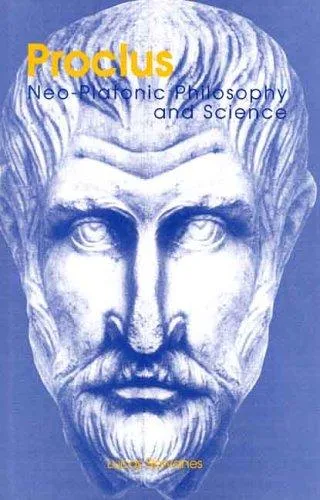
Proclus

Proclus

by Lucas Siorvanes

Authored by Lucas Siorvanes, 'Proclus' offers a detailed examination of the life and philosophical contributions of Proclus, one of the last great Neoplatonic philosophers. Proclus's systematic synthesis of Platonic, Aristotelian, and Pythagorean thought, particularly his theory of emanation, provides a sophisticated framework for understanding cosmic hierarchies and the descent of souls, concepts that resonate with esoteric interpretations of Atlantis as a highly evolved civilization connected to divine origins.

Al-Fārābi

Al-Fārābi

by Majid Fakhry

'Al-Fārābi' by Majid Fakhry provides an in-depth study of the influential medieval Islamic philosopher Abu Nasr al-Farabi. Al-Farabi's synthesis of Aristotelian and Platonic philosophy, particularly his ideas on the ideal state and the emanation of being, offers a fascinating parallel to the philosophical underpinnings of an ideal society like Atlantis. His work on political philosophy and the pursuit of human perfection resonates with the utopian ideals often associated with the lost continent.

Mind in nature

Mind in nature

by Maria Teresa Teixeira

'Mind in nature' by Maria Teresa Teixeira explores the concept of mind and its presence throughout the natural world within a philosophical framework. This work likely draws from ancient philosophical traditions that saw the cosmos as imbued with intelligence and purpose. Such ideas are foundational to many esoteric beliefs, including those that envision Atlantis as a civilization deeply attuned to cosmic intelligence and natural laws, reflecting a harmonious 'mind in nature.'

The Magic World

The Magic World

by Nesbit, E. (Edith)

'The Magic World' by E. (Edith) Nesbit, first published in 1912, is a collection of charming children's fantasy stories. Nesbit, celebrated for her imaginative tales, transports readers to realms where magic is real and everyday objects hold hidden powers. While a work of fiction, its themes of hidden worlds and magical capabilities resonate with the fantastical elements and advanced, often magical, abilities attributed to the inhabitants of Atlantis in esoteric lore.

Neoplatonism

Neoplatonism

by Pauliina Remes

'Neoplatonism' by Pauliina Remes offers a contemporary perspective on this complex philosophical tradition. Remes, known for her clear and insightful analysis, explores key Neoplatonic thinkers and their ideas on metaphysics, ethics, and epistemology. Her work helps readers grasp how Neoplatonic thought, building on Plato's dialogues, provides a sophisticated framework for contemplating ideal societies and the nature of reality, themes central to the enduring fascination with Atlantis.

Neoplatonism

Neoplatonism

by Remes Pauliina Staff

'Neoplatonism' by Remes Pauliina Staff (Pauliina Remes) likely refers to another edition or contribution by the acclaimed scholar. Her work consistently illuminates the intricate doctrines of Neoplatonism, such as the hierarchy of being and the soul's journey. These philosophical concepts offer a sophisticated lens through which to view the spiritual advancements and cosmic role often attributed to Atlantis in various esoteric narratives.

Neoplatonism

Neoplatonism

by Richard T. Wallis

'Neoplatonism' by Richard T. Wallis provides a foundational study of this influential philosophical school, tracing its development from Plotinus to its later exponents. Wallis's seminal work, first published in 1972, highlights Neoplatonism's emphasis on a transcendent One, emanation, and the ascent of the soul. These concepts are crucial for understanding the philosophical backdrop against which many esoteric interpretations of Atlantis, as a spiritually advanced civilization, were formed.

Being Different

Being Different

by Stephen E. Gersh

'Being Different' by Stephen E. Gersh, a distinguished scholar of medieval philosophy, likely explores philosophical concepts of alterity, distinction, or individuality within a historical context. Gersh's expertise in Neoplatonism and its reception in the Middle Ages would connect these ideas to the broader metaphysical landscape. This examination of difference can be applied to understanding how Atlantis, as a unique and advanced civilization, stood apart from other societies in esoteric narratives.

The Navarre Bible

The Navarre Bible

by Thomas Finan

'The Navarre Bible' by Thomas Finan likely refers to scholarly work related to biblical studies or early Christian interpretations. Thomas Finan is known for his work on classical literature and its influence on Christian thought. While not directly about Atlantis, such works on foundational religious texts and their interpretations can provide context for how ancient narratives, whether biblical or philosophical, are understood and reinterpreted within esoteric frameworks, including those concerning lost civilizations.

Esoteric Library
Browse Esoteric Library
📚 All 52,000+ Books 🜍 Alchemy & Hermeticism 🔮 Magic & Ritual 🌙 Witchcraft & Paganism Astrology & Cosmology 🃏 Divination & Tarot 📜 Occult Philosophy ✡️ Kabbalah & Jewish Mysticism 🕉️ Mysticism & Contemplation 🕊️ Theosophy & Anthroposophy 🏛️ Freemasonry & Secret Societies 👻 Spiritualism & Afterlife 📖 Sacred Texts & Gnosticism 👁️ Supernatural & Occult Fiction 🧘 Spiritual Development 📚 Esoteric History & Biography
Esoteric Library
📑 Collections 📤 Upload Your Book
Account
🔑 Sign In Create Account
Info
About Esoteric Library