52,000+ Esoteric Books Free + Modern Compare Prices
Home Collections Alchemy
⚗️

Alchemy Books: A Comprehensive Reading List

Alchemy books trace the history and practice of this complex art from ancient traditions to modern interpretations. Texts such as Michal Sedziwój's 'A New Light of Alchymie' (circa 1600s) and 'The Kybalion' by Three Initiates offer foundational perspectives. This guide outlines essential reading for those seeking to understand alchemical philosophy, history, and symbolism, progressing from introductory concepts to advanced primary sources.

Top Alchemy Books

25 Alchemy books
Swedenborg, a Hermetic Philosopher
📖
Swedenborg, a Hermetic Philosopher
University of Glasgow Library
4.0
61

What is Alchemy?

Alchemy is a philosophical and proto-scientific tradition practiced across the world. Its practitioners, known as alchemists, sought to purify, mature, and perfect certain objects. Common goals included the transmutation of base metals into gold, the creation of an elixir of immortality, and the discovery of a universal solvent. Beyond material goals, alchemy often involved spiritual transformation, aiming to achieve enlightenment or union with the divine. The practice integrated elements of chemistry, metallurgy, physics, medicine, astrology, mysticism, and art.

Best Books for Complete Beginners

Starting with alchemy requires accessible introductions to its core concepts and historical context. Charles Mackay's 'Memoirs of Extraordinary Popular Delusions and the Madness of Crowds' provides a historical overview of alchemical pursuits, highlighting societal fascination and misinterpretations. 'The Story of Alchemy and the Beginnings of Chemistry' by M. M. Pattison Muir offers a clear narrative of alchemy's evolution into modern science. For a taste of alchemical philosophy, 'The Kybalion' by Three Initiates presents fundamental Hermetic principles in a digestible format, setting the stage for deeper study.

Intermediate Reading

For those ready to delve deeper, Herbert Silberer's 'Hidden Symbolism of Alchemy and the Occult Arts' explores the psychological and symbolic layers of alchemical texts. Arthur Edward Waite's 'Lives of alchemystical philosophers' provides biographical insights into key figures and their contributions, alongside a valuable bibliography. John Uri Lloyd's 'Etidorhpa; or, The End of Earth' offers a fictional yet allegorical journey through alchemical ideas. Paul Foster Case's 'Hermetic Alchemy Science Practice' (1931) bridges theory and practical application.

Classical / Advanced Texts

Advanced study necessitates engaging with primary alchemical literature. Roger Bacon's 'The Mirror of Alchimy' represents a significant historical treatise. Michal Sedziwój's 'A New Light of Alchymie' is a key work from the Polish alchemical tradition. The foundational philosophical texts of Hermeticism, such as 'The Corpus Hermeticum' and 'The Hermetica', are essential for understanding the underpinnings of Western alchemy. These works offer direct insights into alchemical theory and symbolism.

Reading Order — Step by Step

Begin with a broad historical context using Charles Mackay's 'Memoirs of Extraordinary Popular Delusions'. Follow with an accessible overview of alchemy's transition into science in M. M. Pattison Muir's 'The Story of Alchemy'. For foundational philosophy, read 'The Kybalion'. Progress to symbolic interpretations with Herbert Silberer's 'Hidden Symbolism of Alchemy'. Explore alchemist biographies in Arthur Edward Waite's 'Lives of alchemystical philosophers'. Finally, engage with primary texts like Roger Bacon's 'The Mirror of Alchimy' and Michal Sedziwój's 'A New Light of Alchymie'.

Frequently Asked Questions

Which alchemy book should I read first?

For a strong historical overview, begin with Charles Mackay's 'Memoirs of Extraordinary Popular Delusions'. If you prefer a philosophical introduction, 'The Kybalion' by Three Initiates is an excellent starting point.

Is alchemy still relevant today?

While its literal goals like transmuting lead to gold are not scientifically pursued, alchemical principles continue to influence psychology, philosophy, and symbolic studies. Its historical role in the development of chemistry is also significant.

What is the difference between alchemy and chemistry?

Alchemy was a precursor to chemistry, blending empirical observation with mystical and philosophical aims. Chemistry, as a modern science, focuses strictly on empirical evidence, measurable properties, and testable theories, largely separating from its esoteric roots.

Are there free resources on alchemy?

Some historical texts, like 'The Corpus Hermeticum.pdf', may be available in public domain formats. Many modern interpretations and secondary sources are typically not free but can be found in libraries and bookstores.

What does 'Solve et Coagula' mean in alchemy?

'Solve et Coagula' is a Latin phrase meaning 'dissolve and coagulate.' It represents a fundamental alchemical principle involving the breakdown of matter (dissolution) followed by its recombination or restructuring (coagulation).

Who were some key alchemists?

Historically significant figures include Hermes Trismegistus (legendary), Roger Bacon, Michal Sedziwój, and Basilius Valentinus. Many alchemists published anonymously or under pseudonyms.

What is the Philosopher's Stone?

The Philosopher's Stone is a legendary alchemical substance believed to be capable of transforming base metals into gold and potentially creating an elixir of immortality. It is central to the Great Work of alchemy.

Why Each Book Matters

Alchemy As A Science Of Soul Transmutation

Alchemy As A Science Of Soul Transmutation

by A. S. Raleigh

A. S. Raleigh's "Alchemy As A Science Of Soul Transmutation" delves into the spiritual and psychological dimensions of Alchemy, moving beyond the literal interpretation of turning lead into gold. This work, published in the early 20th century, interprets alchemical processes as symbolic representations of the soul's journey towards perfection and enlightenment. Raleigh emphasizes the internal work required for true transmutation, aligning alchemical stages with the development of consciousness and the purification of the self, offering a mystical perspective on the ancient art of Alchemy.

The Rosary of the Philosophers (Magnum Opus Hermetic Sourceworks, Vol 6)

The Rosary of the Philosophers (Magnum Opus Hermetic Sourceworks, Vol 6)

by Adam McLean

Adam McLean's "The Rosary of the Philosophers" presents a vital alchemical text, often attributed to Arnold of Villanova or John Dastin, that visually and textually outlines the stages of the Magnum Opus. This volume, part of the Magnum Opus Hermetic Sourceworks series, provides an English translation and commentary on the traditional sequence of alchemical operations, from calcination to coagulation. It is renowned for its detailed illustrations and their symbolic representations of the alchemical wedding and the union of opposites, crucial for understanding the transformative process of Alchemy.

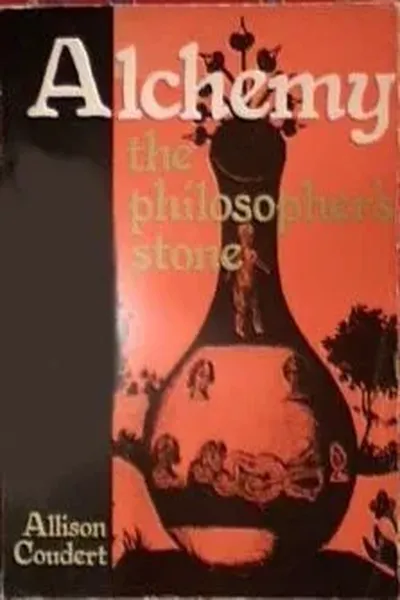
Alchemy, the philosopher's stone

Alchemy, the philosopher's stone

by Allison Coudert

Allison Coudert's "Alchemy, the philosopher's stone" offers an insightful overview of the history and philosophy of Alchemy, with a particular focus on the legendary Philosopher's Stone. This book, published in 1980, traces the development of alchemical thought from its Hellenistic roots through the Renaissance and early modern period. Coudert examines the various interpretations of the Stone, from a literal substance to a symbol of spiritual perfection, and discusses the prominent figures who pursued its secrets. It provides a balanced perspective on both the practical and mystical dimensions of Alchemy.

Lives of Alchemystical Philosophers.

Lives of Alchemystical Philosophers.

by Arthur Edward Waite

Arthur Edward Waite's "Lives of Alchemystical Philosophers." is a critical historical survey of prominent alchemists throughout history. This edition, from the late 19th century, offers biographical sketches and analyses of their contributions to the field of Alchemy and Hermetic philosophy. Waite, a renowned occult scholar, provides insights into the lives and often legendary achievements of these figures, examining their works and the cultural impact of their pursuit of the Philosopher's Stone. It serves as a valuable resource for understanding the human element behind the alchemical tradition.

Lives of alchemystical philosophers ... To which is added a bibliography of alchemy and hermetic philosophy

Lives of alchemystical philosophers ... To which is added a bibliography of alchemy and hermetic philosophy

by Arthur Edward Waite

Arthur Edward Waite's "Lives of alchemystical philosophers" provides a detailed historical overview of prominent alchemists and their contributions to Hermetic philosophy. The book, first published in 1888, includes a substantial bibliography, making it a key resource for the study of Alchemy. Waite examines figures from ancient times through the early modern period, exploring their theories, experiments, and the spiritual dimensions of their work. His scholarship helps to demystify the lives of these often enigmatic practitioners, offering insight into their motivations and the broader context of alchemical thought.

Lives of the alchemystical philosophers

Lives of the alchemystical philosophers

by Arthur Edward Waite

Arthur Edward Waite's "Lives of the alchemystical philosophers" provides a detailed historical and biographical account of key figures in Alchemy. This work, first published in 1888, delves into the lives and theories of various alchemists, from mythical figures like Hermes Trismegistus to historical practitioners. Waite's extensive research includes a bibliography of alchemical and hermetic texts, making it a crucial scholarly tool. He explores their philosophical underpinnings and the practical aspects of their work, offering a nuanced view of the alchemical tradition.

Magical Transmutations - Pamphlet

Magical Transmutations - Pamphlet

by Eliphas Levi

Eliphas Levi's "Magical Transmutations - Pamphlet" offers a concise exploration of the principles of magical transformation, drawing heavily from alchemical concepts. Levi, a pivotal figure in the 19th-century occult revival, discusses how the will and imagination can influence reality, echoing the alchemical idea of changing one substance into another. This pamphlet, though brief, encapsulates Levi's understanding of the interconnectedness of magic, will, and the subtle forces of the universe, providing a glimpse into his broader system of ceremonial magic and esoteric philosophy.

Swedenborg, a Hermetic philosopher

Swedenborg, a Hermetic philosopher

by Ethan Allan Hitchcock

Ethan Allan Hitchcock's "Swedenborg, a Hermetic philosopher" delves into the connections between the mystical theology of Emanuel Swedenborg and the ancient tradition of Hermeticism, which underpins much of Alchemy. Published in 1858, this work, a companion to his "Remarks on Alchemy," argues that Swedenborg's spiritual insights provide a key to understanding the allegorical language of alchemical texts. Hitchcock proposes that Swedenborg's doctrines of correspondences and the internal sense of scripture resonate deeply with the symbolic transformations sought in the Great Work of Alchemy.

Remarks upon alchemy and the alchemists, indicating a method of discovering the true nature of Hermetic philosophy; and showing that the search after the philosopher's stone had not for its object the discovery of an agent for the transmutation of metals

Remarks upon alchemy and the alchemists, indicating a method of discovering the true nature of Hermetic philosophy; and showing that the search after the philosopher's stone had not for its object the discovery of an agent for the transmutation of metals

by Ethan Allen Hitchcock

Ethan Allen Hitchcock's "Remarks upon alchemy and the alchemists" argues for a symbolic interpretation of alchemical texts, suggesting a method for discerning the true nature of Hermetic philosophy. Published in 1857, this work posits that alchemical writings conceal profound spiritual truths rather than merely chemical recipes. Hitchcock connects alchemical processes to inner transformation, urging readers to look beyond the literal pursuit of gold to understand the allegorical journey of the soul. He emphasizes the importance of a moral and intellectual purification alongside any material work, positioning Alchemy as a path to self-knowledge.

Swedenborg, a Hermetic Philosopher - Being a Sequel to Remarks on Alchemy and the Alchemists - Showing That Emanuel Swedenborg Was a Hermetic Philosop

Swedenborg, a Hermetic Philosopher - Being a Sequel to Remarks on Alchemy and the Alchemists - Showing That Emanuel Swedenborg Was a Hermetic Philosop

by Ethan Allen Hitchcock

Ethan Allen Hitchcock's "Swedenborg, a Hermetic Philosopher" serves as a sequel to his earlier "Remarks on Alchemy and the Alchemists." Published in 1858, this work argues that the spiritual visions and writings of Emanuel Swedenborg align with and elucidate the principles of Hermetic philosophy. Hitchcock posits that Swedenborg's theological system, with its emphasis on correspondences and spiritual states, provides a key to understanding the deeper, allegorical meanings embedded in alchemical texts. He aims to demonstrate a continuous thread of esoteric knowledge from ancient Alchemy to Swedenborg's revelations.

Swedenborg, a hermetic philosopher

Swedenborg, a hermetic philosopher

by Ethan Allen Hitchcock

Ethan Allen Hitchcock's "Swedenborg, a hermetic philosopher" meticulously explores the profound philosophical and spiritual parallels between Emanuel Swedenborg's theological system and the principles of Hermetic philosophy. This 1858 publication suggests that Swedenborg's detailed descriptions of the spiritual world and his doctrine of correspondences offer a unique lens through which to interpret the symbolic language of alchemical texts. Hitchcock argues that both Swedenborg and alchemists were engaged in a similar quest for universal truths, albeit expressed through different terminologies and methodologies.

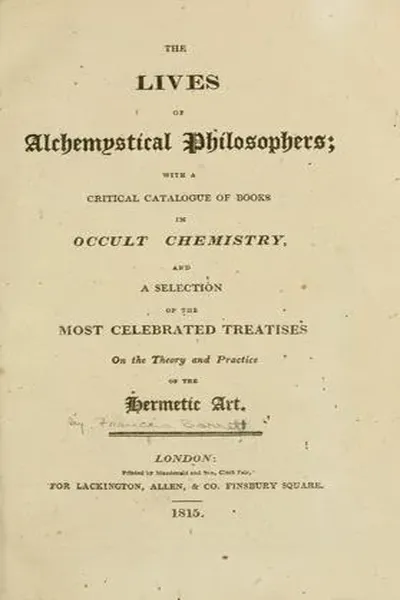
The lives of alchemystical philosophers

The lives of alchemystical philosophers

by Francis Barrett

Francis Barrett's "The lives of alchemystical philosophers" offers a historical account of notable alchemists and their contributions to the esoteric arts. Published in the early 19th century, this work provides biographical details and anecdotes about figures involved in the pursuit of the Philosopher's Stone and the elixir of life. Barrett, known for his "The Magus," compiles narratives that highlight the mystical and philosophical dimensions of Alchemy, reflecting the Romantic era's renewed interest in occult traditions and the lives of its practitioners.

Alchemy and Transmutation

Alchemy and Transmutation

by George R. Martin III

George R. Martin III's "Alchemy and Transmutation" provides a concise yet informative introduction to the core concepts of alchemical practice. This work explores the historical context of Alchemy, from its ancient origins to its philosophical implications, focusing on the idea of transformation. It discusses the various stages of the alchemical process, such as calcination, dissolution, and coagulation, and their symbolic meanings. Martin aims to clarify the often-obscured principles of Alchemy, making its fundamental ideas accessible to a contemporary audience.

Alchemy And The Secret Idea Of Transmutation

Alchemy And The Secret Idea Of Transmutation

by J. E. Mercer

J. E. Mercer's "Alchemy And The Secret Idea Of Transmutation" investigates the clandestine nature and profound philosophical underpinnings of alchemical transmutation. This work explores how the alchemists often veiled their true intentions and methods in symbolic language to protect their knowledge. Mercer delves into the 'secret idea' of transformation, suggesting that the pursuit of physical gold was often a metaphor for spiritual perfection and the development of higher consciousness. The text emphasizes the esoteric tradition inherent in the practice of Alchemy.

Transmutations--alchemy in art

Transmutations--alchemy in art

by Lawrence Principe

Lawrence Principe's "Transmutations--alchemy in art" explores the rich visual culture of Alchemy, examining how alchemical ideas and processes have been represented in art throughout history. This work delves into the symbolic imagery used by alchemists and how artists depicted the pursuit of the Philosopher's Stone, the alchemical wedding, and other key concepts. Principe, a distinguished historian of science and Alchemy, highlights specific artworks and their connection to alchemical texts, demonstrating the profound influence of Alchemy on artistic expression and cultural imagination.

Nicholas Flammel, his exposition of the hieroglyphicall figures which he caused to bee painted upon an arch in St. Innocents church-yard in Paris. Together with the secret booke of Artephius, and the epistle of Iohn Pontanus; concerning both the theoricke and the practicke of the Philosophers Stone ...

Nicholas Flammel, his exposition of the hieroglyphicall figures which he caused to bee painted upon an arch in St. Innocents church-yard in Paris. Together with the secret booke of Artephius, and the epistle of Iohn Pontanus; concerning both the theoricke and the practicke of the Philosophers Stone ...

by Nicolas Flamel

Nicholas Flammel's "his exposition of the hieroglyphicall figures which he caused to bee painted upon an arch in St. Innocent's Churchyard" is a legendary alchemical text. Published posthumously, this work details Flamel's supposed discovery of an ancient book that revealed the secrets of the Philosopher's Stone. He describes a series of symbolic images, which he had painted on a Parisian archway in 1407, and provides his interpretations of their alchemical significance, outlining the steps for achieving the Great Work. This text is a cornerstone of alchemical lore and symbolism.

Paracelsus his Aurora, & Treasure of the philosophers

Paracelsus his Aurora, & Treasure of the philosophers

by Paracelsus

Paracelsus's "his Aurora, & Treasure of the philosophers" compiles two significant alchemical treatises by the renowned Swiss physician. The "Aurora" explores the origins and transformations of metals and minerals, detailing the principles of generation and decay within the alchemical framework. The "Treasure of the philosophers" further elaborates on the preparation of the Philosopher's Stone and its medicinal applications. These 16th-century works are central to understanding Paracelsus's blend of practical chemistry, mystical philosophy, and revolutionary medical theories, emphasizing the quest for a universal medicine.

Of the chymical transmutation, genealogy and generation of metals & minerals

Of the chymical transmutation, genealogy and generation of metals & minerals

by Paracelsus

Paracelsus's "Of the chymical transmutation, genealogy and generation of metals & minerals" is a crucial text for understanding his alchemical theories on the origin and evolution of natural substances. Written in the 16th century, this work details Paracelsus's unique perspective on how metals and minerals are formed within the earth, challenging traditional Aristotelian views. He posits that all substances originate from three primal principles—Salt, Sulfur, and Mercury—and undergo a continuous process of generation and transmutation, fundamental to his practice of Alchemy and Iatrochemistry.

Of the chymical transmutation, the genealogy and generation of metals & minerals

Of the chymical transmutation, the genealogy and generation of metals & minerals

by Paracelsus

Paracelsus's "Of the chymical transmutation, the genealogy and generation of metals & minerals" is a profound exploration of his alchemical cosmology. In this 16th-century treatise, he details the processes by which metals and minerals are formed and transformed in nature, positing an intricate system of generation and perfection. Paracelsus introduces his doctrine of the Tria Prima (Salt, Sulfur, and Mercury) as the fundamental building blocks of all matter, offering a radical departure from classical elements. This work is essential for grasping his unique contributions to both Alchemy and early chemistry.

The Book Concerning The Tincture Of The Philosophers by Paracelsus

The Book Concerning The Tincture Of The Philosophers by Paracelsus

Paracelsus's "The Book Concerning The Tincture Of The Philosophers" is a seminal alchemical text that discusses the creation and properties of the Philosopher's Stone, or 'Tincture.' In this 16th-century work, Paracelsus details the stages and materials necessary for achieving this ultimate alchemical goal, emphasizing its power not only for transmuting metals but also for healing and prolonging life. He describes the 'tincture' as a concentrated essence capable of perfecting all things, reflecting his holistic view of Alchemy as a universal science.

The Aurora of the philosophers by Paracelsus

The Aurora of the philosophers by Paracelsus

Paracelsus's "The Aurora of the philosophers" is a foundational alchemical text that delves into the nature of metals, minerals, and the process of their transformation. Written by the influential physician and alchemist, this work, likely from the 16th century, outlines his unique perspective on the generation of substances and the vital role of the 'tincture' in alchemical operations. Paracelsus challenges conventional medical and alchemical views, asserting that the true purpose of Alchemy extends beyond gold-making to the preparation of potent medicines and the perfection of nature.

Isaac Newton and the transmutation of alchemy

Isaac Newton and the transmutation of alchemy

by Philip Ashley Fanning

Philip Ashley Fanning's "Isaac Newton and the transmutation of alchemy" sheds light on the often-overlooked alchemical pursuits of the renowned scientist Isaac Newton. This book reveals the extensive notes and experiments Newton conducted in Alchemy, demonstrating that his work in this field was not a fringe interest but central to his understanding of the natural world. Fanning explores how Newton's alchemical investigations into the transmutation of matter influenced his theories on gravity and optics, challenging the conventional view of Newton as solely a rational scientist and highlighting the pervasive influence of Alchemy.

Swedenborg, a Hermetic Philosopher

Swedenborg, a Hermetic Philosopher

by University of Glasgow Library

University of Glasgow Library's "Swedenborg, a Hermetic Philosopher" represents a digitized version of Ethan Allen Hitchcock's significant work. This 1858 text explores the intellectual and spiritual connections between the Swedish mystic Emanuel Swedenborg and the Hermetic tradition, which is foundational to Alchemy. Hitchcock's analysis suggests that Swedenborg's visions and writings can be understood as a modern continuation of ancient Hermetic wisdom, providing keys to the allegorical meanings of alchemical processes. The Glasgow Library's preservation makes this important scholarly work accessible to a wider audience.

Lives of alchemystical philosophers: To which is added a bibliography of alchemy and hermetic philosophy

Lives of alchemystical philosophers: To which is added a bibliography of alchemy and hermetic philosophy

by Waite, Arthur Edward

Waite, Arthur Edward's "Lives of alchemystical philosophers" offers a comprehensive biographical dictionary of significant figures in the history of Alchemy. This edition, originally published in the late 19th century, includes a valuable bibliography of alchemical and hermetic philosophy, making it an essential reference for researchers. Waite meticulously details the lives, works, and often legendary exploits of alchemists from various eras, providing a critical yet sympathetic overview of their contributions to the esoteric arts and their pursuit of the Philosopher's Stone.

Modern Alchemy and the Philosopher's Stone

Modern Alchemy and the Philosopher's Stone

by Wilfried Holzapfel

Wilfried Holzapfel's "Modern Alchemy and the Philosopher's Stone" explores contemporary interpretations and applications of alchemical principles, bridging ancient wisdom with modern thought. This book, published in 1989, examines how the concepts of transformation and the Philosopher's Stone continue to resonate in fields beyond traditional chemistry, including psychology and spiritual development. Holzapfel discusses the enduring symbolism of Alchemy and its relevance for personal growth and understanding the deeper structures of reality in a modern context, offering a fresh perspective on the Great Work.

Esoteric Library
Browse Esoteric Library
📚 All 52,000+ Books 🜍 Alchemy & Hermeticism 🔮 Magic & Ritual 🌙 Witchcraft & Paganism Astrology & Cosmology 🃏 Divination & Tarot 📜 Occult Philosophy ✡️ Kabbalah & Jewish Mysticism 🕉️ Mysticism & Contemplation 🕊️ Theosophy & Anthroposophy 🏛️ Freemasonry & Secret Societies 👻 Spiritualism & Afterlife 📖 Sacred Texts & Gnosticism 👁️ Supernatural & Occult Fiction 🧘 Spiritual Development 📚 Esoteric History & Biography
Esoteric Library
📑 Collections 📤 Upload Your Book
Account
🔑 Sign In Create Account
Info
About Esoteric Library