✍️ Author Biography
Nicholas Goodrick-Clarke
🌍 American
📚 0 free books
⭐ Known for: The Occult Roots of Nazism (1985)
Nicholas Goodrick-Clarke was a historian of Western esotericism, known for his scholarly works on occultism and Nazism.
Nicholas Goodrick-Clarke was a British historian specializing in Western esotericism, who held a professorship at the University of Exeter. He is widely recognized for his academic contributions to the study of occultism, particularly its intersection with Nazism and broader esoteric traditions. His research delved into the historical connections between occult movements and political ideologies, producing influential books that brought these subjects to a wider academic audience.
Goodrick-Clarke was instrumental in establishing academic frameworks for the study of esotericism. He founded the Exeter Centre for the Study of Esotericism (EXESESO) and co-founded the European Society for the Study of Western Esotericism (ESSWE). Throughout his career, he authored several seminal books, edited academic series, and translated key texts, solidifying his reputation as a leading scholar in his field. His work continues to be a foundational reference for researchers interested in the history of Western esotericism and its complex relationship with historical events and ideologies.
Academic Contributions to Esotericism
Nicholas Goodrick-Clarke dedicated his academic career to the rigorous study of Western esotericism. He held a professorship at the University of Exeter, where he established and directed the Exeter Centre for the Study of Esotericism (EXESESO). This initiative was a significant step in formalizing the academic exploration of esoteric traditions. Furthermore, he was a co-founder of the European Society for the Study of Western Esotericism (ESSWE), an organization that fostered collaboration and scholarship across the continent. His research interests encompassed the globalization of esotericism, alchemy, Rosicrucianism, Hermeticism, and the complex links between esoteric thought and modern political ideologies, including conspiracy theories.
Key Works and Research Focus
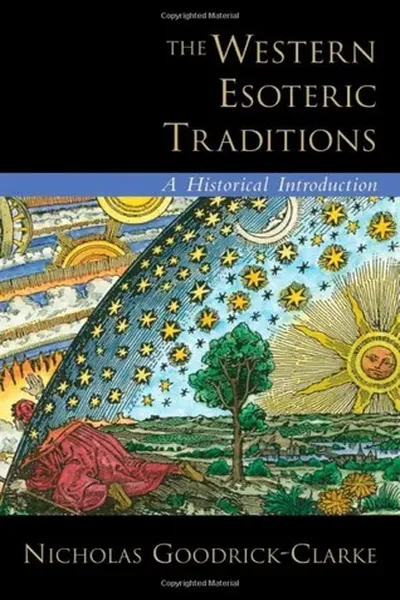
Goodrick-Clarke's scholarly output is notable for its in-depth examination of sensitive historical intersections. His doctoral dissertation at Oxford laid the groundwork for his most celebrated book, 'The Occult Roots of Nazism' (1985). This work investigated the connections between occult movements in Austria and Germany and the rise of Nazism, aiming to provide factual evidence for previously speculative accounts. The book achieved significant international recognition, translated into multiple languages and remaining in print for decades. He followed this with 'Hitler's Priestess' (1998), a biography of the fascist writer Savitri Devi, and 'Black Sun' (2002), which explored Aryan cults and neo-Nazism. His final book, 'The Western Esoteric Traditions' (2008), offered a historical introduction to the field.
Scholarly Initiatives and Editorial Work
Beyond his authored works, Nicholas Goodrick-Clarke was deeply involved in shaping the academic landscape of esotericism through editorial projects and the founding of scholarly societies. He founded the Association for the Study of Esotericism (ASE) and was a founding member of the American Association for the Study of Esotericism. His editorial contributions included managing Aquarian Press's 'Essential Readings' series and North Atlantic Books' 'Western Esoteric Masters' series, which focused on biographies and writings of key esoteric figures. He also edited and translated numerous books, including works on Paracelsus, Helena Blavatsky, and G.R.S. Mead, demonstrating a broad engagement with the history and dissemination of esoteric knowledge.
Key Ideas
- The historical connections between Western esoteric traditions and political ideologies, particularly Nazism.
- The academic study and formalization of Western esotericism as a field of research.
- The examination of occult movements, their beliefs, and their influence on historical events and modern thought.