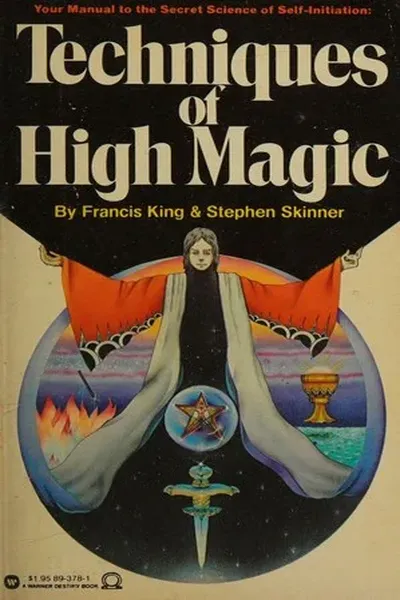
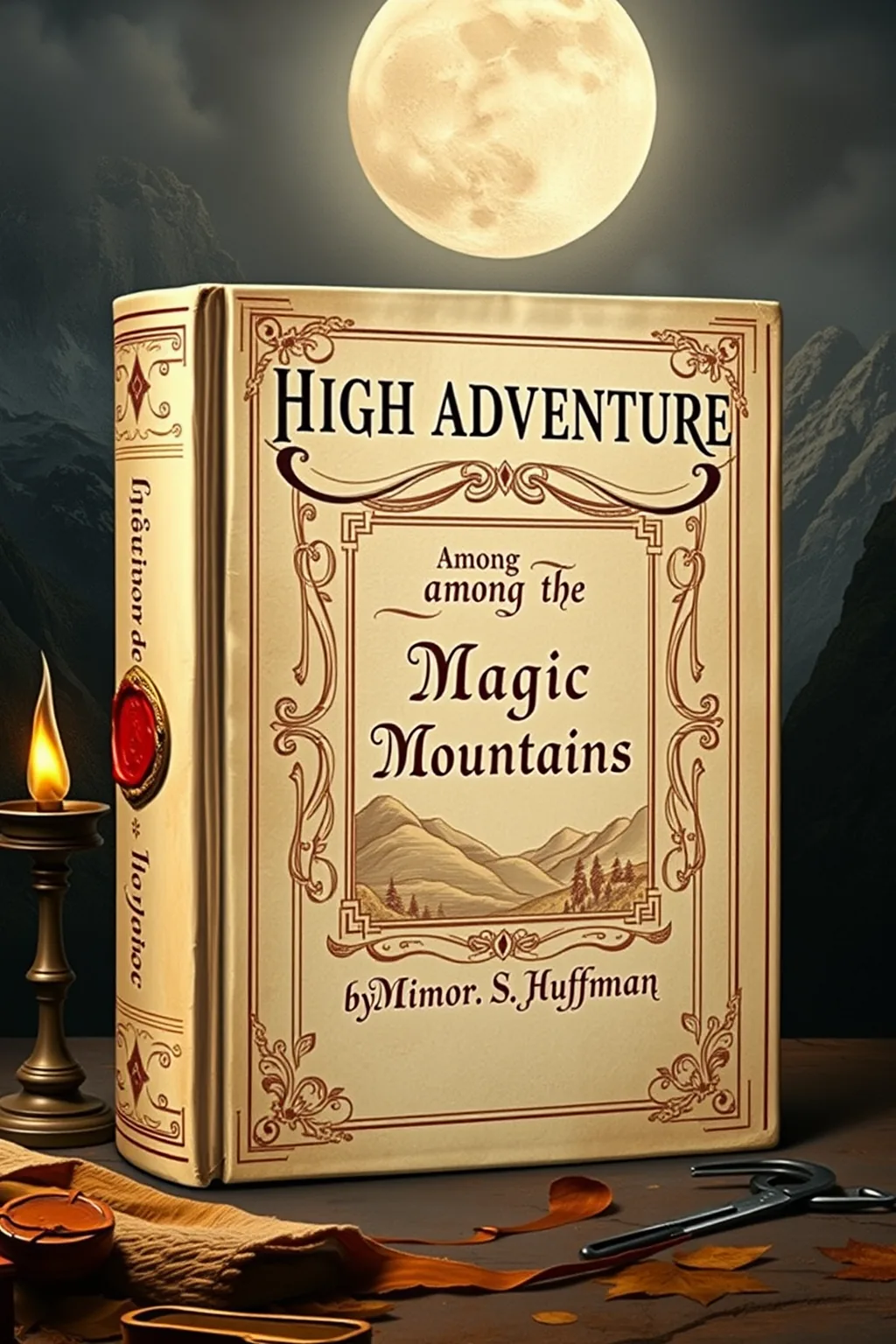
High adventure among the magic mountains
 61
61

High adventure among the magic mountains


Evander Ashcroft (Alchemy & Hermeticism Editor) — Minor S. Huffman's "High Adventure Among the Magic Mountains" is a remarkable testament to the enduring power of place as a conduit for esoteric wisdom. Huffman masterfully interweaves personal experience with deep historical and symbolic resonance, revealing the Philmont Scout Ranch not merely as a geographical location, but as a crucible for spiritual transformation. The book offers profound insights into the archetypal journey, the sacredness of the wilderness, and the subtle energies that permeate our world. It is a vital read for anyone seeking to understand the alchemical principles at play in nature and the human psyche, particularly those drawn to the Hermetic arts.
📝 Description
61
Minor S. Huffman's 1949 book recounts an expedition into the magic mountains.
In "High Adventure Among the Magic Mountains," Minor S. Huffman details his experiences during an expedition into a remote mountain range. The account goes beyond a simple travelogue, focusing instead on the hidden meanings Huffman perceived in the natural environment. He describes the landscape as imbued with a tangible energy and filled with remnants of forgotten traditions. Huffman interprets symbols found in the land, connecting them to ancient rituals and the relationship between people and natural forces. The book presents the journey not just as a physical undertaking but as a process of uncovering a sacred dimension within the ordinary world. It touches upon concepts like sacred geometry and the presence of elemental beings. Huffman aims to reveal the latent power within wild places, reflecting on the persistent influence of myth and the pursuit of higher understanding.
Huffman's work engages with a tradition of esoteric geography, where physical locations are seen as imbued with spiritual significance and energetic patterns. This perspective aligns with certain hermetic and nature-based spiritualities that view the natural world as a living text containing hidden correspondences. The book suggests that the mountains themselves act as conduits for primal forces, and that understanding their symbolism can lead to personal transformation. It reflects a post-war interest in finding deeper meaning in the earth and its ancient lore, moving beyond purely material interpretations of reality.
💡 Why Read This Book?
Uncover the hidden spiritual geography of the American wilderness and its connection to ancient mysteries. This book offers a unique blend of adventure and esoteric exploration, revealing symbolic landscapes and elemental wisdom. Ideal for seekers of lost knowledge, practitioners of nature-based spirituality, and anyone yearning to reconnect with the sacredness of the earth.
⭐ Reader Reviews
Honest opinions from readers who have explored this book.
❓ Frequently Asked Questions
What is the primary esoteric theme explored in this book?
The primary esoteric theme is the recognition of sacred landscapes and their inherent spiritual energies, drawing parallels between the wilderness and ancient mystical traditions.
Does the book offer practical magical techniques?
While not a grimoire, the book offers profound insights into the principles of elemental magic and the power of intention within a natural setting.
Is this book suitable for beginners in esoteric studies?
Yes, the narrative is engaging and accessible, providing a gentle introduction to the concept of nature as a source of profound, hidden knowledge.
What historical period does the book primarily reference?
The book draws upon historical accounts and traditions related to the Philmont Scout Ranch, connecting them to broader, timeless esoteric concepts.
Can this book be read purely as an adventure story?
Absolutely, it offers a thrilling account of high adventure, but its deeper layers of symbolism and spiritual resonance elevate it beyond a simple adventure narrative.
🔮 Key Themes & Symbolism
Sacred Geography and Wilderness Mysticism
This theme explores the profound concept of landscapes imbued with spiritual significance, a core part of many ancient traditions. Huffman guides readers to perceive the Philmont Scout Ranch not just as a physical place, but as a living entity pulsing with elemental forces and echoing with the wisdom of ages. It examines how specific geographical features—mountains, valleys, rivers—can act as energetic conduits and sacred sites, mirroring the concept of ley lines and sacred geometry found in esoteric lore. This perspective invites a deeper, more reverent engagement with the natural world, viewing it as a profound teacher and a source of potent, untamed magic.
The Archetypal Journey and Inner Transformation
The book frames the physical adventure as a powerful metaphor for the inner quest for self-discovery and spiritual awakening. Huffman illustrates how facing challenges in the wilderness mirrors the trials faced on the path of esoteric development. The mountains become a crucible for transformation, forcing introspection and the shedding of limitations. This theme appeals to the archetypal 'hero's journey,' where encounters with the wild lead to clear insights and the integration of the shadow self. It speaks to the idea that true adventure lies not just in external exploration, but in the courageous descent into one's own inner landscape.
Elemental Energies and Primal Forces
Huffman taps into the primal forces that govern the natural world, exploring the tangible presence of elemental energies within the magic mountains. This includes the raw power of earth, the flowing wisdom of water, the transformative heat of fire, and the expansive breath of air. The narrative suggests that these elements are not merely physical components but are sentient forces that can be understood, respected, and even communed with. It touches upon ancient animistic beliefs and the idea that the wilderness is alive with spirits and intelligences, offering a pathway to reconnect with the fundamental energies that underpin all existence.
💬 Memorable Quotes
Direct passages from the work, attributed to the author.
“Every peak a temple, every valley a sanctuary.”
— This evokes the sacredness of the natural landscape, elevating geographical features to the status of holy sites, integral to spiritual practice and connection.
“The path ahead is etched in starlight and stone.”
— This poetic phrase implies a divinely guided journey, where destiny is interwoven with both celestial patterns and the enduring, elemental nature of the earth.
“Within the wild, we find the untamed spirit.”
— This speaks to the transformative power of nature, suggesting that true self-discovery involves embracing our primal, unadulterated essence.
“The traces of ancient rites linger in the air.”
— This hints at the historical and mystical layers of the landscape, implying that forgotten rituals and spiritual practices still resonate within the environment.
💡 Key Ideas
Editorial paraphrase of the work's core concepts — not direct quotes.
The mountains whisper secrets to those who listen.
This quote highlights the book's central theme of nature as a source of hidden knowledge, suggesting that profound wisdom can be accessed through mindful observation and spiritual receptivity.
🌙 Esoteric Significance
Tradition
This work draws significantly from the traditions of Nature Mysticism and Animism, viewing the wilderness as a living, sentient entity. It echoes aspects of Shamanism, where journeys into the wild facilitate spiritual communion and the retrieval of hidden knowledge. The concept of sacred geography also aligns with Hermetic principles and the idea of the macrocosm reflecting the microcosm, with the earth itself holding divine patterns and energies waiting to be deciphered.
Symbolism
Key symbols include the mountain as a path to higher consciousness and divine connection, the wilderness as a crucible for transformation, and the natural elements (earth, water, fire, air) as archetypal forces governing existence. The journey itself symbolizes the seeker's path, with challenges representing spiritual trials and discoveries signifying enlightenment. The book implicitly uses the landscape as a symbolic map, hinting at hidden energetic pathways and sacred sites.
Modern Relevance
In an era increasingly disconnected from the natural world, Huffman's work offers a vital reminder of our inherent connection to the earth's subtle energies and ancient wisdom. It provides a framework for understanding the wilderness not just as a recreational space, but as a profound source of spiritual insight and personal growth. The book's exploration of nature-based spirituality appeals to contemporary movements seeking to reclaim indigenous knowledge and foster ecological reverence, offering a timeless perspective on the quest for meaning.
👥 Who Should Read This Book
This book is a compelling read for several distinct groups within the Esoteric Library's readership. Beginners in esoteric studies will find it an accessible and inspiring introduction to nature mysticism and the concept of sacred landscapes. Scholars of history and comparative religion will appreciate its nuanced exploration of the Philmont Scout Ranch's historical context and its connection to broader spiritual traditions. Seekers of hidden knowledge will be drawn to its evocative descriptions of symbolic landscapes and its suggestion of deeper, unseen realities. Practitioners of nature-based spirituality and those interested in shamanic or animistic practices will find resonance with its themes of elemental energies and communion with the wild.
📜 Historical Context
Minor S. Huffman's "High Adventure Among the Magic Mountains" emerges from a body of American wilderness exploration and a burgeoning interest in esoteric thought during the 20th century. The Philmont Scout Ranch itself, established in the 1930s, was conceived as a place to foster character, resilience, and a connection with the outdoors, echoing the Romantic ideals of nature's restorative and educational power. Concurrently, movements like Theosophy, Anthroposophy, and various forms of Hermeticism were gaining traction, fostering a climate where the natural world was increasingly viewed through a symbolic and spiritual lens. Huffman's work bridges these spheres, presenting the rugged field of Philmont as a modern-day 'sacred mountain,' a site where ancient wisdom traditions and the spirit of adventure converge.
📔 Journal Prompts
Reflect on a natural place that has always felt 'magical' or spiritually significant to you. What qualities does it possess?
Consider the concept of a 'sacred mountain' in your own life or belief system. What does it represent?
How can the challenges faced during a physical journey mirror the trials of spiritual growth?
Describe an experience where you felt a strong connection to the elemental forces of nature (earth, water, fire, air).
What 'whispers' do you imagine the natural world might offer if you were to truly listen?
🗂️ Glossary
Sacred Geography
The study and recognition of places on Earth that are imbued with spiritual significance, often seen as holding unique energetic properties or historical mystical importance.
Elemental Energies
The fundamental forces and spirits associated with the classical elements (earth, water, fire, air, and sometimes spirit or ether) believed to influence both the physical and metaphysical realms.
Archetype
A universal, archaic symbol or motif that recurs in the literature and thought of many cultures, representing fundamental human experiences and patterns of behavior.
Animism
The belief that natural objects, phenomena, and the universe itself possess a distinct spiritual essence or soul.
Hermeticism
A spiritual, philosophical, and esoteric tradition based primarily upon writings attributed to Hermes Trismegistus, emphasizing the interconnectedness of all things and the pursuit of hidden knowledge.
This book appears in 2 collections
🔮 Readers Also Liked
Browse all →







From the “Ceremonial Magic” Collection
View all →








More Free Magic & Ritual Books
View all →