What is Hermetic Philosophy?
Hermetic philosophy is a spiritual, philosophical, and esoteric tradition based on writings attributed to Hermes Trismegistus. These texts, often referred to as the Hermetica, explore cosmology, divine intelligence, ethics, and the nature of reality. Key tenets include the principle of "As Above, So Below," emphasizing the connection between the macrocosm and microcosm, and the idea that all things are interconnected through a universal consciousness.
Best Books for Complete Beginners
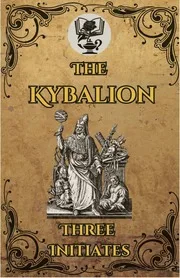
For those new to Hermetic philosophy, starting with accessible introductions is crucial. 'The Kybalion' by Three Initiates offers a concise overview of core principles, presented in aphoristic style. 'The Hermetica: The Lost Wisdom Of The Pharaohs' by Timothy Freke and Peter Gandy (2020) provides modern translations and context for the ancient texts. Paul Foster Case's 'Introduction to Tarot' (1922) indirectly introduces Hermetic concepts through the symbolism of the Tarot, a practice deeply rooted in Hermeticism.
Intermediate Reading
Students ready for deeper study should engage with primary source translations and historical analyses. 'The Corpus Hermeticum.pdf' (2014) presents the core dialogues, essential for direct engagement with the source material. Arthur Edward Waite's 'Lives of alchemystical philosophers' provides biographical accounts and bibliographical information relevant to the Hermetic tradition. H. P. Blavatsky's 'Isis unveiled, Volume 1' (1877) offers a critical, albeit dense, perspective on ancient mysteries, including Hermetic influences within broader occultism.
Classical / Advanced Texts
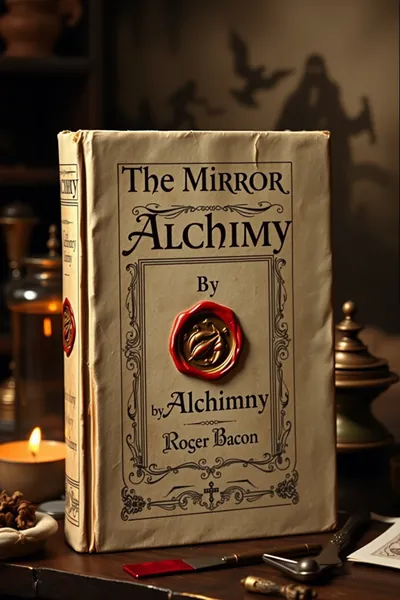
Advanced study involves exploring the original Hermetic texts and related alchemical and philosophical works. 'The Corpus Hermeticum' and 'The Hermetica' are primary sources. Michal Sedziwój's 'A New Light of Alchymie' (1609) offers a historical alchemical perspective with Hermetic undertones. Blaise de Vigenère's 'A Discovrse of Fire and Salt' (1651) explores alchemical symbolism and philosophy. Roger Bacon's 'The Mirror of Alchimy' (1597) is another key historical alchemical text.
Reading Order — Step by Step
Begin with 'The Kybalion' for a foundational understanding of Hermetic principles. In weeks 3-4, move to 'The Hermetica: The Lost Wisdom Of The Pharaohs' (2020) for a modern interpretation of primary texts. Month 2 should be dedicated to 'The Corpus Hermeticum.pdf' (2014), reading the core dialogues. For Month 3, explore Arthur Edward Waite's 'Lives of alchemystical philosophers' for historical context. Advanced readers can then tackle early alchemical texts like Sedziwój's 'A New Light of Alchymie' (1609) or look at Blavatsky's 'Isis unveiled'.
Frequently Asked Questions
Which Hermetic philosophy book should I read first?
Begin with 'The Kybalion' by Three Initiates. It provides a clear and accessible introduction to the seven core principles of Hermetic philosophy, serving as an excellent starting point for new students.
What is the relationship between Hermeticism and Alchemy?
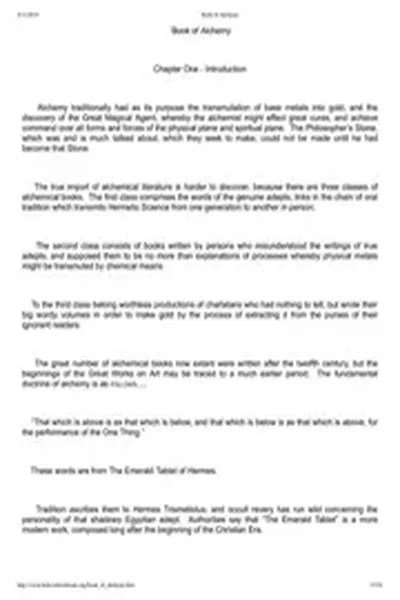
Alchemy is a practical and symbolic tradition deeply intertwined with Hermetic philosophy. Many alchemical texts explore the transformation of metals as a metaphor for spiritual purification, a concept central to Hermetic teachings.
Are the Hermetic texts historically accurate?
The Hermetic texts are attributed to Hermes Trismegistus, a legendary figure. While the writings date from Hellenistic Egypt and later periods, their historical authorship is complex; their value lies in the philosophical and spiritual teachings they contain.
What does 'As Above, So Below' mean?
This is a core Hermetic principle signifying the correspondence between the macrocosm (the universe) and the microcosm (humanity or the Earth). It suggests that understanding one can lead to understanding the other.
Where can I find translations of the Corpus Hermeticum?
Translations of the 'Corpus Hermeticum' are available in various editions. Look for scholarly translations and modern interpretations, such as those found in 'The Hermetica' by Freke and Gandy, or dedicated PDF versions.
Is Hermetic philosophy religious?
Hermetic philosophy is primarily a spiritual and philosophical system, though it incorporates elements that can be seen as religious or mystical. It focuses on understanding the divine and the cosmos through reason and esoteric knowledge.
What is the significance of the Emerald Tablet?
The Emerald Tablet is a legendary alchemical text attributed to Hermes Trismegistus. It is considered a foundational document in alchemy and Hermeticism, containing cryptic verses that encapsulate key principles of transformation.
How does Hermeticism relate to modern esoteric practices?
Hermeticism forms the philosophical bedrock for many modern esoteric traditions, including Western ceremonial magic, Rosicrucianism, and aspects of Freemasonry and Theosophy. Its principles are often integrated into these systems.