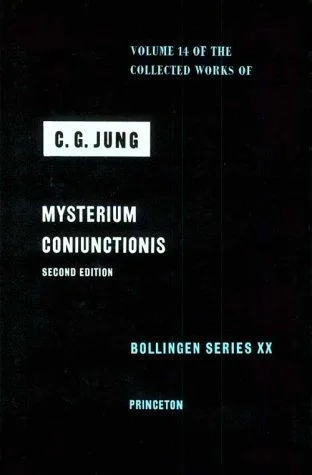
Mysterium coniunctionis
 66
66

Mysterium coniunctionis



'Mysterium coniunctionis' stands as a beacon of esoteric insight, seamlessly weaving the arcane wisdom of alchemy with Jung's groundbreaking theories on the unconscious. This masterful work is not just a scholarly endeavor but a spiritual odyssey, offering readers a profound understanding of the symbolic language that underpins both alchemy and the human psyche. Jung's meticulous analysis and evocative prose make this book an indispensable resource for anyone delving into the mysteries of the occult. Whether you are a seasoned scholar or a curious seeker, 'Mysterium coniunctionis' will expand your horizons and deepen your appreciation for the hidden knowledge that lies within ancient traditions.
📝 Description
66
Carl Gustav Jung published Mysterium Coniunctionis in 1955-1956, his final major work.
Mysterium Coniunctionis is Carl Gustav Jung's last major theoretical work, published in two volumes in 1955 and 1956. In it, Jung examines the alchemical process of coniunctio, or union, as a symbol for the psychological integration of opposites. He draws parallels between the alchemical texts and the unconscious psychic processes of individuals, particularly concerning the union of the masculine and feminine principles.
Jung analyzes a vast array of alchemical symbols and imagery, connecting them to the individuation process. He shows how the alchemist's quest for the philosopher's stone mirrors the individual's search for wholeness and the reconciliation of inner conflicts. The book details specific alchemical procedures and their symbolic meanings, asserting that alchemy is not merely a proto-chemistry but a genuine psychological discipline.
This work represents Jung's culmination of decades of research into alchemy, which he saw as a projection of the collective unconscious. He argues that the imagery and language of alchemy reveal universal psychic patterns that transcend specific historical or cultural contexts. The book's dense symbolism and complex arguments are central to understanding Jung's overall psychological theories.
Mysterium Coniunctionis stands as a significant bridge between modern depth psychology and the Western esoteric tradition of alchemy. Jung's work reinterprets alchemical symbolism not as literal chemical processes or purely mystical dogma, but as a coded language for the transformation of the psyche. He sought to demonstrate that alchemical texts, often obscure and allegorical, contained profound psychological insights into the human condition and the process of individuation. This book places Jung squarely within discussions of hermeticism and esoteric philosophy, arguing for their relevance to understanding the human mind.
💡 Why Read This Book?
Read 'Mysterium coniunctionis' to gain a deeper understanding of the psychological underpinnings of alchemy. This book is ideal for seekers of hidden knowledge, scholars of the occult, and practitioners of mystical arts. It offers a unique perspective on the symbolism and practices of alchemy, providing valuable insights into the unconscious mind and the spiritual journey of self-discovery.
⭐ Reader Reviews
Honest opinions from readers who have explored this book.
❓ Frequently Asked Questions
What is the main focus of 'Mysterium coniunctionis'?
The main focus is the psychological interpretation of alchemical symbolism, exploring the hidden processes of the unconscious mind.
Who would benefit from reading this book?
Scholars, spiritual seekers, and practitioners of the occult will find this book particularly beneficial.
Is prior knowledge of alchemy required?
While prior knowledge can enhance understanding, the book is accessible to readers with a basic interest in mystical and esoteric themes.
How does Jung's work relate to modern psychology?
Jung's analysis of alchemical symbols provides a framework for understanding the unconscious mind, making it relevant to modern psychological theories.
What makes this book unique?
Its unique blend of alchemical symbolism and psychological insight offers a fresh perspective on both fields, making it a standout work in the esoteric literature.
🔮 Key Themes & Symbolism
Alchemical Symbolism
Jung studies the strong symbolism of alchemy, revealing the hidden meanings behind ancient practices and their relevance to modern psychology. This theme explores how alchemical processes mirror the inner journey of the soul, offering insights into the unconscious mind and the quest for spiritual enlightenment.
The Unconscious Mind
The book provides a deep dive into the unconscious mind, using alchemical symbolism as a framework. Jung's analysis sheds light on the hidden processes that shape our thoughts and behaviors, making it a valuable resource for those seeking to understand the depths of the psyche.
Spiritual Transformation
Jung's exploration of alchemy highlights the transformative power of spiritual practices. This theme emphasizes the journey of self-discovery and enlightenment, encouraging readers to engage with the mystical and esoteric traditions that have guided seekers for centuries.
💬 Memorable Quotes
Direct passages from the work, attributed to the author.
“The alchemist's stone represents the unity of opposites.”
— It highlights the alchemical quest for balance and harmony within the self.
“The unconscious mind holds the key to our deepest desires and fears.”
— Jung's insights into the unconscious mind reveal the hidden forces that drive our actions.
“Alchemy is the art of turning base metals into gold, both literally and symbolically.”
— This metaphor illustrates the transformative power of alchemical practices on the psyche.
“The journey of self-discovery is a lifelong process of integration and growth.”
— It emphasizes the ongoing nature of spiritual and psychological development.
💡 Key Ideas
Editorial paraphrase of the work's core concepts — not direct quotes.
The opus alchymicum is the symbol of the individuation process.
This quote underscores the parallel between alchemical transformation and personal growth.
🌙 Esoteric Significance
Tradition
This book belongs to the Hermetic tradition, drawing on the ancient wisdom of alchemy to explore the mysteries of the human psyche. Hermeticism emphasizes the interconnectedness of all things and the pursuit of spiritual enlightenment through hidden knowledge.
Symbolism
Key symbols in the book include the philosopher's stone, the union of opposites, and the alchemical process of transformation. These symbols represent the journey of self-discovery and the quest for inner harmony.
Modern Relevance
Today, 'Mysterium coniunctionis' remains relevant to practitioners of alchemy, psychology, and spiritual seekers. Its insights into the unconscious mind and the transformative power of symbolism continue to influence modern esoteric studies and psychological research.
👥 Who Should Read This Book
Beginners interested in the mystical and esoteric will find this book an accessible introduction to alchemical symbolism and its psychological significance. Scholars of the occult will appreciate Jung's deep analysis and historical context. Spiritual seekers will benefit from the book's emphasis on self-discovery and spiritual transformation. Practitioners of alchemy and Hermeticism will find valuable insights into the ancient art and its modern applications.
📜 Historical Context
Written in the mid-20th century, 'Mysterium coniunctionis' emerged during a time of significant intellectual and spiritual exploration. Jung's work was influenced by the resurgence of interest in alchemy and the occult, as well as the growing recognition of the unconscious mind in psychological research. This book played a central role in bridging the gap between ancient mystical traditions and modern psychological theories, influencing subsequent generations of scholars and practitioners in the field of esoteric studies.
📔 Journal Prompts
Reflect on a time when you felt a deep sense of transformation. How does this relate to alchemical symbolism?
Consider the concept of the unconscious mind. How might it influence your daily thoughts and actions?
Explore the idea of the union of opposites. How can this principle be applied to your personal growth?
Write about a symbol that holds personal significance for you. How does it relate to the themes in 'Mysterium coniunctionis'?
Reflect on the journey of self-discovery. What steps can you take to deepen your understanding of your inner self?
🗂️ Glossary
Alchemy
An ancient mystical practice aimed at transforming base metals into gold, symbolizing spiritual and psychological transformation.
Unconscious Mind
The part of the mind that operates below the level of conscious awareness, influencing thoughts and behaviors.
Philosopher's Stone
A legendary alchemical substance believed to turn base metals into gold and grant immortality, symbolizing spiritual enlightenment.
Hermeticism
An esoteric tradition based on the writings of Hermes Trismegistus, emphasizing the interconnectedness of all things and the pursuit of hidden knowledge.
Symbolism
The use of symbols to represent abstract ideas or qualities, often employed in mystical and esoteric traditions to convey hidden meanings.
This book appears in 3 collections
🔮 Readers Also Liked
Browse all →









More by Carl Gustav Jung
All books →

From the “Hermeticism” Collection
View all →







![Herrman's [sic] black art](/img/thumb/herrman-s-sic-black-art-alexander-herrmann.webp)
More Free Alchemy & Hermeticism Books
View all →