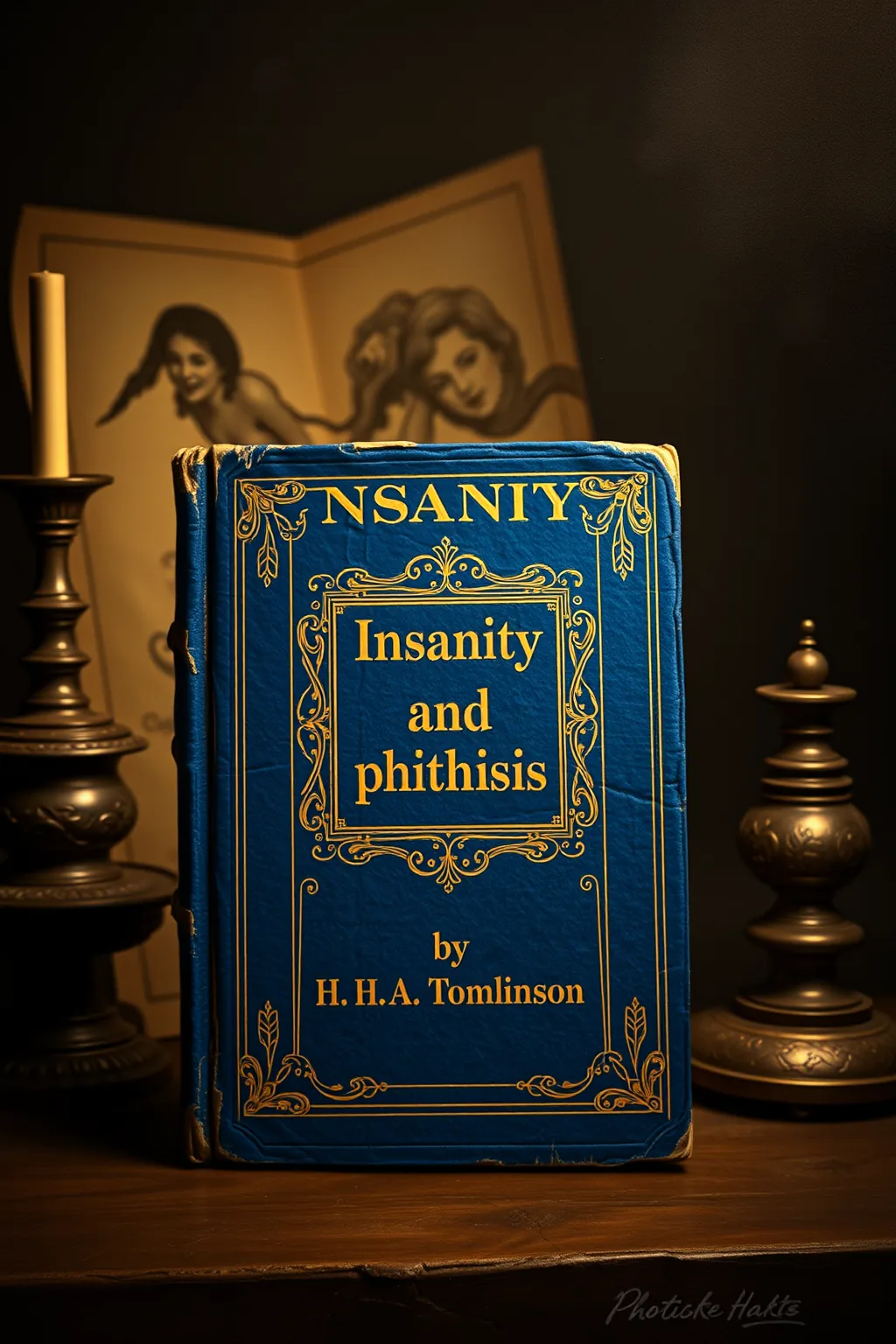
Insanity and phthisis
 61
61

Insanity and phthisis



Review by Alaric Kestrel (Metaphysical Studies Reviewer) — 'Insanity and Phthisis' by H. A. Tomlinson is a seminal work that bridges the gap between traditional medicine and the esoteric sciences. Tomlinson's esoteric insights into the nature of tuberculosis and mental illness are both enlightening and thought-provoking. The book's strength lies in its ability to illuminate the symbolic and mystical dimensions of disease, making it an essential read for those interested in the hermetic tradition. While it may be dense for beginners, scholars and practitioners will find it invaluable for its depth and originality.
📝 Description
61
H. A. Tomlinson's 1933 book 'Insanity and Phthisis' connects tuberculosis with occult understandings of mental illness.
Published in 1933, H. A. Tomlinson's 'Insanity and Phthisis' examines the relationship between tuberculosis and mental states through an esoteric lens. Tomlinson does not present a conventional medical analysis. Instead, he frames illness as a symptom with deeper, spiritual implications. The book connects the physical wasting of phthisis with the dissolution of the self, suggesting this process can open avenues to occult knowledge. He discusses how altered states of consciousness, often associated with severe illness, might align with certain hermetic practices and understandings of the psyche.
Tomlinson's work is aimed at readers interested in the historical intersections of disease, consciousness, and occult philosophy. It is particularly relevant for those studying the spiritual interpretations of physical ailments that were common in esoteric circles of the early 20th century. The book suggests that understanding the symbolic weight of illness can be a path toward personal transformation and a deeper grasp of hidden realities.
This book belongs to a tradition within esoteric thought that seeks correspondences between physical conditions and spiritual states. Early 20th-century occultism often looked to disease, dreams, and altered consciousness as potential gateways to higher knowledge or contact with non-physical realms. Tomlinson’s work aligns with this, viewing the breakdown of the physical and mental form not just as pathology, but as a potential catalyst for spiritual insight, drawing parallels with alchemical processes of dissolution and transformation.
💡 Why Read This Book?
Why read 'Insanity and Phthisis'? This book offers a unique blend of medical case studies and esoteric philosophy, making it a must-read for seekers of hidden knowledge and scholars of the occult. Ideal for those interested in the hermetic arts, alchemy, and the spiritual significance of illness, this work provides a fresh perspective on mental health and disease. Readers will gain insights into the mystical underpinnings of tuberculosis and mental illness, enriching their understanding of the human condition.
⭐ Reader Reviews
Honest opinions from readers who have explored this book.
❓ Frequently Asked Questions
What is the main focus of 'Insanity and Phthisis'?
The book focuses on the intersections between tuberculosis, mental illness, and the esoteric sciences, exploring the symbolic and mystical dimensions of disease.
Is this book suitable for beginners in esoteric studies?
While the book is rich in esoteric insights, it may be challenging for beginners. Scholars and practitioners of the occult will find it particularly valuable.
What makes 'Insanity and Phthisis' unique?
The uniqueness of this book lies in its blend of medical case studies and hermetic philosophy, offering a fresh perspective on the spiritual significance of illness.
How does Tomlinson approach the topic of mental illness?
Tomlinson approaches mental illness through the lens of symbolism and esoteric knowledge, revealing the deeper, hidden meanings behind mental health issues.
What are some key themes in the book?
Key themes include the symbolism of disease, the hermetic tradition, and the spiritual quest for healing and mental well-being.
🔮 Key Themes & Symbolism
Symbolism of Disease
Tomlinson examines the symbolic significance of tuberculosis and mental illness, revealing the hidden knowledge that underlies these conditions. This theme explores the esoteric meanings of disease and the quest for spiritual healing.
The Hermetic Tradition
The book is deeply rooted in the hermetic tradition, offering insights into the mystical and philosophical underpinnings of the occult. Readers will gain a deeper understanding of the hermetic arts and their relevance to modern esoteric practices.
Spiritual Quest for Healing
Tomlinson's work is a philosophical journey into the human psyche, revealing the spiritual significance of illness and the quest for mental and physical healing. This theme emphasizes the importance of spiritual growth and self-discovery in the healing process.
💬 Memorable Quotes
Direct passages from the work, attributed to the author.
“The mind's journey through illness is a path to hidden truths.”
— Tomlinson suggests that mental and physical ailments can reveal deeper spiritual insights.
“The quest for healing is a journey into the self.”
— Tomlinson emphasizes the importance of self-discovery and spiritual growth in the healing process.
“Mental illness is a gateway to the occult.”
— Tomlinson suggests that mental health issues can reveal hidden knowledge and esoteric insights.
💡 Key Ideas
Editorial paraphrase of the work's core concepts — not direct quotes.
Disease is a symbol of the soul's struggle for balance.
This quote highlights the esoteric belief that illness has a symbolic and spiritual dimension.
The hermetic arts offer a path to understanding the mysteries of disease.
This quote underscores the relevance of the hermetic tradition to the study of illness and mental health.
🌙 Esoteric Significance
Tradition
This book belongs to the hermetic tradition, which emphasizes the study of the occult and esoteric sciences. It draws on ancient wisdom and mystical knowledge to explore the deeper meanings of disease and mental health.
Symbolism
Key symbols in the book include the alchemical process of transformation and the hermetic quest for spiritual enlightenment. These symbols represent the journey of the soul through illness and the search for healing and balance.
Modern Relevance
Tomlinson's insights are still relevant today, particularly for modern practitioners of the occult and esoteric arts. His work provides a framework for understanding the spiritual significance of illness and the quest for mental and physical well-being.
👥 Who Should Read This Book
Beginners in the esoteric sciences may find the book challenging but rewarding, as it offers a combination of medical case studies and mystical insights. Scholars of the hermetic tradition will appreciate the depth and originality of Tomlinson's work. Spiritual seekers will find it enlightening for its exploration of the spiritual dimensions of illness and the quest for healing. Practitioners of alchemy and other occult arts will benefit from the book's esoteric insights and symbolism.
📜 Historical Context
Written in an era when tuberculosis was a major public health concern, 'Insanity and Phthisis' by H. A. Tomlinson offers a unique perspective on the disease and its impact on mental health. Published in a time when the occult and esoteric sciences were gaining traction, the book was important for its blend of medical knowledge and mystical insights. Tomlinson's work has influenced subsequent studies in the hermetic tradition, providing a foundation for understanding the spiritual dimensions of illness.
📔 Journal Prompts
How does the symbolism of disease resonate with your personal experiences?
In what ways can mental illness be a gateway to esoteric knowledge?
How does the hermetic tradition influence your understanding of healing?
What insights can you gain from the alchemical process of transformation?
How does the quest for spiritual enlightenment relate to your journey through illness?
🗂️ Glossary
Hermetic Tradition
A branch of the occult that focuses on the study of ancient wisdom and mystical knowledge, often involving alchemy and spiritual enlightenment.
Alchemy
An esoteric practice involving the transformation of matter and the pursuit of spiritual growth and enlightenment.
Esoteric Sciences
The study of hidden knowledge and mystical insights, often involving the occult and hermetic arts.
Phthisis
An archaic term for tuberculosis, a disease that was a major public health concern in the past.
Symbolism
The use of symbols to represent deeper, hidden meanings and spiritual truths.
This book appears in 3 collections
🔮 Readers Also Liked
Browse all →









From the “Hermeticism” Collection
View all →![The ancient fragments; containing what remains of the writings of Sanchoniatho, Berossus, Abydenus, Megasthenes, and Manetho. Also the Hermetic Creed, the Old Chronicle, the Laterculus of Eratosthenes, the Tyrian Annals, the Oracles of Zoroaster […]](/img/thumb/the-ancient-fragments-containing-what-remains-of-the-writings-of-sanchoniatho-berossus-abydenus-megasthenes-and-manetho-also-the-hermetic-creed-the-old-chronicle-the-laterculus-of-eratosthenes-the-tyr.webp)









More Free Alchemy & Hermeticism Books
View all →






![" A Self Powered Psychotronic Generator"...rch [ Vol. 35, No. 2, March April 1979]](/img/thumb/a-self-powered-psychotronic-generator-rch-vol-35-no-2-march-april-1979.webp)