The book of the magi
 63
63

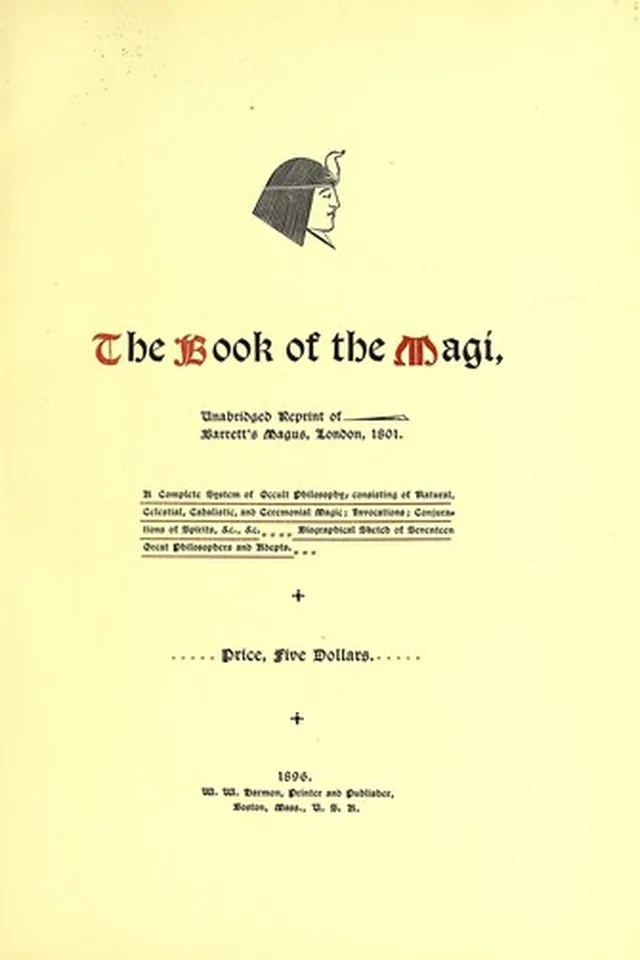
The book of the magi

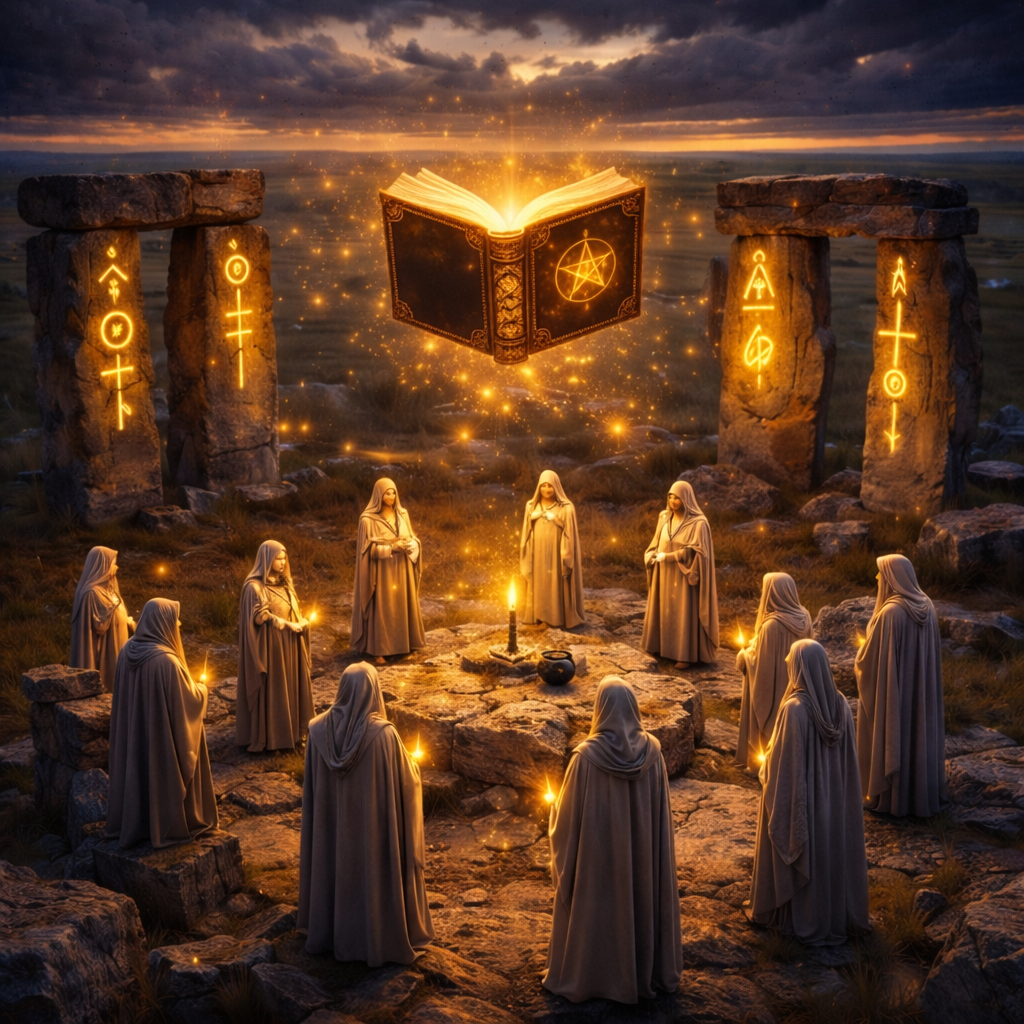

Aurelia Blackwood, Occult Philosophy Critic: Francis Barrett's 'The Book of the Magi' stands as a monumental achievement in esoteric literature. Barrett's unique blend of scientific acumen and mystical insight lends an unparalleled authority to his exploration of ancient magical systems. This work is not for the casual dabbler; it demands a serious engagement with its intricate symbolism and philosophical underpinnings. Its strength lies in its methodical presentation of complex concepts, making the profound accessible to dedicated students of the occult. Scholars and practitioners alike will find invaluable wisdom here, offering a robust foundation for understanding foundational magical principles and their practical application. A truly indispensable resource.
📝 Description
63
Francis Barrett's 'The Book of the Magi' was published in 1900.
Francis Barrett, a professor of chemistry, wrote 'The Book of the Magi' in 1900. This work examines magical principles and the practices of ancient wise men. Barrett, who understood both science and occultism, aimed to explain complex magical ideas clearly. The book covers not just rituals but a philosophy for understanding universal energies and human potential. Each section unlocks secrets of ceremony, symbolism, and the transformation of awareness through alchemy. It is a guide for those interested in the connections within the cosmos and the individual spirit.
This book belongs to the late 19th and early 20th-century occult revival, a period when authors sought to synthesize esoteric traditions with contemporary scientific understanding. Barrett, with his background in chemistry, approached magic as a system with underlying principles, much like scientific laws. He connected ceremonial magic, alchemy, and mysticism, seeking to explain these subjects in a more systematic manner than some earlier grimoires. His work sits alongside other texts from this era that attempted to codify and rationalize occult knowledge for a new generation of practitioners and scholars.
💡 Why Read This Book?
Unlock the hidden language of the cosmos and the ancient pathways to spiritual enlightenment. 'The Book of the Magi' offers profound insights into foundational magical principles, alchemical symbolism, and the transformative power of ritual. Ideal for seekers of hidden knowledge, practitioners looking to deepen their understanding, and scholars of the occult interested in historical esoteric traditions. This book is your gateway to unlocking profound truths about yourself and the universe.
⭐ Reader Reviews
Honest opinions from readers who have explored this book.
❓ Frequently Asked Questions
What is the primary focus of 'The Book of the Magi'?
The book primarily focuses on the philosophical and practical aspects of ancient magic, exploring its connection to alchemy, symbolism, and the esoteric traditions of the Magi.
Who was Professor Francis F.R.C. Barrett?
Barrett was a distinguished scholar, a Professor of Chemistry, and a dedicated student of occult philosophy, known for his ability to bridge scientific reasoning with mystical inquiry.
Is this book suitable for beginners in magic?
While comprehensive, the book's depth and scholarly approach are best suited for those with a foundational interest in the occult or a serious commitment to study. Beginners may find it challenging but rewarding with dedicated effort.
What kind of symbolism can I expect to find?
Expect rich symbolism drawn from hermeticism, alchemy, and ancient religious traditions, offering layered interpretations of spiritual and material realities.
Does the book offer practical magical techniques?
Yes, it delves into ritualistic practices and the underlying principles that govern magical operations, providing a framework for practical application rather than mere theoretical discussion.
🔮 Key Themes & Symbolism
The Hermetic Art of Transformation
This theme explores the profound alchemical journey detailed within the text, not merely as a pursuit of material transmutation but as a metaphor for the spiritual evolution of the individual. It looks at the concepts of purification, dissolution, and synthesis as applied to the human psyche, revealing how the ancient arts sought to refine the soul and elevate consciousness towards divine union. The book elucidates the subtle correspondences between the macrocosm and the microcosm, presenting alchemy as a practical science of spiritual regeneration.
The Language of Celestial Signatures
Barrett masterfully deciphers the intricate web of celestial influences and their wide impact on terrestrial events and human destiny. This theme examines how the movements of stars and planets are understood as divine script, encoding universal laws and spiritual truths. The book reveals the ancient Magi's sophisticated system of astrological interpretation and its application in magical practice, offering insights into the harmonious relationship between the divine order of the cosmos and the intricate workings of the human soul. It is a study of divine order made manifest.
The Power of Sacred Geometry and Symbolism
This theme focuses on the potent force of symbolic representation and sacred geometry as conduits for divine energy and hidden knowledge. The book illustrates how shapes, numbers, and sigils are not mere decorative elements but are imbued with profound cosmic significance, capable of influencing the subtle realms. It explores the visual language of the ancients, demonstrating how carefully constructed symbols and geometric forms serve as keys to unlocking universal mysteries and invoking specific spiritual forces, thereby facilitating communion with the divine and understanding the underlying structure of reality.
💬 Memorable Quotes
Direct passages from the work, attributed to the author.
“As above, so below; as within, so without.”
— A fundamental Hermetic axiom illustrating the interconnectedness of all planes of existence, from the divine to the mundane.
“True alchemy is the purification of the soul.”
— This highlights the spiritual dimension of alchemy, portraying it as a path of inner transformation rather than solely material manipulation.
“Wisdom is not gained, but recognized.”
— Suggests that true understanding comes from an inner awakening and recognition of inherent truths, rather than external acquisition.
“The key is not to find, but to become.”
— Points to the active, transformative nature of spiritual practice, emphasizing personal evolution over passive searching.
💡 Key Ideas
Editorial paraphrase of the work's core concepts — not direct quotes.
The outward is but the shadow of the inward.
This quote emphasizes the esoteric principle that the visible world is a mere reflection of deeper, unseen realities and spiritual states.
🌙 Esoteric Significance
Tradition
This work is deeply rooted in the Hermetic and Alchemical traditions, drawing heavily from Kabbalistic principles and Neoplatonic philosophy. It represents a synthesis of ancient wisdom, presented through a lens that sought to bridge the gap between empirical observation and spiritual insight, making it an important text for understanding the evolution of Western Esotericism.
Symbolism
The book is replete with strong symbolism, from alchemical furnaces and celestial bodies to geometric figures and archetypal imagery. These symbols are not merely decorative but serve as keys to unlocking deeper meanings, representing stages of spiritual development, cosmic forces, and the interconnectedness of all creation.
Modern Relevance
In an age often defined by materialism and rapid technological advancement, 'The Book of the Magi' offers a vital counterpoint, reminding us of the profound inner dimensions of existence. Its exploration of consciousness, subtle energies, and spiritual transformation remains profoundly relevant for individuals seeking meaning, purpose, and a deeper connection to the universe.
👥 Who Should Read This Book
This important work is indispensable for serious students of Western Esotericism, particularly those drawn to Hermeticism and Alchemy. Scholars of occult history will find a valuable primary source useful the intellectual currents of its time. Practitioners seeking to deepen their understanding of ritual, symbolism, and the philosophical underpinnings of magical practice will find profound guidance. Even the curious beginner, willing to engage with complex ideas, will discover a rich, rewarding intellectual and spiritual journey that illuminates the hidden architecture of reality.
📜 Historical Context
Written during a period of burgeoning interest in the occult sciences and a revival of classical esoteric traditions, 'The Book of the Magi' emerged from an era where the lines between science, philosophy, and mysticism were often blurred. Professor Barrett's work reflects the late 19th and early 20th-century milieu, characterized by figures seeking to reconcile burgeoning scientific understanding with ancient spiritual wisdom. This was a time when societies like the Hermetic Order of the Golden Dawn were active, exploring ceremonial magic, Kabbalah, and Hermeticism. Barrett's contribution stands as a proof of this intellectual current, offering a structured and reasoned approach to complex magical theories that sought to clarify and codify the arcane arts for a new generation of seekers.
📔 Journal Prompts
Reflect on a personal 'alchemical' transformation you have undergone or wish to pursue. How can the principles of purification and synthesis be applied?
Consider a symbol that holds personal significance. What deeper meanings might it represent in the context of your inner life and spiritual journey?
How do you perceive the relationship between the 'outer' world and your 'inner' landscape? Does the outward reflect the inward for you?
Explore the concept of 'celestial signatures' in your own life. Are there patterns or synchronicities you observe that feel divinely orchestrated?
What does 'wisdom recognized' mean to you? How can you cultivate an inner state receptive to recognizing inherent truths?
🗂️ Glossary
Magi
Ancient priests and wise men, often associated with Zoroastrianism and later with esoteric traditions, revered for their knowledge of astronomy, astrology, and occult sciences.
Alchemy
An ancient philosophical and protoscientific tradition combining elements of chemistry, metallurgy, physics, medicine, astrology, semiotics, mysticism, spiritualism, and art. It was concerned with the transmutation of base metals into gold and the discovery of a universal elixir.
Hermeticism
A religious, philosophical, and esoteric tradition based on the purported teachings of Hermes Trismegistus. It emphasizes the correspondence between the spiritual and material realms, the pursuit of divine knowledge, and the potential for human spiritual enlightenment.
Esoteric
Intended for or likely to be understood by only a small number of people with a specialized knowledge or interest; private, secret.
Transmutation
In alchemy, the process of changing one element or substance into another, particularly the conversion of base metals into gold. Spiritually, it refers to the transformation of the soul or consciousness.
This book appears in 3 collections
🔮 Readers Also Liked
Browse all →





More by Barrett, Francis F.R.C., Prof. of Chemistry
All books →
From the “Ritual Magic” Collection
View all →






More Free Magic & Ritual Books
View all →