Einführung in das Wesen der Mythologie
 72
72

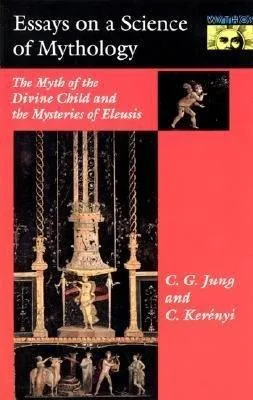
Einführung in das Wesen der Mythologie



Marcus Thorne (Esoteric Sciences Reviewer) — A monumental collaboration, Jung and Kerényi's exploration of mythology transcends mere scholarship. This work is essential for anyone seeking to understand the deep psychological and spiritual currents that underpin human experience. Jung's commentaries are particularly illuminating, revealing how archaic myths function as living expressions of the collective unconscious. The book masterfully bridges the gap between psychological analysis and esoteric wisdom, offering profound insights into archetypes, the divine child, and the eternal feminine. It’s a challenging but immeasurably rewarding read for serious students of occultism, psychology, and the perennial philosophy.
📝 Description
72
Carl Jung's 1941 lectures introduced his ideas on mythology and the psyche.
Originally delivered as lectures in 1941, Carl Gustav Jung's *Einführung in das Wesen der Mythologie* examines the nature of myth and its relationship to the human psyche. Collaborating with mythologist C. Kerényi, Jung discusses how ancient narratives function not just as stories, but as expressions of fundamental psychological patterns. He argues that these archetypal images, present across cultures and time, reveal the unconscious mind's structure and its search for meaning.
The book considers how symbols within myths act as bridges to understanding deeper psychic realities. Jung suggests that by studying these myths, we can gain insight into the collective unconscious, the shared reservoir of human experience. The work aims to show how these ancient forms continue to influence individual and collective consciousness, shaping our perceptions of ourselves and the world. It offers a perspective on how psychological and mythological elements intertwine.
This work is situated within the broader field of depth psychology, particularly Jung's analytical psychology. It connects mythological studies with psychological interpretation, viewing myths as manifestations of the unconscious psyche. This approach sees ancient narratives not merely as historical artifacts but as living expressions of universal human experiences and patterns. The exploration of symbols and archetypes links it to traditions that seek meaning beyond the purely material or rational.
💡 Why Read This Book?
Delve into the archetypal foundations of human consciousness and uncover the hidden language of myth. This book offers profound psychological and spiritual insights, connecting ancient narratives to the deepest recesses of the soul. Ideal for seekers of esoteric knowledge, scholars of mythology and psychology, and practitioners looking to deepen their understanding of symbolic systems.
⭐ Reader Reviews
Honest opinions from readers who have explored this book.
❓ Frequently Asked Questions
What is the core argument of this book?
The book argues that myths are not mere stories but vital psychic realities, embodying universal human experiences and archetypes. Jung and Kerényi demonstrate how understanding myth offers profound insights into the human psyche and spiritual development.
Who is C. G. Jung and why is he relevant here?
Carl Gustav Jung was a pioneering Swiss psychiatrist and psychoanalyst, founder of analytical psychology. His relevance lies in his revolutionary theories on the collective unconscious and archetypes, which he applies to decipher the symbolic language of myths.
What is the significance of the collaboration with C. Kerényi?
Kerényi, a renowned mythologist, provides deep scholarly understanding of mythological motifs. Their collaboration creates a powerful synergy, blending psychological depth with historical and cultural context to elevate the study of myth.
Is this book suitable for beginners in mythology or psychology?
While it delves into complex concepts, the book's foundational nature makes it accessible to dedicated beginners. A willingness to engage with abstract ideas and symbolism is key to appreciating its depth.
How does this book relate to divination or esoteric practices?
By exploring the symbolic language of myths, the book provides a framework for understanding the archetypal patterns often used in divination. It illuminates the psychological underpinnings that give esoteric practices their power and meaning.
🔮 Key Themes & Symbolism
The Archetypal Unconscious
This theme explores Jung's groundbreaking concept of the collective unconscious, a shared reservoir of primal images and patterns (archetypes) that influence human thought and behavior across cultures and time. The book posits that myths are the primary vehicles through which these archetypes manifest, serving as blueprints for human experience and consciousness. By examining specific myths, Jung demonstrates how universal themes of creation, transformation, the hero's journey, and divine encounters are encoded within these ancient narratives, offering a profound understanding of the psychic structures that shape our reality and our collective destiny.
Myth as Living Psychic Reality
Jung challenges the notion of myth as mere ancient folklore or primitive superstition. Instead, he presents myths as dynamic, living psychic realities that continue to exert a potent influence on the contemporary mind. These narratives are not static relics but potent symbolic expressions of the soul's journey, offering guidance, healing, and meaning. The book argues that by engaging with mythological narratives, individuals can access a deeper understanding of their own inner lives, confront personal challenges through archetypal patterns, and find connection to the timeless wisdom that has sustained humanity through millennia.
The Symbolism of the Divine Child and the Kore
Focusing on Kerényi's contributions, this theme studies the profound symbolism of the Divine Child and the Kore (Maiden) as fundamental archetypes. The Divine Child represents potential, new beginnings, and the promise of transformation, often appearing in myths as a figure of immense power destined for greatness. The Kore, conversely, embodies innocence, vulnerability, but also the latent power of the feminine and the underworld. Their interplay within myth reveals essential aspects of human development, the cycles of life, death, and rebirth, and the eternal feminine principle, offering a collection of symbolic meaning for psychological and spiritual exploration.
💬 Memorable Quotes
Direct passages from the work, attributed to the author.
“The psyche knows more than we do.”
— Highlighting the vastness of the unconscious, this phrase suggests that our conscious understanding is limited, and true wisdom often resides in the deeper, often mythic, areas of the psyche.
“Archetypes are the inherited potentialities of the human psyche.”
— This explains the fundamental nature of archetypes as innate predispositions, inherited patterns of thought and behavior that shape our perception and reaction to the world, often expressed through myth.
“The unconscious is not a dark cellar but a luminous realm.”
— A poetic re-framing of the unconscious, suggesting it is a source of creativity, wisdom, and spiritual insight, rather than a place of mere repression or darkness.
“Myth is the secret of the soul.”
— This evocative statement positions mythology as the key to understanding our deepest selves, our inner spiritual landscape, and the fundamental questions of human existence.
💡 Key Ideas
Editorial paraphrase of the work's core concepts — not direct quotes.
Myths are the psychic experiences of mankind.
This quote expresses Jung's central thesis that myths are not external stories but deeply internalized psychic realities, reflecting the universal experiences and patterns of the human soul.
🌙 Esoteric Significance
Tradition
This work is deeply rooted in the tradition of analytical psychology and the perennial philosophy, seeking to uncover universal truths that transcend specific religious or cultural doctrines. Jung's exploration of archetypes and the collective unconscious aligns with esoteric concepts of a universal consciousness and the interconnectedness of all beings. It speaks to the Hermetic principle of 'As Above, So Below,' by demonstrating how cosmic patterns are mirrored within the individual psyche through myth.
Symbolism
The book is a profound exploration of symbolic language, particularly archetypal imagery found in myths. Symbols like the Divine Child, the Great Mother, the Wise Old Man, and the Hero are presented not as arbitrary signs, but as potent carriers of psychological and spiritual meaning. These symbols act as keys to unlocking the unconscious, revealing the underlying order of the cosmos and the inherent potentials within the human spirit. Understanding this symbolism is crucial for working through the inner world and for interpreting the messages embedded within dreams and ancient narratives.
Modern Relevance
In an age often characterized by disconnection and superficiality, Jung's work on mythology offers a vital pathway back to deeper meaning and authentic selfhood. It provides tools for understanding the pervasive influence of archetypes in modern media, personal relationships, and societal structures. By recognizing these ancient patterns, individuals can gain critical awareness of their own motivations and the forces shaping their lives. The book's insights are crucial for psychological healing, spiritual growth, and for fostering a more profound connection to humanity's shared heritage and inner spiritual landscape.
👥 Who Should Read This Book
This key work is essential for anyone seeking to understand the profound connections between myth, psychology, and the human soul. **Scholars of mythology, psychology, and comparative religion** will find its rigorous analysis and innovative theories invaluable. **Spiritual seekers and practitioners** will discover a rich source of esoteric wisdom, offering useful insights into archetypal patterns, the unconscious, and the perennial quest for meaning. **Individuals interested in self-discovery and personal growth** will benefit from Jung's ability to illuminate the hidden currents of their own inner lives through the lens of ancient narratives. Even **beginners** willing to engage with complex symbolic thought will find a rewarding journey into the very foundations of human experience.
📜 Historical Context
Published in the mid-20th century, *Einführung in das Wesen der Mythologie* emerged during a period of profound intellectual and cultural upheaval. The aftermath of two World Wars spurred a deep introspection into the human condition, the nature of consciousness, and the enduring power of ancient wisdom. Jung's work, deeply influenced by his contemporary analytical psychology, sought to re-establish the relevance of myth in a rapidly modernizing and increasingly secularized world. His collaboration with Kerényi, a leading figure in classical philology and mythology, provided a robust scholarly foundation for their psychological interpretations. This era saw a renewed interest in archetypal patterns, symbolic language, and the perennial philosophy, as thinkers grappled with the existential anxieties and the search for meaning in a fragmented world. The book stands as a evidence of this intellectual current, offering a bridge between academic disciplines and esoteric understanding.
📔 Journal Prompts
Reflect on a recurring dream or powerful image you've experienced. How might it connect to an archetypal theme discussed in this book?
Consider a myth or fairy tale that resonated with you in childhood. What is its deeper psychological or spiritual message for you now?
How do the concepts of the Divine Child or the Kore manifest in your own life or in the world around you?
In what ways do you see archetypal patterns influencing contemporary society, media, or your personal relationships?
What does the idea of myth as a 'living psychic reality' mean for your personal understanding of yourself and the world?
🗂️ Glossary
Archetype
A universal, archaic pattern of thought, image, or behavior inherited in the collective unconscious. Archetypes are not specific images but predispositions that shape how we experience and respond to the world, often manifesting in myths, dreams, and symbols.
Collective Unconscious
A concept introduced by Carl Jung, referring to a layer of the unconscious mind that is shared by all humanity. It contains archetypes and is inherited, serving as a reservoir of ancestral memories and psychic patterns that transcend individual experience.
Kore
In Jungian psychology and classical studies, the Kore refers to the Maiden archetype, often associated with the goddess Persephone. It symbolizes innocence, youth, the feminine principle, and often represents a journey into the underworld, signifying transformation and rebirth.
Psyche
The totality of the human mind, encompassing consciousness, the personal unconscious, and the collective unconscious. It is the seat of all psychological processes, including thoughts, feelings, perceptions, and the integration of experience.
Mythopoeia
The creation of myths or the process by which myths are formed and evolve. In a broader sense, it refers to the human capacity to create stories and symbolic narratives that imbue life with meaning and order.
This book appears in 3 collections
🔮 Readers Also Liked
Browse all →







More by Carl Gustav Jung
All books →

From the “Tarot” Collection
View all →








More Free Divination & Tarot Books
View all →