Alchemy

 61
61

Alchemy

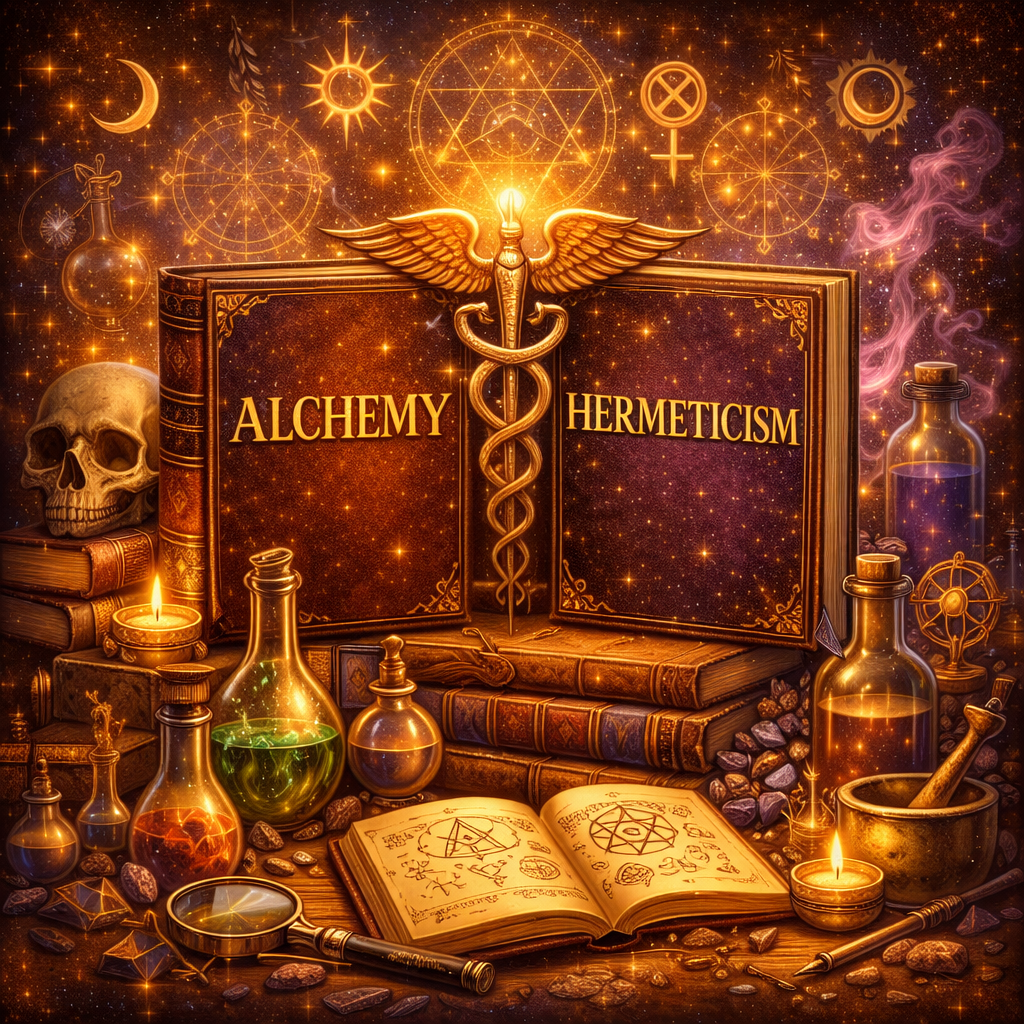

Andrew Nelson Lytle's 'Alchemy' is a masterful exploration of the hermetic arts, steeped in esoteric insights and rich symbolism. The novel's strength lies in its ability to blend historical accuracy with mystical themes, making it a valuable resource for both scholars and spiritual seekers. Lytle's prose is evocative and thought-provoking, inviting readers to delve into the deeper meanings behind alchemical practices. This book is a must-read for anyone interested in the occult and the hidden knowledge of the ages.
📝 Description
61
Andrew Nelson Lytle's 1974 novel 'Alchemy' uses the alchemical process as a metaphor for spiritual growth.
Published in 1974, Andrew Nelson Lytle's 'Alchemy' examines the historical practice of alchemy not just as a proto-science but as a symbolic system for personal transformation. The narrative unfolds against a backdrop of hermetic traditions, where the alchemist's quest to transmute base metals into gold serves as a powerful allegory for the inner work of spiritual enlightenment. Lytle employs rich symbolism and evocative language to guide the reader through this process.
The book delves into the philosophical underpinnings of alchemy, connecting its rituals and theories to psychological and spiritual development. It is written for those who appreciate the esoteric dimensions of historical practices and seek to understand the deeper meanings behind ancient quests for perfection and transcendence. The work is accessible to readers interested in how historical traditions can inform contemporary understanding of self and spirit.
Lytle's 'Alchemy' is situated within the broader tradition of Western esotericism, specifically drawing on the rich symbolic language of Hermeticism and classical alchemy. These traditions, which flourished from antiquity through the Renaissance, viewed the physical processes of alchemy as a mirror for the spiritual purification and perfection of the human soul. The book engages with concepts such as the prima materia, the four elements, and the Philosopher's Stone, interpreting them not just as literal substances but as stages in a profound inner journey.
💡 Why Read This Book?
Read 'Alchemy' to immerse yourself in the mystical world of hermeticism and alchemy. This book is ideal for seekers of hidden knowledge, scholars of esoteric studies, and practitioners of alchemical arts. It offers a profound exploration of transformation and spiritual enlightenment, making it a valuable addition to any mystical library.
⭐ Reader Reviews
Honest opinions from readers who have explored this book.
❓ Frequently Asked Questions
What is the main theme of 'Alchemy'?
The main theme of 'Alchemy' is the transformative power of alchemical processes, both literally and metaphorically. It explores the quest for spiritual enlightenment and the hidden knowledge of the hermetic tradition.
Who is the intended audience for this book?
The intended audience includes scholars of esoteric studies, practitioners of alchemy, and anyone interested in the occult and mystical themes.
How does 'Alchemy' relate to historical alchemy?
'Alchemy' draws heavily from historical alchemy, using its symbols and practices as a framework for exploring deeper philosophical and spiritual questions.
What makes 'Alchemy' unique among other books on the subject?
'Alchemy' stands out due to its rich, evocative prose and its ability to blend historical accuracy with mystical themes, making it both a scholarly and spiritual journey.
Are there any modern applications of the ideas presented in 'Alchemy'?
Yes, the book's exploration of transformation and spiritual enlightenment continues to resonate with modern practitioners of alchemy and seekers of ancient wisdom.
🔮 Key Themes & Symbolism
Transformation
The central theme of 'Alchemy' is transformation, both literal and metaphorical. Lytle uses the alchemical process of turning base metals into gold as a symbol for personal and spiritual evolution, inviting readers to reflect on their own journeys of growth and enlightenment.
Hidden Knowledge
The novel examines the hidden knowledge of the hermetic tradition, exploring the esoteric insights and mystical themes that have fascinated seekers for centuries. Lytle's work is a rich source of ancient wisdom, presented in a way that is both accessible and profound.
Symbolism
Rich in symbolism, 'Alchemy' uses cryptic allusions and vivid language to create a world where every object and action holds deeper meaning. This symbolism is not merely decorative but integral to the book's exploration of the occult and the mystical.
💡 Key Ideas
Editorial paraphrase of the work's core concepts — not direct quotes.
The alchemist knows that the journey is as important as the destination.
This quote highlights the importance of the transformative process in alchemy and spiritual growth.
In the furnace of the soul, base metals are transmuted into gold.
This line underscores the alchemical metaphor for personal and spiritual evolution.
The hidden knowledge of the ages is a beacon in the darkness.
This passage emphasizes the guiding role of esoteric wisdom in the quest for enlightenment.
Symbolism is the language of the mystical.
This quote underscores the importance of symbolism in understanding the deeper meanings of alchemical practices.
The hermetic tradition holds the keys to unlocking the mysteries of the universe.
This line highlights the significance of the hermetic tradition in the pursuit of hidden knowledge.
🌙 Esoteric Significance
Tradition
'Alchemy' belongs to the hermetic tradition, which emphasizes the pursuit of hidden knowledge and spiritual enlightenment through alchemical practices and mystical symbolism. This tradition has roots in ancient Egypt and has been influential in various esoteric and occult movements throughout history.
Symbolism
Key symbols in 'Alchemy' include the philosopher's stone, the alchemical furnace, and the process of transmutation. These symbols represent the transformative journey from base to enlightened states, both literally and metaphorically. Understanding these symbols is crucial to grasping the deeper meanings of the text.
Modern Relevance
Today, 'Alchemy' continues to resonate with practitioners of alchemy and seekers of ancient wisdom. Its exploration of transformation and spiritual enlightenment remains relevant, inspiring modern esoteric studies and occult practices. The book's strong symbolism and useful insights make it a valuable resource for anyone interested in the hermetic tradition.
👥 Who Should Read This Book
Beginners interested in the occult and esoteric studies will find 'Alchemy' an accessible and engaging introduction to the hermetic tradition. Scholars of esoteric studies will appreciate its historical accuracy and strong symbolism. Spiritual seekers will be drawn to its exploration of transformation and spiritual enlightenment. Practitioners of alchemy will find it a valuable resource for understanding the deeper meanings behind alchemical practices.
📜 Historical Context
Written during a time when alchemy was both a scientific and mystical pursuit, 'Alchemy' reflects the era's fascination with transformation and hidden knowledge. The novel draws on historical alchemical practices and hermetic symbols, making it a valuable resource for understanding the spiritual and philosophical context of the time. Its influence can be seen in modern works that explore the occult and esoteric traditions, continuing to inspire seekers and scholars alike.
📔 Journal Prompts
How does the concept of transformation in 'Alchemy' relate to your own spiritual journey?
What hidden knowledge from the hermetic tradition speaks to you the most?
Reflect on a symbol from 'Alchemy' that holds personal significance for you.
How does 'Alchemy' challenge or affirm your understanding of the occult?
What insights from 'Alchemy' can you apply to your daily life or spiritual practice?
🗂️ Glossary
Philosopher's Stone
A legendary alchemical substance said to be capable of turning base metals into gold and granting immortality. In 'Alchemy', it symbolizes the ultimate goal of spiritual transformation.
Alchemical Furnace
A vessel used in alchemy to heat and transform substances. In the book, it represents the process of personal and spiritual evolution.
Transmutation
The alchemical process of changing one substance into another. In 'Alchemy', it symbolizes the journey from base to enlightened states.
Hermetic Tradition
A philosophical and spiritual tradition based on the writings of Hermes Trismegistus, emphasizing hidden knowledge and spiritual enlightenment through alchemical practices.
Esoteric
Relating to knowledge that is intended for a small group of people with special knowledge or interest, often involving mystical or occult themes.
This book appears in 3 collections
🔮 Readers Also Liked
Browse all →









From the “Hermeticism” Collection
View all →






More Free Alchemy & Hermeticism Books
View all →