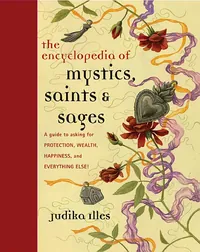
Museum Archetypes and Collecting in the Ancient World
 81
81

Museum Archetypes and Collecting in the Ancient World
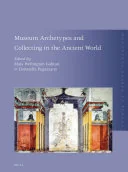
Maia Wellington Gahtan and Donatella Pegazzano's edited volume, Museum Archetypes and Collecting in the Ancient World, offers a much-needed scholarly examination of ancient collecting. The strength lies in its interdisciplinary approach, bringing together specialists to illuminate the complex motivations behind artifact accumulation, from Archaic Greece onward. A particularly striking section explores the concept of the 'treasury' as a precursor to the modern museum, highlighting how votive offerings and spoils of war were curated. However, the compendium's breadth occasionally leads to a lack of cohesive depth in certain essays, leaving the reader wanting more specific case studies. The discussion on Roman collecting, while informative, could have benefited from a more direct engagement with the philosophical underpinnings discussed in earlier sections. Despite this, the work provides a solid foundation for understanding the historical roots of curatorial impulses.
📝 Description
81
Published in 2022, this book analyzes ancient collecting practices and the conceptual models that predated modern museums.
Museum Archetypes and Collecting in the Ancient World offers a detailed look at how people in antiquity acquired and preserved artifacts. The volume collects essays from various experts who discuss the reasons and methods behind collecting objects across different ancient cultures. It goes beyond simple lists of items to consider the ideas that made certain objects important enough for collection and exhibition. The essays cover collecting behaviors from Archaic Greece up to the Late Roman Empire. The book examines how these habits changed due to shifts in politics, religion, and philosophy. It suggests that the ancient urge to collect was not just about owning things but also about creating knowledge and expressing culture.
This work is for academics and dedicated students in archaeology, art history, classics, and museum studies. It will also interest collectors and historians of collecting who want to better understand the intellectual and cultural roots of modern museum ideas. Readers should have some basic knowledge of ancient history and cultures.
While not strictly esoteric in the occult sense, this book engages with a tradition of understanding ancient practices as deeply symbolic and tied to broader cosmological or philosophical systems. It examines the impulse to collect and curate objects not merely as historical acts, but as expressions of a desire to order the world, preserve knowledge, and imbue physical items with spiritual or intellectual significance. This aligns with esoteric thought that seeks hidden meanings and underlying structures within human endeavors, viewing collections as early attempts to create microcosms or map the divine order.
💡 Why Read This Book?
• Understand the earliest forms of collection curation by examining how treasuries in ancient Greece, like those at Delphi, functioned as proto-museums, shaping the concept of organized display. • Gain insight into the social and political motivations behind collecting, such as how Roman emperors used acquired artifacts to project power and legitimacy. • Explore the philosophical underpinnings of collecting in the ancient world, recognizing that the act of acquisition was often tied to knowledge, piety, or a desire to preserve memory.
⭐ Reader Reviews
Honest opinions from readers who have explored this book.
❓ Frequently Asked Questions
What distinguishes ancient collecting from modern museum practices?
Ancient collecting often fused religious devotion, political display, and personal prestige, unlike modern museums which prioritize scholarly research and public education with stricter provenance standards.
Which ancient civilizations are covered in the book?
The book spans from Archaic Greece (circa 8th century BCE) through to the Roman Empire, examining collecting practices across these diverse cultures.
Does the book discuss specific types of artifacts collected?
Yes, the essays touch upon various objects, including sculpture, pottery, precious metals, and religious votives, analyzing why each held value for collectors.
What is the 'museological lens' mentioned in the blurb?
It refers to analyzing ancient practices through the theoretical framework of modern museology, understanding them as precursors to contemporary museum functions and ideas.
Who are the primary authors or editors of this collection?
The book is edited by Maia Wellington Gahtan and Donatella Pegazzano, featuring contributions from multiple specialists in ancient history and archaeology.
Is this book suitable for casual readers interested in ancient history?
While accessible to those with some background, the book's academic rigor and specialized focus make it most suitable for students and scholars in related fields.
🔮 Key Themes & Symbolism
The Temple as Archive
This theme examines how ancient temples functioned not merely as places of worship but as sophisticated archives and early museums. They housed votive offerings, dedications, and spoils of war, curated by priests. The work explores how these sacred spaces established precedents for object categorization, display hierarchies, and the preservation of culturally significant items, influencing later secular collecting.
Collecting as Political Power
The book elucidates how collecting in antiquity was intrinsically linked to the projection of political power and social status. From Greek tyrants to Roman emperors, the acquisition and display of rare artifacts, exotic goods, and art served to legitimize rule, demonstrate wealth, and assert cultural dominance. This section scrutinizes the imperial collections and their symbolic functions.
Personal Collections and Intellectual Pursuits
Beyond state-sponsored or religious collections, this theme investigates private collections amassed by wealthy individuals and intellectuals. It looks at the motivations behind personal hoarding of texts, art, and curiosities, linking these practices to philosophical inquiry, the pursuit of knowledge, and the desire for personal legacy. The role of patronage in shaping these collections is also considered.
Object Provenance and Sacred Value
A crucial aspect discussed is the importance of an object's origin and its sacred or historical significance in its value as a collectible. The work analyzes how artifacts acquired through conquest, trade, or pilgrimage gained prestige, and how their provenance contributed to their perceived power or authenticity within collections.
💬 Memorable Quotes
Direct passages from the work, attributed to the author.
“The treasury at Delphi functioned as a complex nexus of religious devotion, political statement, and communal memory.”
— This highlights how ancient sites like Delphi were multi-functional, serving not just spiritual needs but also acting as early curated spaces for displaying power and preserving collective identity through collected objects.
“Roman villas often contained curated selections of art and antiquities intended to project the owner's erudition and status.”
— This points to the personal dimension of collecting in the Roman world, where private residences became extensions of the owner's intellectual and social standing, curated to impress visitors.
“Votive offerings, while primarily religious, also contributed to the visual narrative and material wealth of sanctuaries.”
— This interpretation emphasizes the dual nature of religious donations, serving both spiritual purposes and accumulating tangible assets that enhanced the prestige and appearance of sacred sites.
“The act of collecting in antiquity was rarely detached from its social, political, or religious context.”
— This core idea underscores that ancient collecting was deeply embedded in the fabric of society, unlike modern, often more dispassionate, academic curation.
“The selection and arrangement of objects in early collections reveal underlying cultural values and priorities.”
— This suggests that by studying what ancient peoples chose to collect and how they displayed it, we can infer their societal hierarchies, beliefs, and what they considered important.
🌙 Esoteric Significance
Tradition
While not explicitly esoteric, the book's exploration of ancient collecting aligns with Hermetic and Neoplatonic traditions that emphasize the sacredness of objects and the hidden knowledge they contain. The collection and curation of artifacts in temples and treasuries can be viewed as an ancient form of 'sacred science,' where material objects served as vessels for divine presence or historical memory, echoing the Hermetic principle of 'as above, so below.'
Symbolism
The 'temple treasury' emerges as a potent symbol, representing not just accumulated wealth but a curated repository of divine favor and communal identity. Sculptures and votive offerings function as tangible links to the divine or ancestral realms. The act of collecting itself symbolizes a desire to order the cosmos, to capture and preserve fragments of power or meaning within a defined space.
Modern Relevance
Contemporary practitioners of Hermeticism, ceremonial magic, and even certain strands of animistic spirituality can draw parallels. The book's analysis of how ancient cultures imbued objects with power and meaning through collection and display informs modern ritualistic practices and the understanding of sacred objects. Thinkers exploring object-oriented ontology and the 'agency' of artifacts find historical precedents in these ancient curatorial impulses.
👥 Who Should Read This Book
['• Classical Studies Scholars: Researchers investigating the cultural practices, religious rituals, and social structures of ancient Greece and Rome will find detailed analyses of artifact collection and display.', '• Museum Professionals and Historians: Curators, conservators, and scholars of museum history seeking to understand the deep historical roots of museological theory and practice will benefit from this foundational work.', '• Students of Material Culture: Individuals studying how societies create, use, and assign meaning to objects will gain a comprehensive perspective on ancient collecting behaviors and their significance.']
📜 Historical Context
Published in 2015, Museum Archetypes and Collecting in the Ancient World emerged during a period of intense interdisciplinary scholarship examining the history of collecting and museums. The work builds upon decades of archaeological findings and art historical analyses, engaging with scholars like Susan Vogel and others who had previously explored ancient art and its contexts. The intellectual climate was marked by a growing interest in the social life of objects and the theoretical underpinnings of display. While not facing overt censorship, such academic volumes often find their reception within specialized circles, their impact measured by citations in subsequent research rather than public discourse. This book's significance lies in synthesizing diverse research into a cohesive overview, providing a foundation for ongoing debates about the origins of museological thought, standing in contrast to earlier, more object-focused archaeological reports.
📔 Journal Prompts
The function of temple treasuries as early curated spaces.
The Roman villa as a personal museum reflecting status and intellect.
The motivations behind collecting votive offerings in antiquity.
Ancient concepts of object provenance and their connection to value.
Comparing Archaic Greek collecting impulses with those of the Roman Empire.
🗂️ Glossary
Museological Lens
An analytical approach that examines historical practices, such as ancient collecting, through the theoretical frameworks and principles of modern museum studies and curation.
Archetype
In this context, refers to the original models or foundational concepts of museums and collections that existed in the ancient world, predating formal institutions.
Votive Offering
An object presented to a deity or sacred place as a fulfillment of a vow, a token of gratitude, or a plea for divine intervention.
Provenance
The history of ownership and location of a valuable object, especially a work of art or antiquity, crucial for establishing authenticity and value.
Archaic Greece
The period of Greek history preceding the Classical period, roughly from the 8th century BCE to 480 BCE, characterized by early developments in art, politics, and philosophy.
Treasury (Ancient)
A small building or room within a sanctuary, often used to store valuable dedications and offerings, functioning as a form of curated collection.
Compendium
A collection of concise but detailed information about a particular subject, especially in book form.
This book appears in 1 collection
🔮 Readers Also Liked
Browse all →








From the “Archetypes” Collection
View all →

More Free Esoteric History & Biography Books
View all →