The Grail Chronicles
 83
83

The Grail Chronicles
Coleman's "The Grail Chronicles" presents a bold thesis, attempting to anchor the ethereal legend of the Holy Grail in concrete historical events and locations. The book's strength lies in its ambitious synthesis of disparate elements, from the Gospels to the Knights Templar and the Crown Jewels. However, the narrative's reliance on conjecture, while inherent to the subject, occasionally strains credulity, particularly when linking obscure 19th-century discoveries directly to Christ's chalice. A notable passage details the purported journey through various hands before its supposed arrival in England, a sequence that, while imaginative, lacks definitive corroboration. The work is perhaps best approached as a spirited exploration of possibility rather than a definitive historical account. It offers a compelling, if speculative, perspective on one of history's most enduring mysteries.
📝 Description
83
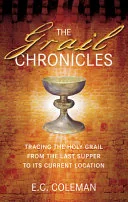
E. C. Coleman's 2010 book traces the Holy Grail's purported path from Christ's Last Supper to 19th-century England.
The Grail Chronicles follows the alleged history of the Holy Grail, beginning with its identification as the chalice used by Christ. The narrative extends this lineage to its supposed rediscovery in the late 1800s and its eventual location within England. The book is written for readers interested in the confluence of religious history, Arthurian legends, and secret organizations. Those who enjoy a story connecting early Christian relics to later historical enigmas will find considerable material within its pages. Coleman's work enters a long lineage of Grail investigations, both literary and historical, which saw renewed interest after the medieval romances by Chrétien de Troyes and Wolfram von Eschenbach. The text examines the artifact's physical whereabouts and symbolic interpretations that have accumulated over centuries.
Coleman's book engages with the persistent fascination surrounding the Holy Grail, a subject that has fueled centuries of speculation and legend. It situates the Grail within a tradition of esoteric inquiry, linking early Christian events to later medieval and modern historical puzzles. The narrative touches upon the secretive histories of groups like the Knights Templar, demonstrating how a single artifact can become a nexus for mythmaking and clandestine pursuits. This work contributes to a larger discourse on the enduring power of religious relics and the construction of historical narratives around them.
💡 Why Read This Book?
• Gain a narrative connecting the Last Supper to the Knights Templar, offering a specific historical lineage for the Grail artifact that moves beyond purely symbolic interpretations. • Understand the potential link between the Grail and English historical sites, providing concrete geographical anchors for legends often relegated to myth. • Explore how the artifact's journey is presented as culminating in a 19th-century discovery, offering a specific date for a pivotal, albeit debated, event in its purported history.
⭐ Reader Reviews
Honest opinions from readers who have explored this book.
❓ Frequently Asked Questions
What specific historical periods does 'The Grail Chronicles' examine?
The book covers a broad spectrum, beginning with the 1st century AD during Christ's life, moving through the medieval era with the Knights Templar, touching upon the reign of King John, and concluding with purported 19th-century discoveries in England.
Does the book claim to know the current location of the Holy Grail?
Yes, 'The Grail Chronicles' posits that the Holy Grail, described as a plain silver chalice, currently rests in the heart of England, though it details a complex historical journey to reach this point.
What role do the Knights Templar play in the book?
The Knights Templar are presented as significant custodians or inheritors of the Holy Grail's legacy after its initial historical period, forming a crucial link in the chain of events described by the author.
Is this book based on academic historical research or speculative legend?
While it incorporates historical figures and periods, the book is largely speculative, weaving together legend, apocrypha, and historical conjecture to construct its narrative about the Holy Grail.
What is the author's central argument about the Grail's post-Last Supper history?
Coleman's central argument is that the Grail is a physical artifact, a silver chalice from the 1st century AD, which passed through specific historical hands and events before its 19th-century rediscovery in England.
Does the book discuss Thomas Becket in relation to the Grail?
Yes, the book integrates figures like Thomas Becket into its narrative, suggesting connections or historical contexts that link the Grail's journey to significant English historical events and personalities.
🔮 Key Themes & Symbolism
The Physical Grail
This work focuses on the Grail not merely as a symbol but as a tangible object: a plain silver chalice from the first century AD. It meticulously traces its supposed physical trajectory from the Last Supper, through the Crucifixion, into various historical hands, and finally to its alleged 19th-century rediscovery and current location in England. The emphasis is on the artifact's material existence and its journey through human history, grounding the legend in a materialist interpretation.
Arthurian and Templar Connections
Coleman bridges the gap between early Christian history and the medieval mystique surrounding King Arthur and the Knights Templar. The book explores how these legendary and historical groups might have interacted with, protected, or sought the Grail. It positions the Templars as key figures in the artifact's later history, linking their secretive practices and eventual downfall to the ongoing saga of the sacred cup.
Relics and English History
The narrative ties the Grail's story into the fabric of English history, referencing figures like King John and Thomas Becket, and even the Crown Jewels. This grounds the esoteric quest within a specific national context, suggesting the artifact holds a profound, perhaps hidden, significance for England. The book proposes a continuity of sacred presence within the British Isles.
The Unrecognized Discovery
A key element is the claim of the Grail's unrecognized discovery in the late 19th century. This concept highlights how profound spiritual or historical artifacts can be overlooked or misinterpreted in their own time. It suggests that the Grail's presence has been hidden in plain sight, awaiting a time or a perspective capable of revealing its true nature and importance.
💬 Memorable Quotes
Direct passages from the work, attributed to the author.
“A plain silver chalice from the first century AD that now rests in the heart of England.”
— This phrase captures the book's central thesis: the Grail is a physical, historical object with a specific, documented location, rather than solely a spiritual or allegorical concept.
“From its momentous beginnings as the cup used by Christ at the Last Supper, and as the vessel used to catch his blood at the Crucifixion...”
— This highlights the dual sacred origins attributed to the artifact, linking it directly to the foundational events of Christian theology and martyrdom.
“...to its unrecognized discovery in the late 19th century...”
— This points to a specific, yet obscured, moment in modern history where the Grail allegedly resurfaced, emphasizing themes of hidden knowledge and missed opportunities.
“Covering Arthurian legend, Templars, King John, the Crown Jewels, and Thomas Becket...”
— This serves as a summary of the diverse historical and legendary elements the author synthesizes to construct the Grail's purported lineage.
“This exciting new account of what happened to the Holy Grail after the Last Supper reveals where it is now.”
— This statement frames the book as a revelation, promising concrete answers about the Grail's post-biblical history and current whereabouts.
🌙 Esoteric Significance
Tradition
The work aligns with traditions that seek a material basis for spiritual phenomena, often found in fringe historical research and certain esoteric interpretations of Christian history. It departs from purely Gnostic or Hermetic traditions by focusing intensely on the physical relic's lineage, rather than its spiritual or symbolic embodiment. It occupies a space that bridges historical investigation with legendary narratives, a common characteristic of many 19th and 20th-century esoteric movements seeking to uncover hidden truths within established history.
Symbolism
The primary symbol is the chalice itself, representing communion, sacrifice, and the vessel of divine grace. Its association with Christ's blood imbues it with potent symbolism of redemption and the Eucharist. The narrative also imbues locations within England with symbolic weight, suggesting a sacred geography where the artifact's presence consecrates the land, echoing ancient concepts of sacred sites and their guardians.
Modern Relevance
Contemporary interest in the Grail persists within various communities, including historical conspiracy theorists, Arthurian enthusiasts, and those exploring the lineage of sacred objects. Thinkers and groups focusing on Templar history, alternative archaeology, and the material culture of religion might find Coleman's specific claims intriguing, even if debated. The work contributes to ongoing discussions about the persistence of ancient mysteries within modern contexts.
👥 Who Should Read This Book
• Students of Arthurian legend and medieval literature seeking a narrative that connects the myths to potential historical artifacts and secret societies. • Enthusiasts of esoteric history and conspiracy theories interested in speculative accounts of religious relics and clandestine organizations like the Knights Templar. • Readers of comparative religion and historical mysteries who appreciate explorations that attempt to ground legendary objects in specific, albeit debated, historical timelines and locations.
📜 Historical Context
Published in 2010, E. C. Coleman's "The Grail Chronicles" entered a field already saturated with centuries of speculation, from medieval romances like those by Chrétien de Troyes to modern esoteric theories. The early 21st century saw continued popular fascination with Templar conspiracies and Arthurian mythos, partly fueled by popular culture and a resurgence of interest in alternative histories. Coleman's work positioned itself within this milieu, seeking to provide a tangible, historically grounded narrative for the elusive artifact. While academic historians largely dismiss such literal interpretations of the Grail legend, the book tapped into a persistent vein of popular esotericism that often critiques established historical narratives. Its contribution lies in attempting a specific, geographically anchored synthesis, distinguishing it from purely symbolic or allegorical treatments.
📔 Journal Prompts
The plain silver chalice's purported journey from the 1st century AD to modern England.
The role of the Knights Templar in safeguarding or transmitting the Grail.
The significance of the Grail's alleged unrecognized discovery in the late 19th century.
Connecting the Grail narrative to specific English locations mentioned in the text.
The balance between historical fact and legendary embellishment in tracing relics.
🗂️ Glossary
Holy Grail
The legendary cup used by Jesus at the Last Supper and, in some traditions, used to collect his blood at the Crucifixion. Its historical existence and location are subjects of extensive myth and speculation.
Knights Templar
A medieval Catholic military order founded around 1119, known for their role in the Crusades and their later suppression and alleged secrets, often linked to the Grail legend.
Arthurian Legend
A body of medieval literature and subsequent adaptations concerning the legendary British leader King Arthur, his knights, and his court, often featuring quests for the Holy Grail.
Chrétien de Troyes
A 12th-century French poet considered one of the first to introduce the Holy Grail into Arthurian literature in his unfinished romance 'Perceval, le Conte du Graal'.
Wolfram von Eschenbach
A German knight and poet of the late 12th and early 13th centuries, author of 'Parzival', another significant early Arthurian romance featuring the Grail.
Thomas Becket
Archbishop of Canterbury in the 12th century, known for his conflict with King Henry II, whose life and martyrdom are often interwoven with English historical and religious narratives.
Crown Jewels
The collection of regalia and vestments used in the coronation and other ceremonies of the British monarchy, representing royal power and historical continuity in England.
This book appears in 1 collection
🔮 Readers Also Liked
Browse all →




From the “Templar Knights” Collection
View all →



More Free Esoteric History & Biography Books
View all →