Mozart and the Enlightenment
 80
80

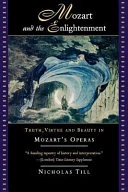
Mozart and the Enlightenment
Nicholas Till's "Mozart and the Enlightenment" provides a crucial corrective to views of Mozart as a detached genius. By meticulously examining the operatic scores and their libretti, Till demonstrates how profoundly Mozart's compositions were engaged with the intellectual ferment of his era. The analysis of how operas like *The Magic Flute* or *Don Giovanni* mirrored Enlightenment ideals concerning reason, natural law, and social hierarchy is particularly compelling. Till's detailed exploration of specific musical passages and their dramatic function, illustrating shifts in Enlightenment thought, is a significant strength. However, for readers less familiar with musicological analysis, some sections might prove dense, requiring close attention to fully appreciate the musical arguments. The book's insistence on Mozart's intellectual engagement, rather than purely emotional expression, offers a more nuanced understanding of his genius.
This is a vital study for anyone seeking to understand Mozart's work beyond the superficial. Till presents a convincing case for Mozart as an artist deeply embedded in his time's intellectual currents.
📝 Description
80
Nicholas Till's 1995 study examines Mozart's operas within the Enlightenment's intellectual currents.
Published in 1995, Nicholas Till's "Mozart and the Enlightenment" moves beyond simple descriptions of the composer's work. It situates his operas within the intellectual and social currents of the late 18th century. The book analyzes how operatic narratives and musical structures reflected the emerging ideals and challenges of the Enlightenment. This study is for academics, musicologists, and serious enthusiasts of classical music and historical studies. Readers interested in the intersection of art, philosophy, and societal change in the Age of Reason will find it particularly rewarding. It requires a foundational understanding of music theory and historical context.
The work is grounded in the dramatic societal shifts occurring in Austria and across Europe during the Enlightenment. This period saw a rise in rationalism, humanism, and challenges to traditional authority. Till places Mozart's creative output within this dynamic environment. His operas engaged with contemporary debates on reason, morality, and individual liberty, concepts central to figures like Immanuel Kant and broader philosophical discourse.
The book examines the concept of the "Enlightened" subject, the tension between individual freedom and societal order, and the role of music and drama in shaping public consciousness. Mozart's operas, through their libretti and musical settings, addressed themes of social justice, political reform, and the human condition as understood by Enlightenment thinkers.
While not explicitly esoteric in the occult sense, this book engages with the Enlightenment's philosophical underpinnings, which influenced many later esoteric traditions. The focus on reason, individual liberty, and the critique of traditional authority reflects a broader intellectual shift that also informed movements seeking hidden spiritual knowledge or alternative societal structures. Till's analysis of how these ideals were expressed in art provides context for understanding the intellectual environment from which some esoteric thought emerged.
💡 Why Read This Book?
• Gain insight into how Mozart's operas actively engaged with Enlightenment ideals, offering a new perspective on the composer's intellectual engagement, particularly concerning the concept of reason in society. • Understand the dramatic emergence of modern society in 18th-century Austria, learning how operatic forms reflected contemporary philosophical debates and societal shifts during this pivotal period. • Reappraise the meaning of the Enlightenment itself through the lens of musical and dramatic art, appreciating how works like *The Marriage of Figaro* grappled with social order and individual rights.
⭐ Reader Reviews
Honest opinions from readers who have explored this book.
❓ Frequently Asked Questions
Was Mozart influenced by specific Enlightenment philosophers?
Nicholas Till's work suggests Mozart's operas were informed by the broader intellectual currents of the Enlightenment, reflecting concepts discussed by thinkers like Kant and Rousseau concerning reason, natural law, and individual liberty.
How does "Mozart and the Enlightenment" differ from other biographies?
Unlike traditional biographies focusing on personal life, this book examines Mozart's work through the lens of his era's philosophical and social movements, highlighting his role as an artist engaged with contemporary ideas.
Which Mozart operas are discussed in detail?
The study likely examines key operas that were contemporary with the height of the Enlightenment, such as *The Marriage of Figaro*, *Don Giovanni*, and *The Magic Flute*, to illustrate its arguments.
What is the significance of the "divine idiot" concept Till refutes?
Till challenges the notion of Mozart as a 'divine idiot' or purely instinctual genius, arguing instead that his compositions were deliberate artistic responses to the intellectual landscape of the Enlightenment.
When was Nicholas Till's book originally published?
Nicholas Till's "Mozart and the Enlightenment" was first published in 1995, offering a scholarly perspective that emerged from later 20th-century musicological and historical analysis.
Does the book discuss censorship or reception of Mozart's operas during the Enlightenment?
While not explicitly stated in the blurb, a study of this nature would likely touch upon the reception and potential censorship of operas that engaged with controversial Enlightenment themes, reflecting societal tensions.
🔮 Key Themes & Symbolism
Opera as Enlightenment Discourse
This work positions Mozart's operatic output not merely as entertainment but as a vital medium for exploring and disseminating Enlightenment ideals. Till demonstrates how the dramatic narratives, character archetypes, and musical expressions within operas like *The Magic Flute* directly engaged with contemporary philosophical debates on reason, natural rights, and social reform. The book scrutinizes how the musical setting itself could convey complex philosophical arguments, challenging the simplistic view of art divorced from intellectual context during the 18th century.
The Rational Subject
A central theme is the emergence of the rational individual as conceptualized during the Enlightenment. Till examines how Mozart's characters, particularly in works like *Don Giovanni*, embody the tensions between individual will, societal expectations, and the burgeoning concept of universal morality. The operas become a stage for exploring the human capacity for reason, the consequences of its misuse, and the search for an ethical framework in a changing world.
Social and Political Commentary
The book argues that Mozart, through his operatic collaborations, participated in the critical discourse surrounding social and political structures of his time. Works like *The Marriage of Figaro* are analyzed for their subtle (and sometimes not-so-subtle) critiques of aristocratic privilege and their exploration of themes related to justice and equality. Till reveals how musical drama served as a potent, albeit sometimes coded, vehicle for social commentary in an era of significant political upheaval and intellectual questioning.
Music and Philosophical Expression
Till explores the intricate relationship between musical composition and philosophical expression. He posits that Mozart’s innovative musical techniques were not purely aesthetic but served to articulate the complex ideas of the Enlightenment. The work investigates how musical form, harmony, and melody could convey abstract concepts, emotional states aligned with rational thought, and the very spirit of inquiry that defined the Age of Reason.
💬 Memorable Quotes
Direct passages from the work, attributed to the author.
“Mozart was not a 'divine idiot' but an artist informed by the ideas of his time.”
— This core assertion reframes Mozart's genius, moving beyond a perception of innate, unthinking talent to one of deliberate engagement with the intellectual currents of the Enlightenment, suggesting his work was a conscious artistic response to his era.
“Examining the dramatic emergence of a modern society in eighteenth-century Austria.”
— This highlights the book's focus on societal transformation. It frames Mozart's operas as products and reflections of a period witnessing significant shifts towards modernity, influenced by Enlightenment principles and the rise of new social structures.
“Reappraising the history and meaning of the Enlightenment and Mozart's role within it.”
— This indicates the book's ambitious scope: to reconsider the historical narrative of the Enlightenment itself by analyzing how a major artistic figure like Mozart actively participated in and shaped its cultural expression.
“Till shows that the composer's work was informed by the ideas and discoveries of his time.”
— This emphasizes the intellectual grounding of Mozart's art. It suggests that his compositions are not isolated creations but are deeply connected to the scientific, philosophical, and social knowledge that characterized the late 18th century.
“The book analyzes the dramatic emergence of a modern society.”
— This points to the book's socio-historical dimension, suggesting that the operas are studied as dramatic manifestations of the birth of modernity, a process heavily influenced by Enlightenment ideals and the changing social range of Austria.
🌙 Esoteric Significance
Tradition
While not explicitly a text from a specific esoteric lineage, "Mozart and the Enlightenment" touches upon themes resonant within Western esotericism, particularly those concerning the Enlightenment's rationalist impulse and its relationship to older mystical traditions. The book indirectly engages with the Hermetic principle of "As Above, So Below" by examining how grand philosophical ideas (macrocosm) are reflected in artistic creations (microcosm). It aligns with esoteric interpretations that view periods of societal change and intellectual awakening as opportunities for shifts in consciousness, which art can both reflect and influence.
Symbolism
The book implicitly analyzes symbolism within Mozart's operas, particularly those that engage with Enlightenment themes. For instance, the Freemasonry motifs prevalent in works like *The Magic Flute* carry esoteric weight, symbolizing initiation, the pursuit of knowledge, and the building of a spiritual temple. The juxtaposition of light (reason, enlightenment) and darkness (ignorance, superstition) within these narratives also functions symbolically, reflecting a perennial esoteric concern with overcoming illusion and achieving higher understanding.
Modern Relevance
Contemporary thinkers exploring the intersection of art, philosophy, and societal transformation continue to draw on analyses like Till's. Modern esoteric practitioners and scholars interested in the historical roots of consciousness studies or the application of occult principles to societal structures find value in understanding how Enlightenment ideals were mediated through culture. The book’s approach offers a model for analyzing how artistic expression can serve as a vehicle for complex philosophical and potentially esoteric ideas in any era.
👥 Who Should Read This Book
• Musicologists and historians specializing in the 18th century seeking to understand the intellectual context of Mozart's operatic output. • Students of philosophy and cultural studies interested in how Enlightenment ideas were disseminated and debated through artistic mediums. • Readers intrigued by the relationship between creative genius and historical movements, looking for an analysis that moves beyond biographical accounts to explore artistic intent.
📜 Historical Context
Nicholas Till's "Mozart and the Enlightenment" emerged in 1995, a period of intensified historical and musicological re-evaluation of the 18th century. The book revisits the Age of Reason, a time marked by revolutionary ideas championed by figures like Jean-Jacques Rousseau and Immanuel Kant, which emphasized reason, individual rights, and secularism. In Austria, this intellectual climate coexisted with entrenched aristocratic power and Catholic influence, creating fertile ground for artistic engagement with social and political themes, as seen in Mozart's operas. While earlier scholarship might have focused on biographical details or purely formal musical analysis, Till's work contributed to a growing trend of contextualizing music within broader intellectual history. Key contemporaries like Joseph Haydn also navigated these currents, though Till's focus remains squarely on Mozart's operatic engagement. The book implicitly engages with prevailing interpretations of the Enlightenment, offering a more nuanced view of its impact on artistic production, moving away from simplistic notions of universal progress.
📔 Journal Prompts
Mozart's engagement with Enlightenment themes.
The concept of the 'rational subject' in opera.
Operatic narratives as social commentary.
The relationship between musical form and philosophical ideas.
Reassessing the 'divine idiot' perception of Mozart.
🗂️ Glossary
Enlightenment
An 18th-century intellectual and cultural movement emphasizing reason, individualism, skepticism towards tradition, and the pursuit of knowledge and human rights.
Age of Reason
An alternative name for the Enlightenment, highlighting its emphasis on rationality, logic, and scientific inquiry as the primary sources of authority and legitimacy.
Natural Law
A philosophical concept that posits the existence of a moral code inherent in nature, discoverable by human reason, and universally applicable.
Libretto
The text of an opera or other long musical work, including the words sung by the characters and any spoken dialogue.
Rationalism
A philosophical stance emphasizing reason as the primary source of knowledge and justification, often contrasting with empiricism or faith-based belief systems.
Social Contract Theory
Political philosophy that originated during the Enlightenment, exploring the origin of society and the legitimacy of the state's authority over the individual.
Opera Seria
A style of opera common in the 18th century, typically featuring serious, mythological, or historical subjects and a highly formalized structure.
This book appears in 1 collection
🔮 Readers Also Liked
Browse all →






From the “Enlightenment” Collection
View all →



More Free Esoteric History & Biography Books
View all →