The tarot
 65
65

The tarot



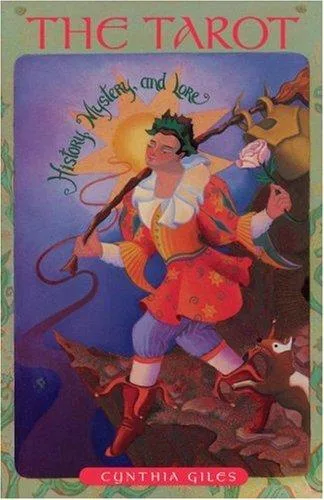
Cynthia Elizabeth Giles' "The Tarot" stands as a beacon for those seeking genuine esoteric understanding. Evander Ashcroft, writing from the crucible of alchemical study, finds in Giles' work a rare blend of scholarly depth and intuitive illumination. She masterfully navigates the symbolic labyrinth of the Tarot, connecting its imagery to profound hermetic principles and ancient wisdom traditions. Her exposition on the archetypal energies within the cards is particularly insightful, offering practitioners a richer, more potent framework for their readings. This book is an indispensable resource for serious students of the Tarot who yearn to move beyond superficial interpretation and engage with its transformative power on a deeper, more philosophical level. Giles provides the keys to unlocking the Tarot's true potential as a spiritual discipline.
📝 Description
65
Cynthia Elizabeth Giles' 1981 book details the Tarot's symbolic language and philosophical underpinnings.
Published in 1981, Cynthia Elizabeth Giles' work on the Tarot moves beyond simple card interpretations. It presents the Major and Minor Arcana as a system of symbols connected to universal patterns and the human mind. Giles argues the cards serve as tools for gaining insight and understanding oneself, rather than solely for prediction. The book examines the numerological, astrological, and Kabbalistic elements that give each card its meaning. It is written for those seriously interested in the Tarot, offering a way to see it as a map of life and the connection between the physical and spiritual worlds. Giles' approach invites readers to consider the Tarot's long history as a source of guidance for introspection and a way to perceive universal structures. The focus is on the deeper significance of the cards and their potential for personal growth and spiritual understanding.
This book sits within the Western esoteric tradition that views the Tarot not just as a divinatory tool, but as a symbolic representation of spiritual principles and the human psyche. It draws on Kabbalah, astrology, and numerology, systems often used in esoteric studies to understand cosmic order and personal development. Giles' work contributes to a lineage of authors who see the Tarot as a philosophical text, a guide to inner transformation and a mirror of universal laws, connecting its imagery to deeper metaphysical concepts.
💡 Why Read This Book?
Dive into the profound depths of the Tarot with Cynthia Elizabeth Giles. This book is essential for anyone seeking to understand the Tarot not just as a divinatory tool, but as a sacred language of symbols and archetypes. It is ideal for seekers of hidden knowledge, practitioners yearning for deeper insight, and scholars interested in the metaphysical underpinnings of this ancient art. Uncover the spiritual and philosophical dimensions that make the Tarot a timeless map for self-discovery and cosmic understanding.
⭐ Reader Reviews
Honest opinions from readers who have explored this book.
❓ Frequently Asked Questions
What is the primary focus of Cynthia Elizabeth Giles' "The Tarot"?
The book's primary focus is on the Tarot as a profound symbolic system, delving into its esoteric, philosophical, and spiritual dimensions rather than just predictive techniques. It explores the archetypal energies and hidden knowledge embedded within the cards.
Is this book suitable for beginners?
Yes, while it offers deep esoteric insights, Giles' clear prose and structured approach make it accessible to dedicated beginners who are eager to learn the Tarot's profound symbolism and philosophical underpinnings from the outset.
How does this book differ from other Tarot guides?
Unlike many guides, Giles emphasizes the Tarot's role as a spiritual discipline and a map of consciousness, connecting it to ancient wisdom traditions and archetypal psychology, offering a more philosophical and transformative perspective.
What kind of esoteric traditions are explored?
The book touches upon Kabbalistic principles, Hermetic philosophy, and universal archetypal symbolism, revealing how these ancient currents inform the structure and meaning of the Tarot deck.
Can this book enhance my existing Tarot practice?
Absolutely. For experienced practitioners, Giles' work provides a deeper conceptual framework, enriching interpretations and fostering a more potent, soul-centered approach to Tarot readings and personal growth.
🔮 Key Themes & Symbolism
The Tarot as a Sacred Symbolic Language
Giles posits that the Tarot is not merely a deck of cards, but a sophisticated symbolic language that mirrors the universal patterns of existence and the human psyche. Each card is a hieroglyph, a visual representation of profound spiritual and psychological truths. This theme explores how these symbols act as keys to unlocking hidden knowledge, bridging the conscious and unconscious, and revealing the intricate set of the cosmos. It emphasizes that understanding this language is an initiation into a deeper perception of reality, a way to converse with the archetypal forces that shape our lives and the world around us.
Archetypal Journeys and the Soul's Evolution
Central to Giles' exploration is the concept of the Tarot as a map of the soul's evolutionary journey. The Major Arcana, in particular, are presented as stages of a universal quest, charting the archetypal experiences and challenges that mark our spiritual development. This theme explores how each card embodies distinct archetypal energies – the Hero, the Sage, the Shadow – and how their interplay guides us through periods of transformation. It highlights the Tarot's power in useful our personal myths, understanding our innate potentials, and working through the profound transitions inherent in the human experience.
Esoteric Connections and Hidden Wisdom
Giles masterfully ties together the esoteric threads that bind the Tarot to ancient wisdom traditions. This theme illuminates the deep connections between the Tarot, Kabbalah, Hermeticism, and Jungian psychology, revealing the multidimensional layers of meaning embedded within the deck. It explores how numerology, astrology, and the Tree of Life inform the Tarot's structure, offering a richer, more integrated understanding. The book serves as a conduit to this hidden wisdom, empowering readers to perceive the subtle energies and cosmic resonances that make the Tarot an enduring tool for divination, self-knowledge, and spiritual awakening.
💬 Memorable Quotes
Direct passages from the work, attributed to the author.
“At the beginning is the word itself.”
— This profound opening suggests that all creation, all understanding, and all meaning originates from a fundamental, primal force or utterance, echoing the concept of the Logos in esoteric traditions.
“Each card is a gateway to a deeper reality.”
— This highlights the transformative potential of the Tarot, suggesting that engaging with its symbolism can open pathways to understanding dimensions of existence beyond the mundane.
“The symbols speak a language older than time.”
— This points to the universal and archetypal nature of Tarot imagery, implying that its meanings transcend specific cultures or eras, tapping into innate human consciousness.
💡 Key Ideas
Editorial paraphrase of the work's core concepts — not direct quotes.
The Tarot is a mirror to the soul.
This quote emphasizes the introspective power of the Tarot, positioning it as a reflective surface that reveals our inner landscape, hidden potentials, and subconscious patterns.
Seek not the future, but the wisdom of the present.
This quote reframes Tarot from mere fortune-telling to a tool for present-moment awareness and inner growth, focusing on understanding current energies and choices.
🌙 Esoteric Significance
Tradition
Giles' work is deeply rooted in the Hermetic and Kabbalistic traditions, viewing the Tarot as a symbolic representation of the universe and the human soul's journey within it. It draws parallels to the Tree of Life, numerology, and astrological correspondences, presenting the Tarot as an integrated system of ancient wisdom. This approach positions the Tarot not just as a divinatory tool, but as a profound philosophical and spiritual map for self-discovery and understanding the divine order.
Symbolism
The book meticulously deciphers the strong symbolism of the Tarot, interpreting each card as a manifestation of universal archetypes and cosmic principles. Giles reveals how colors, numbers, figures, and imagery within the cards encode profound meanings related to consciousness, spiritual development, and the interplay of divine forces. The focus is on understanding the deeper, often hidden, significance of these symbols as keys to unlocking psychological insights and spiritual truths.
Modern Relevance
In contemporary times, Giles' approach to the Tarot offers a vital pathway for navigating complexity and seeking inner meaning. The book's emphasis on archetypes and symbolism provides a powerful framework for understanding personal challenges, fostering self-awareness, and cultivating resilience. It empowers individuals to see beyond surface-level events, connecting with deeper currents of wisdom and purpose, making the Tarot an enduring tool for psychological integration and spiritual growth in a rapidly changing world.
👥 Who Should Read This Book
Cynthia Elizabeth Giles' "The Tarot" is an essential read for a diverse audience. **Beginners** seeking to grasp the profound, symbolic nature of the Tarot beyond simple card meanings will find a clear, insightful guide. **Scholars** of esoteric traditions will appreciate the depth of its historical and philosophical connections to Hermeticism and Kabbalah. **Spiritual seekers** yearning for a tool that facilitates introspection, self-discovery, and a deeper connection to universal truths will find it invaluable. **Practitioners** looking to enrich their readings with a more nuanced, archetypal understanding and a philosophical framework will discover new layers of insight and transformative potential.
📜 Historical Context
Cynthia Elizabeth Giles' "The Tarot" emerged during a period of renewed interest in esoteric studies and occult revivalism in the mid-to-late 20th century. This era saw a significant surge in explorations of ancient philosophies, mysticism, and psychological archetypes, particularly influenced by figures like Carl Jung. As the world grappled with rapid societal change and technological advancement, there was a parallel yearning for spiritual grounding and a deeper understanding of the human condition. Giles' work contributed to this movement by offering a scholarly yet accessible interpretation of the Tarot, grounding its symbolism in established esoteric traditions and psychological theory. It provided a sophisticated lens through which readers could engage with the Tarot not just as a divinatory tool, but as a profound system of wisdom and self-exploration, resonating with a generation seeking meaning beyond the material.
📔 Journal Prompts
Reflect on the 'word' that begins all things. How does this concept relate to the core message of a Tarot spread you have recently experienced?
Consider the Major Arcana as stages of your own life's journey. Which archetypal 'card' are you currently embodying, and what lesson does it hold?
What symbol from the Tarot deck currently resonates most strongly with your inner state, and what hidden message might it be conveying to you?
How can the concept of the Tarot as a 'mirror to the soul' be applied to a current challenge or decision you are facing?
Explore a card you often find difficult or confusing. How might Giles' emphasis on its esoteric connections offer a new perspective for understanding its deeper meaning?
🗂️ Glossary
Archetype
A universal, inherited pattern of thought or imagery derived from the collective unconscious, often manifesting in symbols, myths, and dreams. In Tarot, these represent fundamental human experiences and energies.
Hermeticism
An ancient philosophical and religious tradition based on the writings attributed to Hermes Trismegistus, emphasizing esoteric wisdom, the unity of all things, and the correspondence between the microcosm (human) and macrocosm (universe).
Kabbalah
A system of Jewish mysticism that explores the divine nature and the relationship between God and the created world through symbolic interpretation, often utilizing the Tree of Life diagram.
Symbolism
The use of symbols to represent ideas or qualities. In the Tarot, each card is rich with symbolism that conveys deeper meanings beyond its literal depiction.
Logos
In esoteric and theological contexts, the divine principle of reason and order that governs the universe; often translated as 'word,' 'reason,' or 'plan.'
This book appears in 3 collections
🔮 Readers Also Liked
Browse all →
From the “Tarot” Collection
View all →
More Free Divination & Tarot Books
View all →
![Abandonment to Divine Providence [Annotated]](/img/thumb/abandonment-to-divine-providence-annotated-jean-pierre-de-caussade.webp)